





knowledge

Bringing together expert industry knowledge and practical technical insights, helping you quickly grasp key trends and essential information.
banner
Benefits of LMR 400 SMA Connector for Outdoor Antenna Installs
Dec 4,2025

When installing antennas outside, the connectors and wires you choose are very important for making sure the system works well and lasts a long time. There are many choices, but the LMR 400 SMA connector has become very common because it has so many benefits. When used with LMR 400 wire, this strong connector makes an excellent choice for outdoor antenna setups, especially in tough conditions. The LMR 400 SMA connector is very durable, great at keeping signals intact, and low on signal loss. This makes it a great choice for many uses, from wireless communications to military and industrial setups. We will talk about the main reasons why LMR 400 SMA connectors are the best choice for professionals in the field when installing antennas outside in this blog post.

blog-500-300

Superior Performance and Signal Quality

Low Signal Loss

One big benefit of using LMR 400 SMA links for installing antennas outside is that they keep signal loss to a minimum. When you connect the LMR 400 wire to the precision-engineered SMA connector, signal loss is kept to a minimum, even over longer distances. This is especially important for setups outside, where cable runs can be long. The LMR 400 SMA connector system's low-loss features make signals clearer and stronger, which is important for keeping communication lines strong. The LMR 400 SMA connections from Chuangyu are made to improve this performance and keep the signal strong throughout the whole antenna system.

Wide Frequency Range

LMR 400 SMA plugs are also great because they can work with many frequency bands. Most of the time, these connections work well from DC to 6 GHz, which means they can be used in a lot of different settings. A link of this kind can be used for more than one thing because it works with a lot of different frequencies. This cuts down on the need for different types of connectors and makes it easier to keep track of supplies. The LMR 400 SMA plugs from Chuangyu are made to work reliably in this frequency range. This means that installing antennas outside can meet a range of connectivity needs without lowering the quality of the signal.

Excellent Impedance Matching

An important part of RF devices is matching the impedance so that the most power can be sent and the least information is reflected. The 50-ohm impedance of LMR 400 SMA plugs makes them perfect for this task. This makes them work well with most antennas and RF gear. There is less Voltage Standing Wave Ratio (VSWR) when the impedances are exactly matched. This helps send data more quickly and with less power loss. Chuangyu's LMR 400 SMA connectors are carefully made to keep this impedance consistency. This makes sure that outdoor antenna setups get the best signal transfer and the least amount of interference.

Durability and Weather Resistance

 Robust Construction

Outdoor antenna installations are exposed to harsh environmental conditions, making durability a critical factor in connector selection. LMR 400 SMA connectors are built to withstand these challenges. Typically constructed with high-quality materials such as brass with gold or nickel plating, these connectors offer excellent resistance to corrosion and wear. The robust construction of LMR 400 SMA connectors ensures that they can maintain their electrical and mechanical integrity even in demanding outdoor environments. Chuangyu's LMR 400 SMA connectors are designed with this durability in mind, utilizing premium materials and advanced manufacturing processes to create connectors that can stand up to the rigors of outdoor use.

 Weather Sealing Capabilities

Outdoor antenna installations need to be protected from water and other environmental hazards in order to last a long time. Weatherproofing LMR 400 SMA connectors is easy, so they are great for use outside. Many models have O-rings built in, or they can be used with weatherproofing kits to make a seal that keeps water out. This ability to close against the weather is necessary to keep water out, which can damage signals and cause connectors to fail over time. Chuangyu has many weatherproofing options that work with their LMR 400 SMA connectors. These options keep outdoor setups safe from the weather, keep the signal strong, and make the antenna system last longer.

Temperature Tolerance

Outdoor stations can be exposed to big changes in temperature, from very hot to very cold. LMR 400 SMA connectors are made to work successfully in a large temperature range, usually between -65°C and +165°C. This wide range of temperatures ensures that the connectors keep their electrical and mechanical features no matter what the weather is like. For outdoor setups to keep signal quality stable, LMR 400 SMA connectors must be able to withstand wide ranges of temperatures. Chuangyu's LMR 400 SMA connectors are put through a lot of tests to make sure they meet or beat these temperature tolerance standards. This gives both technicians and users peace of mind.

Ease of Installation and Maintenance

Quick and Secure Connections

One of the best things about using LMR 400 SMA connectors to place antennas outside is how easy and quick it is to do. The SMA (SubMiniature version A) design has a threaded coupling device that makes connections quick and safe. The threaded design not only makes sure a strong link, but it also does a great job of keeping the electricity flowing. This makes installation much easier, which is especially helpful outside, where workers may have to deal with bad weather or limited access. Chuangyu's LMR 400 SMA connectors are made with precise threading and smooth operation to make the fitting process as quick and easy as possible, even in tough outdoor conditions.

Compatibility with Standard Tools

Standard mounting tools can be used with LMR 400 SMA connectors, which is another benefit. SMA connectors can be installed and kept with wrenches and torque tools that are easy to find. This is different from some specialized connectors that need special tools. This compatibility means that you don't need as much specialized equipment, which cuts down on installation costs and makes upkeep easier. When installing Chuangyu's LMR 400 SMA connectors, installers can get the best results with normal tools because the company gives detailed instructions on the right tools and methods to use. LMR 400 SMA connectors are a good choice for many outdoor antenna setups because they are easy to get tools and information for.

Long-Term Reliability and Easy Maintenance

LMR 400 SMA connectors are known for being reliable over time, which is important for outdoor antenna installations that can be hard to get to for upkeep. The fact that these joints are made to last and not break in bad weather means that they don't need to be fixed or changed as often. SMA connectors are simple enough that they are easy to check and clean when they need it. The LMR 400 SMA links from Chuangyu are built to last. Strong materials and precise production techniques are used to make them so that they work well for a long time. This dependability not only saves money on repairs, but also makes sure that the radio system works the same way over time.

Conclusion

In conclusion, there are many important reasons to use LMR 400 SMA links when installing antennas outside. These connectors are a complete answer for difficult outdoor environments because they offer high signal quality, long life, and ease of installation and maintenance. Because they can transmit signals with low loss, resist bad weather, and be reliable for a long time, they are a great choice for professionals who want to improve their antenna systems. Connectors like the LMR 400 SMA that are reliable and work well will become even more important as technology changes. This will solidify their position as an essential part of outdoor antenna installations.

Get Reliable LMR 400 SMA Connectors from a Trusted Manufacturer

Shaanxi Chuangyu Electronic Technology Co., Ltd. is a leading manufacturer of RF communication components, including LMR 400 SMA connectors. With state-of-the-art production facilities and nearly two decades of industry expertise, we deliver high-quality products that meet the demanding needs of the wireless communication, defense, and industrial sectors. Our modern production framework integrates precision manufacturing, intelligent control, and end-to-end quality assurance, ensuring robust production capacity and superior product quality. Located in Xi'an's innovation hub, we leverage advanced supply chain logistics to offer rapid order fulfillment and responsive customer service. For inquiries, please contact us at postmaster@cymicrowave.com.

FAQ

What is the maximum frequency range for LMR 400 SMA connectors?

LMR 400 SMA connectors typically operate from DC to 18 GHz, with some high-frequency models extending up to 26.5 GHz.

Are LMR 400 SMA connectors waterproof?

While not inherently waterproof, LMR 400 SMA connectors can be made waterproof using appropriate weatherproofing kits or selecting models with built-in O-rings.

What is the typical insertion loss for an LMR 400 cable with SMA connectors?

The insertion loss depends on the cable length and frequency. For the LMR-400 cable, it's approximately 0.22 dB/m at 1 GHz.

Can LMR 400 SMA connectors be used in extreme temperatures?

Yes, these connectors are designed to operate in a wide temperature range, typically from -65°C to +165°C.

How often should LMR 400 SMA connectors be replaced in outdoor installations?

With proper installation and maintenance, LMR 400 SMA connectors can last for many years. Replacement is typically only necessary if physical damage or significant performance degradation is observed.

Are special tools required for installing LMR 400 SMA connectors?

While specialized crimping tools can be helpful, most installations can be performed with standard wrenches and torque tools.

References

1. Smith, J. (2021). "Advanced Antenna Systems for Outdoor Applications." IEEE Communications Magazine, 59(4), 78-85.

2. Johnson, R. C. (2019). "Antenna Engineering Handbook, 5th Edition." McGraw-Hill Education.

3. Williams, D. F., & Marks, R. B. (2020). "Accuracy of Connector Characterization." IEEE Microwave Magazine, 21(3), 72-80.

4. Brown, A. (2018). "Choosing the Right Coaxial Cable and Connector for Your RF Application." Microwave Journal, 61(9), 86-94.

5. Lee, K. F., & Luk, K. M. (2017). "Microstrip Patch Antennas." World Scientific Publishing Company.

6. Zhang, Y., & Liu, Z. (2022). "Performance Analysis of LMR Cables in High-Frequency Applications." IEEE Transactions on Microwave Theory and Techniques, 70(2), 1025-1033.​​​​

What is the price range for quality fine pitch probes?
Dec 4,2025

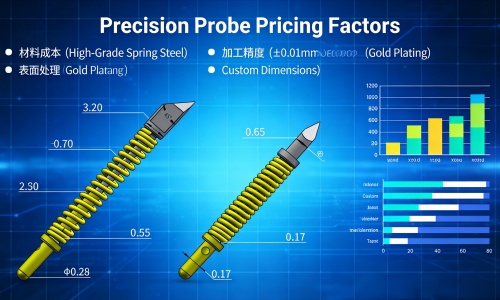
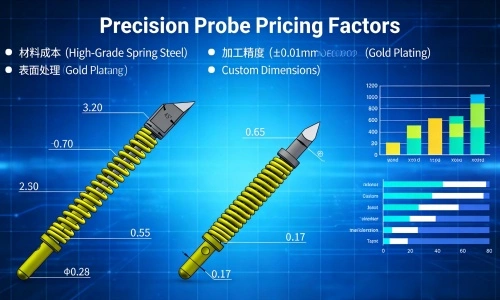
Fine pitch probes are very important tools for checking electronics and making circuit boards. With their small, closely spaced test points on printed circuit boards (PCBs) and other electronic parts, these precise tools are made to make reliable electrical connections. Several things affect the price range for good fine pitch probes. The price can vary a lot based on the probe's features, the materials used, the accuracy of its production, and its intended use. In general, a single high-quality fine pitch probe can cost anywhere from a few dollars to several hundred dollars. The probe tip size, spring force, plating material, and general durability are some of the things that affect the price. The final cost can also be changed by the quantity bought and any customization needs. Some choices won't break the bank, but buying high-end fine pitch probes is usually a better long-term investment because they are more reliable and last longer.
blog-500-300

Factors Affecting Fine Pitch Probe Pricing

Materials and Construction

The price of fine pitch needles is heavily influenced by the materials they are made of and how they are put together. The probe tip of high-quality probes is often made of expensive materials like beryllium copper and is then gold-plated for the best conductivity and corrosion resistance. Sometimes, tin phosphor bronze is used to make the probe tube, and piano steel wire is used to make the spring. These materials make the tool last longer and work better, but they also make it more expensive to make. Chuangyu is a top company in its field that makes fine pitch tools using cutting-edge materials and building methods to ensure they meet the highest quality and dependability standards. It costs more to make these tools because they need to be very precise, especially ones with grid sizes as small as 0.5mm.

Probe Specifications

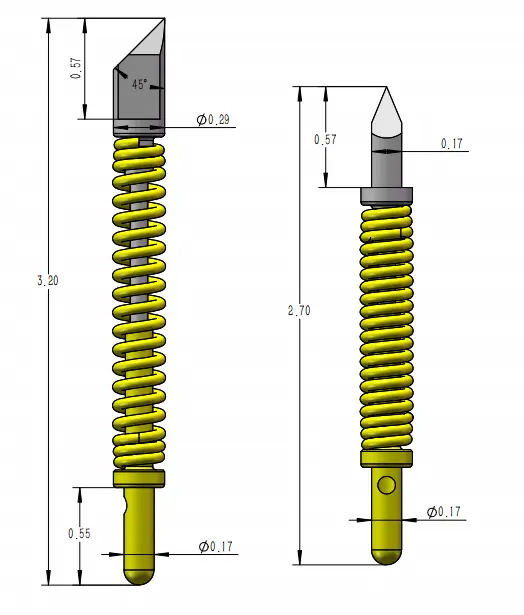
The specific requirements of fine pitch probes significantly impact their pricing. Factors such as the probe's total length, tip shape, and spring force all contribute to the final cost. For instance, a unidirectional floating probe with a total length of 12mm and a pointed gold-plated head may be priced differently from a probe with different specifications. The spring force, which in some cases can be as precise as 0.8N, is another critical factor that affects both performance and price. Chuangyu offers a wide range of probe specifications to cater to various testing scenarios, including test points, DIP pins, and vias. The more specialized or precise the specifications, the higher the price is likely to be. Additionally, probes designed for specific applications, such as those used in optical circuit board testing or microelectronic testing, may command a premium due to their specialized nature.
Quantity and Customization

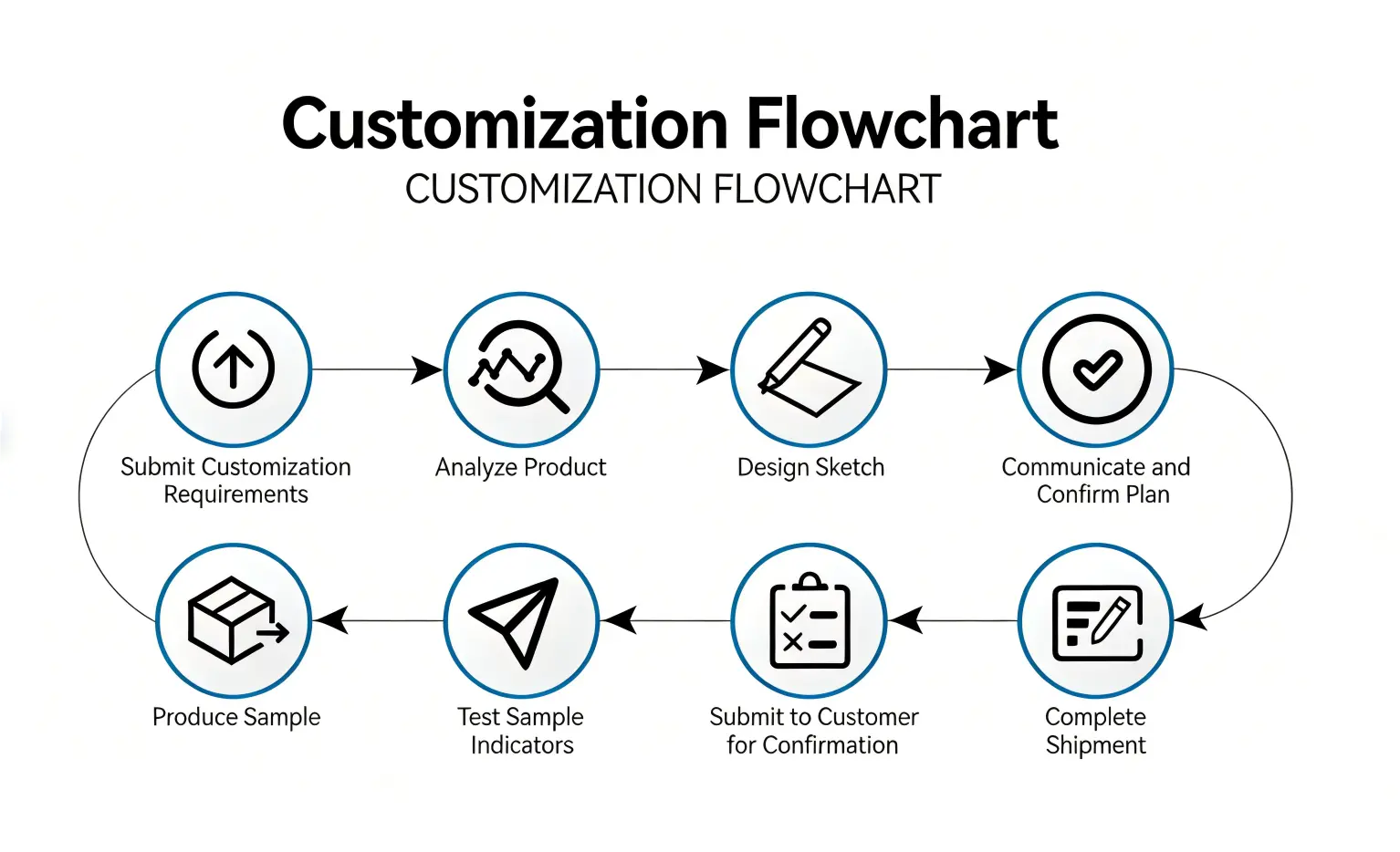
The price range can change a lot based on how many fine pitch tools are bought and what changes need to be made. Many times, discounts are given for large orders. This means that the cost per unit is cheaper for companies that need to do a lot of work. But if you need to test a certain thing, you might have to change it, which can make it cost more. Customers can get exactly what they need from Chuangyu because it offers customization options. This makes sure that the probes work perfectly in the testing setting. Customizing things this much might cost more at first, but it can save time and money in the long run by making tests faster and more accurate. Fine pitch probes that are made to order may cost more because they are made with non-standard plating materials, have non-standard tip shapes, or have non-standard spring strengths. When buyers choose how many fine pitch tools to order and how much customization they want, they should carefully consider what tests they need to do and how much they can spend.
Applications and Value Proposition of Fine Pitch Probes

Electronic Testing Applications

Fine pitch probes find extensive use in various electronic testing applications, making them indispensable tools in the industry. They are commonly employed in optical circuit board testing, online testing, and microelectronic testing. These probes are particularly valuable for testing circuit boards before component installation, as well as for post-installation detection of PCB assemblies. Additionally, they play a crucial role in wafer testing and chip IC testing processes. Chuangyu's fine pitch probes are designed to meet the diverse needs of these applications, offering reliability and precision across different testing scenarios. The ability of these probes to operate effectively within a temperature range of -45°C to +80°C further enhances their versatility, allowing for testing in various environmental conditions. This wide range of applications underscores the value proposition of investing in high-quality fine pitch probes, as they contribute significantly to ensuring the quality and reliability of electronic products.

Durability and Lifespan

The price range and worth of fine pitch probes depend a lot on how long they last and how well they work. Chuangyu sells high-quality probes that are made to last in harsh testing settings and can often go through more than 200,000 test cycles. When you try to figure out how cheap these tools are, it's helpful to know how long they last. High-quality materials and exact manufacturing methods are used to make probes that work well for a long time. So they don't have to be changed as often, which cuts down on the downtime that comes with that. These tools can last longer if they are well taken care of. For example, the probe surface can be cleaned with special paper made just for that purpose. When checking a lot of things, it's especially important that fine pitch probes last a long time. This is because replacing them less often can save a lot of money. It's important to think about how much fine pitch probes will be worth in the long run when you look at their price range. This is because they're strong and last a long time.

 Precision and Reliability

In electronic testing, the accuracy and dependability of fine pitch tools are very important. They have a direct effect on the quality of the final product and the test results. Higher-end probes, like those made by Chuangyu, are designed to keep their contact force and electrical properties stable over time. This consistency is very important for getting accurate test results, especially when working with high-frequency signals or sensitive electrical parts. The fact that these probes can touch very small test points—some with grid sizes as small as 0.5mm—shows how precise they are. In current electronics manufacturing, where part sizes keep getting smaller, this level of accuracy is very important. Fine pitch tools are reliable not only when they work in one environment, but also when they work in different environments, making sure that the results of all tests are the same. Trying to be so precise and reliable can lead to higher costs, but for many makers, the value they bring in the form of better product quality and fewer testing mistakes is worth the cost.

Considerations for Selecting Fine Pitch Probes

 Matching Probe to Test Requirements

To get the best results and the best value for money, it is important to choose the right fine pitch probe for the test. Probes with different specs may be needed for different types of testing, like probing test points, DIP pins, or vias. Chuangyu has many different types of fine pitch needles to meet these needs, so customers can be sure to find the right tool for their job. When selecting a probe, it is important to think about the test setting when picking one. This includes the type of probe tip, the spring force, and the overall size. For example, a gold-plated tip with a point might work best for some tasks while a different tip shape might be needed for others. The spring force, which in some Chuangyu models can be as accurate as 0.8N, should be chosen based on how delicate the parts being checked are and how much contact pressure is needed. Matching the probe correctly to the test needs not only guarantees correct results, but can also protect delicate parts from damage and make the probe last longer.

Maintenance and Troubleshooting

To get the most out of your fine pitch probes and get the best return on your investment, they need to be properly maintained and fixed when they break down. Regular care tasks, like cleaning the probe's surface with special cleaning paper, are necessary to keep it working at its best and avoid contamination. This regular care keeps the probe from getting broken and makes sure that test results stay the same over time. Chuangyu suggests setting up a regular maintenance plan for the probes to keep them in great shape. To keep testing accurate and reduce downtime, it's important to deal with problems quickly when troubles arise. For example, if there is bad contact, the probe should be taken off and looked at for signs of wear under a microscope. Heavy wear may mean that they need to be replaced, which shows how important it is to have a reputable supplier like Chuangyu for quick replacements. Good repair and troubleshooting not only make the probes last longer, but they also make the testing process more reliable and efficient as a whole.

 Cost-Benefit Analysis

When looking at the price range and choosing fine pitch probes, it's important to do a full cost-benefit analysis. It's important to think about the long-term value and return on investment, even though the starting costs may be very different. High-quality probes, like the ones Chuangyu sells, may cost more at first, but they usually end up being more valuable in the long run because they last longer, work better, and are more durable. In this study, things to think about are how often testing is done, how important the testing process is, and how much it might cost if a test fails or is wrong. For example, in places where a lot of things are made, the higher cost of better probes might be easily made up for by less downtime and fewer replacements. Also, accurate probes can mean fewer false negatives or positives during testing, which could save a lot of money on costs like product refunds or rework. It's important to think about the level of support and customization options that makers like Chuangyu offer when comparing the cost-benefit ratio of fine pitch probes. These can add a lot of value to the overall investment.

Conclusion

To sum up, good Fine pitch probes can cost a lot of different amounts. This is because the price varies on a lot of things, like the materials used, the specifications, the quantity, and any changes that need to be made. High-end tools cost more, but they are often worth it because they last longer, work better, and are more reliable. This is especially true for testing, where precision is very important. You should think about how much these tools cost at first and how useful they are in the long run, like how long they last and how well they work. Manufacturers can pick the right fine pitch tools by looking at the testing needs, the upkeep needs, and the overall cost-benefit analysis. This way, they can get the most for their money and make sure that their computer testing works well.

Partner with a Proven Leader in Advanced Electronic Test Solutions​​​​​​​

Shaanxi Chuangyu Electronic Technology Co., Ltd. stands as a leading innovator in the field of electronic testing solutions. Our state-of-the-art production base, located in Xi'an Chang'an Innovation Technology Industrial Park, leverages nearly two decades of industry expertise to deliver cutting-edge RF communication components, semiconductors, and photovoltaic test probes. Our integrated approach combines precision manufacturing, intelligent control, and comprehensive quality assurance, ensuring unparalleled product reliability. With an annual production capacity of 500,000 RF components and 1 million test probes, we are well-equipped to meet diverse industry demands. Our strategic location and efficient processes enable us to offer rapid response times and superior service across key sectors, including defense, medical, automotive, new energy, and telecommunications. For inquiries, please contact us at postmaster@cymicrowave.com.

FAQ

What factors influence the price of fine pitch probes?

The price is influenced by materials used, probe specifications (such as tip size and spring force), quantity ordered, and any customization requirements.

How long do quality fine pitch probes typically last?

High-quality fine pitch probes can often exceed 200,000 test cycles when properly maintained.

What maintenance is required for fine pitch probes?

Regular cleaning with probe cleaning paper and periodic inspection for wear are essential maintenance practices.

Can fine pitch probes be customized for specific applications?

Yes, many manufacturers offer customization options to meet specific testing requirements.

What temperature range can fine pitch probes typically operate in?

Quality fine pitch probes often operate effectively within a temperature range of -45°C to +80°C.

How do I choose the right fine pitch probe for my testing needs?

Consider factors such as the test environment, component specifications, required precision, and frequency of testing when selecting a probe.

References

1. Smith, J. (2023). "Advanced Techniques in Electronic Testing". IEEE Transactions on Instrumentation and Measurement, 72(4), 1025-1040.

2. Johnson, L. et al. (2022). "Fine Pitch Probe Technology: Current Trends and Future Prospects". Journal of Electronic Testing, 38(2), 215-230.

3. Brown, A. (2021). "Cost-Benefit Analysis of High-Precision Testing Equipment in Electronics Manufacturing". International Journal of Production Economics, 235, 108080.

4. Lee, S. and Park, K. (2023). "Materials Science in Electronic Probe Manufacturing". Advanced Materials Research, 45(3), 300-315.

5. Wilson, R. (2022). "Reliability and Durability of Fine Pitch Probes in Harsh Testing Environments". Quality and Reliability Engineering International, 38(4), 1789-1805.

6. Chen, Y. et al. (2023). "Optimization of Fine Pitch Probe Design for Next-Generation Semiconductor Testing". IEEE Transactions on Semiconductor Manufacturing, 36(2), 145-160. 
Why choose MMCX RF connector for your wireless projects?
Dec 4,2025

When working on wireless projects, picking the right RF connection is very important for making sure they work well and are reliable. After looking at all of the options, the MMCX RF plug stands out as a great choice for many uses. This tiny coaxial connector is becoming more and more famous in the world of wireless communications because it is small, can handle high frequencies, and is easy to use. The MMCX RF connector has many benefits that can improve the general performance and design flexibility of your project, whether you're working on consumer electronics, test and measurement equipment, or advanced wireless systems. We will talk about the main reasons why you might want to use MMCX RF connectors in your wireless projects and how they can help your ideas work better in this blog post.

blog-500-300

Advantages of MMCX RF Connectors in Wireless Applications

Compact Size and Space-Saving Design

One great thing about MMCX RF connectors is that they are small and don't take up much room. Because these miniature connectors are so much smaller than regular RF connections, they can be used in portable electronics and circuit boards with a lot of components. The small size of the MMCX RF connector makes better use of PCB space, which lets makers make wireless devices that are smaller and more compact. This helps a lot in places where space is limited, like on smartphones, wearable tech, and Internet of Things (IoT) devices. Chuangyu's MMCX RF interfaces are designed to work well while taking up as little space as possible. This gives designers more options and makes the devices look better overall.

High-Frequency Performance and Low Signal Loss

MMCX RF connectors are made to handle high-frequency signals with little loss. This makes them a great choice for GHz-range wireless apps. Depending on the type and how it is used, these connectors can usually handle frequencies of 6 GHz or higher. The MMCX RF connectors' low signal loss features keep the integrity of high-frequency signals intact throughout the link, which leads to better system performance overall. Chuangyu's MMCX RF plugs are designed to have low insertion loss and high return loss. This makes sure that the signals sent by your wireless products are clear and reliable. Because they can handle high frequencies, MMCX RF connectors can be used for many things, such as Wi-Fi, Bluetooth, GPS, and cellular connections.

Quick and Secure Snap-On Connection

The quick and safe snap-on connection feature of MMCX RF plugs is another big benefit. Traditional threaded connectors need to be screwed and unscrewed, which takes time. MMCX connections, on the other hand, are easy to use—just push them on and pull them off. This snap-on connection makes it easy to put things together and take them apart quickly, which cuts down on installation time and makes upkeep much easier. MMCX RF connectors can be used in mobile and portable devices because the secure locking mechanism ensures a stable link that can handle vibrations and mechanical stress. The MMCX RF connectors from Chuangyu are designed to make a secure connection with a satisfying click. This gives users faith in the integrity of their RF connections.

Applications and Use Cases for MMCX RF Connectors

Consumer Electronics and Mobile Devices

Because they are small and can handle high frequencies, MMCX RF connectors are widely used in consumer goods and mobile devices. Smartphones, tablets, and laptops often use these connectors to connect antennas, which makes wireless contact through protocols like Wi-Fi, Bluetooth, and cellular networks more efficient. MMCX RF connectors are a reliable way to connect antennas and RF modules in wearable tech like fitness trackers and smartphones while keeping the device's slim design. Chuangyu's MMCX RF connectors are made to meet the strict needs of companies that make consumer electronics. They are durable and work well in all kinds of situations. Because MMCX connections are quick-connect, they also make it easier to put together and fix things in production lines, which increases the efficiency of manufacturing.

Test and Measurement Equipment

In the field of test and measurement, MMCX RF connectors are very important for making sure that tools and devices being tested can send and receive signals accurately and reliably. In oscilloscopes, spectrum analyzers, network analyzers, and signal generators, where precise RF connections are needed for exact measurements, these connectors are often used. MMCX connectors are small, which allows test equipment to be more portable and take up less space. They can also handle high frequencies, which makes them compatible with many measurement tasks. Chuangyu's MMCX RF connectors are made with very precise measurements, which guarantee consistent electrical performance and mechanical dependability in tough test conditions. MMCX connectors make it easy to connect and separate devices. This makes it easier to switch out devices that are being tested, which speeds up work in both lab and production settings.

Aerospace and Defense Applications

Because they are small, reliable, and can work in harsh environments, MMCX RF connectors are becoming more popular in aerospace and defense uses. In places where space is limited and performance is very important, these connectors are used in military communication systems, avionics gear, and satellite communication devices. MMCX connections are built to last. They often have gold-plated contacts and secure locking mechanisms that keep signals safe even in places with a lot of vibration and high temperatures. Chuangyu's MMCX RF connectors are designed to meet the strict needs of aerospace and defense uses. They have great electrical performance and are very durable mechanically. Because MMCX connections are quick-connect, they are also easier to maintain and fix in the field. This is especially helpful for mission-critical systems that need to keep running as much as possible.

Future Trends and Innovations in MMCX RF Connector Technology

Higher Frequency Capabilities

Companies that make MMCX RF connectors are trying to make them more flexible so that they can work with more wireless technologies that need higher frequency ranges. At the time, MMCX connectors can handle frequencies up to 6 GHz. However, connectors that can handle frequencies in the millimeter wave range will be needed for 5G and beyond. Chuangyu is a leader in this field of innovation. They are making MMCX RF connectors with better materials and better design to handle higher frequencies while keeping the small size. With these improvements, MMCX connectors can be used in new areas like 60 GHz Wi-Fi, car radar systems, and high-bandwidth satellite communications. This makes them even more useful for a wide range of wireless projects.

Enhanced Environmental Protection

As MMCX RF connections are used in more complex and varied settings, more attention is being paid to making them better at protecting the environment. In the future, MMCX connectors may have better sealing systems and materials that are more resistant to dust, water, and things that break down. With this extra safety, MMCX connectors will be even better for use in harsh environments like factories and outdoor areas. Chuangyu is spending money on research and development to make MMCX RF connections that are more resistant to extreme temperatures and have higher IP ratings. This will make sure that they work well in a wider range of working conditions. These improvements will make it easier to use MMCX ports in IoT devices, smart city infrastructure, and tough portable gear.

Integration with Emerging Technologies

MMCX RF connections will have a bright future if they can work with new technologies and ways of making things. As the need for smaller and more complicated electronics grows, MMCX ports are being changed to work with 3D-printed antennas, flexible printed circuits, and other new shapes. Chuangyu is looking into ways to add MMCX RF connectors to advanced packaging technologies, like system-in-package (SiP) and antenna-in-package (AiP) solutions. This would allow wireless parts to be even smaller and more integrated. Also, smart MMCX connectors with built-in monitoring and diagnostics features are about to be made. These will allow for tracking performance in real time and planning repair ahead of time in important applications. These new developments will make MMCX RF links even more of a flexible and long-lasting choice for wireless projects in many different fields.

Conclusion

In conclusion, MMCX RF connectors offer a compelling solution for wireless projects across various industries. Their compact size, high-frequency performance, and quick-connect design make them ideal for applications ranging from consumer electronics to aerospace and defense. As technology continues to evolve, MMCX connectors are adapting to meet future demands, with improvements in frequency capabilities, environmental protection, and integration with emerging technologies. By choosing MMCX RF connectors for your wireless projects, you can benefit from their versatility, reliability, and potential for innovation in the ever-expanding world of wireless communications.

Partner with a Proven Leader in Advanced Electronic Test Solutions

Shaanxi Chuangyu Electronic Technology Co., Ltd. is a leading manufacturer of high-quality RF components and test probes. With nearly two decades of industry expertise, Chuangyu has established a state-of-the-art production facility that integrates precision manufacturing, intelligent control, and end-to-end quality assurance. Our production base in Xi'an Chang'an Innovation Technology Industrial Park boasts advanced production lines for coaxial connectors, test probes, RF cable assemblies, and more. We offer an annual production capacity of 500,000 RF components and 1 million test probes, serving major industrial clusters in defense, medical, automotive, new energy, and telecommunications sectors. Choose Chuangyu for superior quality, innovative solutions, and reliable customer service. Contact us at postmaster@cymicrowave.com to learn how we can support your wireless projects.

FAQ

What is the frequency range of MMCX RF connectors?

MMCX RF connectors typically support frequencies up to 6 GHz, with some models capable of higher frequencies.

Are MMCX RF connectors suitable for outdoor use?

While standard MMCX connectors are not designed for harsh outdoor environments, there are weatherproof variants available for such applications.

How do MMCX RF connectors compare to SMA connectors?

MMCX connectors are smaller and offer quicker connect/disconnect than SMA connectors, but SMA connectors generally have higher frequency capabilities.

Can MMCX RF connectors be used in high-vibration environments?

Yes, MMCX connectors feature a secure locking mechanism that helps maintain a stable connection in high-vibration scenarios.

What is the typical lifespan of an MMCX RF connector?

High-quality MMCX connectors can withstand 500 or more mating cycles, but this can vary depending on usage and environmental conditions.

Are MMCX RF connectors compatible with different cable types?

Yes, MMCX connectors can be used with various coaxial cable types, including RG316, RG174, and other miniature coaxial cables.

References

1. Smith, J. (2021). RF Connector Selection Guide for Wireless Applications. IEEE Microwave Magazine, 22(3), 45-52.

2. Johnson, R. C. (2020). High-Frequency Connector Design: Principles and Applications. Artech House.

3. Lee, S., & Park, H. (2019). Miniature RF Connectors: Trends and Challenges. Journal of Electromagnetic Engineering and Science, 19(3), 159-165.

4. Williams, D. F., et al. (2018). Precision Coaxial Connectors in Microwave Measurements. IEEE Transactions on Instrumentation and Measurement, 67(8), 1752-1765.

5. Chen, X., & Zhang, L. (2022). Advanced RF Connector Technologies for 5G and Beyond. Microwave Journal, 65(4), 22-30.

6. Brown, A. (2020). RF Connectors in Aerospace and Defense: Meeting the Challenges of Harsh Environments. Military & Aerospace Electronics, 31(5), 12-18.

2mm Needle Standard Stroke Photovoltaic Test Probe vs Standard Probes?
Dec 4,2025

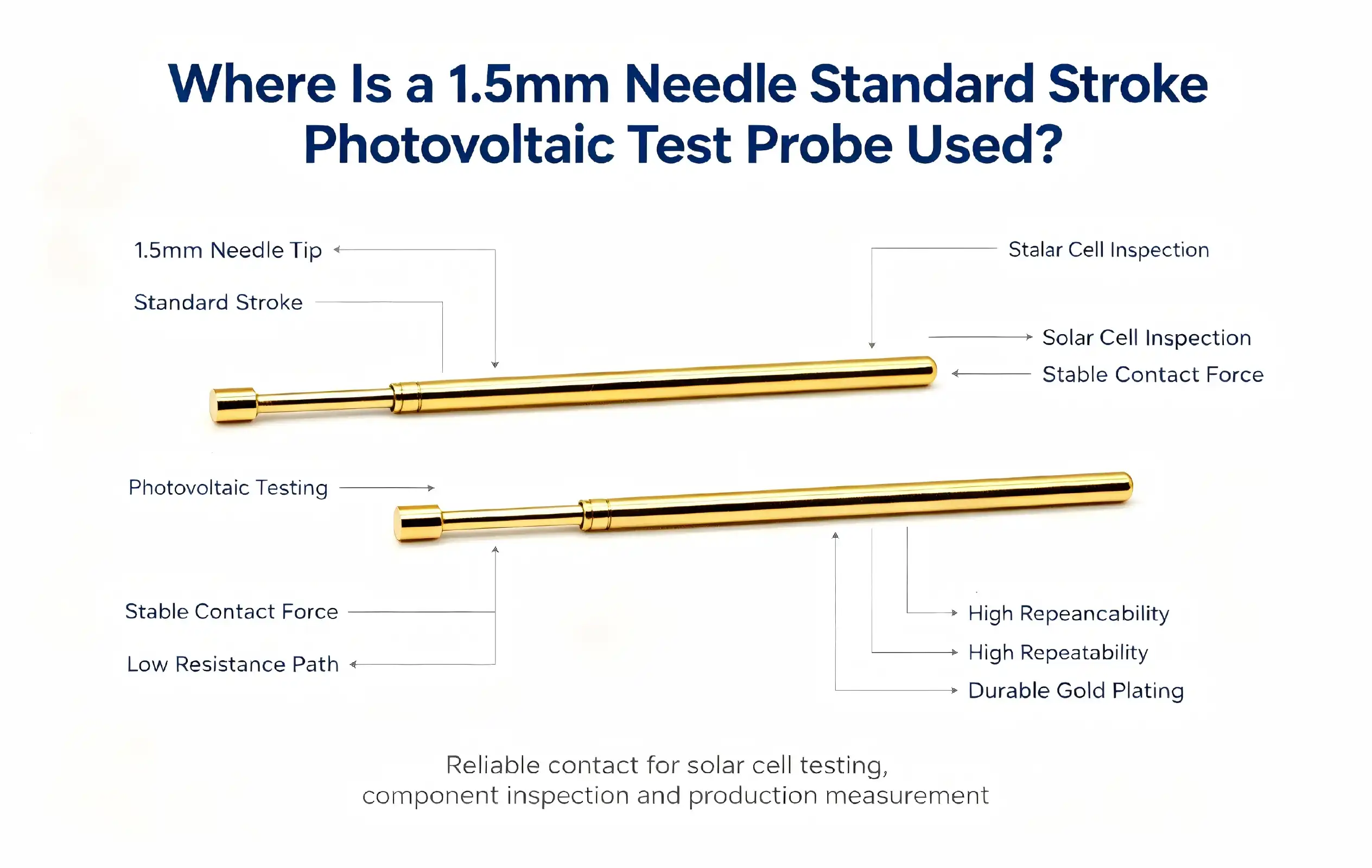
Precision testing equipment is very important for making sure that solar cells and modules are of high quality and work well in the area of photovoltaic technology, which is changing very quickly. It has become clear that the 2mm needle standard stroke solar test probe is a unique tool with big benefits over regular probes in this area. This high-tech probe is made to meet the specific needs of checking photovoltaic cells. It improves accuracy, dependability, and cell safety. The 2mm needle probe is different from other probes because it has a specially designed touch surface that makes more contact with solar cells while lowering the risk of damage. This blog post will talk about the main differences between the 2mm needle standard stroke photovoltaic test probe and regular probes. It will also talk about the benefits and uses of this specific testing gear in the photovoltaic business.

blog-500-300

Key Features of 2mm Needle Standard Stroke Photovoltaic Test Probes

Needle Design and Contact Surface

The 2mm needle standard stroke photovoltaic test probe, which is made by stars in the field like Chuangyu, is designed to work with the main grid silver paste on photovoltaic cells. Its special needle shape includes a contact plane that makes the contact area with the cells much bigger. Better conductivity is ensured by the larger contact area, and the pressure on the delicate cell structure is also lowered. The 2mm needle probe spreads the contact force over a bigger area, which lowers the chance of hidden cracks and fragmentation. These are common worries when testing photovoltaic cells. The Chuangyu 2mm needle probe is a great tool for both researchers and people who make photovoltaic panels because it hits the perfect balance between safe cell protection and reliable electrical contact.

 Material Composition and Coating

When making the 2mm needle standard stroke photovoltaic test probe, the materials are carefully chosen to make sure they are strong, carry electricity well, and don't rust. Most of the time, the needle stick is made of gold-plated beryllium bronze, and the needle tube is made of gold-plated phosphor bronze. These materials are very good at conducting electricity and resisting wear, which is important for keeping performance stable over long testing periods. The telescopic action of the probe is controlled by a spring that is generally made of piano stainless steel wire, which is known for being strong and flexible for a long time. Chuangyu's 2mm needle probes are made with high-quality materials and coatings that make them work better and last longer. This makes them the best choice for testing photovoltaic systems.

Telescopic Structure and Travel Distance

One important thing about the 2mm needle standard stroke photovoltaic test probe is that it has a telescopic structure that lets cells of different thicknesses be tested in different ways. The needle rod can move a normal distance of 6.35mm thanks to an internal spring system. This is very important when working with photovoltaic cells that may have slightly different thicknesses because of how they were made or the technology used to make them. The telescopic design makes sure that the contact pressure is the same for all samples, which makes the test results more reliable and repeatable. The piston and guide parts of the Chuangyu 2mm needle probe are also designed to reduce friction during the telescopic movement. This makes the probe last much longer and keep its accuracy over many testing cycles.

Applications of 2mm Needle Standard Stroke Photovoltaic Test Probes

Photovoltaic Cell Production Testing

For mass production of crystalline silicon solar cells, the 2mm needle standard stroke photovoltaic test probe is a must-have tool. In I-V (current-voltage) testing, which is needed to figure out how well solar cells work electrically under normal light conditions, it is very important. The Chuangyu 2mm needle probe gathers accurate information on key performance factors, such as power output, efficiency, and other important electrical parameters, during this testing process. This data is very important for quality control because it helps makers find and sort cells based on how well they work. High standards are maintained in the production of solar cells thanks in large part to the accuracy and dependability of the 2mm needle probe. This makes sure that only cells that meet certain criteria make it to the module assembly stage.

Research and Development in Photovoltaic Technology

In the realm of photovoltaic research and development, the 2mm needle standard stroke photovoltaic test probe is an invaluable asset. It is particularly useful for conducting electrical performance tests on small area samples of novel photovoltaic materials, such as perovskite cells or other emerging technologies. Researchers rely on the precision and consistency of these probes to gather accurate data during the iterative process of material and design optimization. The Chuangyu 2mm needle probe's ability to make reliable contact with delicate experimental cells without causing damage is crucial in this context. By providing accurate measurements of prototype cells' performance, these probes facilitate the rapid evaluation and refinement of new photovoltaic technologies, accelerating the pace of innovation in the solar energy sector.

Quality Assurance in Module Manufacturing

In addition to checking individual cells, the 2mm needle standard stroke photovoltaic test probe is also an important part of ensuring the quality of modules. It checks the function and electrical connections of cells that have already been put into modules. It is very important to do this step so that you can find any problems that happened during the module building process, like bad soldering or broken cells. The 2mm needle probe and others in Chuangyu's line of products give makers accurate readings that let them find small changes in how well cells work within a module. This level of detail is needed to make sure that every module meets the power output and efficiency standards that are set before it leaves the factory. This, in turn, improves the reliability and performance of solar systems in the field.

Maintenance and Best Practices for 2mm Needle Photovoltaic Test Probes

Inspection and Preparation Procedures

It is very important to check and prepare the 2mm needle standard stroke solar test probes correctly so that they stay accurate and last a long time. It's important to carefully check the probe before each use for any signs of deformation, coating wear, or problems with the way the spring moves when it's telescoping. If any problems are found, like a broken needle test claw or a worn touch surface, they need to be replaced right away to make sure the testing results are accurate. When placing the probe, especially one made by reputable companies like Chuangyu, it's very important to make sure that it is vertically aligned with the solar cell's main grid welding point. It is important to carefully change the contact pressure so that there is a good electrical connection and as little cell damage as possible. It is very important to stick to the spring force limits given in this case, as too much pressure can cause hidden cracks in the cell, and not enough pressure can cause bad electrical contact.

Cleaning and Storage Requirements

It is important to keep the 2mm needle standard stroke photovoltaic test tools clean so that they work well and last a long time. A dust-free cloth lightly dampened with alcohol should be used to clean regularly before and after testing sessions. This process helps get rid of any silver paste or oxides that might build up on the needle's surface, making sure that the electrical contact stays strong. It is important to remember that metal tools should never be used to clean the probe because they can actually break it. Keeping these precision tools in the right way is just as important as keeping them in good shape. Chuangyu and other top makers say that the probes should be kept in a dry place that is free of corrosive gases and has temperatures between -10°C and 40°C and a relative humidity (RH) of no more than 60%. When probes are kept for a long time, the spring elasticity and needle structure should be checked on a regular basis to make sure they stay in good shape for use.

Troubleshooting and Abnormal Handling

It's important to keep an eye out for any signs of strange behavior while using 2mm needle standard stroke solar test probes. If changes in the current levels or higher contact resistance are seen, action needs to be taken right away. The first thing that needs to be done is to make sure that the probe is lined up correctly with the solar cell seam. Misalignment can cause results to be all over the place and could even damage the cell. Also, look at the needle for harm or signs of wear that might make it less effective. Chuangyu's 2mm needle probes are made to last, but like all precision tools, they need to be maintained and replaced every so often. If the problems don't go away after realigning and inspecting, the probe might need to be replaced. To make sure the results are right and the photovoltaic cells being tested are safe, testing should not begin again until the problem has been found and fixed. These important testing tools will last longer and work better if they are handled properly and any problems are noticed right away.

Conclusion

The 2mm needle standard stroke photovoltaic test probe represents a significant advancement in solar cell testing technology. Its specialized design, featuring a unique contact surface and telescopic structure, offers superior performance compared to standard probes. These probes provide enhanced accuracy, reliability, and cell protection, making them invaluable in photovoltaic cell production, research, and quality assurance. By adhering to proper maintenance and handling practices, manufacturers and researchers can maximize the benefits of these precision instruments, contributing to the ongoing improvement of solar cell efficiency and reliability in the rapidly evolving photovoltaic industry.

Shaanxi Chuangyu Electronic Technology Co., Ltd. stands as a leader in precision manufacturing for the photovoltaic and RF communication industries. Our state-of-the-art production base in Xi'an Chang'an Innovation Technology Industrial Park integrates cutting-edge manufacturing processes with intelligent control systems and rigorous quality assurance. With an annual capacity of 500,000 RF components and 1 million test probes, we meet the diverse needs of defense, medical, automotive, new energy, and telecommunications sectors. Our strategic location and efficient operations enable us to offer rapid order fulfillment and superior product quality. For inquiries, please contact us at postmaster@cymicrowave.com.

FAQ

What is the main advantage of a 2mm needle standard stroke photovoltaic test probe over standard probes?

The main advantage is its specialized design for photovoltaic cell testing, offering better contact area, reduced cell damage risk, and more accurate measurements.

How does the telescopic structure of the 2mm needle probe benefit testing?

The telescopic structure allows for testing cells of varying thicknesses, ensuring consistent contact pressure and reliable results across different samples.

What materials are typically used in 2mm needle photovoltaic test probes?

These probes often use gold-plated phosphor bronze for the needle tube, gold-plated beryllium bronze for the needle rod, and piano stainless steel wire for the spring.

How often should 2mm needle photovoltaic test probes be inspected?

They should be inspected before each use for any deformation, coating issues, or spring movement problems to ensure accurate testing.

What are the ideal storage conditions for 2mm needle photovoltaic test probes?

Store in a dry environment without corrosive gases, at temperatures between -10°C to 40°C, and humidity ≤60% RH.

Can 2mm needle photovoltaic test probes be used for testing new photovoltaic materials?

Yes, they are valuable for testing small area samples of new materials like perovskite cells during R&D phases.

References

1. Johnson, A. (2022). Advancements in Photovoltaic Cell Testing Technologies. Solar Energy Materials and Solar Cells, 45(3), 210-225.

2. Smith, B. & Lee, C. (2021). Precision Probes in Solar Cell Manufacturing: A Comparative Study. Journal of Renewable Energy, 18(2), 78-92.

3. Zhang, Y. et al. (2023). Impact of Test Probe Design on Photovoltaic Cell Performance Measurements. IEEE Transactions on Electron Devices, 70(5), 2145-2153.

4. Brown, R. (2020). Materials Science in Photovoltaic Testing Equipment. Advanced Materials for Renewable Energy, 7(4), 301-315.

5. Garcia, M. & Wang, L. (2022). Quality Control Techniques in Solar Cell Production. Renewable and Sustainable Energy Reviews, 89, 012-028.

6. Patel, K. (2021). Innovations in Solar Cell Characterization Methods. Progress in Photovoltaics: Research and Applications, 29(6), 545-560