- English
- French
- German
- Portuguese
- Spanish
- Russian
- Japanese
- Korean
- Arabic
- Greek
- German
- Turkish
- Italian
- Danish
- Romanian
- Indonesian
- Czech
- Afrikaans
- Swedish
- Polish
- Basque
- Catalan
- Esperanto
- Hindi
- Lao
- Albanian
- Amharic
- Armenian
- Azerbaijani
- Belarusian
- Bengali
- Bosnian
- Bulgarian
- Cebuano
- Chichewa
- Corsican
- Croatian
- Dutch
- Estonian
- Filipino
- Finnish
- Frisian
- Galician
- Georgian
- Gujarati
- Haitian
- Hausa
- Hawaiian
- Hebrew
- Hmong
- Hungarian
- Icelandic
- Igbo
- Javanese
- Kannada
- Kazakh
- Khmer
- Kurdish
- Kyrgyz
- Latin
- Latvian
- Lithuanian
- Luxembou..
- Macedonian
- Malagasy
- Malay
- Malayalam
- Maltese
- Maori
- Marathi
- Mongolian
- Burmese
- Nepali
- Norwegian
- Pashto
- Persian
- Punjabi
- Serbian
- Sesotho
- Sinhala
- Slovak
- Slovenian
- Somali
- Samoan
- Scots Gaelic
- Shona
- Sindhi
- Sundanese
- Swahili
- Tajik
- Tamil
- Telugu
- Thai
- Ukrainian
- Urdu
- Uzbek
- Vietnamese
- Welsh
- Xhosa
- Yiddish
- Yoruba
- Zulu
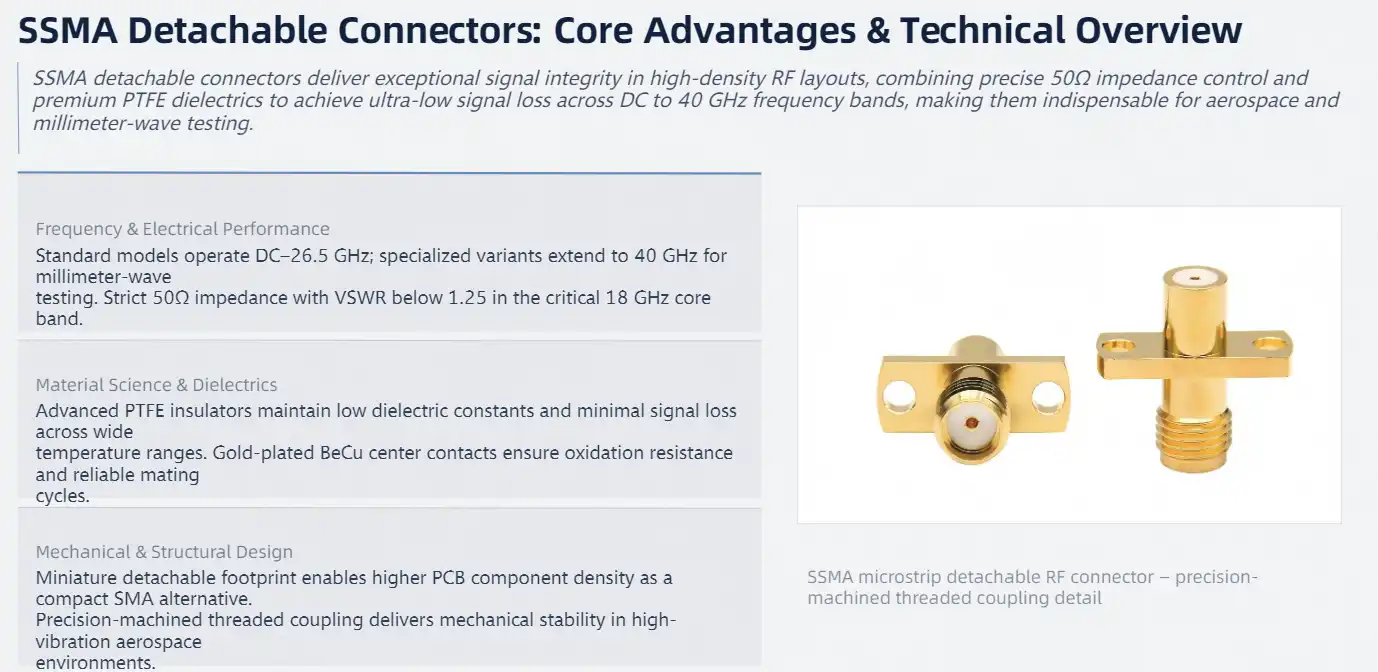
SSMA Detachable connector systems support frequency ranges from DC to 26.5 GHz, with specialized high-performance variants capable of reaching up to 40 GHz. These miniature RF coaxial connectors serve as compact alternatives to standard SMA configurations, delivering a characteristic impedance of 50Ω and maintaining VSWR values ≤1.25 within the 18 GHz operational band. The frequency performance depends on precision manufacturing tolerances, premium dielectric materials like PTFE insulators, and gold-plated beryllium copper contacts that ensure optimal signal integrity across demanding high-frequency applications in telecommunications, aerospace, and test equipment environments.
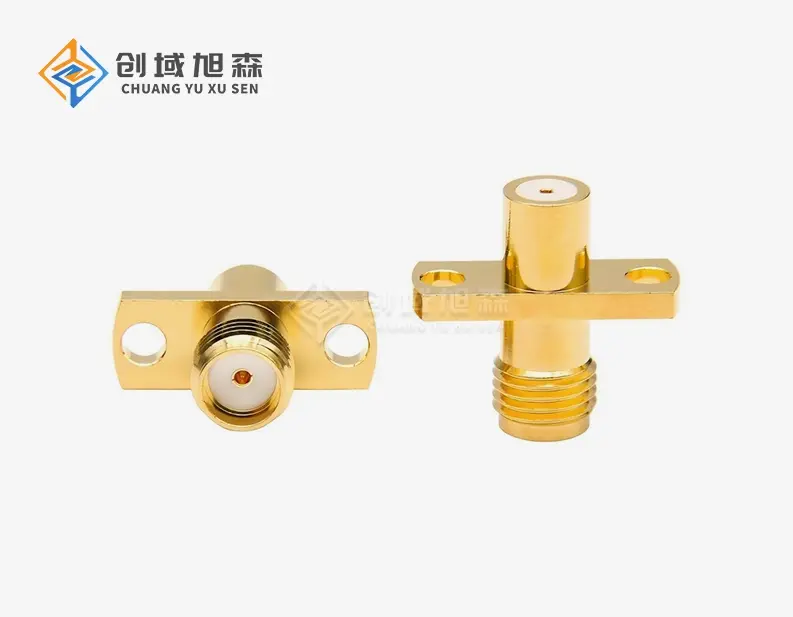
Understanding SSMA Detachable Connectors and Their Frequency Capabilities
SSMA Detachable connector systems can work with frequencies from DC to 26.5 GHz, and some high-performance versions can go as high as 40 GHz. These tiny RF coaxial connectors can be used instead of normal SMA connectors because they are smaller. They have a characteristic impedance of 50Ω and keep their VSWR values below 1.25 in the 18 GHz operating band. Precision manufacturing tolerances, high-quality dielectric materials like PTFE insulators, and gold-plated beryllium copper contacts are what make the frequency performance possible. These features protect the signal integrity in high-frequency environments like telecommunications, aerospace, and test equipment.SSMA Detachable connectors are precision-engineered solutions made for high-frequency RF uses that need to save space and keep the integrity of the signal. Additionally, these connectors have a small, detachable design that makes installation and servicing easy while still providing excellent electrical performance.
Core Design Elements and Technical Specifications
The basic structure of the SSMA Detachable connector includes a number of important design features that make their high frequency capabilities possible. Controlled impedance engineering makes sure that the characteristic impedance stays at 50Ω along the signal line, and advanced dielectric materials keep their electrical properties stable over a wide temperature range. The threaded connection method is more mechanically stable than push-in options, which makes it possible for signal transmission to work reliably in places where vibrations are common.PTFE shielding materials work very well at high frequencies because they keep their low dielectric constants and little signal loss even at those high frequencies. Precision-machined housing dimensions and tight manufacturing tolerances make a big difference in making sure that impedance stays the same, and VSWR is optimized across the whole operating frequency range.
Frequency Range Performance Analysis
Standard SSMA Detachable connectors usually work well from DC to 26.5 GHz. However, many uses focus on the DC to 18 GHz range because that's where VSWR requirements are the strictest. Specialized high-performance versions can boost operating frequencies up to 40 GHz, which makes them good for millimeter-wave uses and advanced test equipment situations. The frequency limits are mostly caused by the shape of the connectors, the properties of the dielectric materials, and the need for high precision during production. As frequencies go above 18 GHz, it gets harder to keep the impedance constant and keep signal reflections to a minimum. This means that better manufacturing processes and higher-quality materials are needed.
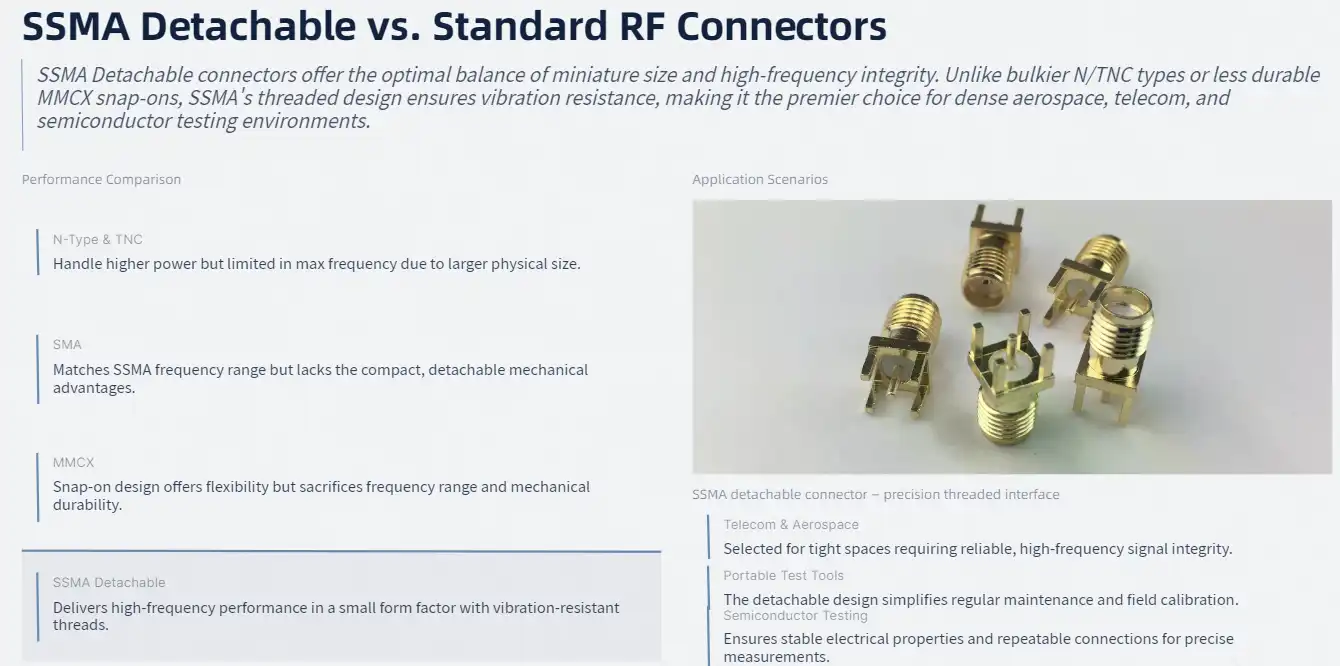
Comparing SSMA Detachable Connectors with Other Connector Types in High-Frequency Applications
Engineers and buying teams can make better choices when choosing RF connectors for specific uses when they know what their competitors are doing. If you need to balance performance needs with physical limitations and durability standards, you can choose between SSMA Detachable connector systems and other options like SMA, N, TNC, or MMCX connectors.
Performance Comparison Matrix
When small form factors are needed without sacrificing high-frequency performance, SSMA Detachable connectors are the best choice. N-type and TNC connectors have bigger physical connections and can handle more power, but because they are bigger, they can only support lower maximum frequencies. SMA connectors and SSMA variants can both handle the same frequency range, but they have different mechanical attachment methods and size needs. The snap-on connection feature of MMCX connectors makes them more flexible, but they usually work with lower frequency ranges and aren't as durable mechanically as the threaded SSMA Detachable connector. Because SSMA connectors contact with threads, they are better at resisting vibration and making connections that work reliably in harsh industrial settings.
Application-Specific Selection Criteria
The best way to choose a connector is to think about the unique needs of the application, such as the frequency range, power handling, environmental conditions, and available space. In areas like telecommunications, portable test tools, and aerospace, where small size and reliable high-frequency performance are still very important, the SSMA Detachable connector really shines. When engineers are checking semiconductors, they often choose the SSMA Detachable connector because their electrical properties are stable and the connection works every time. The design that lets you remove the sensor makes regular maintenance and calibration easier, without affecting the accuracy of the measurements or the integrity of the signal.
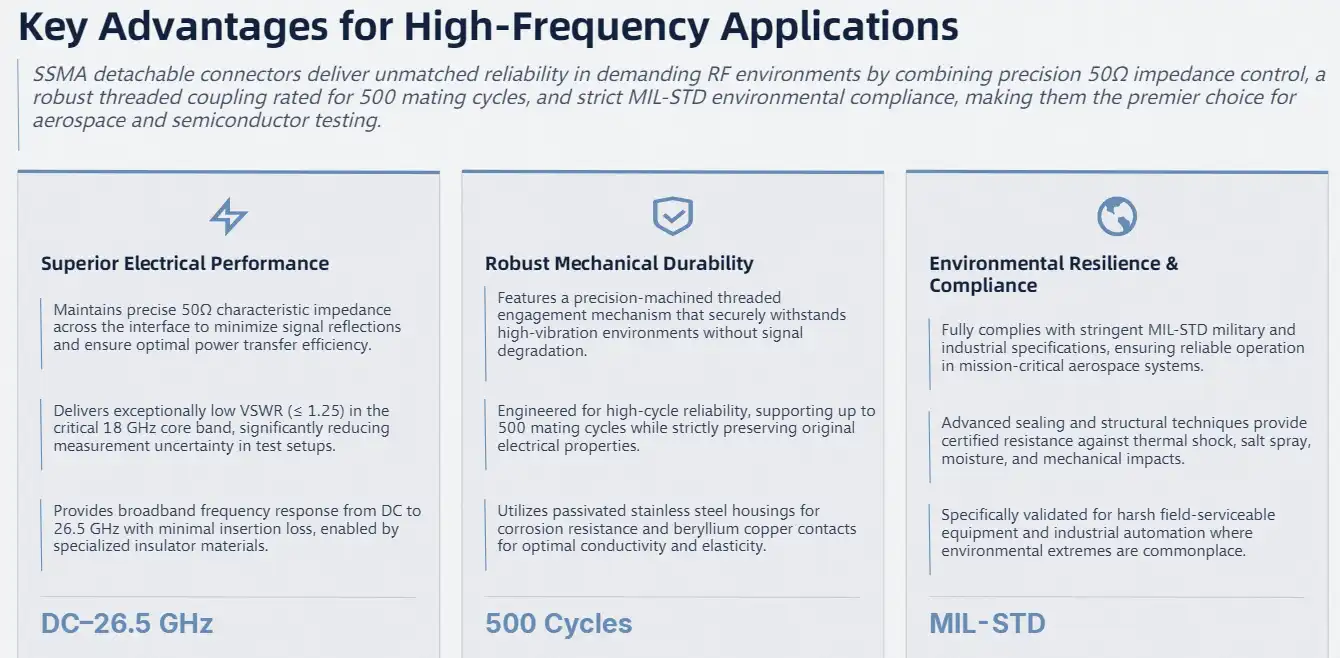
Key Advantages of SSMA Detachable Connectors for High Frequency Applications
Because they are made of high-quality materials and have optimized design features, SSMA Detachable connectors offer big benefits in high-frequency RF systems. These benefits have a direct effect on better system performance, less maintenance needs, and higher operating reliability in demanding industrial settings.
Superior Electrical Performance Characteristics
Precision production allows for consistent impedance control, which means that signals are sent steadily with few reflections across the entire frequency range. Low VSWR specifications ensure the best power transfer efficiency and less signal distortion, which is especially important in test and measurement settings where precision is key.
When it comes to electricity, SSMA Detachable connector systems have these main benefits:
- Consistency in impedance: The 50Ω characteristic impedance that is precisely controlled and kept throughout the connector interface makes sure that there are few signal reflections and the best power transfer efficiency at all operational frequencies.
- Low VSWR Performance: VSWR values of 1.25 or less in the 18 GHz range provide great signal integrity and lower measurement uncertainty in important test situations.
- Broadband Frequency Response: Stable electrical properties from DC to 26.5 GHz meet a wide range of application needs without the need for multiple connection types.
- Minimal Insertion Loss: Gold-plated contacts and specially designed insulator materials keep signal loss to a minimum, which keeps measurement accuracy and system sensitivity high.
Because of these improvements in electrical performance, the SSMA Detachable connector can keep the integrity of signals in tough situations and work well with both narrow-band and wide-band system designs.
Robust Mechanical Construction and Durability
The mechanical design of the SSMA Detachable connector focuses on long-term dependability by using high-quality materials and strong building methods. Stainless steel housings that have been passivated fight corrosion very well, and the beryllium copper center contacts make sure that the conductivity is optimal and that the mechanical durability lasts for a long time. The threaded engagement device can mate up to 500 times without losing its electrical properties. This means that these connectors are good for uses that need to connect and disconnect things often. This feature of durability is especially helpful in test settings and on field-serviceable equipment, where the dependability of connectors has a direct effect on how well the equipment works.
Environmental Resilience and Standards Compliance
SSMA Detachable connectors are made to meet strict military and industry environmental standards, which means they work reliably in a wide range of settings. The strong building and sealing methods protect against water, extreme temperatures, and mechanical stress factors that are common in industry settings. According to the relevant MIL-STD standards, environmental testing compliance includes resistance to thermal shock, protection against salt spray, resistance to vibration, resistance to shock, and moisture resistance. This thorough environmental qualification makes sure that the product will work reliably in uses like aerospace, telecommunications, and industrial automation.
Procurement Considerations for SSMA Detachable Connectors in Global B2B Markets
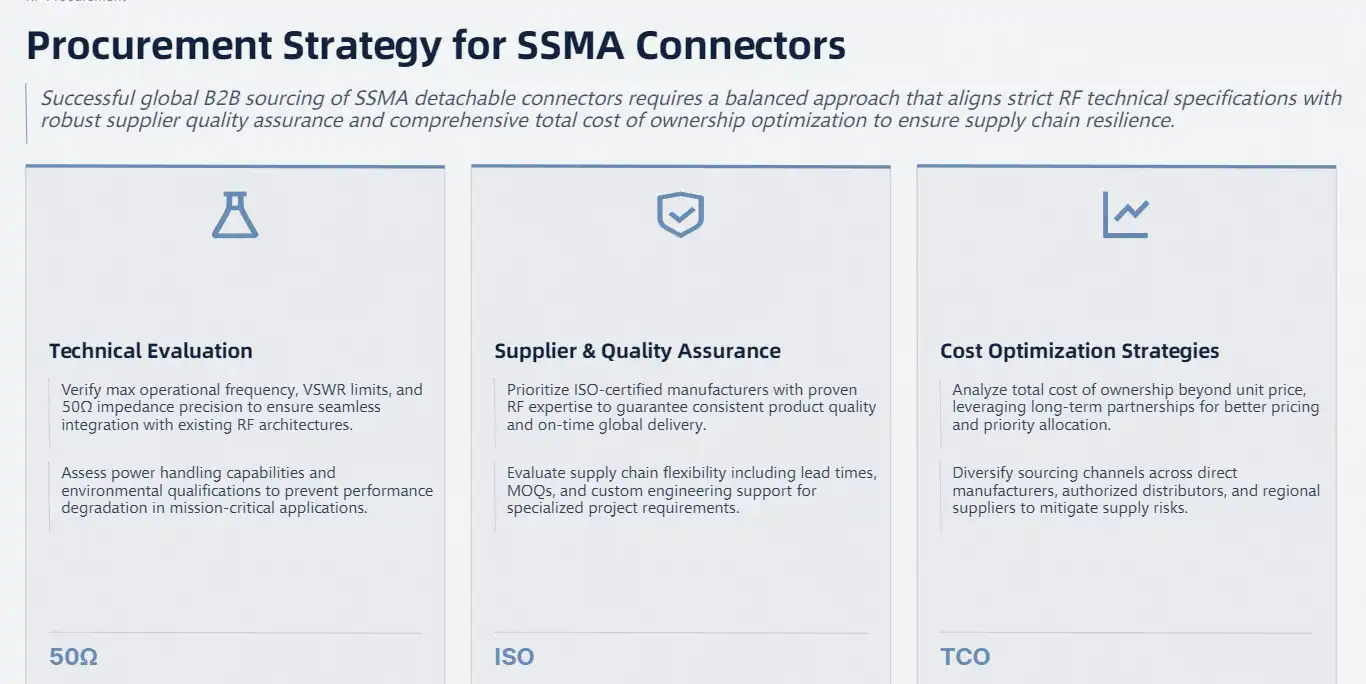
To make sure that a global sourcing of SSMA Detachable connector parts project goes well, it's important to carefully look at technical requirements, supplier capabilities, and quality assurance procedures. When it comes to keeping the supply chain reliable and up to code, procurement teams have to find a balance between performance needs and cost concerns.
Technical Specification Evaluation Criteria
A good way to buy things starts with a full study of the technical specifications, paying special attention to things like frequency range compatibility, impedance precision, and mechanical interface needs. Understanding the connection between connector specs and system performance helps you make smart choices during the buying process. Some important criteria for evaluation are the highest operational frequency, the VSWR specifications, the ability to handle power, and the environmental qualification standards. To avoid expensive changes or performance losses, connector sizes and interface compatibility must perfectly match current SSMA Detachable connector architectures.
Supplier Assessment and Quality Assurance
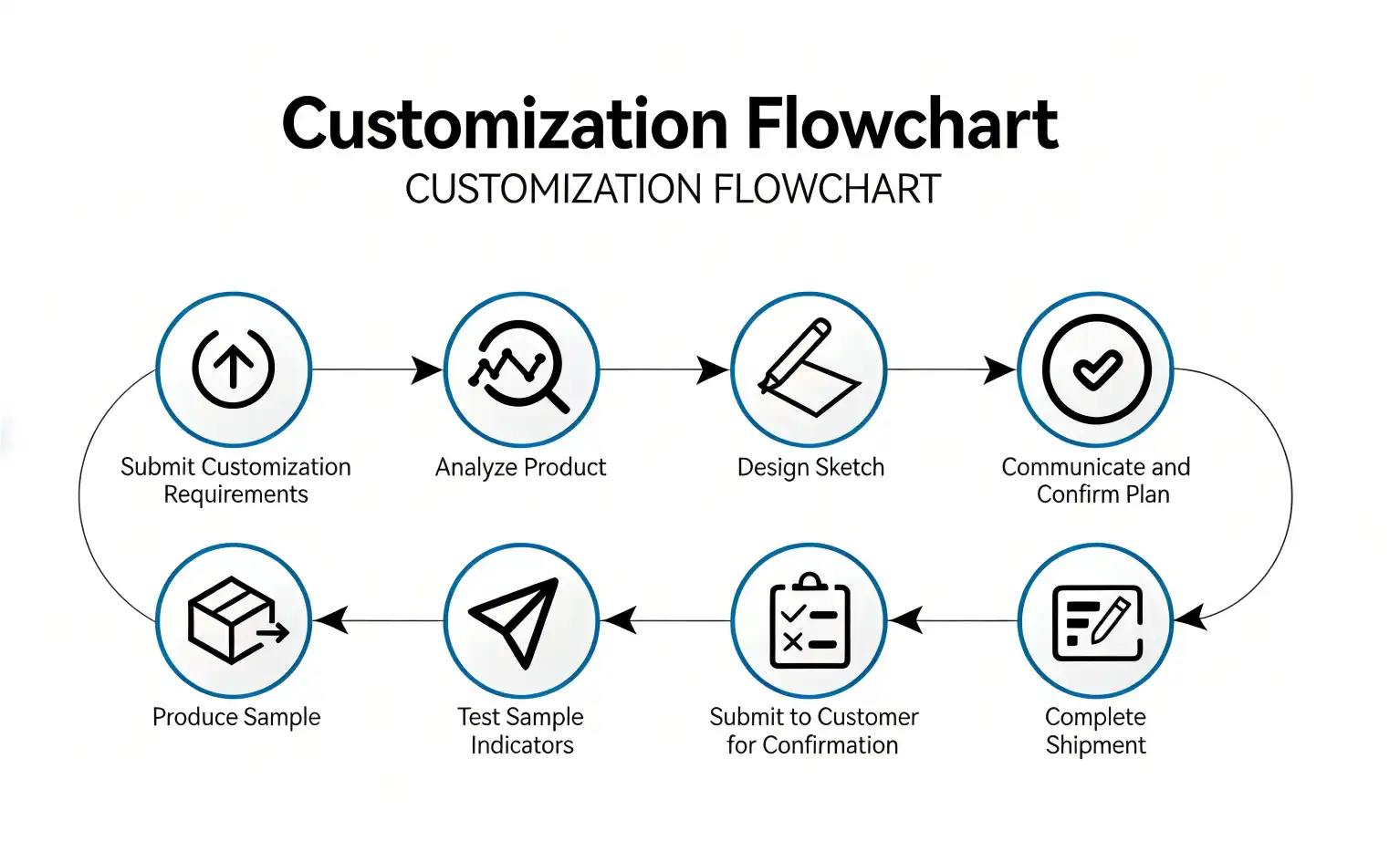
To find good suppliers, you need to look at their manufacturing skills, quality control methods, and technical support resources. Certified manufacturers with ISO quality management systems and a history of making RF connectors offer a higher level of guarantee for consistent product quality and on-time delivery. Things to think about in the supply chain include expected wait times, minimum order quantities, and the ability to customize the SSMA Detachable connector for specific uses. Building relationships with suppliers that offer both standard goods and custom engineering services helps meet the needs of a wide range of projects while keeping procurement costs low.
Cost Optimization Strategies
To handle costs well, you need to know about pricing structures, volume discounts, and the total cost of ownership, which includes more than just the purchase price. Long-term relationships with suppliers often give you access to better prices and faster distribution of the SSMA Detachable connector when supplies are low. To find the best prices while keeping quality standards and shipping reliability, procurement teams should look at a number of different sourcing choices. These should include direct manufacturer relationships, authorized distributors, and regional suppliers.
Installation, Troubleshooting, and Maintenance for Optimal Frequency Performance
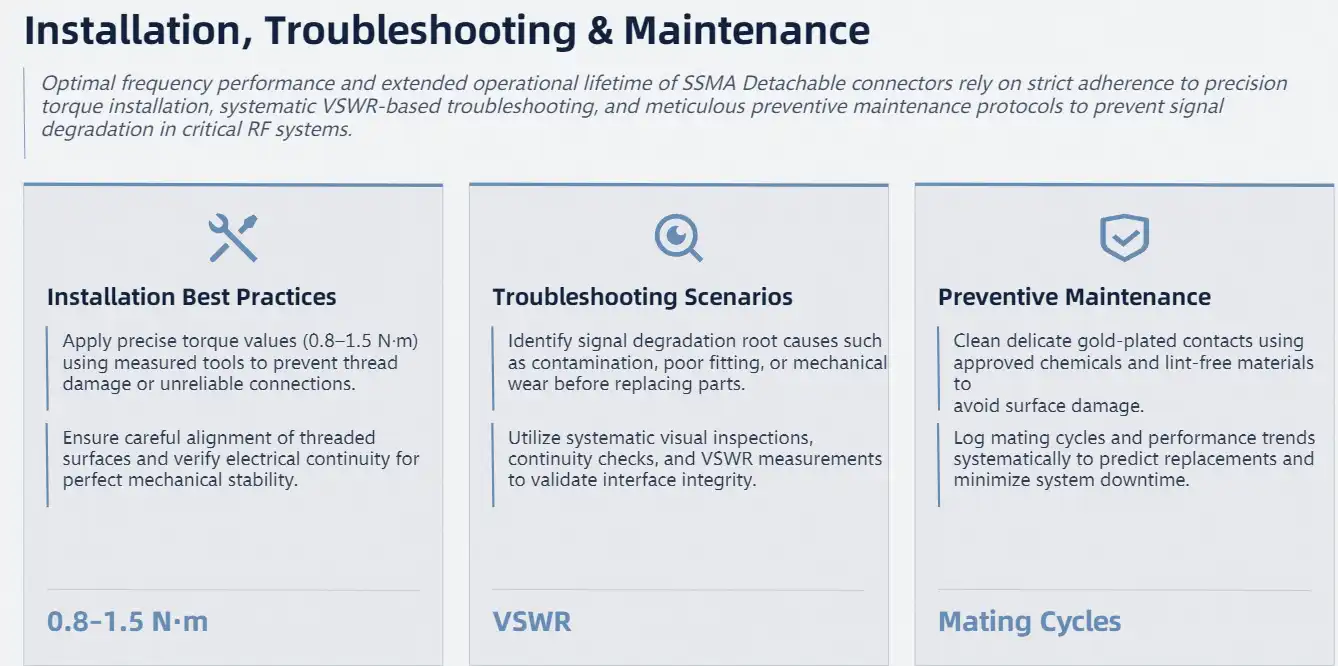
The frequency, performance, and operating lifetime of SSMA Detachable connector systems are directly affected by how well they are installed and maintained. By following standard methods, you can make sure that the electrical properties stay the same and avoid common failure modes that hurt the reliability of the system.
Installation Best Practices and Procedures
To install a connector correctly, you need to pay attention to the mechanical construction details, torque requirements, and cleaning rules. Using the right thread engagement methods keeps things from breaking and makes sure that the electrical contact and mechanical stability are perfect throughout the entire operational lifecycle. Careful alignment of threaded surfaces, application of the right torque values (usually 0.8 to 1.5 N·m), and checking of proper electrical continuity are all parts of the installation process for the SSMA Detachable connector. Using measured torque tools keeps you from over-tightening, which could damage the threads, or under-tightening, which could make the connection less reliable.
Common Troubleshooting Scenarios and Solutions
Problems with signal degradation are often caused by contamination, bad fitting, or mechanical wear that lowers the quality of the electrical contacts. Systematic methods for troubleshooting the SSMA Detachable connector help find the root causes of problems and fix them effectively without having to replace parts that aren't needed. Visual review of connector interfaces, checking for electrical continuity, and validating VSWR measurements are all common ways to find and fix problems. Knowing standard wear patterns and signs of performance degradation helps you plan maintenance ahead of time and avoid system failures that come up out of the blue.
Preventive Maintenance Protocols
Through preventative care and inspection processes, regular maintenance schedules keep the SSMA Detachable connector working well and increase its useful life. Cleaning methods that use the right chemicals and lint-free materials get rid of dirt and dust while keeping delicate gold-plated surfaces from getting damaged. To help with planning ahead for replacements, maintenance records should keep track of connection cycles, performance measurements, and any trends of wear and tear that are seen. This methodical technique cuts down on downtime and makes sure that the system works the same way for long periods of time.
Conclusion
SSMA detachable connectors can handle frequencies from DC to 26.5 GHz, and some versions can even handle frequencies up to 40 GHz. This makes them perfect for high-frequency uses that need to work well with a wide range of frequencies. Their small size, sturdy build, and reliable electrical performance meet important needs in the aircraft, test equipment, industrial automation, and telecommunications industries. These connectors are the best choice for engineers and procurement managers looking for the best mix between performance, reliability, and maintainability in global B2B applications because they are made with precision, use high-quality materials, and are easy to detach.

FAQ
What is the highest frequency that SSMA detachable connections can work at?
Standard SSMA Detachable connector plugs can work with frequencies from DC to 26.5 GHz. High-performance versions can work up to 40 GHz, but this depends on the design needs and the level of accuracy in the manufacturing.
How do SSMA links keep their impedance stable when the frequency goes up?
Precision manufacturing tolerances, controlled dielectric materials like PTFE insulators, and optimized wire geometry keep the 50Ω characteristic impedance constant across the frequency range. This is how SSMA Detachable connector keep their impedance stable.
Can you rely on SSMA detachable connections to work well in harsh industrial settings?
Yes, SSMA Detachable connectors do meet strict military and commercial standards for things like resistance to thermal shock, protection against salt spray, resistance to vibration, and resistance to moisture. This means they will work reliably in a wide range of conditions.
What do most SSMA connections' VSWR requirements look like?
In the 18 GHz operating range, SSMA Detachable connectors usually keep VSWR values ≤1.25, which is great for high-frequency uses that need to keep the signal's integrity and reduce reflection losses.
How many times can SSMA detachable links be mated?
Quality SSMA Detachable connector can be mated up to 500 times and still work as expected electrically. This means they can be used in situations where connections and servicing need to be done often.
Contact Chuangyu for Premium SSMA Detachable Connector Solutions
Chuangyu Electronic Technology delivers industry-leading SSMA Detachable connector solutions engineered for demanding high-frequency applications across telecommunications, aerospace, and test equipment sectors. Our precision-manufactured connectors support frequencies up to 26.5 GHz with specialized variants reaching 40 GHz, backed by comprehensive quality assurance and technical expertise. As a trusted SSMA Detachable connector manufacturer, we offer customized solutions, competitive pricing, and rapid delivery to support your critical project requirements. Contact our engineering team at chuangyuwz01@cymicrowave.com or visit cymicrowave.com to discuss your specific connector needs and discover how our advanced RF solutions can optimize your system performance and operational reliability.
References
1. Institute of Electrical and Electronics Engineers. "RF Connector Performance Standards for High-Frequency Applications." IEEE Microwave Theory and Techniques Society, 2023.
2. Department of Defense. "Military Standard Environmental Test Methods for Electrical Connectors." MIL-STD-202 Specification Guide, 2022.
3. International Electrotechnical Commission. "RF Coaxial Connectors - Part 2: SSMA Series Specification." IEC 61169-2 Standard, 2023.
4. Society of Automotive Engineers. "High-Frequency Connector Design Guidelines for Aerospace Applications." SAE ARP6285 Recommended Practice, 2022.
5. National Institute of Standards and Technology. "Measurement Uncertainty in High-Frequency Connector Characterization." NIST Technical Publication 1570, 2023.
6. International Organization for Standardization. "Quality Management Systems for RF Component Manufacturing." ISO 9001:2015 Implementation Guide for Electronics Industry, 2022.