- English
- French
- German
- Portuguese
- Spanish
- Russian
- Japanese
- Korean
- Arabic
- Greek
- German
- Turkish
- Italian
- Danish
- Romanian
- Indonesian
- Czech
- Afrikaans
- Swedish
- Polish
- Basque
- Catalan
- Esperanto
- Hindi
- Lao
- Albanian
- Amharic
- Armenian
- Azerbaijani
- Belarusian
- Bengali
- Bosnian
- Bulgarian
- Cebuano
- Chichewa
- Corsican
- Croatian
- Dutch
- Estonian
- Filipino
- Finnish
- Frisian
- Galician
- Georgian
- Gujarati
- Haitian
- Hausa
- Hawaiian
- Hebrew
- Hmong
- Hungarian
- Icelandic
- Igbo
- Javanese
- Kannada
- Kazakh
- Khmer
- Kurdish
- Kyrgyz
- Latin
- Latvian
- Lithuanian
- Luxembou..
- Macedonian
- Malagasy
- Malay
- Malayalam
- Maltese
- Maori
- Marathi
- Mongolian
- Burmese
- Nepali
- Norwegian
- Pashto
- Persian
- Punjabi
- Serbian
- Sesotho
- Sinhala
- Slovak
- Slovenian
- Somali
- Samoan
- Scots Gaelic
- Shona
- Sindhi
- Sundanese
- Swahili
- Tajik
- Tamil
- Telugu
- Thai
- Ukrainian
- Urdu
- Uzbek
- Vietnamese
- Welsh
- Xhosa
- Yiddish
- Yoruba
- Zulu
Interface incompatibilities are one of the most typical constraints that engineers confront while working with mixed RF systems. This issue is resolved with an SMA male-to-GPPO female adapter. It connects the normal SMA microwave interface to the ultra-compact GPPO (SSMP) millimeter-wave interface, providing a smooth transfer of signal across two families of connectors that otherwise cannot be connected. This adapter is a must-have for any precision RF process, enabling dependable, low-loss signal conversion from DC to 18 GHz, whether you are integrating 5G test equipment, verifying RF chip performance, or extending a lab measurement platform.
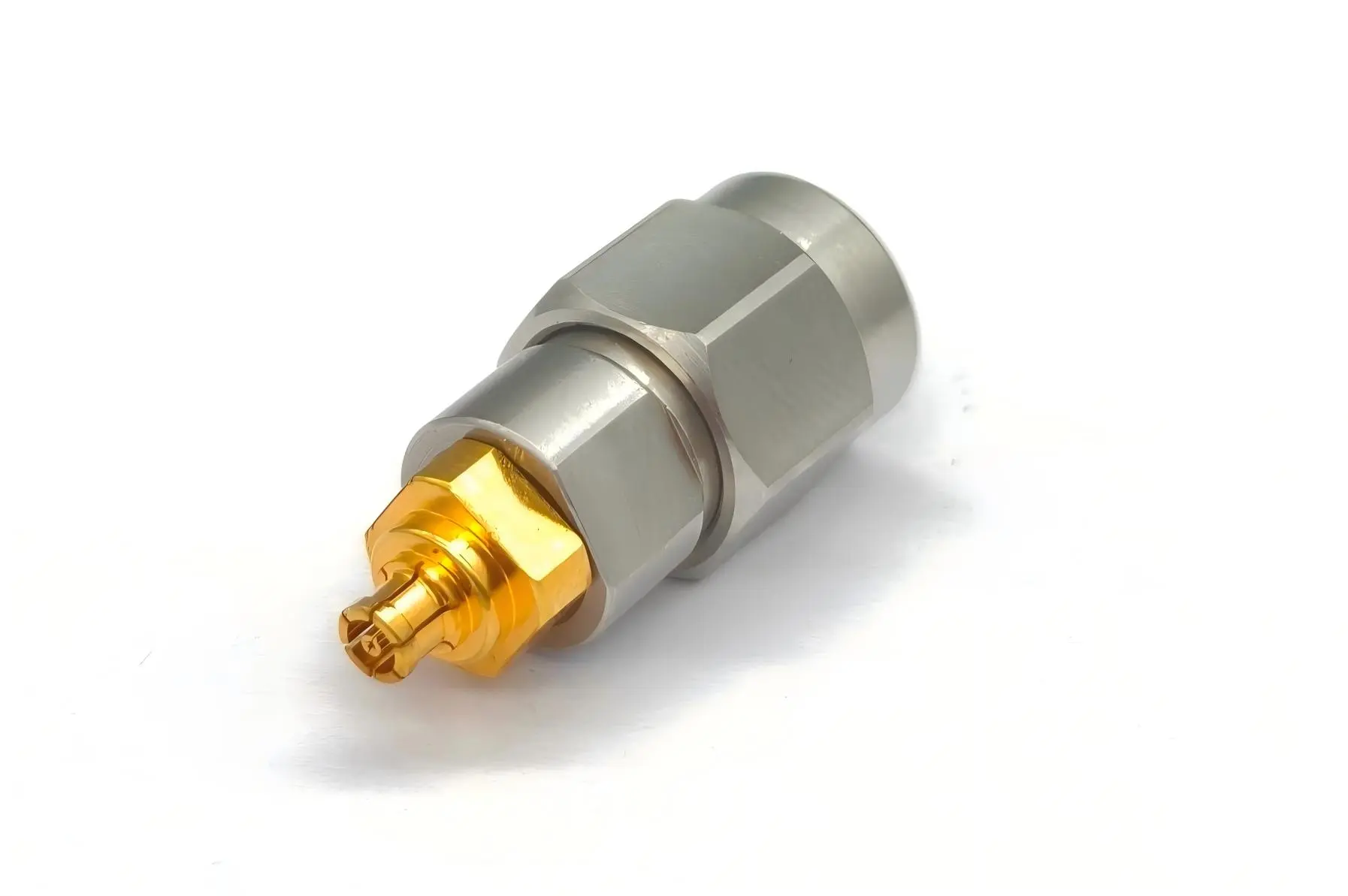
Understanding the SMA Male to GPPO Female Adapter
Cross-Series Design and Material Architecture
The SMA male-to-GPPO female converter is a cross-series RF transition component. One end has an SMA male connection with exposed center pins, a widely established microwave standard, while the other end has a GPPO (also known as SSMP) female push-in socket, an ultra-miniature millimeter-wave interface for high-density board interconnects.
Material selection has a direct effect on performance. The exterior conductor is stainless steel passivated for corrosion resistance in harsh situations. The inner conductor is gold-plated beryllium copper, which ensures low contact resistance and maintains signal integrity at high frequencies. The dielectric material used is polytetrafluoroethylene (PTFE), which has a steady dielectric constant and a low loss tangent to maintain the 50Ω impedance matching across the whole working range.
Key Technical Specifications
The operating frequency is DC to 18 GHz, including microwave and lower millimeter-wave bands. The voltage standing wave ratio (VSWR) is maintained at or below 1.25, a typical value for minimal reflected power and clean signal transmission. Tighten the SMA end to a precise 0.5 to 0.8 Nm using a calibrated torque wrench to prevent under-torquing and over-torquing. The GPPO end is a push-in connection with a radial tolerance of ±0.25 mm and an axial tolerance of +0.25 mm. The connector has a minimum plug-and-pull lifetime of 500 mating cycles, making it excellent for use on test benches where frequent use is desired.
Why Choose an SMA Male to GPPO Female Adapter?
RF system integration routinely demands connecting equipment built to different connector standards. An SMA male to GPPO female adapter eliminates the need for custom cable rework or signal chain redesign, saving both time and engineering cost.
Here are the core advantages this adapter delivers in real-world deployments:
- Microwave and millimeter-wave testing: In 5G base station validation, radar system characterization, and microwave communication testing, the adapter interfaces vector network analyzers and spectrum analyzers with GPPO-equipped devices. It ensures accurate signal relaying without introducing measurement artifacts.
- Semiconductor RF development: When testing RF chips and microwave components, engineers frequently encounter mismatches between test fixtures and the device under test. This adapter resolves those compatibility gaps, accelerating RF performance verification cycles.
- Communication system integration: 5G base stations and satellite communication terminals often combine modules with different connector footprints. The SMA-to-GPPO transition enables modular RF interconnects, extending system scalability without hardware redesign.
- Test platform expansion: Laboratory measurement setups routinely need to accommodate new devices across varying frequency bands. This adapter enriches platform flexibility without requiring full fixture replacement.
These advantages translate directly to reduced downtime, lower rework costs, and more reliable test data—outcomes that procurement managers and technical directors consistently prioritize.

Comparing the SMA Male to GPPO Female Adapter with Alternative Adapters
Not all RF adaptors are suited for every occasion. Buyers should prevent expensive procurement errors by understanding how the SMA-to-GPPO transition stacks up against other options.
The SMA male to GPPO female adapter has the SMA interface but ends in a larger GP (GPPO push-on) housing. It is good for lower density assemblies but does not have the miniaturization benefit that the GPPO (SSMP) female connector gives in space-restricted PCB situations. The RP-SMA female variation reverses the orientation of the center pin and is ubiquitous in consumer Wi-Fi equipment; however, it is not compatible with typical RF test instruments; hence, it is not appropriate for precision measurement applications. The N-male adapter can operate at greater power levels and frequencies up to 18 GHz, but has a bigger form factor, which makes it impracticable for tiny millimeter-wave modules.
The SMA male to GPPO female adapter has a special place in that it combines the worldwide acceptance of the SMA interface with the push-in simplicity and tiny footprint of the SSMP connector family. Its stainless steel and gold-plated design can outlast lower-grade zinc alloy equivalents in situations with heat cycling or humidity exposure, lowering the frequency of replacement and overall maintenance overhead from a lifetime cost standpoint.
How to Select and Connect Your SMA Male to GPPO Female Adapter
Selection Criteria
Before purchasing, confirm that your system operates within DC to 18 GHz. Verify 50Ω impedance compatibility on both the SMA transmitting and GPPO receiving sides. Check that the GPPO socket on your PCB or module accommodates the push-in tolerance specification (radial ±0.25 mm, axial +0.25 mm). Environmental requirements such as temperature range and humidity exposure should also guide material grade selection.
Installation and Usage Specifications
The pre-use inspection is compulsory. Ensure that the outside conductor is not deformed. Make sure the gold plate is not flaking. Inspect the SMA pin and GPPO socket for oxidation and mechanical damage. If any trouble is encountered, replace the adapter at once.
SMA end to 0.5-0.8 Nm using a calibrated torque wrench during installation. Insert the GPPO end upright and straight. Do not enter at an angle; it will damage the socket. Make sure the radial and axial alignment is correct before you apply force. Ensure that the test signal is exactly in the working window of DC-18 GHz and execute the high-frequency measurements in a protected container to avoid electromagnetic interference.
Maintenance should consist of cleaning the interface using RF-grade swabs, moistened with anhydrous alcohol. Store adapters in a dry container sealed at -10 to 40 degrees Celsius, relative humidity less than 60% RH. Please stop the test immediately, examine the connection, and resume the test if the VSWR is unusually high or the signal attenuation is abnormal.
Trusted Brands and Where to Buy Your SMA Male to GPPO Female Adapter
The North American market has a number of known brands that provide SMA to SSMP interface adapters. Amphenol RF provides a broad range of precision adapters with consistent dimensional tolerances. Pasternack provides an extensive in-stock inventory of SMA and GPPO transition goods with speedy domestic dispatch. Times Microwave and TE Connectivity are famous for the high-reliability parts used in aerospace and military-grade assemblies. CommScope produces RF interconnects for the telecom infrastructure sector.
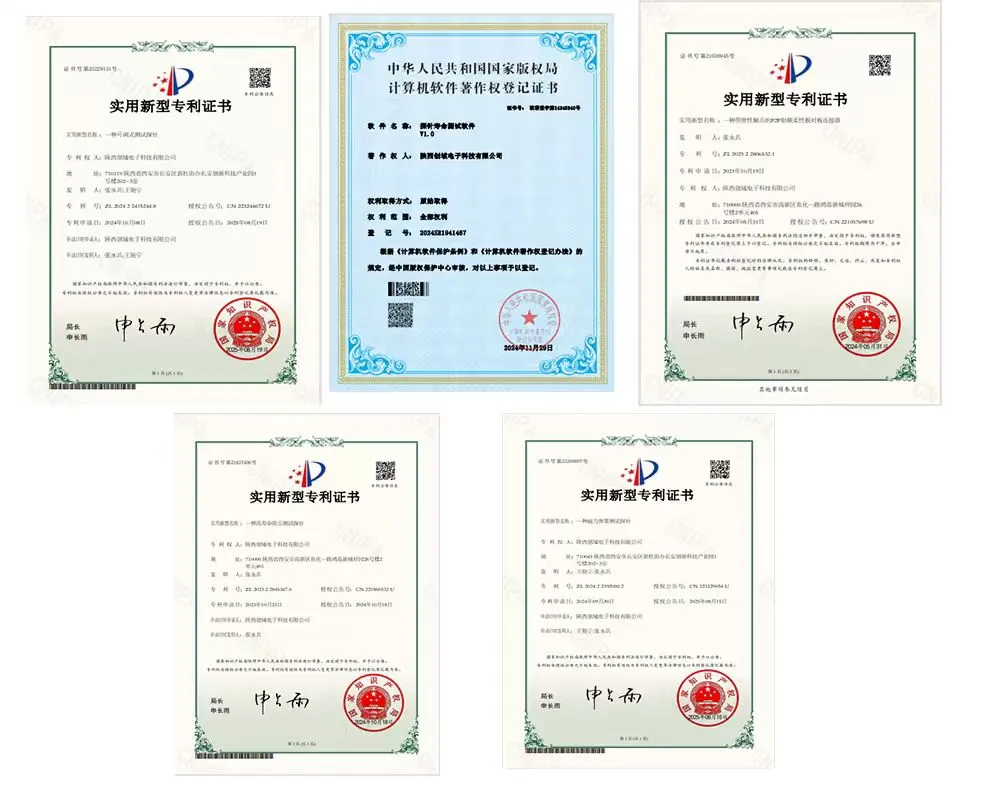
In addition to these names, Chuangyu (cymicrowave.com) has established a strong niche as a precision RF component maker and SMA male to GPPO female adapter supplier for demanding industries such as 5G communications, semiconductor testing, photovoltaics, medical devices, and industrial automation. Chuangyu has around 20 years of manufacturing experience and a manufacturing capability of more than 500,000 RF components each year. Proven quality, robust process control, and conformity with international standards.
When sourcing, search for suppliers that offer VSWR test data, detailed drawings, and unambiguous longevity values. If you buy in bulk, ask for the traceability documentation for the lot and confirm that the warranty terms include both mechanical and electrical performance.
Conclusion
The SMA male to GPPO female adapter solves a very real and very expensive issue in RF system integration: connection mismatch between SMA-standard instruments and GPPO-equipped devices. The gold-plated beryllium copper center conductor, PTFE dielectric, and stainless steel enclosure combine to provide low-loss, high-reliability performance from DC to 18 GHz. Whether you are testing 5G infrastructure, characterizing radar, validating semiconductor RF, or expanding laboratory platforms, this adapter consistently lowers integration friction and enhances measurement fidelity. Choosing the correct adapter from a reliable vendor can extend the life of your signal quality as well as your procurement budget.
FAQ
1. What is the difference between SMA and GPPO connectors?
SMA (SubMiniature version A) is a threaded coaxial connector widely used in microwave systems up to 18 GHz. GPPO, also called SSMP, is an ultra-miniature push-in connector designed for high-density millimeter-wave applications. The SMA male-to-GPPO female adapter connects these two distinct interface families without modifying existing hardware.
2. What frequency range does this adapter support?
The adapter operates from DC to 18 GHz, covering both microwave and lower millimeter-wave bands. This range supports 5G sub-6 GHz and mmWave testing, satellite communication validation, and standard laboratory instrument interfacing.
3. How do I verify mechanical fitment before purchasing?
Confirm that the target PCB or module uses a GPPO (SSMP) female receptacle compatible with the push-in tolerance spec: radial ±0.25 mm and axial +0.25 mm. On the SMA side, verify that the mating port accepts a standard SMA male connector and supports the 0.5–0.8 Nm torque specification.
4. Can this adapter be reused frequently?
Yes. The rated plug-and-pull lifecycle is at least 500 mating cycles, making it suitable for repetitive test bench use common in semiconductor and RF measurement environments.
Partner with Chuangyu for Your RF Connectivity Needs
Chuangyu manufactures precision SMA male to GPPO female adapters built to DC–18 GHz performance standards, with gold-plated beryllium copper conductors and VSWR ≤ 1.25. As a trusted SMA male to GPPO female adapter manufacturer with nearly two decades of RF component expertise, we support OEM clients, R&D labs, and system integrators across the U.S. market. Contact our technical team directly at chuangyuwz01@cymicrowave.com to request specifications, samples, or bulk pricing.
References
1. Pozar, D. M. Microwave Engineering, 4th ed. Wiley, 2011.
2. Straw, R. D. (Ed.). The ARRL Handbook for Radio Communications. American Radio Relay League, 2020.
3. IEEE Standard 287-2007. IEEE Standard for Precision Coaxial Connectors (DC to 110 GHz). IEEE, 2007.
4. Lacombe, J. "RF Connector Selection for High-Frequency Applications." Microwave Journal, 2019.
5. Daneshrad, B., & Stuber, G. L. "Millimeter-Wave Interface Standards and Test Methodologies for 5G NR." IEEE Transactions on Microwave Theory and Techniques, 2021.
6. Browne, J. "Connector Choices for mmWave 5G Test Systems." Microwaves & RF, 2022.