- English
- French
- German
- Portuguese
- Spanish
- Russian
- Japanese
- Korean
- Arabic
- Greek
- German
- Turkish
- Italian
- Danish
- Romanian
- Indonesian
- Czech
- Afrikaans
- Swedish
- Polish
- Basque
- Catalan
- Esperanto
- Hindi
- Lao
- Albanian
- Amharic
- Armenian
- Azerbaijani
- Belarusian
- Bengali
- Bosnian
- Bulgarian
- Cebuano
- Chichewa
- Corsican
- Croatian
- Dutch
- Estonian
- Filipino
- Finnish
- Frisian
- Galician
- Georgian
- Gujarati
- Haitian
- Hausa
- Hawaiian
- Hebrew
- Hmong
- Hungarian
- Icelandic
- Igbo
- Javanese
- Kannada
- Kazakh
- Khmer
- Kurdish
- Kyrgyz
- Latin
- Latvian
- Lithuanian
- Luxembou..
- Macedonian
- Malagasy
- Malay
- Malayalam
- Maltese
- Maori
- Marathi
- Mongolian
- Burmese
- Nepali
- Norwegian
- Pashto
- Persian
- Punjabi
- Serbian
- Sesotho
- Sinhala
- Slovak
- Slovenian
- Somali
- Samoan
- Scots Gaelic
- Shona
- Sindhi
- Sundanese
- Swahili
- Tajik
- Tamil
- Telugu
- Thai
- Ukrainian
- Urdu
- Uzbek
- Vietnamese
- Welsh
- Xhosa
- Yiddish
- Yoruba
- Zulu
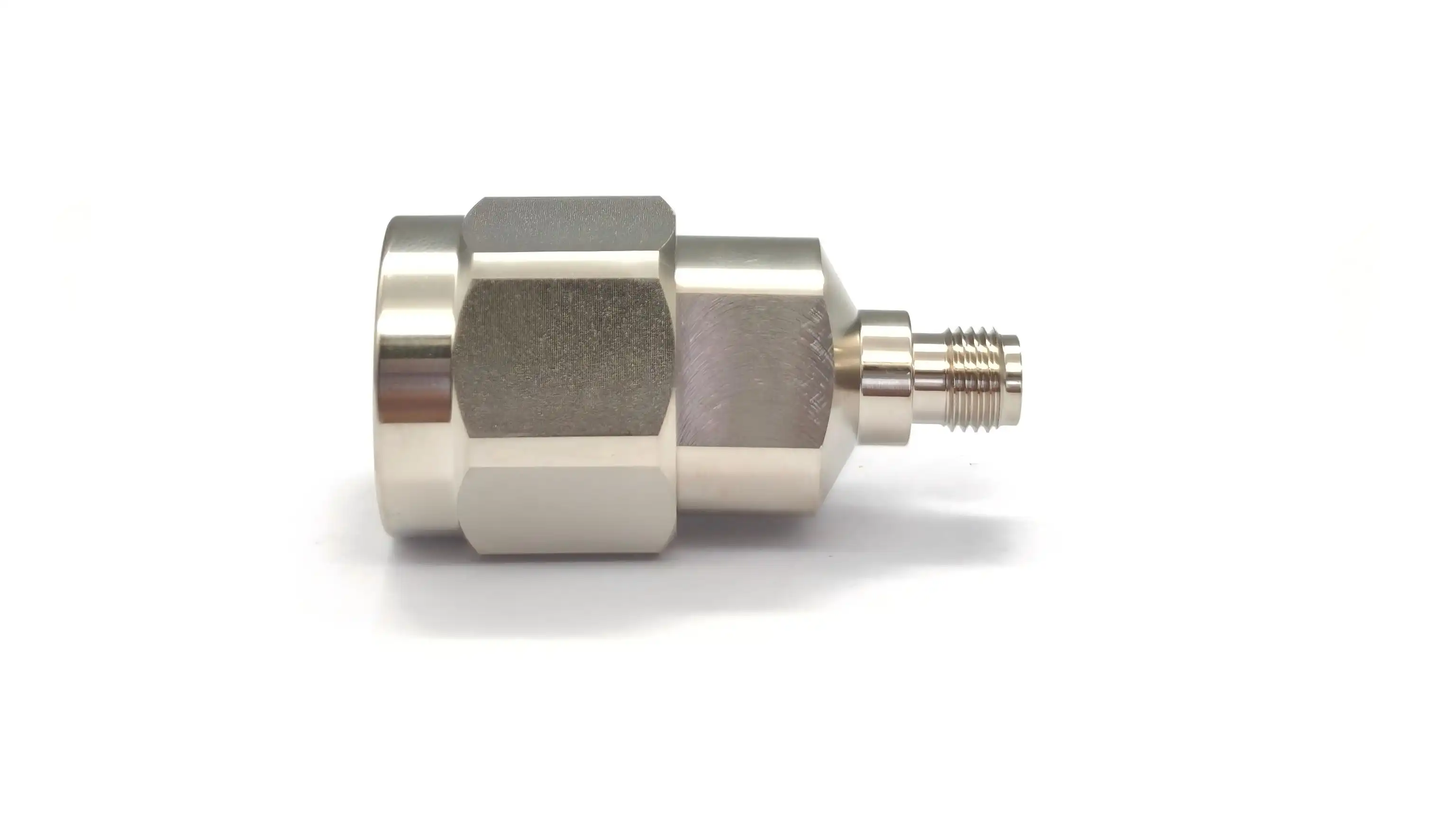
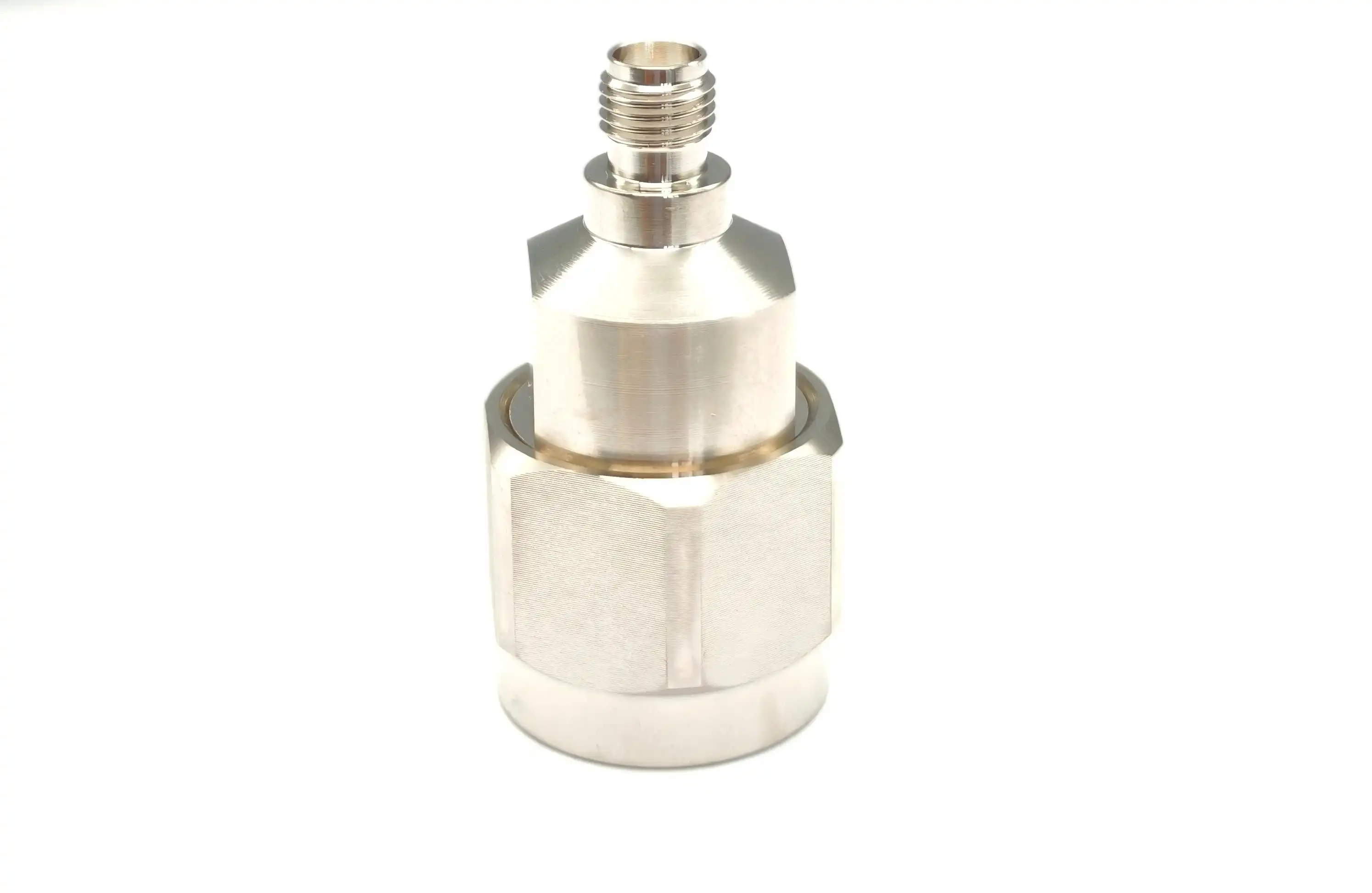
When designing high-frequency RF signal chains, we often encounter systems where a device equipped with an SMA male output port must connect to cable assemblies or equipment featuring N-type female interfaces. The SMA female-to-N male adapter solves this connector mismatch by providing seamless inter-series connectivity, preserving signal integrity from DC to 18 GHz while maintaining a consistent 50-ohm impedance path. This precision-engineered component prevents costly signal reflections and insertion losses that typically degrade system performance, ensuring that your network analyzers, power amplifiers, and test fixtures communicate without compromise.
Why Choose an SMA Female to N Male Adapter in RF Systems?
Solving Interface Mismatch Challenges
When upgrading old systems or combining equipment from different manufacturers, RF engineers often run into connectivity problems. Cellular base stations and radar sites often use high-power N-type infrastructure that needs to connect to small SMA-equipped test tools, filters, or low-noise amplifiers. Without the right adapter solutions, teams would have to either replace whole cable assemblies or re-terminate connectors, which takes a lot of time and money and adds more places where things could go wrong.
The SMA female to N male adapter gets rid of these problems by connecting two different types of connectors in a straight and safe way. This method lets you keep the infrastructure you already have and makes it easy to add new equipment. The adapter is strong enough to keep working even when the temperature changes, it's put under a lot of mechanical stress, or it's left outside for a long time.
Application Versatility Across Industries
A lot of these adapters are used in telecommunications infrastructure to connect N-type outdoor lightning arrestors and high-gain antennas to 5G wireless hubs and spread antenna systems that are based on SMA. In base station installations, the adapter lets signals be sent back and forth between high-power RF modules with N-type interfaces, like power amplifiers, and small SMA test instruments that are used to check the system and keep an eye on its performance.
When used in a lab or testing setting, these extensions are very helpful. Because they are small and work well at high frequencies, SMA ports are often found in network analyzers, signal generators, and spectrum analyzers. When developing devices with N-type connections, like filters, diplexers, or amplifier modules, the adapter is the key link that makes sure measurements are accurate. This interface is used by research teams working from DC to millimeter-wave frequency bands to make sure that signals from different connector standards work together.
The highest levels of dependability are needed for defense and aerospace uses. These adapters are used in radar systems to connect N-type transmit modules to signal processing units with SMA connections. This makes sure that there is low-loss transmission in electromagnetic settings that are complicated and where every tenth of a decibel counts. Electronic warfare gear uses them to connect interference sources to receiver gear with different types of connectors while keeping the signal's purity in high-temperature and high-vibration situations.
More and more, industrial automation systems include wireless monitoring features. The adapter makes it easier to connect high-power wireless transmission equipment with N-type interfaces to sensor nodes with SMA interfaces. This lets you collect data over long distances in factories, mines, and other dangerous industrial settings where cable runs need to keep signal loss to a minimum.
Power Handling Considerations
Knowing the limits of the power keeps tools from breaking and makes sure the system works well. The N-type connection can handle a lot of power—usually 50W or more at 2 GHz—while SMA plugs can only handle a small amount of power. The adapter can only handle the SMA end specification's maximum power, which is usually around 10W at 2 GHz. The people in charge of buying things and designing them have to make sure that the power factors meet the needs of the application. This way, the adapter can work safely within its electrical and thermal limits for as long as it's used.
Comparing SMA Female to N Male Adapters with Other Adapter Options
Structural Differences That Matter
When looking at different adapter configurations, knowing about the differences in structure helps find the best solution. An SMA male-to-female adapter changes the gender configuration, which gives you the opposite style of connection. Both keep the 50-ohm impedance and frequency response the same, so which one you choose relies on the port types on your other tools.
Adapters from N-type male to SMA female are useful when N-type male wires or parts need to link to instruments with SMA female ports. In situations where outdoor antenna systems are receiving indoor SMA-equipped receivers, this setup is often used. When it comes to mechanics, the reverse gender pattern is important. N-male threads are better at resisting vibration than SMA threads, which makes this configuration better for mobile or high-vibration applications.
Frequency Response and Application Suitability
BNC adapters are a different type of connector that is sometimes mixed up with SMA and N-type options. Because BNC connections use a bayonet coupling method instead of threaded engagement, they can only work with frequencies up to 4 GHz. The BNC connector is easy to use, but the threaded interface of the SMA female to N male adapter provides better electrical performance up to 18 GHz. This makes it the best choice for current RF systems that work in cellular, Wi-Fi 6E, and satellite transmission bands.
Because they are bigger, have stronger threads, and can seal better against the weather, Type-N connectors are great for outdoor and high-power uses. There are benefits to using SMA connectors in places with limited room and in the lab, where their small size lets test tools have more ports. The SMA female to N male adapter effectively combines these strengths, letting engineers use rugged N-type cabling where durability is important while still being able to use precise SMA instruments where accuracy in measurements is very important.
How to Select and Procure the Right SMA Female to N Male Adapter
Critical Selection Criteria
The most important decision factor is frequency matching. Make sure that the adapter's rated frequency range covers the frequency range that your application needs. Standard adapters work reliably from DC to 18 GHz, making them good for most Wi-Fi, cellular, and general RF uses. Specialized millimeter-wave models work at higher frequencies, but they are more expensive and not always available.
Impedance matching verification stops system performance problems that cost a lot of money. Make sure that the adapter's characteristic resistance stays at 50 ohms as it switches between connection types. Manufacturers of good products list the VSWR performance; numbers below 1.3 mean good matching that keeps signal echoes to a minimum. Higher VSWR numbers show breaks in the potential resistance, which makes measurements less accurate and the system less efficient.
An environmental longevity review makes sure that something will work for a long time. Adapters with the right environmental ratings are needed for defense systems, industrial settings, and outdoor deployments. If the installation will be near water or the coast, look for details about the temperature range it can work in, how well it handles humidity, and how well it works with salt spray. Stainless steel with gold plating is more resistant to rust than brass with nickel plating, but it costs more.
Procurement Best Practices and Supplier Considerations
When buying modules for mass production or important systems, the seller you choose has a big effect on how well the project turns out. Well-known companies like Amphenol, Pasternack, and TE Connectivity offer thorough technical documents and strict quality control. Their goods usually come with warranties and helpful customer service that comes in handy when there are problems integrating systems.
Buying in bulk can save you money and make sure that you can get the parts you need. Production delays can be avoided by building relationships with suppliers who keep stock on hand. Ask for certificates of conformance that list the electrical performance parameters and materials that meet the staffemale-to-Ns paperwork is necessary for groups that need to be able to track their progress or show that they are following the rules.
Verifying authenticity keeps you safe from fake parts that could make your system less reliable. When you can, buy straight from approved manufacturers or distributors. Fake RF components might look the same on the outside, but they're made with low-quality materials that break down quickly or don't work well electrically. Reliable sellers label their goods with serial numbers so that customers can check their trustworthiness if they need to.
Installation and Usage Best Practices for SMA Female to N Male Adapters
Proper Handling and Connection Procedures
Correct fitting has a direct effect on how long an adapter lasts and how accurate the measurements are. First, check both connector interfaces for damage or contamination. It's possible for even small particles stuck in the joining interface to cause impedance discontinuities or damage contact surfaces that are already fragile. To get rid of loose dirt and dust, use compressed air. For tough dirt and grime, use lint-free brushes that have been wet with rubbing alcohol.
When connecting the N male end, make sure the threads are lined up correctly before adding rotating force. Cross-threading is easy to do with fine-pitch RF connectors, and it damages the threads, so the connector needs to be replaced. Tighten by hand until there is more resistance, then use a calibrated torque wrench set to 0.8 to 1.2 N·m to get the torque that the manufacturer says you should have. Too much torque can damage connector bodies and insulators, while too little torque lets vibrations cause them to loosen.
When mating, the SMA female side needs the same amount of care. The inner conductor of the elastic socket can only handle a certain number of joining rounds before the spring tension breaks down. Carefully line up the male pin with the axis of the socket so that the contact surfaces don't bend or get scored. Tighten the SMA connection by hand using the knurled surface of the outer conductor and firm pressure without using too much force. Most SMA connections don't need torque wrenches—finger-tight plus a quarter turn is usually enough to get them to work.
Maintenance and Inspection Schedules
Regular checking keeps performance from dropping and avoids breakdowns that come out of the blue. Set up a regular inspection schedule based on how important your application is. For example, outdoor installations should be checked every month, while protected lab environments may only need to be checked every three months. Check for physical damage like cracks in the connector bodies, rust on the metal surfaces, or signs of water getting in and weakening the insulation.
Electrical performance testing makes sure that signals stay intact. Every so often, use a vector network monitor to check the insertion loss and return loss. Gradual performance degradation means that problems are starting to show up, like higher contact resistance or insulation wearing down. By comparing data to the original installation's baseline values, you can find trends that need to be fixed before they become a complete failure.
In some situations, environmental factors speed up wear. Changing temperatures cause things to expand and contract, which makes threaded links loosen over time. In places with a lot of shaking, thread-locking solutions or extra mechanical support may be needed to keep the threads from coming loose. Corrosive environments, like chemical plants or marine installations, should be inspected more often and have compounds on the outside that stop corrosion.
Troubleshooting Common Issues
Connector troubles are often the cause of poor signal strength. When VSWR measurements are high, it usually means that the impedances don't match up. This can be caused by damaged connectors, dirty interfaces, or bad mating. Take the adapter apart and look it over. If necessary, clean or replace any parts that need it. Connections that come and go can mean that the threads are loose or the contact surfaces are worn. Make sure that the right amount of force is being applied and look at the contacts for wear.
Burned wires or melted connection bodies are signs of problems with power handling. These terrible failures happen when power values are exceeded or when contact resistance is low, which causes heating to cluster at the interface. Figure out how much power your system actually needs, making sure that it stays well below the adapter's stated capacity. If it's not possible to handle much power, you might want to switch to a bigger connector family with higher values instead of working at the temperature limit.
Conclusion
The SMA female to N male adapter is an important tool for RF engineers who have to work with systems that use more than one standard. Its carefully thought-out design keeps the signal strong in a wide range of settings, from 5G base stations to satellite ground stations and from test benches in the lab to defense radar systems. If procurement managers and design engineers know how the adapter is put together, how it works, and the right way to install it, they can make decisions that improve both system performance and project costs. The mix of rugged N-type connectivity and small SMA interfacing gives modern RF systems the flexibility they need, ensuring reliable operation across frequencies from DC to 18 GHz while also being able to work with equipment from different manufacturers and technology generations.
FAQ
1. What frequency range do SMA female-to-N male adapters support?
Standard adapters work reliably from DC to 18 GHz, which means they can be used for cellphone bands, Wi-Fi, GPS, and other RF tasks. Most business and industrial needs can be met by this frequency range. However, versions made specifically for millimeter-wave applications can work at higher frequency bands. These high-end products are more expensive and may need to be ordered through specialized suppliers.
2. Can these adapters withstand outdoor and harsh industrial environments?
High-quality adapters with bodies made of stainless steel and connections that are gold-plated are very resistant to weather damage. They can handle the high and low temperatures, humidity, and moderate corrosion that are common in outdoor phone installations. Make sure that the outdoor ratings, such as the working temperature range and IP ingress protection ratings, meet the needs of your application. For longer service life in harsh environments, marine or chemical plant installations may benefit from extra safety measures like heat-shrink boots or conformal coatings.
3. How do I ensure compatibility with existing RF components?
To make sure something is compatible, you need to check three things: the frequency range, the resistance, and the gender of the connection. Make sure that your equipment has the right types of connectors that fit together, in this case, an SMA male port and an N female port. Make sure that all of the system's parts keep their 50-ohm characteristic impedance. Mixing impedances causes reflections that hurt performance. Lastly, make sure that the frequency number of the adapter matches or exceeds your highest working frequency by a sufficient amount to ensure the best VSWR performance.

Partner with Chuangyu for Premium RF Interconnect Solutions
Finding RF adapter manufacturers you can trust shouldn't mean sacrificing quality or expert help. Chuangyu is an expert in making high-quality RF connectors and cable assemblies that meet international standards and give you the freedom to make changes that your specific applications need. Our factory has strict quality control measures in place to make sure that every adapter meets certain electrical and mechanical standards before it is sent out.
We are a well-known company that sells SMA female to N male adapters. We work with telecommunications companies, defense contractors, medical device makers, and industrial automation firms all over the world. Our engineering team provides full technical advice to help you make difficult choices about which connectors to use and how to meet specific design needs. Email us at chuangyuwz01@cymicrowave.com to talk about the details of your project, get detailed datasheets, or get pricing for large orders for your next buying cycle.
References
1. Pozar, David M. Microwave Engineering, 4th Edition. Wiley, 2011.
2. Maury, Michel. "The Effects of Connector Quality on Vector Network Analyzer Measurements." Microwave Journal, vol. 56, no. 4, 2013, pp. 88-102.
3. Agilent Technologies. "Understanding and Improving Network Analyzer Measurement Accuracy." Application Note 1287-11, 2005.
4. Amphenol RF Division. "RF Connector Overview and Selection Guide." Technical Bulletin RF-TB-2019-03, 2019.
5. Institute of Electrical and Electronics Engineers. "IEEE Standard for Precision Coaxial Connectors at RF, Microwave, and Millimeter-wave Frequencies." IEEE Std 287-2007, 2007.
6. Johnson, Howard W., and Martin Graham. High-Speed Signal Propagation: Advanced Black Magic. Prentice Hall, 2003.