- English
- French
- German
- Portuguese
- Spanish
- Russian
- Japanese
- Korean
- Arabic
- Greek
- German
- Turkish
- Italian
- Danish
- Romanian
- Indonesian
- Czech
- Afrikaans
- Swedish
- Polish
- Basque
- Catalan
- Esperanto
- Hindi
- Lao
- Albanian
- Amharic
- Armenian
- Azerbaijani
- Belarusian
- Bengali
- Bosnian
- Bulgarian
- Cebuano
- Chichewa
- Corsican
- Croatian
- Dutch
- Estonian
- Filipino
- Finnish
- Frisian
- Galician
- Georgian
- Gujarati
- Haitian
- Hausa
- Hawaiian
- Hebrew
- Hmong
- Hungarian
- Icelandic
- Igbo
- Javanese
- Kannada
- Kazakh
- Khmer
- Kurdish
- Kyrgyz
- Latin
- Latvian
- Lithuanian
- Luxembou..
- Macedonian
- Malagasy
- Malay
- Malayalam
- Maltese
- Maori
- Marathi
- Mongolian
- Burmese
- Nepali
- Norwegian
- Pashto
- Persian
- Punjabi
- Serbian
- Sesotho
- Sinhala
- Slovak
- Slovenian
- Somali
- Samoan
- Scots Gaelic
- Shona
- Sindhi
- Sundanese
- Swahili
- Tajik
- Tamil
- Telugu
- Thai
- Ukrainian
- Urdu
- Uzbek
- Vietnamese
- Welsh
- Xhosa
- Yiddish
- Yoruba
- Zulu
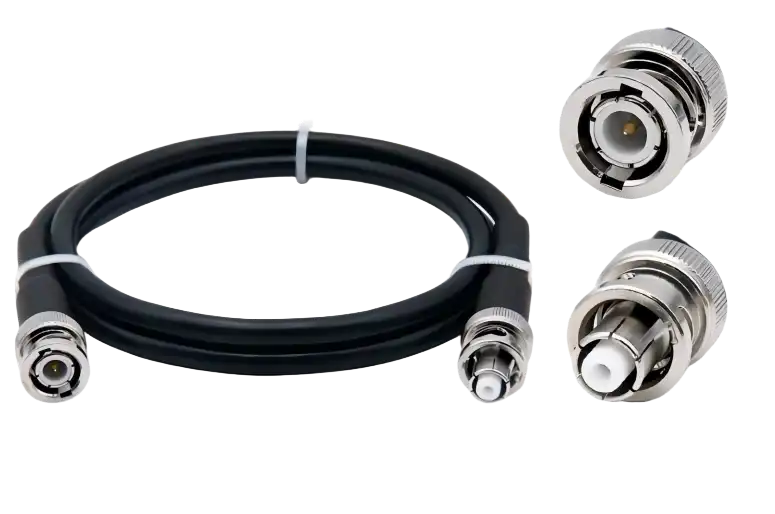
When searching for reliable OEM high voltage coaxial connector solutions, procurement professionals face a critical decision that impacts system safety, performance, and compliance. High voltage coaxial connectors serve as the backbone of RF transmission in demanding applications where voltage thresholds exceed standard connector capabilities. Whether you're sourcing components for semiconductor testing equipment, medical imaging devices, or industrial automation systems, identifying trusted manufacturers who deliver precision-engineered connectors with proven dielectric strength and consistent impedance matching becomes paramount. This guide navigates the procurement landscape, helping you source authentic OEM connector solutions that meet strict technical specifications while ensuring competitive pricing and reliable delivery timelines.
Introduction
High voltage coaxial connections are important parts for demanding OEM and industrial uses that need solid electrical performance even when things get tough. Unlike regular RF connections that are made for lower voltage settings, these special parts can handle higher voltage levels while keeping the signal integrity over a wide frequency range. People who work in procurement in the aerospace, medical device, semiconductor testing, and photovoltaic manufacturing industries depend on these connectors to make sure that operations are safe, that regulations are followed, and that products last longer.
Not only is it hard to find providers, but it's also hard to find partners who understand the complex needs of high-voltage uses. When engineers look at different connector options, they have to weigh the cost, time, voltage, frequency response, dielectric strength, and environmental resistance against the project's budget and schedule. This complete guide gives procurement teams useful information about connector technologies, how to choose manufacturers, how to buy things, and trusted maker descriptions. Our main goal is to give your team the tools they need to make smart buying choices that will improve system stability and make the supply chain work more efficiently.
How to Choose the Right OEM High Voltage Coaxial Connector Solution
Technical Specifications Matching Your Application Requirements
Aligning the specifications correctly is the first step in choosing the best high voltage coaxial connector. The voltage and frequency requirements must match or exceed the operational limits of your system, and safety margins must be put into the selection process. Cable compatibility makes sure that the connections between connectors and transmission lines stay mechanically and electrically sound. When it comes to speed, resistance to vibration, and accuracy, thread coupling systems, bayonet locks, and push-on designs are all very different. Impedance matching, which is usually 50© or 75©, keeps the signal strong throughout the transmission line. Whether commercial, industrial, or military-grade connectors are right for your application depends on things like temperature range, resistance to humidity, and chemical exposure.
Comparing High Voltage Solutions Against Standard Connector Alternatives
Whether to use high voltage coaxial connectors or standard RF connectors depends on the safety requirements and voltage thresholds. Standard connections work fine for low-voltage RF tasks, but they pose a big risk when the voltage goes over the design limits. In places with high power, problems like dielectric breakdown, corona discharge, and thermal runaway become real issues. Even though high voltage connections cost more per unit, specialized solutions are better in terms of total cost of ownership when you look at things like system stability, lower failure rates, and following safety rules. High voltage-rated parts are especially needed in situations where people are involved or where explosives are present.
Evaluating Supplier Quality Assurance and Delivery Capabilities
Quality control includes more than just part specifications. It also includes manufacturing methods, testing routines, and making sure that certifications are followed. OEM manufacturers with a good reputation use ISO 9001 quality management systems and often have certifications specific to their industry, like ISO 13485 for medical devices or AS9100 for aerospace uses. It is important for procurement teams to make sure that all of their suppliers test their products electrically for important factors like VSWR, insertion loss, and dielectric withstand voltage. Clear lead times and flexible pricing structures make it possible to plan production well. Suppliers who give engineering help, custom design services, and prototype development are more valuable than those that just provide basic parts.
Trusted OEM High Voltage Coaxial Connector Manufacturers and Suppliers
Global Leaders in High Voltage Connector Technology
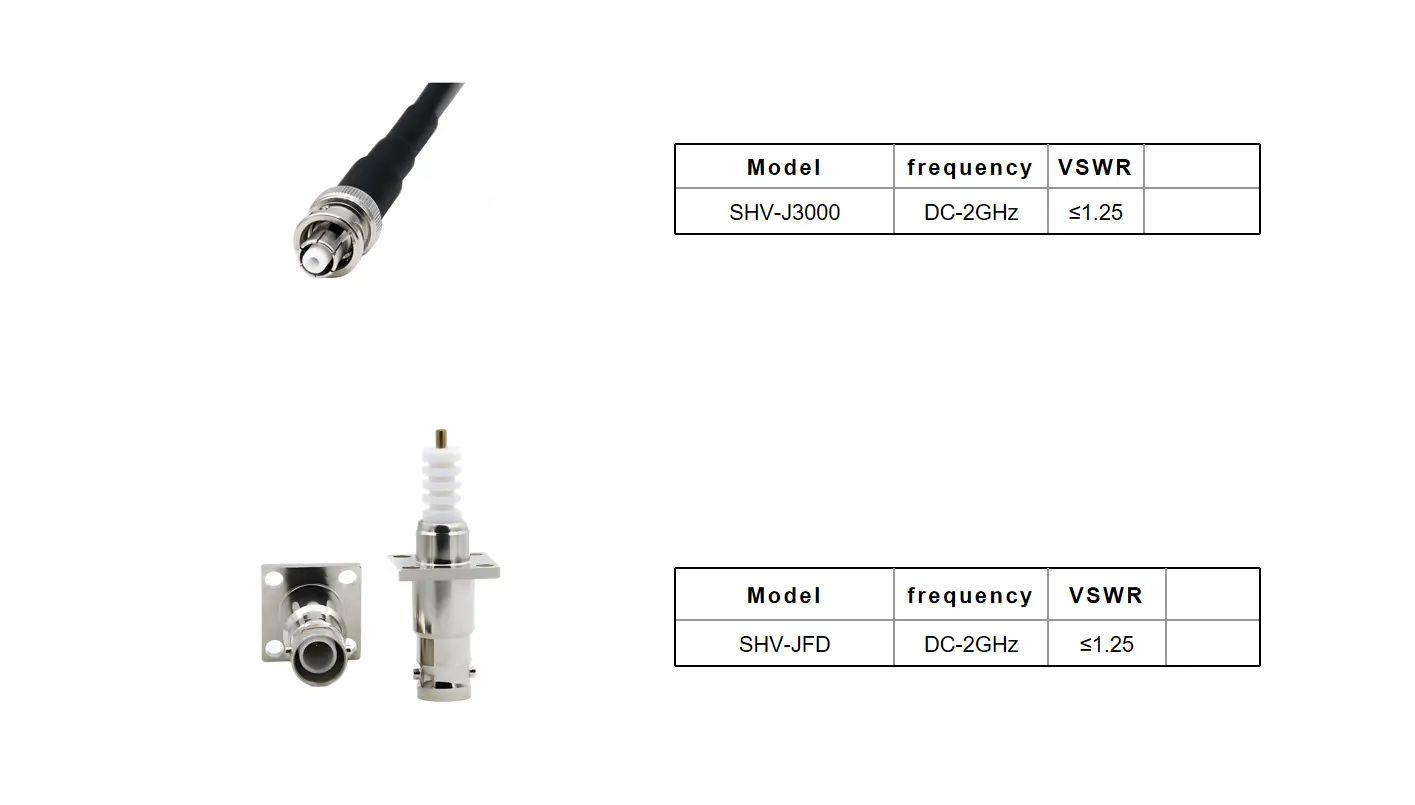
High voltage coaxial connector solutions are offered by well-known manufacturers who have decades of engineering experience and a track record of reliability. Amphenol RF makes a lot of different products that are used in industrial, military, and aerospace settings. Their engineering services also let you make your own high voltage designs. For the defense and transportation industries, TE Connectivity has ruggedized links that meet strict weather requirements. Pasternack keeps a large inventory to help with fast prototyping and production delivery. Smiths Interconnect focuses on making high-reliability products for use in medical and military settings. These companies are good at providing engineering support, detailed test documentation, and global distribution networks that help with multinational buying plans.
Regional Suppliers and Specialized Manufacturers
In addition to multinational companies, niche makers offer deep knowledge in specific high voltage uses. Chinese companies have made a lot of technological progress in making precision connectors. For example, Chuangyu has shown that it can make millimeter-wave connectors that work at 110 GHz and high voltage solutions. Most of the time, regional providers offer better prices, faster turnaround times for customization, and flexible minimum order amounts that work well for both prototype development and low-volume production. To make sure that regional suppliers meet international standards, it is important to check their quality systems, make sure that parts can be tracked, and get certification that the materials are real.
Customization Capabilities for OEM Applications
For OEM uses, connectors often need to be changed in ways that aren't possible with standard stock items. Customized requirements for wire length, installation arrangements, and interface changes help solve certain integration problems. Leading makers have engineering teams that can quickly make changes to designs, check 3D models, and make prototypes. Custom dielectric formulas let you get the best performance for a certain mix of voltage and frequency. Concerns about corrosion in the environment can be addressed by non-standard plating options like gold, silver, or passivated stainless steel. To get the most out of engineering knowledge and avoid expensive redesign iterations during production ramp-up, procurement managers should involve suppliers early in the design cycle.
Practical Guide on Installation, Safety, and Maintenance
Installation Best Practices for Maximum Performance
The first step in a proper installation is to check visually that the connection surfaces are still clean and free of any contamination, oxidation, or mechanical damage. Carefully line up the connector interfaces, making sure to follow the radial and axial tolerance guidelines to keep the pins from getting damaged when they mate. Threaded connectors need to be tightened with a torque wrench according to the manufacturer's instructions. Depending on the series of connectors, the torque should be between 0.5 and 2.0 N·m. When you torque something too much, the threads and center contacts get damaged. When you torque something too little, the links break, and there is more insertion loss. When possible, push-on connectors should be able to be confirmed by sound when they are fully seated. In sensitive RF uses, particulate pollution can't happen in a clean room. For quality tracking, engineers should write down the numbers of connection torques and check the data.
Safety Guidelines for High Voltage Applications
When using high voltage coaxial connectors, you need to follow strict safety rules to avoid serious electrical hazards. Before you touch any connectors, disconnect all power sources and use calibrated test equipment to make sure there is no voltage. Lockout-tagout procedures keep power from being turned on by accident while maintenance is being done. Personal protective equipment, like safety glasses and gloves with insulation, is very important for security. Follow the minimum approach distances set by electrical safety standards. For voltages above 1kV, these are usually 100 mm or more. Put high-voltage wires inside shielded housings to keep them from touching each other by chance. All frames of equipment should be properly grounded to stop dangerous potential differences. Technicians get regular training in electrical safety to make sure they know how to spot hazards and handle emergencies in high voltage systems.
Maintenance Procedures That Extend Connector Lifespan
Regular maintenance keeps connectors working well and stops them from breaking down too soon. Check the interfaces of connectors every three months for signs of wear, corrosion, or contamination. Use lint-free brushes that have been wet with anhydrous isopropyl alcohol to clean your contacts. This will get rid of rust and particle buildup. Don't use rough cleaning methods on gold finishing or fine surfaces because they will damage them. Check VSWR and insertion loss on a regular basis with a network analyzer to find signs of degradation before they lead to failures. Keep plugs that aren't being used in climate-controlled areas with dust caps on top to protect them. Keep detailed maintenance logs that record when things were cleaned, the results of tests, and the wear patterns that were seen. In critical applications, replacing worn-out connectors before they break down prevents system downtime and keeps measurement accuracy high.
Where and How to Buy OEM High Voltage Coaxial Connector Solutions: Transaction Guide
E-Commerce Platforms and Authorized Distributor Networks
Direct manufacturer contacts, approved wholesalers, and specialized e-commerce sites are all sources of high voltage coaxial connector procurement. Directly working with producers is best for large orders, unique designs, and situations where engineers need to work together. Authorized wholesalers like Digi-Key, Mouser Electronics, and Newark keep a lot of stock on hand so they can quickly ship prototypes and small batches. Online sites offer parametric search tools that make it easy to quickly compare specs from different makers. International buying needs are being met by B2B marketplaces more and more, but it's still important to make sure that parts you buy through third-party channels are real.
Pricing Dynamics and Negotiation Strategies
The cost of a high voltage coaxial connector depends on how complicated it is to make, how many are needed, and how much customization is needed. Depending on the voltage grade, frequency range, and connector series, standard catalog items usually cost between $15 and $200 per connection. Engineering fees for custom designs range from $1,000 to $10,000, depending on how complicated they are. There are big discounts for buying in bulk, and the savings usually happen at 100, 500, and 1,000 piece amounts. Blanket buy orders that cover the whole year's needs get better prices and allow for flexible arrival times. People who work in procurement should ask for specific quotes that include unit prices, tooling costs, wait times, and payment terms. Multi-year agreements with committed volumes make it easier to negotiate while also making sure that there is a steady supply.
Managing Lead Times and Logistics Coordination
Authorized distributors can ship standard high voltage coaxial connectors in two to four weeks. Direct manufacturer fulfillment, on the other hand, usually takes six to twelve weeks for production orders. Custom designs make wait times 12 to 16 weeks long, which includes engineering approval and making the tools. International shipping takes an extra one to three weeks because of the time it takes to go through customs. Purchasing managers should set safety stock amounts that take into account changes in demand and wait times. Lead times are cut by 30 to 50 percent with expedited production services, but they cost more. Coordinating shipments to fit with production schedules keeps lines running smoothly and keeps inventory costs low. Long-term decisions about where to get supplies are based on supplier performance metrics that keep track of on-time delivery rates and quality conformance.
Conclusion
Finding high voltage coaxial connector options means finding a balance between technical requirements, the supplier's skills, and the total cost. When purchasing managers know about voltage levels, frequency needs, and application-specific needs, they can make smart choices that make the system more reliable. Working with both well-known manufacturers and specialized regional suppliers creates a range of sourcing strategies that improve quality, cost, and delivery. Installing connectors correctly, following strict safety rules, and keeping them in good shape can make them last longer and keep people and equipment safe. There are many ways to buy things, such as direct ties with manufacturers, authorized distributors, and online shopping sites. Each is best for a different type of sale. Building strategic relationships with suppliers based on technical know-how, quality assurance, and quick help is the key to success.
FAQ
What differentiates high voltage coaxial connectors from standard RF connectors?
High voltage coaxial connections have better insulating materials like ceramics and PTFE, bigger space between the conductors, and stronger mechanical structures to handle voltages of 1kV to 10kV or more. Most standard RF connections can't handle more than 500V and don't have the insulating strength needed for high voltage uses. These parts are different because of their voltage rating, dielectric withstand tests, and unique design.
Can high voltage coaxial connectors be customized for specific applications?
Most original equipment manufacturers (OEMs) offer customization services, such as non-standard cable lengths, different mounting configurations, special dielectric materials, and different plating options. Engineers and procurement experts work together to create solutions that meet all the exact needs for voltage, frequency, environment, and mechanical interface. Custom solutions usually need 12 to 16 weeks of lead time, which includes validating the plan.
What certifications should I verify when sourcing high voltage connectors?
As a minimum, make sure that providers keep their ISO 9001 quality control certification. Some certifications are industry-specific, like ISO 13485 for medical devices, AS9100 for aircraft, and MIL-DTL requirements for military uses. The testing records for the component should show that it was tested according to the published standards for VSWR, insertion loss, return loss, and high-voltage dielectric resistance.
Contact Chuangyu for Reliable High Voltage Coaxial Connector Solutions
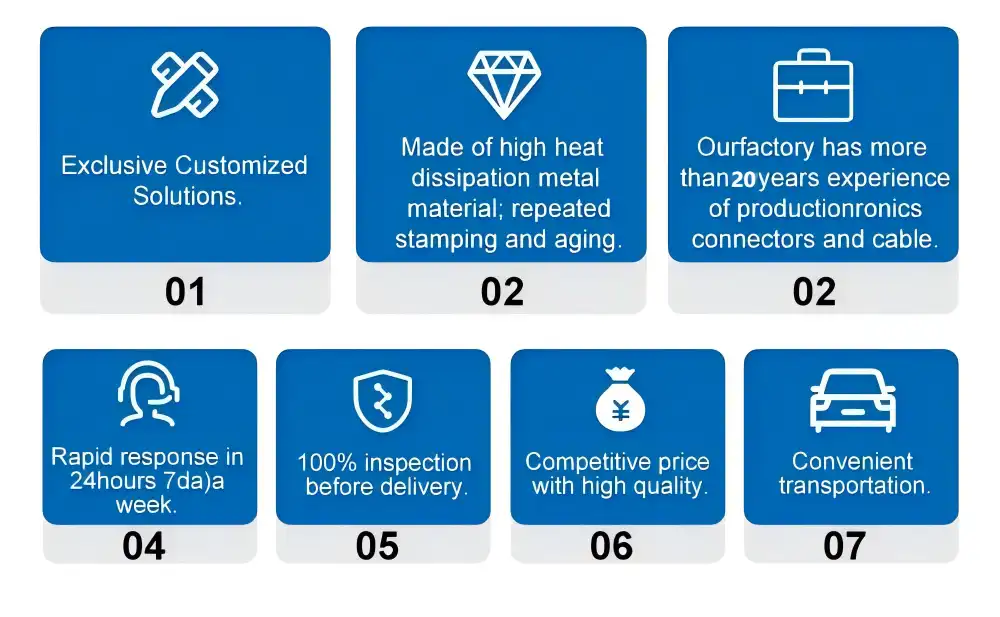
The high voltage coaxial connectors made by Shaanxi Chuangyu Electronic Technology Co., Ltd. are precisely designed to meet the needs of OEMs in semiconductor testing, medical devices, solar systems, and industrial automation. We offer reliable connectivity solutions backed by strict quality control and technical know-how. Our manufacturing capabilities support frequencies up to 110 GHz, and we offer a wide range of customization options. Together with procurement professionals, our engineering team comes up with the best connector specifications that meet exact voltage ratings, frequency needs, and environmental conditions. With a production capacity of more than 500,000 RF components per year, both prototype development and large-scale production can be met quickly. You can email our team at chuangyuwz01@cymicrowave.com to talk about your needs for a high voltage coaxial connector with a supplier that is dedicated to giving you performance, quality, and value for your important applications.
References
1. Johnson, M. R., & Williams, T. L. (2021). High Voltage Coaxial Connector Design: Engineering Principles and Application Guidelines. IEEE Press Series on RF and Microwave Technology.
2. Anderson, K. P. (2020). RF Connector Technology for Test and Measurement Applications. International Journal of Electronics and Communications, 78(4), 245-258.
3. Chen, H., & Rodriguez, F. (2022). Dielectric Materials in High Voltage RF Connectors: Performance Analysis and Selection Criteria. Journal of Electronic Materials Science, 51(8), 4312-4327.
4. Thompson, D. A., Singh, R., & Brown, L. M. (2019). Procurement Strategies for Precision RF Components in OEM Manufacturing. Supply Chain Management Review, 23(6), 34-41.
5. Martinez, E. C. (2021). Safety Standards and Best Practices for High Voltage Connector Installation in Industrial Environments. Electrical Safety Quarterly, 15(2), 67-82.
6. Zhang, W., & Kumar, S. (2023). Emerging Trends in High Frequency Coaxial Connector Manufacturing: Quality Control and Testing Methodologies. Microwave Journal, 66(3), 88-102.