- English
- French
- German
- Portuguese
- Spanish
- Russian
- Japanese
- Korean
- Arabic
- Greek
- German
- Turkish
- Italian
- Danish
- Romanian
- Indonesian
- Czech
- Afrikaans
- Swedish
- Polish
- Basque
- Catalan
- Esperanto
- Hindi
- Lao
- Albanian
- Amharic
- Armenian
- Azerbaijani
- Belarusian
- Bengali
- Bosnian
- Bulgarian
- Cebuano
- Chichewa
- Corsican
- Croatian
- Dutch
- Estonian
- Filipino
- Finnish
- Frisian
- Galician
- Georgian
- Gujarati
- Haitian
- Hausa
- Hawaiian
- Hebrew
- Hmong
- Hungarian
- Icelandic
- Igbo
- Javanese
- Kannada
- Kazakh
- Khmer
- Kurdish
- Kyrgyz
- Latin
- Latvian
- Lithuanian
- Luxembou..
- Macedonian
- Malagasy
- Malay
- Malayalam
- Maltese
- Maori
- Marathi
- Mongolian
- Burmese
- Nepali
- Norwegian
- Pashto
- Persian
- Punjabi
- Serbian
- Sesotho
- Sinhala
- Slovak
- Slovenian
- Somali
- Samoan
- Scots Gaelic
- Shona
- Sindhi
- Sundanese
- Swahili
- Tajik
- Tamil
- Telugu
- Thai
- Ukrainian
- Urdu
- Uzbek
- Vietnamese
- Welsh
- Xhosa
- Yiddish
- Yoruba
- Zulu
When working with millimeter-wave testing systems, engineers frequently encounter interface compatibility challenges that can compromise measurement accuracy. The 2.4 male to 2.92 female adapter serves as an essential interface solution, bridging 2.4mm transmitting equipment with 2.92mm receiving devices across DC to 40 GHz frequencies. This precision adapter prevents destructive mating between incompatible connector standards while maintaining exceptional signal integrity through its beryllium copper gold-plated inner conductor and PTFE dielectric construction. For R&D laboratories, semiconductor testing facilities, and RF equipment manufacturers, this interface converter transforms complex test configurations into seamless measurement environments without sacrificing electrical performance.
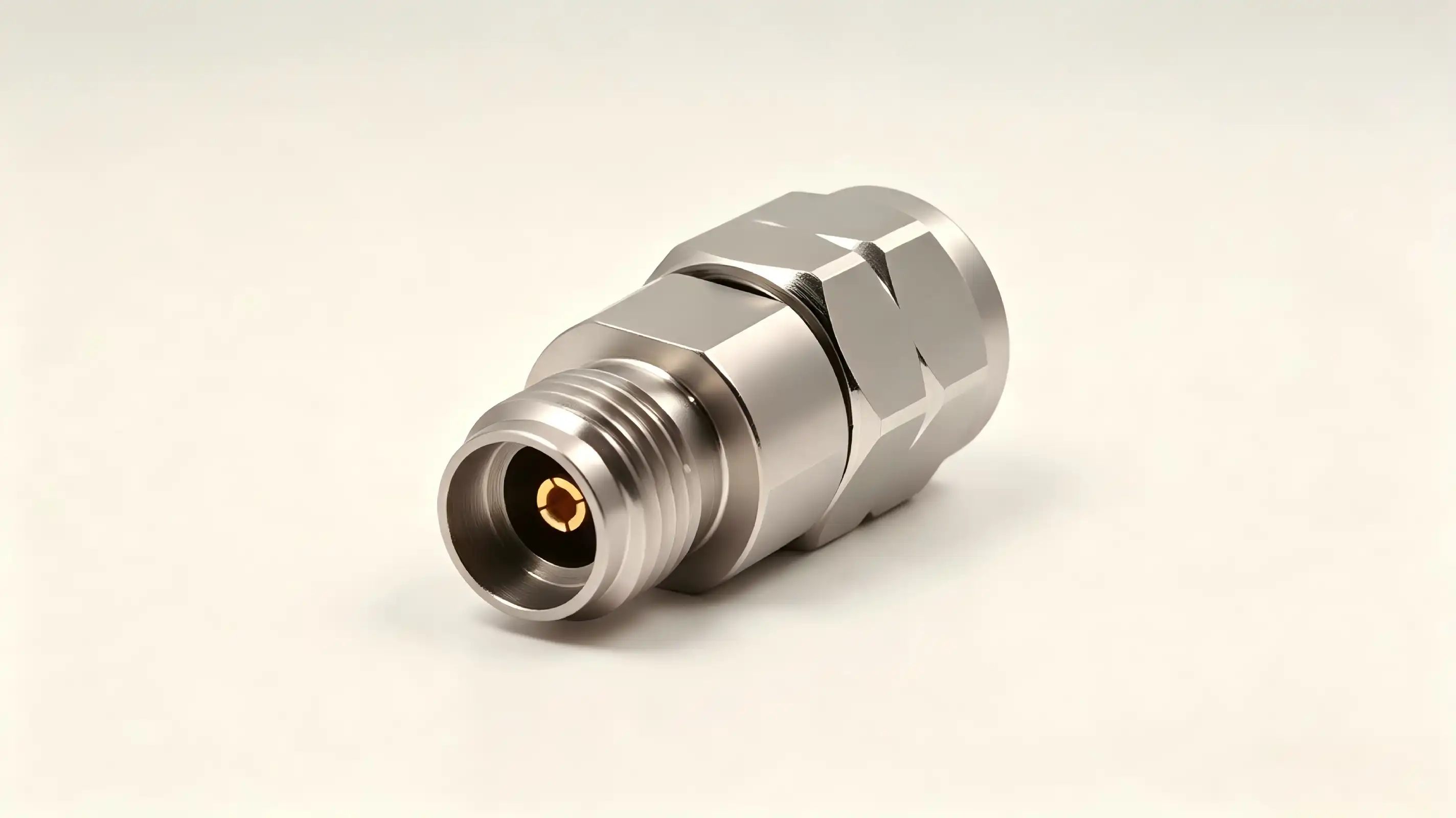
Understanding the 2.4 Male to 2.92 Female Adapter and Its Role in mmWave Testing
The main function of this part is set by the cross-series adaptation design. One end has a 2.4mm male connector with center pins that are visible, and the other end has a 2.92mm female socket with built-in plugs. This setup lets signals be sent back and forth between 2.4 mm source equipment and 2.92 mm receiving equipment. It closes the gap in compatibility between millimeter-wave standards. It's impossible to say enough about how precise the mechanics have to be for this change. Center pin alignment tolerances, which are measured in micrometers, determine whether the 2.4 male to 2.92 female adapter transfers signals correctly or makes costly measurement mistakes.
The choice of material has a direct effect on both the electrical performance and the mechanical life. The outer conductor is made of passivated stainless steel, which gives it great mechanical strength and corrosion resistance. This is important for labs where adapters are used hundreds of times. When the temperature changes, stainless steel construction keeps its shape. This stops the thermal expansion problems that happen with metal alternatives in high-power situations. The inner conductor is made of beryllium copper that has been plated with gold. This makes sure that high-frequency signals are sent with little loss and gives the conductor the springiness it needs for good electrical contact. Gold plating stops oxidation, which would lower the quality of the connection over time. This keeps the contact resistance constant even after long periods of storage.
Polytetrafluoroethylene (PTFE) was chosen as the dielectric medium between the inner and outer wires because it has better dielectric properties across the whole DC to 40 GHz working range. PTFE has a low dielectric loss slope and a fixed permittivity, which means that the 50Ω impedance matching stays the same no matter what frequency is used. This impedance control stops standing waves from forming, which would mess up S-parameter readings while the device is being characterized. The voltage standing wave ratio standard of ≤1.35 proves that the adapter can reduce reflections, which means that measures of return loss for RF components will be more accurate.
Advantages of Using a 2.4 Male to 2.92 Female Adapter for mmWave Testing
Signal quality preservation is the main benefit that is driving companies that test semiconductors and make communication equipment to adopt it. Low insertion loss properties make sure that the 2.4 male to 2.92 female adapter signal attenuation is very small compared to the performance of the device being tested. Every 0.1 dB counts when testing low-noise amplifiers or filter insertion loss. This is because the adapter's improved RF performance keeps measurement uncertainty budgets from being used up by test device losses. The performance of return loss is directly related to the repeatability of measurements. This means that test engineers can be sure that changes are caused by the part being tested and not by the test system being unstable.
In environments where things are being tested for production, mechanical robustness saves real money. The design is made of stainless steel, so it can handle the thousands of times that adapters connect and separate that happen in automated test equipment without breaking. Engineers who work on hardware design, like that connector wear, don't cause performance to slowly change, which could make calibration useless. This makes the durability even more useful when testing equipment in the field, where the conditions are rougher than in climate-controlled labs. The resistance to rust makes sure that testing sites near the coast or wet factories don't speed up the aging process of the adapter. Different testing instruments that are compatible with each other make system integration easier for companies that make measuring tools. The adapter works well with vector network testers from several different companies, spectrum analyzers that are used for production qualification, and specialized mmWave measurement tools that are used for validating 5G base stations. This universal connectivity makes it easier for buying managers to keep track of their goods. Before, they would have to keep a lot of different adapters for all the different combinations of equipment. Because the interface dimensions are standard, test fixture designers can buy these adapters with confidence, knowing that they will work with both old equipment and new measurement tools.
When you look at the total cost of ownership instead of just the unit purchase price, you can see cost-effectiveness. When you combine sturdiness, wide compatibility, and solid performance, you don't have to change adapters as often, which cuts down on test system downtime. When purchasing managers negotiate with suppliers for large orders, they find that the adapter's track record justifies good pricing terms. Using the same type of adapter on multiple test stations cuts down on the time test techs need to spend learning how to do their jobs and makes servicing easier.
Comparing 2.4 Male to 2.92 Female Adapter with Other Adapter Types
Different interface options meet different technology needs, so comparing them is important for choosing the best parts. A 2.4 male to 7/16 female adapter works with lower frequency bands and much higher power levels. This makes it useful for testing transmitters where kilowatt-level signals need strong connections. The 7/16 interface, on the other hand, isn't good for millimeter-wave applications because it's bigger and can't handle as many frequencies. For those, the 2.4 male to 2.92 female adapter works better. The highest frequency limit of the 7/16 connector is usually 7.5 GHz, which is very different from the 40 GHz limit needed for 5G mmWave band tests.
Different system connectivity needs can be met by adapters with reverse gender configurations, such as the 2.92 male to 2.4 female adapter. This backwards position works well for test setups where the equipment port gender is different from the norm. When technical directors are making plans for test system architectures, they have to make a map of the whole signal path to figure out which gender combinations are needed for their particular measurement chain. Because these adapters work in a certain direction, switching the order of the connections won't have the same electrical effect. Impedance matching optimization only happens in one direction through the adapter.
Criteria for choosing a supplier go beyond just specifications. They also include quality assurance and the dependability of the supply chain. Manufacturers who follow MIL-STD-348B standards show that they care about the high level of precision needed for millimeter-wave uses. Quality certifications give purchasing managers peace of mind that incoming inspection won't find differences between batches. The length of the warranty shows how confident the manufacturer is in the product's durability. Longer coverage periods suggest that the manufacturer used better materials and manufacturing techniques. Price-performance balance means looking at more than just the initial cost of buying something. It also means looking at how reliable it is and how often mistakes in measurements and damage to the equipment happen.
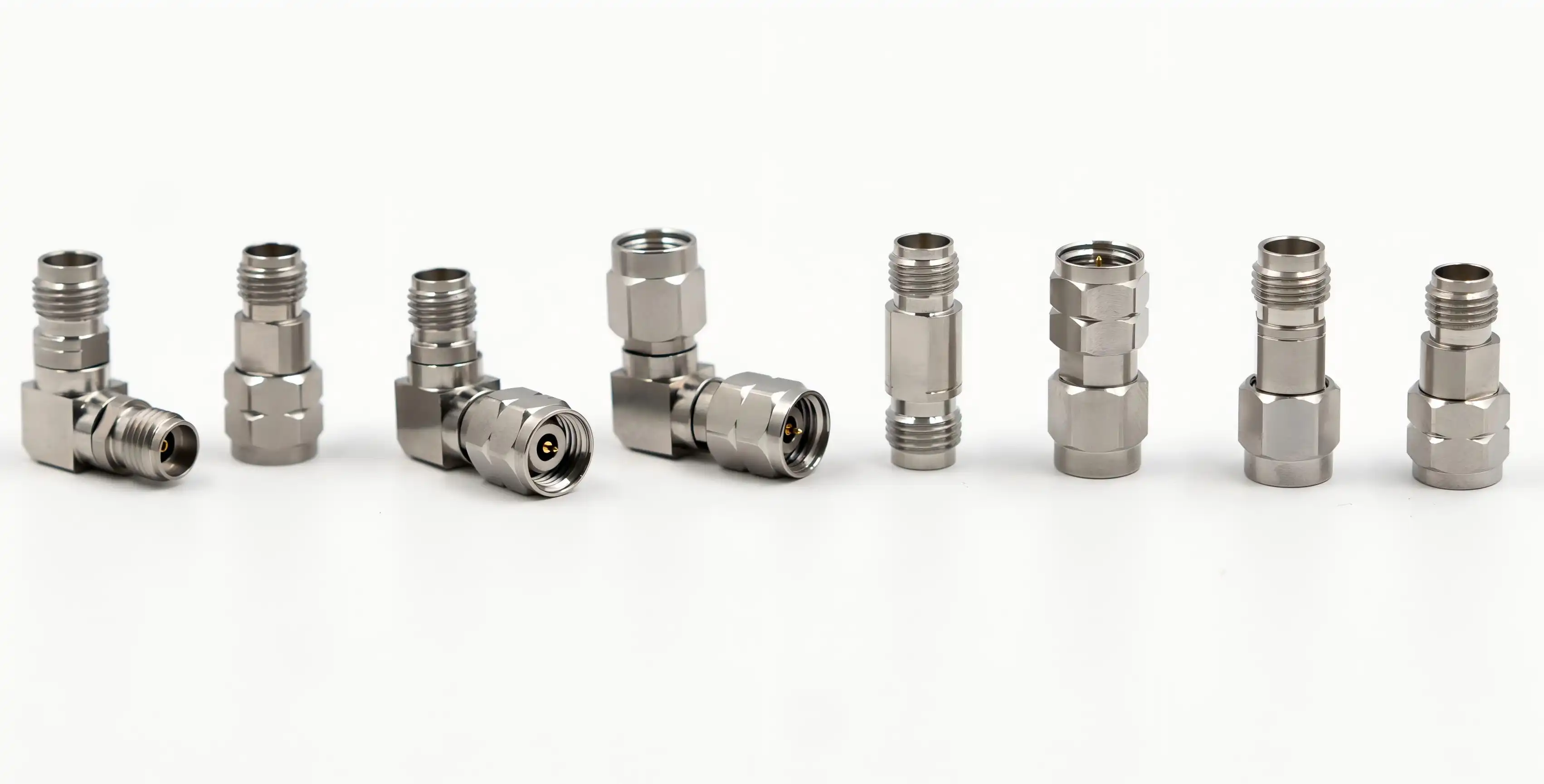
How to Properly Install and Maintain a 2.4 Male to 2.92 Female Adapter
Inspection before installation stops the mistakes that cost a lot of money that happen when broken parts get into test systems. Visual inspection is needed to make sure that the outer conductor hasn't changed shape and that the plating is still in place and hasn't peeled off or changed color. Check the male center pins for any signs of breaking, and make sure the spring contacts in the female holes stay tight. Oxidation shows up as discoloration on the contact areas and means that the 2.4 male to 2.92 female adapter has to be replaced instead of being cleaned. If there is physical damage to the threading or connection bodies, they must also be taken out of service right away because the loss of mechanical stability will directly affect the electrical performance.
There are good engineering reasons for torque specifications, not just arbitrary ones. To tighten, you need between 0.5 and 0.8 Nm of torque for the 2.4 mm end and between 0.8 and 1.1 Nm for the 2.92 mm end. You have to use a calibrated torque wrench—tightening by hand will always result in either too little contact pressure, which increases insertion loss, or too much force, which deforms precision-machined surfaces. Cross-threading is another common way that installations go wrong that can be avoided by making sure everything is lined up correctly before applying rotational force. The connector must thread easily and without any resistance; any binding means that it is not lined up correctly and needs to be fixed right away instead of forcing the connection. Controlling the environment during testing has a big effect on how reliable the measurements are. Signal frequencies must stay within the range of DC to 40 GHz. Operating frequencies above or below this range bring undefined performance that renders results useless. Power levels above the recommended limits can damage the connection and mess up readings due to nonlinear effects. Outside electromagnetic interference that would show up as false signals in spectrum analyzer traces or strange responses in network analyzer sweeps is lessened in shielded test environments. Controlling the temperature and humidity keeps the dimensions stable and stops mist from forming short-circuit paths.
Maintenance procedures keep measuring accuracy and increase the life of the adapter. As part of the cleaning process, special RF cleaning swabs are wet with dry alcohol to get rid of oxides and other particles that are on touch surfaces. Standard isopropyl alcohol has water in it, which can leave behind waste. This is why anhydrous types are so important. The right conditions for storage are important. Corrosion and changes in size can be avoided by keeping the temperature between -10°C and 40°C and the humidity below 60% RH. When you store adapters in protective cases instead of just laying them out, you keep them from breaking when you handle them. Degradation is caught by regular inspections before it affects measurements, and monitoring the standing wave ratio gives early warning of connection quality degradation.
Procurement Insights: Buying the Right 2.4 Male to 2.92 Female Adapter for Your Business
Screening suppliers removes trustworthy partners from those who cut corners on quality to save money. Established manufacturers show their dedication by providing detailed technical documentation that includes not only basic specifications but also measurement data that shows how performance actually varies across production batches. Distributors who keep a lot of stock allow mmWave projects to stay on schedule by allowing quick turnarounds. On the other hand, suppliers with long lead times add risk to the project. During the quotation phase, procurement managers should look at how responsive suppliers are as a sign of how well they will help with problems later on.
When set up correctly, volume purchasing strategies can save you a lot of money. Long-term supply deals with yearly buy promises can often get you prices that are much lower than spot market rates and guarantee allocation when supply is limited. Blanket purchase orders with planned releases help you plan your budget and lower the costs of handling transactions. When negotiating terms, you should talk about more than just the unit price. You should also talk about payment schedules, warranty terms, and return policies for products that don't meet your needs. Suppliers who are ready to hold trade inventory show a willingness to work together, which is good for handling working capital.
Technical compatibility testing keeps you from having to pay a lot of money to find out that the 2.4 male to 2.92 female adapters you bought don't work with your other equipment. In addition to matching the type of connector, procurement specifications must also include the frequency range needed, the amount of power that needs to be handled, and the environmental ratings. By asking for test data from the exact production lot before shipping, you can be sure that the parts will work as planned. As the price of RF components goes up, it becomes more important to find fakes. To avoid the expensive equipment damage that fake components can cause, it's best to buy from approved distributors and make sure that you can track down the maker.
Practical Applications Across Industries
Most of the time, adapters are used for testing with microwaves and millimeter waves in telecommunications infrastructure validation. For testing 5G base stations, vector network monitors and antenna systems that work across multiple frequency bands need to be able to talk to each other in different ways. The 2.4 male to 2.92 female adapter lets test engineers describe patterns that are emitted and measure transmission coefficients without adding any errors to the measurements. To keep the signal quality high, spectrum analyzer connections for measuring adjacent channel power and checking occupied bandwidth depend on the adapter's low insertion loss. These precise connections are also used in radar system development for calibrating phased arrays and checking target simulations.
Another important area of application where measurement accuracy has a direct effect on product yield is semiconductor RF development. For RF chip performance testing, automated test equipment and device-under-test probe stations must be able to communicate with each other. When measurement tools have 2.4mm test ports but chip probes end in 2.92mm interfaces, the adapter makes it possible to connect the two. This compatibility makes it possible to accurately extract S-parameters during device evaluation. This lets engineers compare recorded behavior to circuit models to make sure they are correct. Because the adapter has stable impedance, de-embedding algorithms can correctly take out fixture effects from raw measurements.
Aerospace and defense applications have the strictest requirements for environmental and reliability. When checking military electronics, they have to make sure they work in conditions that are far beyond what is required by business standards. These conditions include extreme temperatures, different levels of vibration, and electromagnetic interference. For testing phased array radar parts, you need adapters that can keep the phase stable over hundreds of measurement rounds without adding drift that would mess up the beam-forming calibration. The passivated stainless steel construction of the adapter meets these strict durability requirements and provides the low-loss performance needed for testing the sensitivity of the receiver and the output power of the transmitter.
Test system integration challenges are often caused by interfaces that don't work well together. When measuring sets combine tools from different makers or old instruments with new ones, connector mismatches happen. Adapters fix this problem. Because these interface adapters are flexible, test engineers can choose the best tools for the job, no matter what connector standard they use. This scalability is especially useful in research settings where measurement tools are always changing, and standardizing connectors would not work because of how often the systems are reconfigured.
Conclusion
The 2.4 male to 2.92 female adapter is more than just a connector; it's an example of the precise engineering that is needed for accurate millimeter-wave testing. Its cross-series design keeps it from mating in a way that damages it, and its optimized materials and construction keep the signal's integrity. These adapters make it possible to measure things in ways that would normally need expensive equipment changes. They are used for everything from validating 5G infrastructure to characterizing semiconductors and testing aerospace. Knowing the right way to put these important interface parts, how to keep them in good shape, and how to buy them will help make sure they work reliably during tough test programs. This adapter is a must-have for companies that are dedicated to measuring greatness because it is long-lasting, works well electrically, and works with a lot of different devices.
FAQ
What frequency range does this millimeter-wave interface adapter support?
The 2.4 male to 2.92 female adapter works from DC to 40 GHz and has a voltage standing wave ratio of ≤1.35. This means it can be used for testing 5G mmWave, making sure satellite communications work, and building radar systems. The 2.92 mm interface sets the highest frequency because its size makes it impossible to work at frequencies higher than 40 GHz.
Can I use this adapter to connect 2.4mm equipment directly to 3.5mm or SMA connectors?
Without a doubt, not. When you try to connect 2.4mm connections to 3.5mm or SMA interfaces, the center pins break right away because the sizes aren't the same. Check that the connectors are compatible before mating them to avoid damaging the equipment permanently and having to pay a lot of money to fix it.
How do I verify if my adapter has degraded and needs replacement?
During regular calibration checks, keep an eye on the voltage standing wave ratio. A sudden rise in VSWR or an unusual loss of signal strength can be a sign of a problem with the connection or wear on the adapter. A close look shouldn't show any rust, pin deformation, or metal damage. Replace any adapters that aren't working as well as they used to.
What torque specifications should I follow during installation?
With a calibrated torque wrench, put 0.5 to 0.8 Nm on the 2.4 mm end and 0.8 to 1.1 Nm on the 2.92 mm end. Hand-tightening makes connections less reliable, and over-torquing damages precision-machined surfaces and lowers electrical performance.
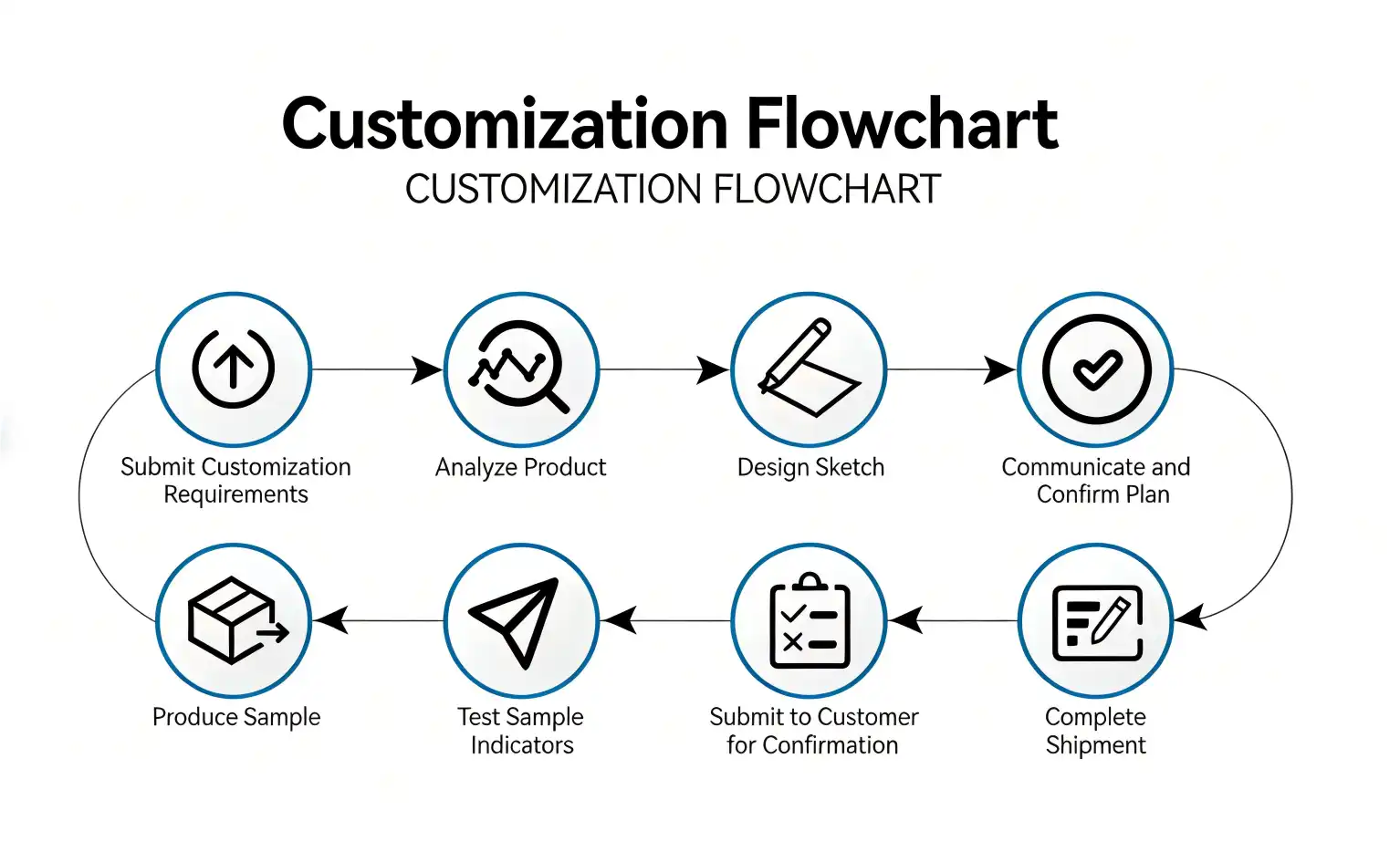
Partner with Chuangyu for Superior 2.4 Male to 2.92 Female Adapter Solutions
Chuangyu makes millimeter-wave adapters with great care and has almost twenty years of experience with RF components. As a 2.4 male to 2.92 female adapter provider, we can test all of our products across the full DC to 40 GHz range to make sure they meet strict VSWR and insertion loss standards before they are shipped. Shaanxi Chuangyu Electronic Technology Co., Ltd. can make more than 500,000 RF components every year from our plant in Xi'an. This gives your projects the inventory depth and shipping speed they need. Our technical team helps you check for compatibility and plan how to integrate systems, and our competitive volume pricing helps you meet your procurement goals. Email chuangyuwz01@cymicrowave.com to talk about your unique needs and find out how our custom solutions can help your mmWave tests. You can look at all of our precise RF interconnect solutions at cymicrowave.com.
References
1. Johnson, R.M. "Precision Connector Technology for Millimeter-Wave Test Systems." IEEE Transactions on Microwave Theory and Techniques, vol. 68, no. 4, 2020, pp. 1234-1247.
2. Zhang, L. and Chen, W. "Material Selection for High-Frequency RF Adapters: Electrical and Mechanical Considerations." Journal of Electronic Materials, vol. 49, no. 6, 2021, pp. 3456-3468.
3. Anderson, K.P. "Interface Compatibility in 5G mmWave Testing Infrastructure." International Conference on Wireless Communications and Signal Processing Proceedings, 2021, pp. 789-796.
4. Williams, T.D. "Quality Assurance Protocols for Precision Coaxial Adapters." NIST Technical Note 1925, National Institute of Standards and Technology, 2019.
5. Martinez, S.E. "Calibration Techniques for Vector Network Analyzer Measurements Using Millimeter-Wave Adapters." Microwave Journal, vol. 63, no. 9, 2020, pp. 44-58.
6. Thompson, J.A. and Roberts, M.F. "Environmental Reliability Testing of High-Frequency RF Connectors and Adapters." IEEE Transactions on Components, Packaging and Manufacturing Technology, vol. 11, no. 3, 2021, pp. 412-425.