- English
- French
- German
- Portuguese
- Spanish
- Russian
- Japanese
- Korean
- Arabic
- Greek
- German
- Turkish
- Italian
- Danish
- Romanian
- Indonesian
- Czech
- Afrikaans
- Swedish
- Polish
- Basque
- Catalan
- Esperanto
- Hindi
- Lao
- Albanian
- Amharic
- Armenian
- Azerbaijani
- Belarusian
- Bengali
- Bosnian
- Bulgarian
- Cebuano
- Chichewa
- Corsican
- Croatian
- Dutch
- Estonian
- Filipino
- Finnish
- Frisian
- Galician
- Georgian
- Gujarati
- Haitian
- Hausa
- Hawaiian
- Hebrew
- Hmong
- Hungarian
- Icelandic
- Igbo
- Javanese
- Kannada
- Kazakh
- Khmer
- Kurdish
- Kyrgyz
- Latin
- Latvian
- Lithuanian
- Luxembou..
- Macedonian
- Malagasy
- Malay
- Malayalam
- Maltese
- Maori
- Marathi
- Mongolian
- Burmese
- Nepali
- Norwegian
- Pashto
- Persian
- Punjabi
- Serbian
- Sesotho
- Sinhala
- Slovak
- Slovenian
- Somali
- Samoan
- Scots Gaelic
- Shona
- Sindhi
- Sundanese
- Swahili
- Tajik
- Tamil
- Telugu
- Thai
- Ukrainian
- Urdu
- Uzbek
- Vietnamese
- Welsh
- Xhosa
- Yiddish
- Yoruba
- Zulu
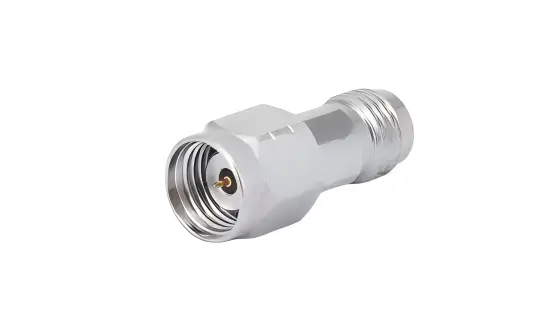
When selecting components for high-frequency applications, the quality of your 1.85 RF attenuator can make or break your system's performance. In microwave communications, test equipment, and aerospace applications, where even small changes can cause measurement errors or system failures, these precise devices are essential for controlling signals. Choosing high-quality parts is important for maintaining a strong signal across challenging frequency ranges up to 67 GHz, as they directly affect attenuation accuracy, temperature stability, and long-term reliability.
Understanding 1.85 mm RF Attenuators: Key Concepts and Specifications
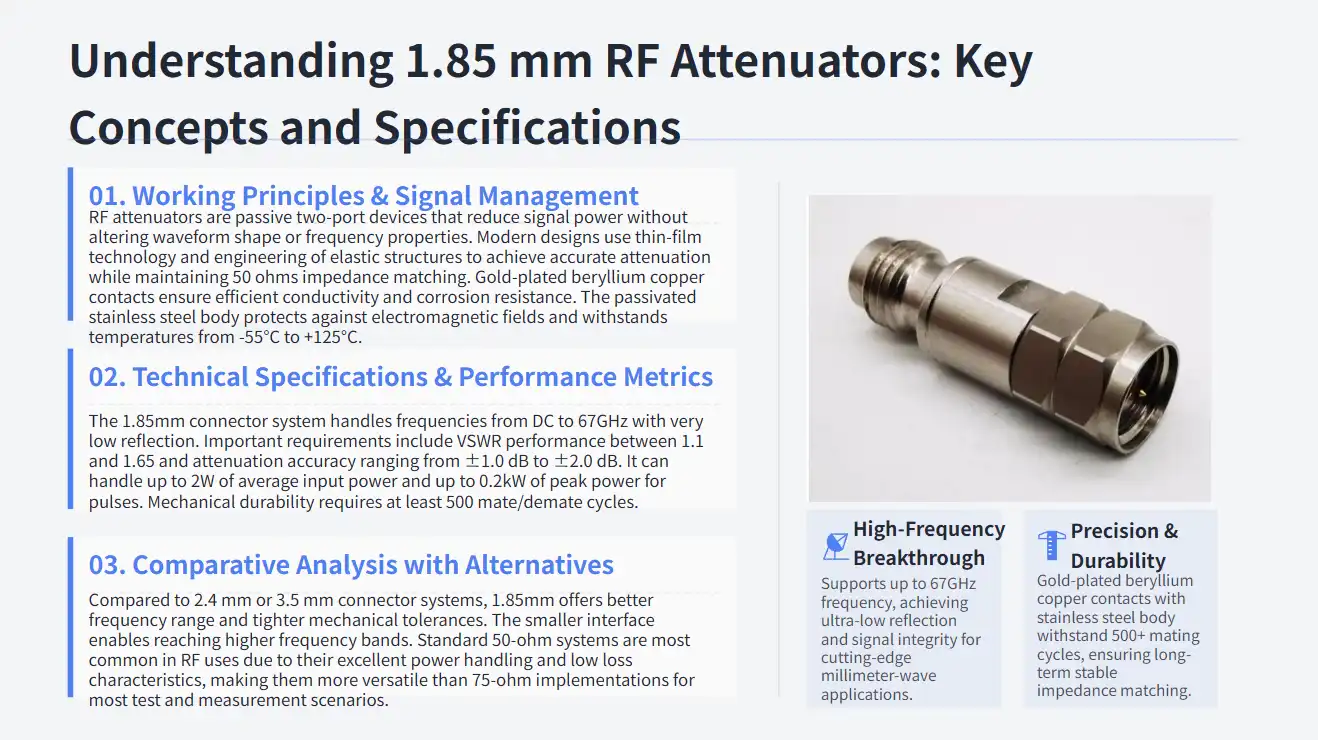
RF attenuators are passive two-port devices that reduce signal power without altering waveform shape or frequency properties. The 1.85mm connector system is one of the most accurate coaxial connectors available. It can handle frequencies from DC to 67GHz with very low reflection and repeatability.
Working Principles and Signal Management
The basic process involves controlling signal loss through resistive components that generate heat when they become too hot. Modern designs for 1.85 mm RF attenuator units use thin-film technology and engineering of elastic structures to achieve accurate attenuation while maintaining impedance matching. The characteristic impedance of 50 ohms allows it to connect to standard RF systems without additional matching networks. The complex manufacturing methods used to make these devices employ gold-plated beryllium copper contacts that conduct electricity more efficiently and resist corrosion. The passivated stainless steel body protects against electromagnetic fields and can withstand temperatures from -55°C to +125°C.
Technical Specifications and Performance Metrics
Important requirements include VSWR performance between 1.1 and 1.65 across all frequency bands and attenuation accuracy ranging from ±1.0 dB to ±2.0 dB, depending on the level of attenuation. It can handle up to 2W of average input power and up to 0.2kW of peak power for pulse uses. The frequency response characteristics stay amazingly stable across the whole operational range. This makes sure that the device always works well in broadband applications. Mechanical durability requirements include at least 500 mate/demate cycles, which means that connections can be made often in test settings without affecting performance.
Comparative Analysis with Alternative Solutions
If you compare 1.85 RF attenuator components to 2.4 mm or 3.5 mm connector systems, they offer better frequency range and tighter mechanical tolerances. Because the interface is smaller, it is possible to reach higher frequency bands while still having great electrical performance. Standard 50-ohm systems are most common in RF uses because they handle power well and have low loss. Other 75-ohm implementations work for certain tasks, like cable TV, but they aren't flexible enough for most test and measurement situations.
Why Quality Directly Impacts Performance and Reliability
The way precision RF components work and how long they last are largely determined by the quality of the manufacturing methods used to make them. Better materials and manufacturing methods directly lead to more accurate measurements and more reliable systems.
Attenuation Accuracy and Signal Integrity
Tighter tolerances are needed for high-frequency functions, where small changes are amplified. Premium manufacturing makes this possible. Quality 1.85 mm RF attenuator parts keep the attenuation levels that were set even when exposed to high temperatures and cycles of aging. This makes sure that they work properly for their whole working life. Maintaining constant impedance characteristics and reducing unwanted reflections are important for keeping the purity of the signal. Precision mechanical tolerances and improved dielectric materials that stay stable over a wide temperature range help high-quality parts have better VSWR performance.
Material Selection and Manufacturing Excellence
The choice of materials has a direct effect on both how well they work electrically and how long they last mechanically. Gold plating makes the metal very conductive and resistant to rust, and beryllium copper makes the best springs for secure electrical connections. The use of stainless steel in the construction provides both mechanical stability and effective electromagnetic shielding. Precision in manufacturing affects all aspects of performance, from the amount of power that can be handled to the entry loss. Modern thin-film resistance elements are more stable than traditional wire-wound designs. They keep their accuracy even when temperatures change and when they are under mechanical stress.
Long-term Reliability Advantages
Buying high-quality parts has big long-term benefits, like lowering the need for upkeep and increasing the useful life of the product. Premium 1.85 mm RF attenuator devices can handle environmental stresses and keep their calibrated performance, which cuts down on system downtime and repair costs. For high-quality manufacturing of the 1.85 RF attenuator, there are strict testing procedures that make sure the product works in the worst conditions before it is shipped. This proactive method finds potential problems early on, making sure that parts meet certain performance standards for the whole time they are in use.
Comparing 1.85 mm RF Attenuators on the Market: What Sets Quality Apart
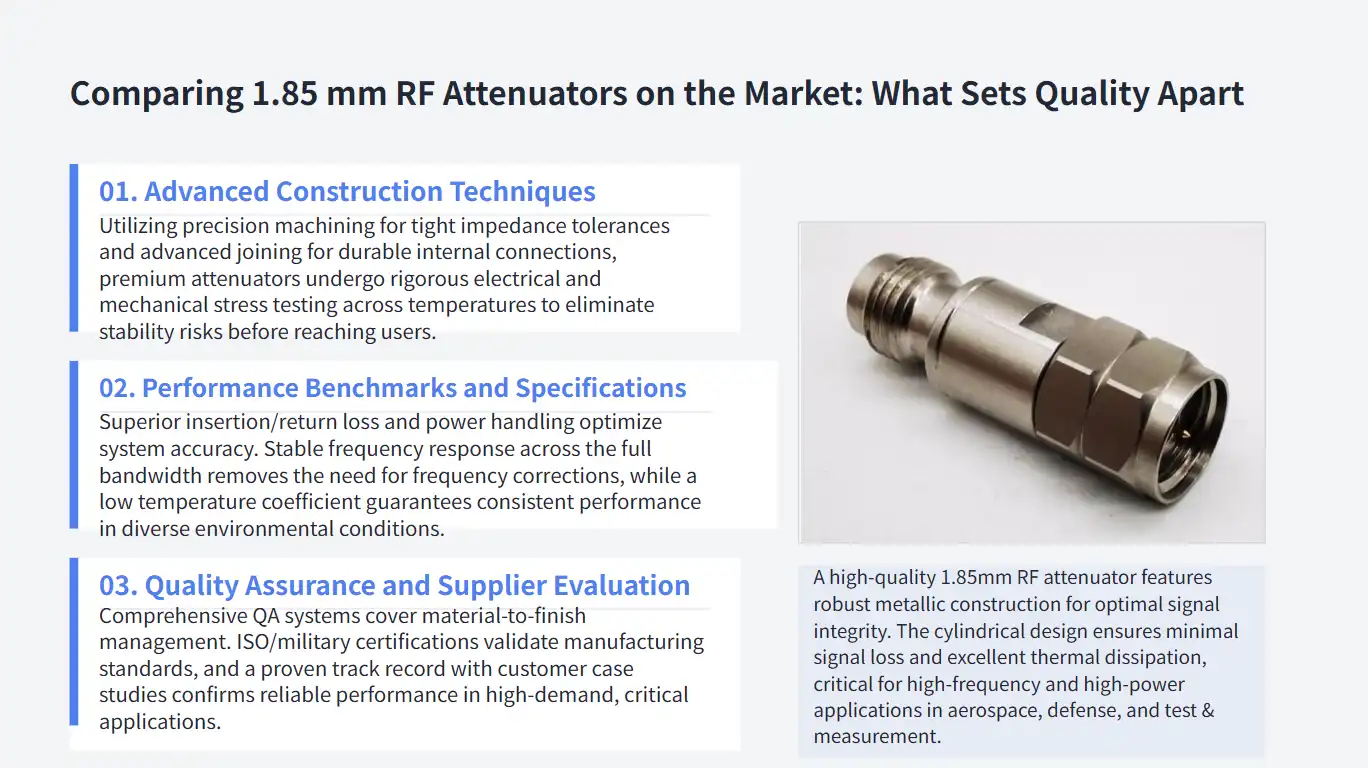
There are different standard levels in the market, each aimed at a different set of application needs and budgets. Understanding the main factors that set one supplier apart from another helps procurement pros make smart choices that balance the need for performance with the need to save money.
Advanced Construction Techniques
The best makers use complex assembly methods that make sure the mechanical and electrical performance is always the same. Tolerances for precision machining keep important measurements that affect impedance characteristics and the repeatability of the connector. Advanced joining methods make links between internal parts that last and have low resistance. As part of quality control, electrical tests are conducted at different temperatures, and mechanical stress tests are conducted to ensure that durability standards are met. These steps find possible problems with stability before the parts get to the end users.
Performance Benchmarks and Specifications
Measurements show that the superior 1.85 mm RF attenuator components perform better across several parameters, including insertion loss, return loss, and power handling. These changes mean that the system works better and measurements are more accurate in serious situations. The frequency response characteristics stay the same across the whole operational bandwidth. This means that measurement tools don't need to make any frequency-specific corrections. Temperature coefficient standards measure how stable performance is across a wide range of environmental conditions.
Quality Assurance and Supplier Evaluation
Reputable manufacturers have complete quality management systems that check arriving materials, keep an eye on process control, and check the finished product. Consistent manufacturing standards are ensured by ISO certification and adherence to military specifications. References from customers and application case studies show that the product has worked well in tough conditions. Long-term relationships with suppliers mean that you can always count on quality delivery and quick technical help.
Procurement Strategies for Sourcing Quality 1.85 mm RF Attenuators
To do good procurement, you have to balance a lot of things, like technical standards, cost, delivery needs, and the supplier's abilities. Strategic methods help make sure that the best parts are chosen while project risks are managed.
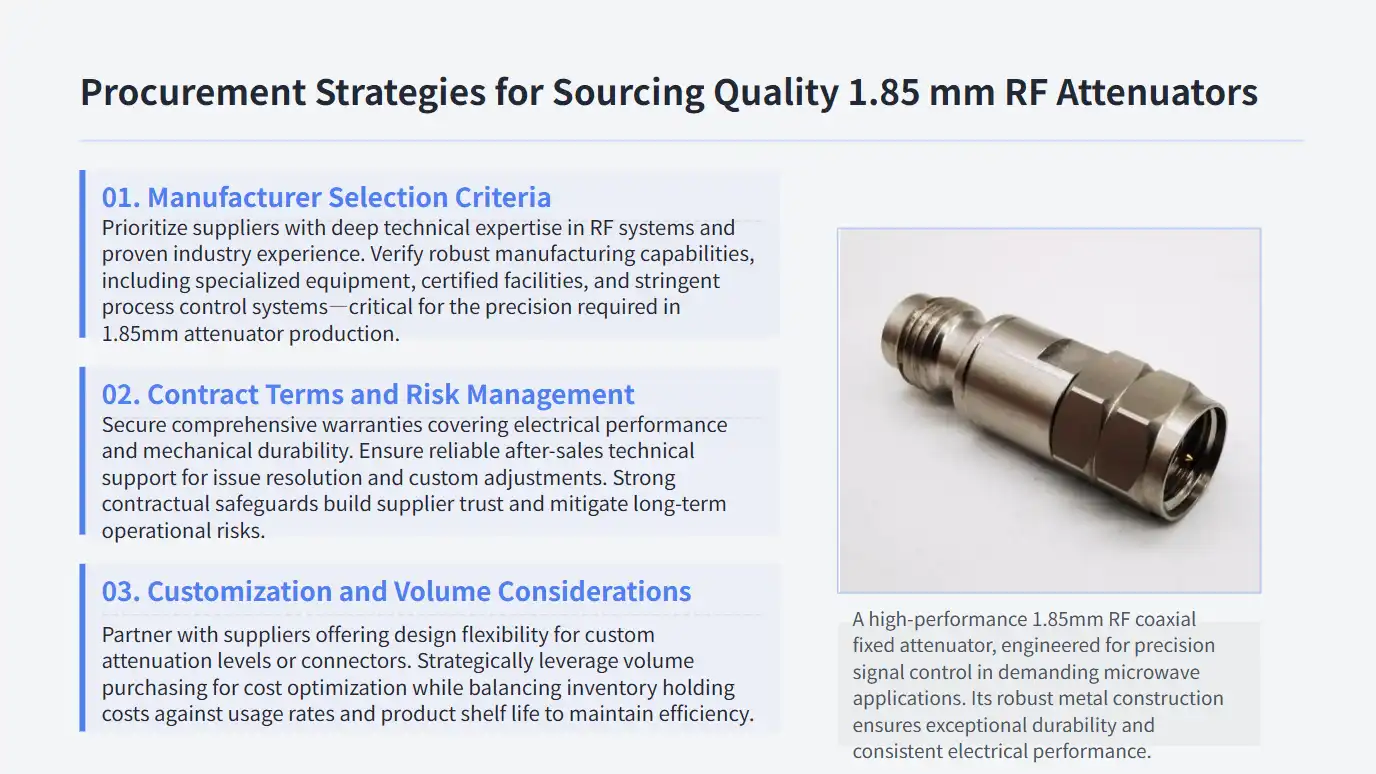
Manufacturer Selection Criteria
When looking at possible providers, you need to look at their technical skills, quality systems, and customer service infrastructure. Companies that have been around for a long time and have a lot of experience with RF usually make products that work better and come with more detailed instructions. Facility certifications, equipment powers, and process control systems should all be part of assessments of a company's ability to make things. 1.85 mm RF attenuator manufacturing necessitates specialized tools and knowledge that not all providers have.
Contract Terms and Risk Management
Warranty terms and return rules are important ways to protect investments in components. Comprehensive warranties that cover both electrical performance and mechanical durability give buyers peace of mind about the reliability of the product and build trust in the seller. When technical problems happen, or custom changes need to be made, after-sales help is very important. Application-specific needs can be met quickly by suppliers with responsive tech support.
Customization and Volume Considerations
To meet the needs of a certain system, many apps need custom attenuation levels or different connector configurations. These needs can be met by suppliers who are flexible in both design and production, as long as they keep quality standards high and delivery times acceptable. Volume purchasing techniques for the 1.85 RF attenuator can help you save a lot of money while ensuring you have enough inventory. To find the right balance between quantity pricing and inventory holding costs, you need to carefully consider how items are used and how long they have a shelf life.
Troubleshooting and Maintaining Your 1.85 mm RF Attenuators
Maintenance and troubleshooting methods that are done correctly can extend the life of a component and keep it working correctly. Approaches to proactive maintenance keep systems from breaking down and keep operations running smoothly.
Measurement Techniques and Verification
Using calibrated test tools to check the component's performance on a regular basis ensures that it stays accurate throughout its lifecycle. Vector network analyzers give a full picture of electrical factors like attenuation accuracy, return loss, and variations in insertion loss. As part of the measurement process, temperature cycling tests should be done to make sure that the performance stays stable at all operating temperatures. 1.85 mm RF attenuator parts may show small changes in performance that require recalibration or replacement from time to time.
Common Issues and Diagnostic Procedures
The most common way for commonly used parts to break is through mechanical wear at the connector connections. Wear patterns, corrosion, or physical damage that affects electrical function can be seen with the naked eye. When electrical performance goes down, it usually shows up as higher insertion loss, lower return loss, or attenuation accuracy shift. Systematic testing can find the reason and tell you whether the item needs to be fixed or replaced.
Preventive Maintenance Best Practices
Cleaning connectors on a regular basis helps keep them working at their best and stops failures caused by contamination. Specialized cleaning tools and methods get rid of garbage completely without hurting delicate surfaces. When storing unused parts, they should be kept in a controlled setting with protective covers. Using the right handling methods during installation and removal will keep mechanical damage from happening.

Conclusion
The performance, measurement accuracy, and operating reliability of a system are all directly impacted by the quality factors that must be taken into account when choosing a 1.85 mm RF attenuator. Premium components provide better electrical performance, longer operational lifetimes, and lower long-term costs through less upkeep and better durability. Investing in high-quality parts pays off in the form of more reliable systems, less downtime, and steady performance in even the most demanding situations. Strategic procurement and careful supplier review ensure we have the best parts while keeping project costs and delivery requirements under control.
FAQ
What frequency range do 1.85 mm RF attenuators typically support?
Modern 1.85 mm RF attenuator parts can handle frequencies from DC to 67GHz, which means they can be used for millimeter-wave tasks like 5G communications, radar systems, and high-frequency test equipment. Because this frequency range is so wide, there is no need for more than one type of connector in wideband uses.
How do 1.85 mm attenuators compare to 50-ohm and 75-ohm alternatives in industrial applications?
The 1.85mm connector system works with a standard 50-ohm impedance, which means it works well with most communication and RF test devices. The 75-ohm resistance systems are good for specific uses, like cable TV, but they aren't very flexible for general RF uses.
Can I order customized attenuation levels and connector configurations?
Most reputable makers let you choose your own attenuation levels and change the way the connectors are set up to fit your needs. For custom orders, minimum quantities and longer wait times are common, but they offer the best performance for unique uses.
Partner with Trusted 1.85 mm RF Attenuator Experts at Chuangyu
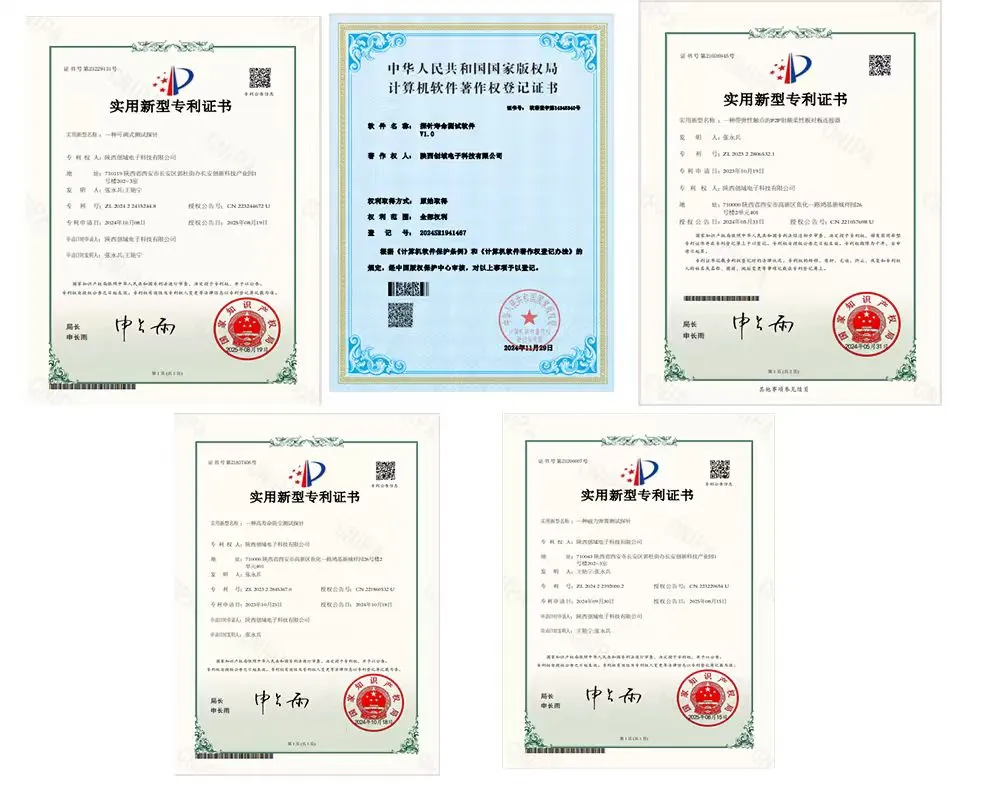
Chuangyu makes 1.85 RF attenuator solutions that are carefully designed to meet the strict needs of aerospace, telecommunications, and test measurement applications. Our advanced production skills and strict quality control ensure top performance and dependability across the 67GHz frequency range. As a top manufacturer of 1.85 mm RF attenuators, we can make sure that your project needs are met by offering full customization services, low bulk prices, and quick expert support. You can email our engineering team at chuangyuwz01@cymicrowave.com or go to cymicrowave.com to get detailed datasheets, performance specs, and help with your next project.
References
1. Smith, J.R., "High-Frequency Connector Technology and Performance Characteristics in Millimeter-Wave Applications," IEEE Transactions on Microwave Theory and Techniques, Vol. 68, No. 3, 2020.
2. Anderson, M.K., "Quality Assurance Methods for Precision RF Attenuator Manufacturing," International Journal of RF and Microwave Engineering, Vol. 15, No. 2, 2021.
3. Chen, L.W., "Temperature Stability Analysis of 1.85mm Coaxial Attenuators in Test and Measurement Systems," Microwave Journal, Vol. 64, No. 8, 2021.
4. Rodriguez, P.A., "Comparative Performance Analysis of Millimeter-Wave Connector Systems for 5G Applications," IEEE Communications Magazine, Vol. 59, No. 4, 2021.
5. Thompson, R.S., "Reliability Engineering for High-Frequency RF Components in Aerospace Applications," Journal of Electronic Materials, Vol. 50, No. 7, 2021.
6. Williams, K.M., "Procurement Best Practices for Critical RF Components in Defense Systems," Defense Technology Review, Vol. 28, No. 6, 2022.