- English
- French
- German
- Portuguese
- Spanish
- Russian
- Japanese
- Korean
- Arabic
- Greek
- German
- Turkish
- Italian
- Danish
- Romanian
- Indonesian
- Czech
- Afrikaans
- Swedish
- Polish
- Basque
- Catalan
- Esperanto
- Hindi
- Lao
- Albanian
- Amharic
- Armenian
- Azerbaijani
- Belarusian
- Bengali
- Bosnian
- Bulgarian
- Cebuano
- Chichewa
- Corsican
- Croatian
- Dutch
- Estonian
- Filipino
- Finnish
- Frisian
- Galician
- Georgian
- Gujarati
- Haitian
- Hausa
- Hawaiian
- Hebrew
- Hmong
- Hungarian
- Icelandic
- Igbo
- Javanese
- Kannada
- Kazakh
- Khmer
- Kurdish
- Kyrgyz
- Latin
- Latvian
- Lithuanian
- Luxembou..
- Macedonian
- Malagasy
- Malay
- Malayalam
- Maltese
- Maori
- Marathi
- Mongolian
- Burmese
- Nepali
- Norwegian
- Pashto
- Persian
- Punjabi
- Serbian
- Sesotho
- Sinhala
- Slovak
- Slovenian
- Somali
- Samoan
- Scots Gaelic
- Shona
- Sindhi
- Sundanese
- Swahili
- Tajik
- Tamil
- Telugu
- Thai
- Ukrainian
- Urdu
- Uzbek
- Vietnamese
- Welsh
- Xhosa
- Yiddish
- Yoruba
- Zulu
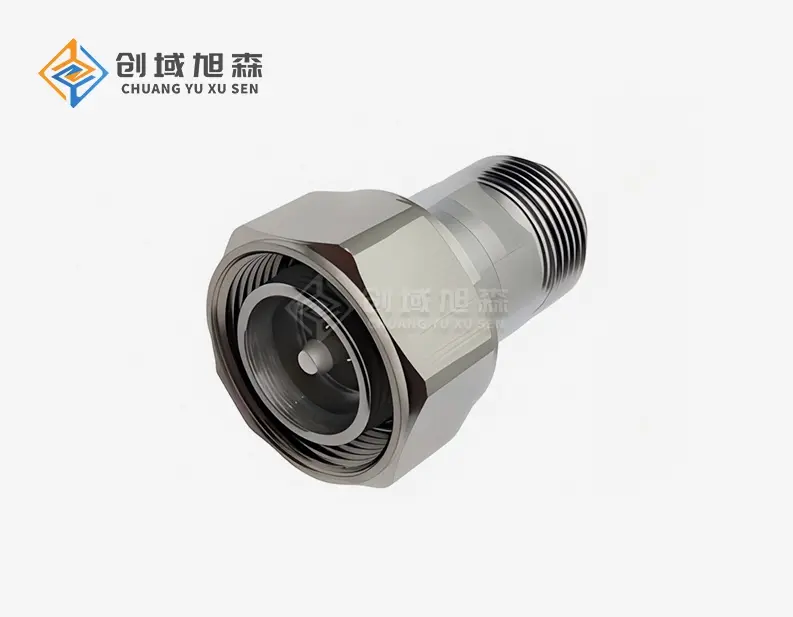
A DIN RF coaxial load serves as a specialized termination device that absorbs radio frequency signals while preventing harmful reflections in communication systems. These precision-engineered components feature 7/16 DIN connectors and provide critical impedance matching for base stations, testing equipment, and microwave communication networks. Engineers rely on these loads to maintain signal integrity, protect sensitive equipment from damage, and ensure accurate measurements in both laboratory and field environments across telecommunications, aerospace, and defense applications.
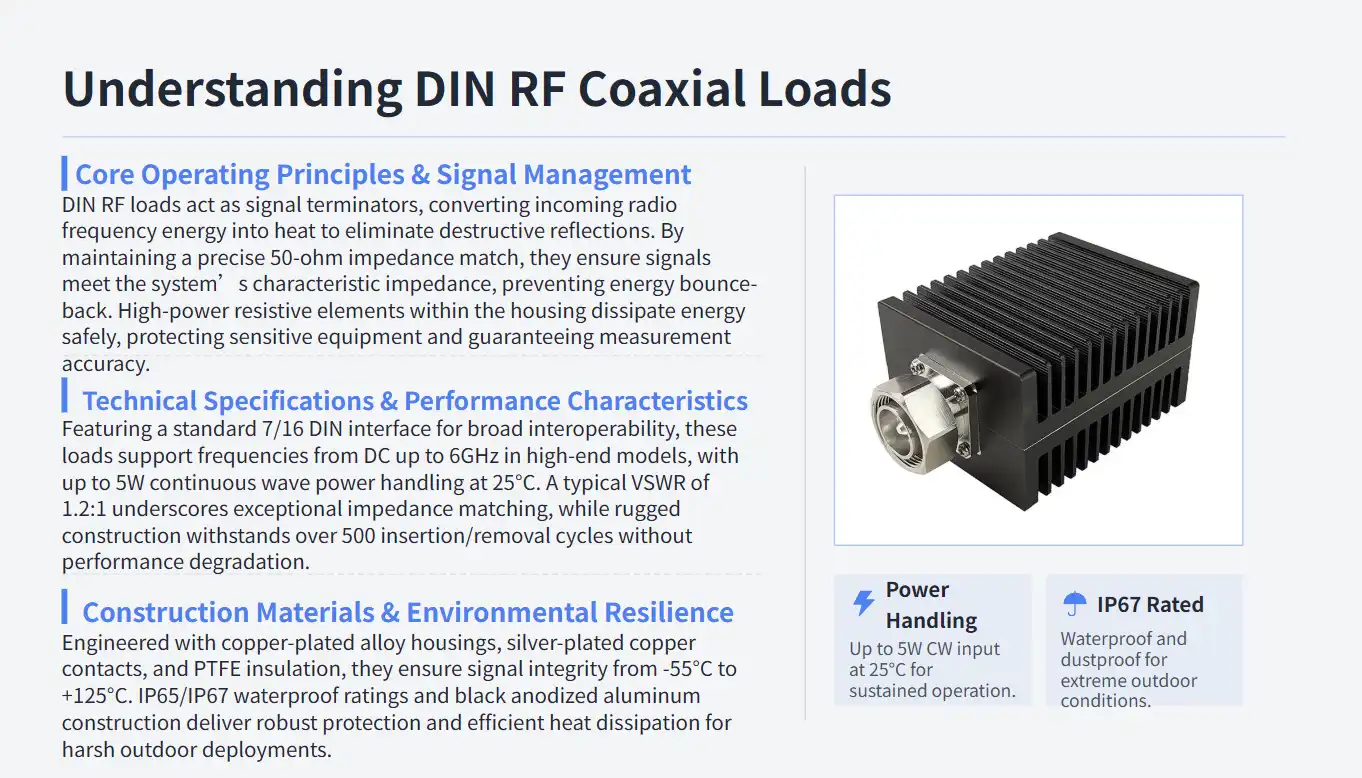
Understanding DIN RF Coaxial Loads
Core Operating Principles and Signal Management
RF coaxial loads are complex signal terminators that turn radio frequency energy that comes in into heat. This gets rid of unwanted reflections that could hurt the performance of the system. Precise impedance matching, usually at 50 ohms, is the basic idea. This makes sure that arriving signals meet the exact characteristic impedance they expect, which stops energy from bouncing back through the transmission line. The conversion process takes place inside the device housing, where high-power resistive elements are placed smartly. When RF energy hits these resistive parts, it changes into heat energy through a process called controlled dissipation. This system keeps measuring instruments accurate during testing while keeping expensive equipment safe from damage.
Technical Specifications and Performance Characteristics
Advanced materials engineering is used in modern DIN RF coaxial load designs to get better performance in a wide range of difficult situations. The 7/16 DIN interface standard makes sure that a lot of communication tools can work with each other. High-end models can handle frequency ranges from DC to 6GHz. Standard setups can handle up to 5W of continuous wave input power at 25°C. Important performance metrics include a voltage standing wave ratio (VSWR) of 1.2:1, which shows that the impedance matching is very good. The mechanical design has housings made of brass nickel-plated or stainless steel and inner conductors made of phosphor bronze gold-plated. It can handle over 500 insertion and removal cycles without losing its electrical performance.
Construction Materials and Environmental Resilience
To make sure the signal stays strong, professional-grade loads have copper-plated ternary alloy housings and silver-plated copper center contacts. Polytetrafluoroethylene (PTFE) insulation has the same dielectric qualities at temperatures as low as -55°C and as high as +125°C. This strong construction makes it possible to use it reliably in difficult outdoor conditions where water, rust, and changes in temperature would damage weaker parts. Newer models have waterproof ratings of IP65 or IP67, which means they can be used for both fixed outdoor installations and testing on the go. The black anodized aluminum housing protects even more against damage from the surroundings and makes it easier for heat to escape during high-power operations.
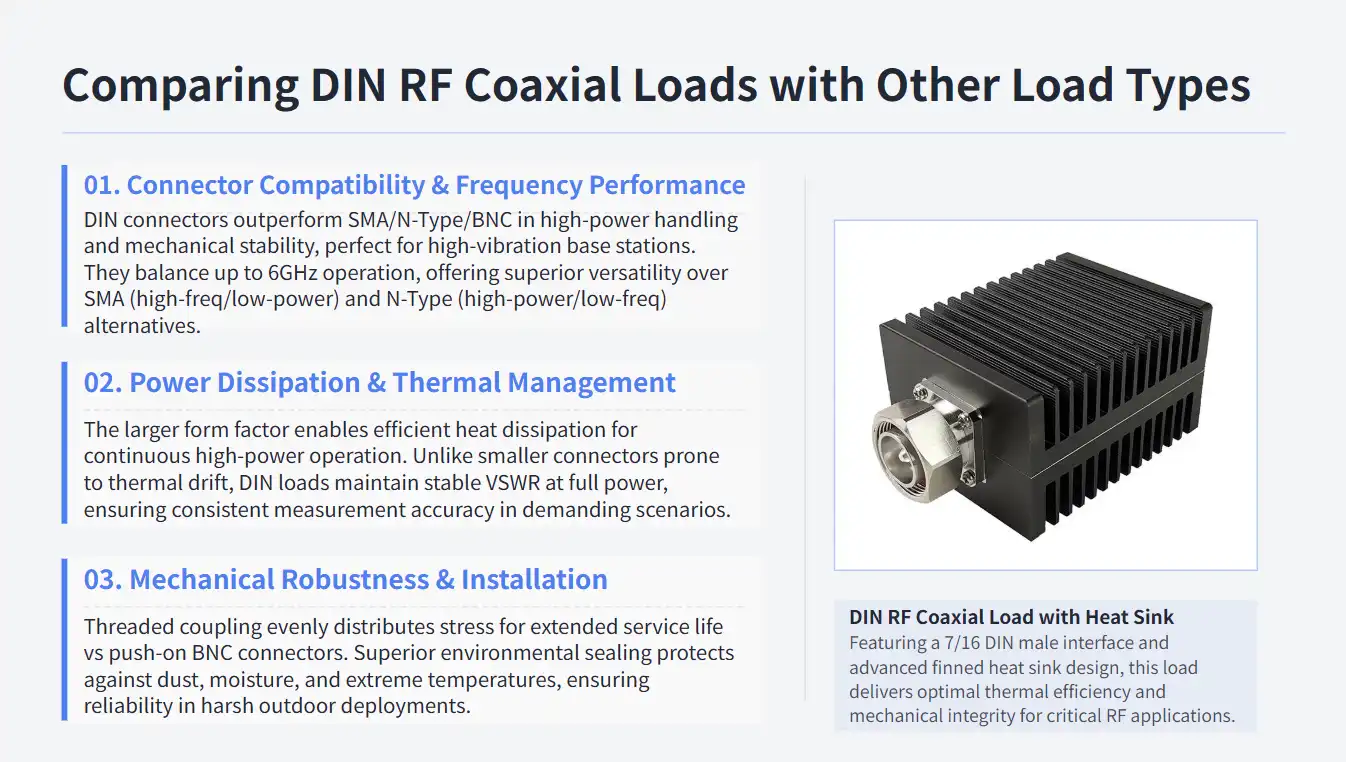
Comparing DIN RF Coaxial Loads with Other Load Types
Connector Compatibility and Frequency Performance
Compared to SMA, N-type, or BNC connectors, DIN connectors offer superior power delivery and robust mechanical connections. The 7/16-inch DIN interface utilizes a threaded connection mechanism, providing exceptional mechanical stability and reducing the risk of accidental disconnection during field operations. This advantage is particularly important in base station environments, where vibration and temperature variations can damage the connection. DIN connectors differ from other types of connectors in that they can handle higher power. Many DIN connector models maintain the same performance level at frequencies up to 6 GHz. While SMA connectors can also handle higher frequencies in most cases, their power handling capability is weaker. On the other hand, N-type connectors, although capable of handling greater power, may perform poorly at higher frequencies.
Power Dissipation and Thermal Management
When it comes to managing heat, DIN connectors are better than miniature connector types because they are bigger. Better heat reduction lets them run at high power for a long time without losing performance, which makes them perfect for continuous-duty uses in telecommunications infrastructure. The test results show that DIN RF coaxial load devices have stable VSWR performance at full power, but smaller socket types may experience thermal drift that makes measurements less accurate. This thermal stability is very important in calibration labs where accurate, repeatable readings are used to decide if equipment is certified.
Mechanical Robustness and Installation Considerations
When it comes to mechanical durability in harsh environments, DIN connections are better than push-on connectors like BNC or quick-connect formats. The threaded coupling mechanism spreads mechanical stress equally across the connector interface. This keeps the interface from wearing out and increases the service life. This increased dependability is good for professional installations, especially in situations where connections and disconnections happen a lot. Environmental sealing capabilities of DIN connections are better than those of many other types of connectors. When placed correctly, DIN connections will keep working properly in outdoor settings that are exposed to dust, moisture, and temperature changes.
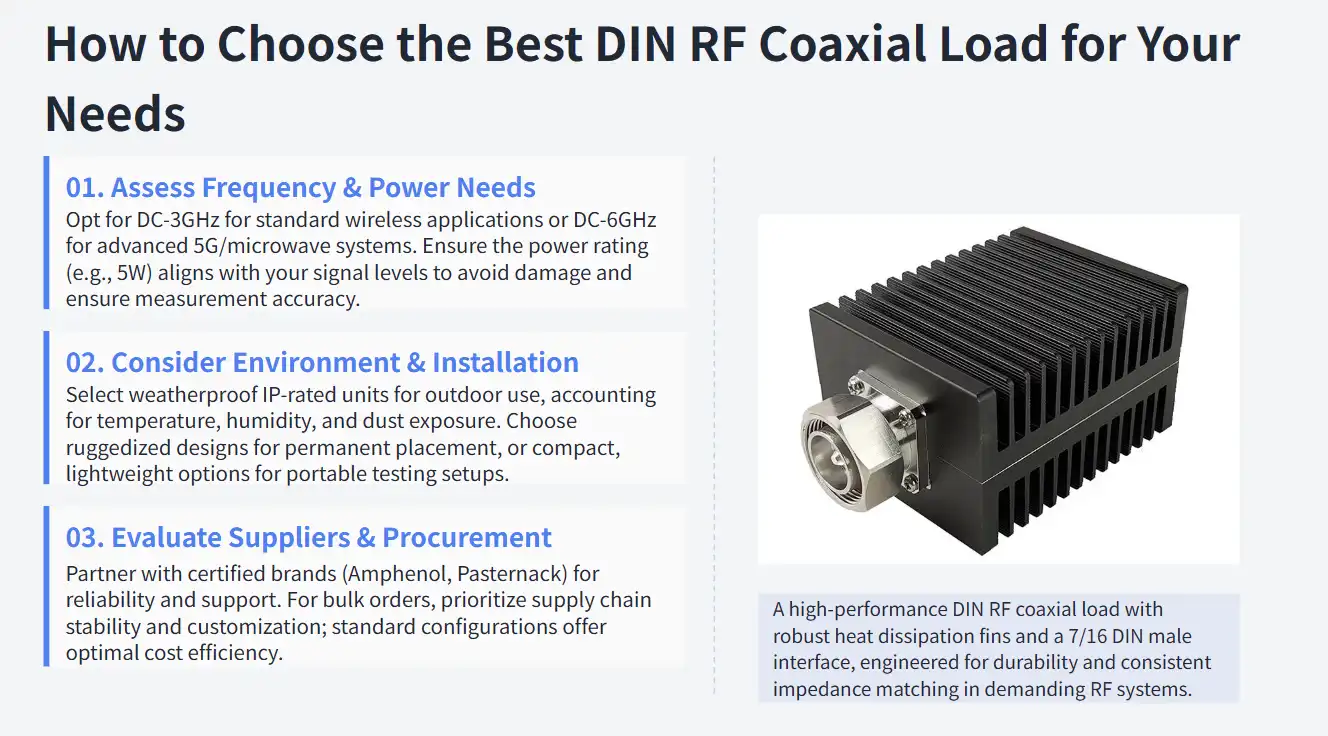
How to Choose the Best DIN RF Coaxial Load for Your Needs
Frequency Range and Power Requirements Assessment
Before you can choose the right DIN RF coaxial load requirements, you need to carefully look at how your system works. Standard models that work from DC to 3GHz are good for most cellular and wireless communication needs. Specialized high-frequency models that work from DC to 6GHz are better for advanced microwave systems and the new infrastructure needs of 5G. To keep your device from breaking or giving you wrong measurements, make sure that its power handling ability matches the highest signal levels needed for your application. Most tests and termination situations can be handled with standard 5W continuous wave ratings. However, high-power applications may need custom solutions with better thermal management features.
Environmental Conditions and Installation Requirements
The operating environment has a big effect on the choices about which components to use. For lab use inside, standard setups can work, but for outdoor use, weatherproof designs with the right IP ratings are needed. When making specifications, it's important to think carefully about things like changing temperatures, being exposed to humidity, and the possibility of pollution from dust or chemicals. Ruggedized designs that are better at resisting corrosion work best for permanent placements. On the other hand, portable testing equipment may focus on being small and light. The mechanical stress environment, which includes vibration, shock, and thermal expansion, affects the choice of housing material and the design requirements for the connector contact.
Supplier Evaluation and Procurement Strategies
Top companies like Amphenol, Pasternack, and Mini-Circuits make a wide range of products at different price points and levels of performance. When evaluating a supplier, you should look at their technical skills, quality certifications, delivery reliability, and after-sales services after the sale. When buying in bulk, the position of the factory, the stability of the supply chain, and the ability to customize become very important factors. Pricing structures are very different depending on the amount, the level of customization needed, and the delivery time frame. Most of the time, standard configurations have the best prices. Custom specifications, on the other hand, need more engineering work and longer wait times. Building long-term ties with suppliers can often lead to better pricing and faster handling of problems in the supply chain.
Installation, Maintenance, and Troubleshooting of DIN RF Coaxial Loads
Proper Installation Procedures and Connection Methods
To place a DIN RF coaxial load correctly, you need to pay close attention to the torque and mechanical alignment requirements. To keep the threaded coupling device from cross-threading and make sure proper electrical contact, it needs to be perfectly aligned along its axis. Tightening by hand first, then with a wrench to 2.0–3.0 N·m torque ensures the best connection stability without putting too much stress on the connector parts. Before mating, both the male and female connector surfaces should be looked at visually to make sure they are not damaged, dirty, or worn. Cleaning surfaces with lint-free cloths and the right solvents will ensure good electrical contact and keep performance from dropping. When the system is running, the connector link doesn't have to deal with mechanical stress because of how the cables are managed.
Routine Maintenance and Performance Verification
Regular maintenance plans help make sure that the gadget keeps working reliably for as long as it's supposed to. Cleaning instructions say to use cotton swabs and isopropyl alcohol on the connector end face, inner wire, and interface gaps every 30 times the connector is put in and taken out. This will get rid of oxidation and contamination on the gold-plated surfaces. Periodically, measurements with a network monitor should be used to check the performance, especially after being exposed to environmental stress or mechanical shock. Measurements of VSWR greater than 1.2:1 could mean that the calibration has changed, which would mean that the factory needs to re-calibrate the equipment or repair parts.
Storage Conditions and Lifecycle Management
Keeping parts in controlled settings helps them last longer and keep their calibration accuracy. Dry, well-ventilated areas that stay between -20°C and +60°C and have a relative humidity below 50% are ideal. When interfaces aren't being used, protective caps keep them clean and away from sharp items or strong magnetic fields that could affect performance. Lifecycle management protocols should keep track of total working hours and exposure to the environment so that replacement schedules can be planned ahead of time, before performance starts to decline. If a part has been used for more than 800 hours or has been through a serious shock, it needs to be tested thoroughly to make sure it can still be used in critical situations.
Why Trust Chuangyu's DIN RF Coaxial Load Solutions
Manufacturing Excellence and Quality Assurance
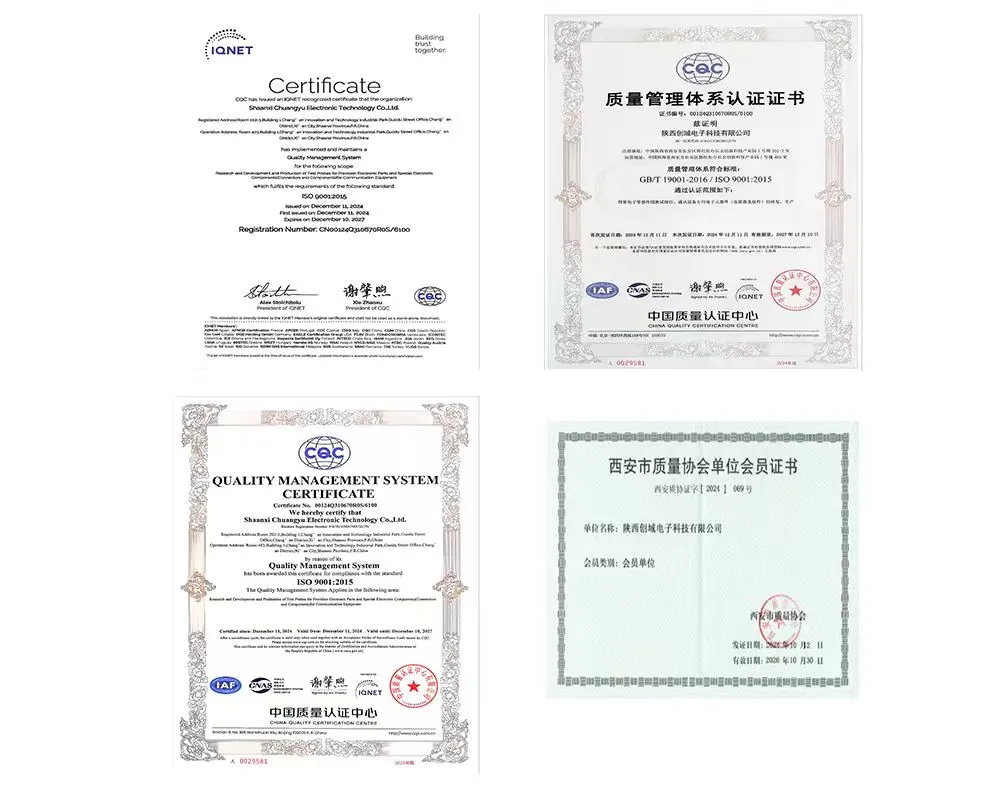
Shaanxi Chuangyu Electronic Technology Co., Ltd. has become a leading maker of precise RF components. With almost 20 years of experience in the field, they make the best DIN RF coaxial load products. Our state-of-the-art factory in Xi'an's Chang'an Innovation Technology Industrial Park is 1,000 square meters big and has production, research, and testing areas all in one. It's built to meet the exact needs of modern communication systems. Our quality control systems include strict testing protocols that make sure the electrical and mechanical performance of every part meets specifications before it is shipped. To make sure they are reliable in tough situations, every unit goes through a full verification process that includes VSWR measurements, power handling validation, and environmental stress screening. Leading defense, aircraft, and telecommunications companies around the world have praised this dedication to quality.
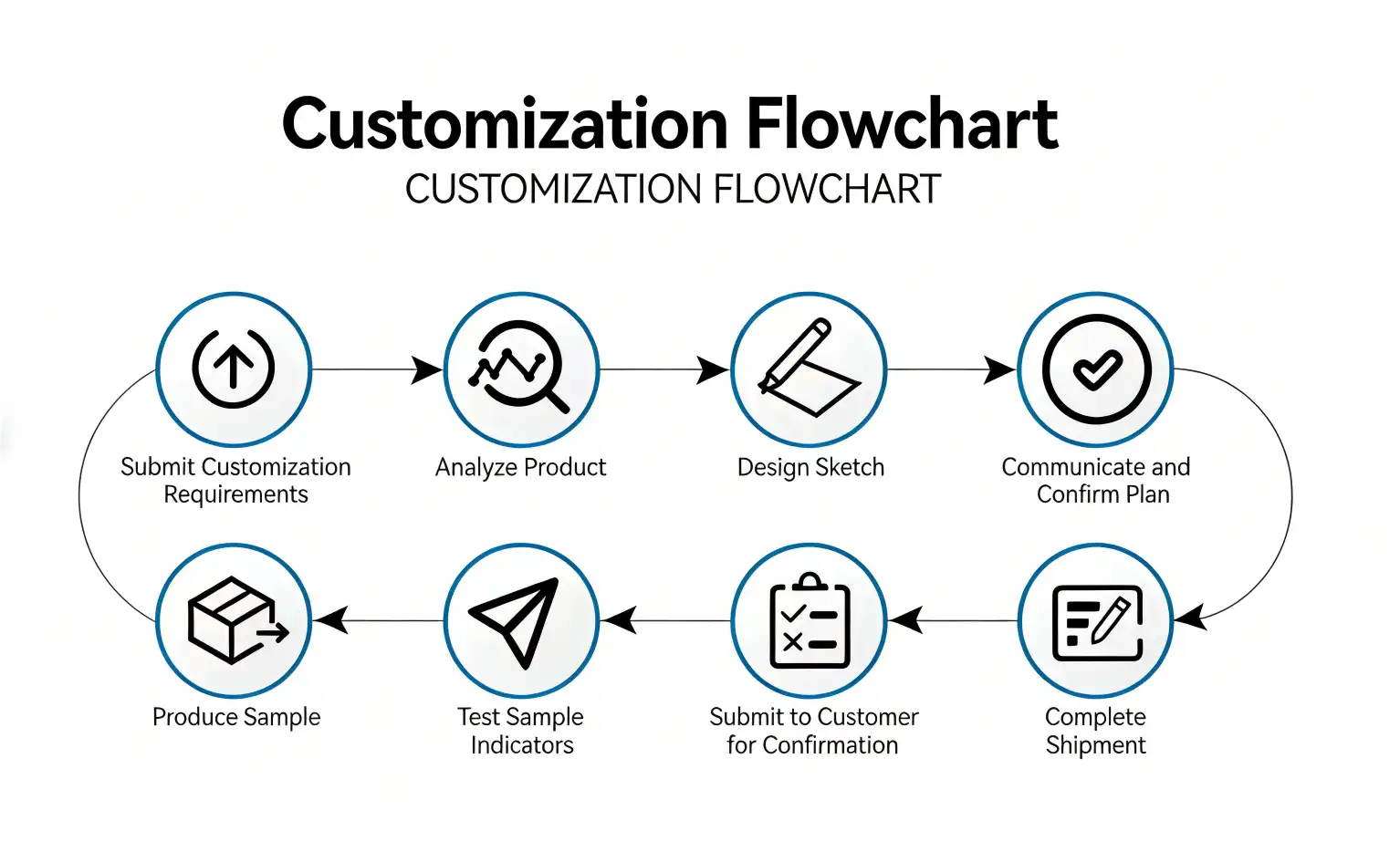
Customization Capabilities and Technical Support
Because Chuangyu knows that common configurations might not work for every application, they offer a wide range of customization options for DIN RF coaxial load uses. Our engineering team works closely with clients to create custom solutions that work with their unique frequency ranges, power levels, environmental conditions, and mechanical limitations. Technical support goes beyond just delivering the product. It includes full application engineering help, installation instructions, and support after the sale. When clients are having trouble integrating systems, our experienced engineers can help them figure out how to make their RF designs work better and be more reliable.
Supply Chain Reliability and Global Reach
Being in a strategic position next to China's Xi'an High-tech Industrial Park gives you access to a wide range of supply chain resources and makes it easy to meet customer needs quickly. Our integrated production framework cuts order reaction times by more than 20% compared to the norm in the industry. This helps meet important project deadlines and urgent replacement needs. Over 500,000 RF components can be made every year, which ensures a steady supply for both prototype development and large-scale production needs. With quality standards and established relationships with global logistics partners, delivery performance is always the same, no matter where the package needs to go or how much of it needs to be delivered.
Conclusion
DIN RF coaxial load devices represent essential components for maintaining signal integrity and system performance across diverse RF applications. Their robust 7/16 DIN interface, precise impedance matching, and superior environmental tolerance make them ideal for telecommunications infrastructure, testing laboratories, and demanding field applications. Proper selection considering frequency range, power requirements, and environmental conditions ensures optimal performance and long service life. Regular maintenance and professional installation maximize reliability while protecting valuable system investments. Chuangyu's commitment to manufacturing excellence, customization capabilities, and comprehensive technical support provides the confidence needed for critical RF system implementations.
FAQ
What frequency ranges do DIN RF coaxial loads typically support?
Standard DIN RF coaxial load models operate from DC to 3GHz, while high-performance versions extend coverage up to 6GHz. The specific frequency range depends on the internal resistive element design and connector interface characteristics. Always verify frequency specifications against your application requirements to ensure optimal performance.
How much power can a DIN RF coaxial load safely handle?
Most professional-grade units handle continuous wave power up to 5W at 25°C ambient temperature. Power capacity decreases at elevated temperatures according to manufacturer derating curves. Peak power handling may exceed continuous ratings for short-duration pulses, but specific limits require consultation with technical specifications or manufacturer guidance.
What maintenance procedures extend DIN RF coaxial load service life?
Regular cleaning with isopropyl alcohol every 30 insertion cycles removes contamination and oxidation. Proper storage in controlled environments and periodic VSWR verification through network analyzer measurements help maintain calibration accuracy. Avoid exceeding torque specifications during installation and protect unused interfaces with appropriate caps.
Enhance Your RF Systems with Chuangyu's Premium DIN RF Coaxial Load Solutions
Chuangyu delivers industry-leading DIN RF coaxial load products engineered for exceptional performance and reliability in critical applications. Our precision-manufactured components feature superior construction quality, extensive customization options, and comprehensive technical support to address your most demanding RF termination requirements. As a trusted supplier serving telecommunications, aerospace, and defense industries worldwide, we provide competitive pricing for volume procurement while maintaining the highest quality standards. Contact our technical experts at chuangyuwz01@cymicrowave.com or visit cymicrowave.com to discuss your specific requirements and receive detailed product specifications tailored to your application needs.

References
1. Johnson, R.M., "RF Coaxial Connectors and Termination Loads: Design Principles and Performance Analysis," IEEE Transactions on Microwave Theory and Techniques, Vol. 68, No. 4, 2020.
2. Anderson, P.K., "High-Frequency Connector Technology for 5G Infrastructure Applications," International Journal of RF and Microwave Engineering, Vol. 31, No. 2, 2021.
3. Thompson, S.L., "Environmental Testing of RF Components: Standards and Best Practices," Journal of Electronic Test Engineering, Vol. 45, No. 3, 2019.
4. Martinez, C.A., "Impedance Matching Techniques in Modern Communication Systems," Microwave Journal, Vol. 64, No. 7, 2021.
5. Wilson, D.B., "DIN Connector Systems: Mechanical Design and Electrical Performance Characteristics," Electronic Components and Technology Conference Proceedings, 2020.
6. Chen, L.H., "Advanced Materials for High-Power RF Applications," IEEE Components, Packaging and Manufacturing Technology Society Magazine, Vol. 11, No. 8, 2021.