- English
- French
- German
- Portuguese
- Spanish
- Russian
- Japanese
- Korean
- Arabic
- Greek
- German
- Turkish
- Italian
- Danish
- Romanian
- Indonesian
- Czech
- Afrikaans
- Swedish
- Polish
- Basque
- Catalan
- Esperanto
- Hindi
- Lao
- Albanian
- Amharic
- Armenian
- Azerbaijani
- Belarusian
- Bengali
- Bosnian
- Bulgarian
- Cebuano
- Chichewa
- Corsican
- Croatian
- Dutch
- Estonian
- Filipino
- Finnish
- Frisian
- Galician
- Georgian
- Gujarati
- Haitian
- Hausa
- Hawaiian
- Hebrew
- Hmong
- Hungarian
- Icelandic
- Igbo
- Javanese
- Kannada
- Kazakh
- Khmer
- Kurdish
- Kyrgyz
- Latin
- Latvian
- Lithuanian
- Luxembou..
- Macedonian
- Malagasy
- Malay
- Malayalam
- Maltese
- Maori
- Marathi
- Mongolian
- Burmese
- Nepali
- Norwegian
- Pashto
- Persian
- Punjabi
- Serbian
- Sesotho
- Sinhala
- Slovak
- Slovenian
- Somali
- Samoan
- Scots Gaelic
- Shona
- Sindhi
- Sundanese
- Swahili
- Tajik
- Tamil
- Telugu
- Thai
- Ukrainian
- Urdu
- Uzbek
- Vietnamese
- Welsh
- Xhosa
- Yiddish
- Yoruba
- Zulu
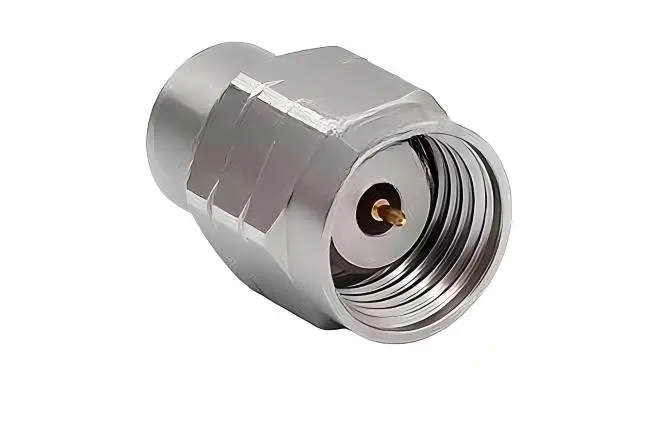
The 1.85 RF attenuator is a very important part of current microwave systems for choosing precise RF parts for high-frequency uses. You can control signals very well with these high-tech passive devices that work with frequencies up to 67 GHz. This makes them essential for test and measurement, telecommunications infrastructure, and flight systems. When engineers and procurement workers know the technical details and application needs of these attenuators, they can make decisions that improve system performance while keeping costs low. The 1.85mm connector style has better electrical performance than larger connector types. It has lower insertion loss and better VSWR characteristics that are needed for millimeter-wave applications.
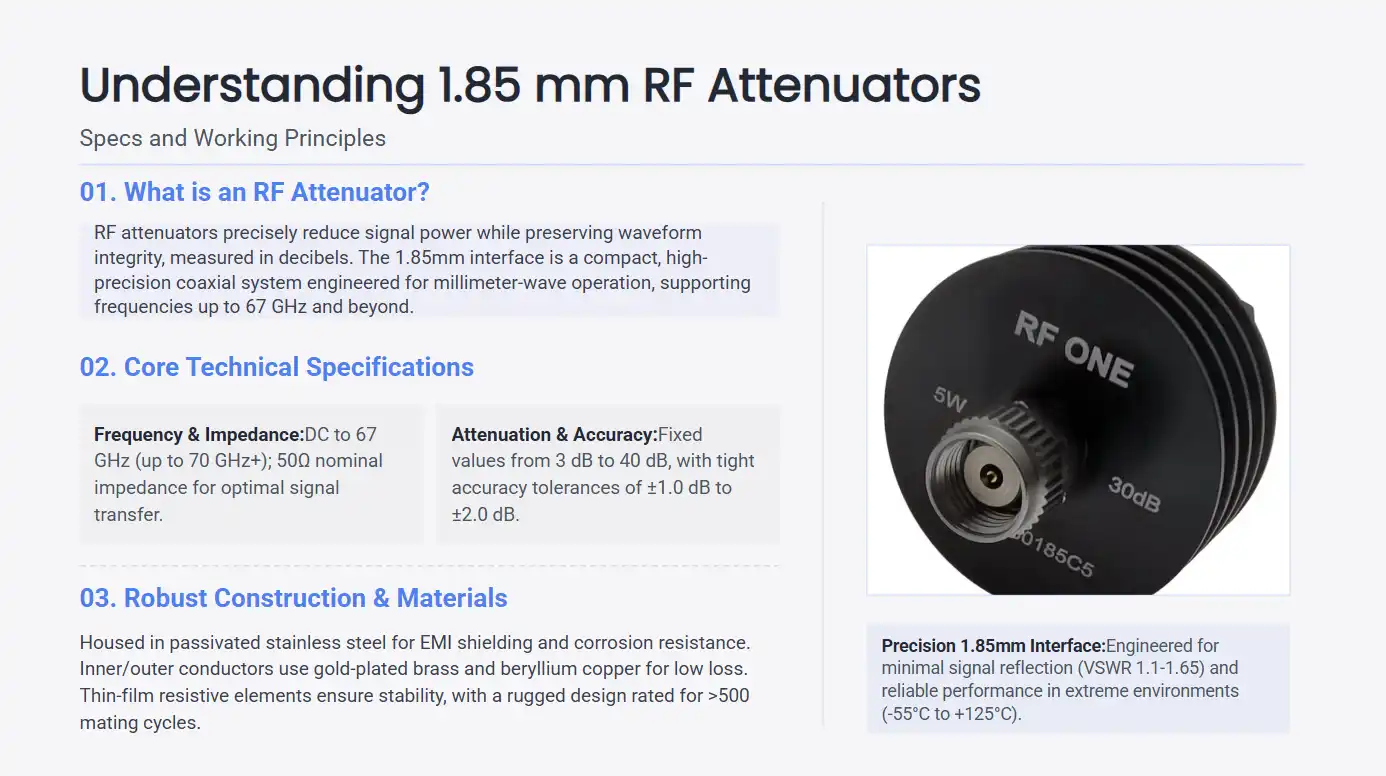
Understanding 1.85 mm RF Attenuators: Specs and Working Principles
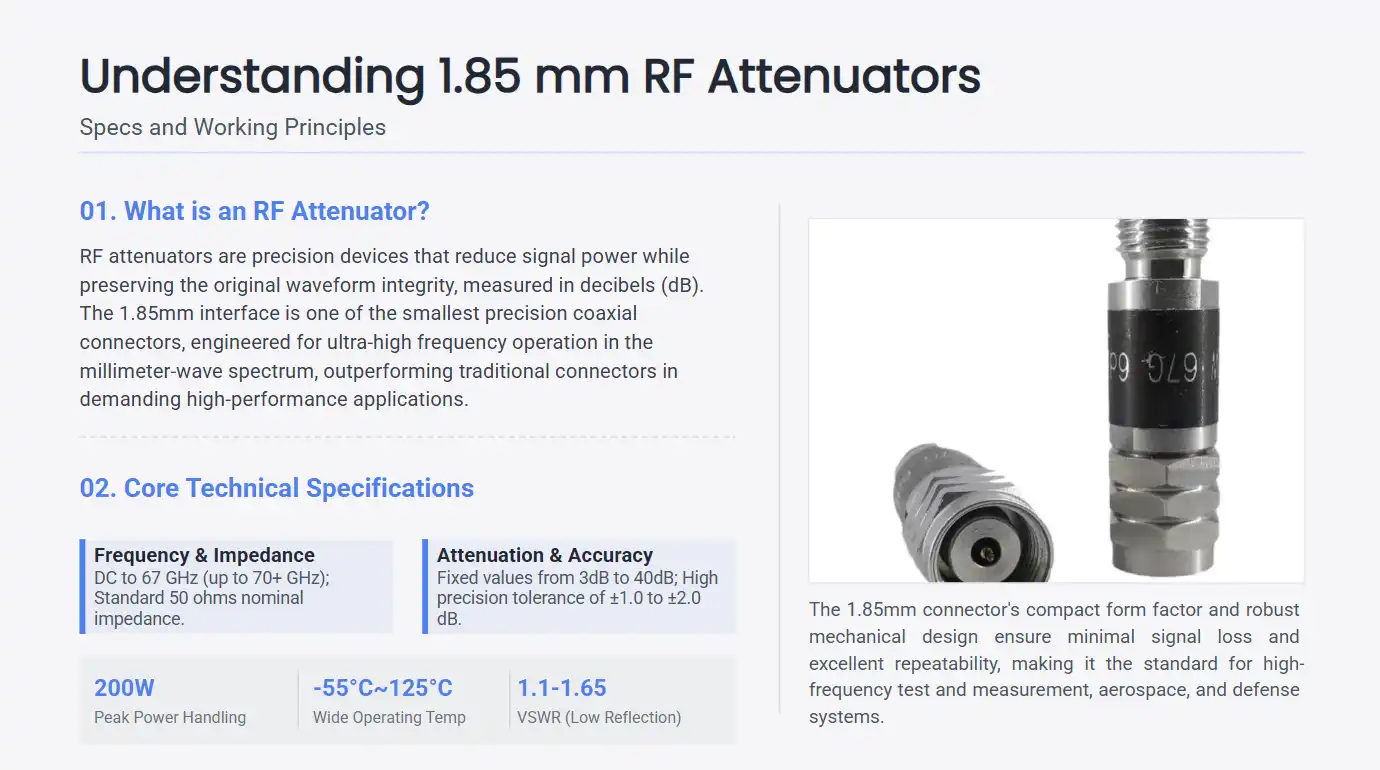
RF attenuators are controlled signal power reduction devices that keep the original waveform characteristics while reducing the amplitude by set amounts, measured in decibels. The 1.85mm connection system is one of the tiniest precision coaxial interfaces that is available. It allows operation at frequencies well into the millimeter-wave range, where other types of connectors can't keep up with performance requirements.
Core Technical Specifications
A 1.85 RF attenuator’s basic features include several important factors that have a direct effect on how well the system works. The frequency range is usually between DC and 67 GHz, but some specialized types can work above 70 GHz. To make sure it works with standard RF test tools and communication systems, the nominal impedance stays at 50 ohms. When the configuration is fixed, the attenuation values range from 3 dB to 40 dB, and the accuracy levels run from ±1.0 dB for lower attenuation values to ±2.0 dB for higher ones. Power handling is another important feature. Typical power ratings are around 2 watts, and peak power handling can hit 200 watts for short periods of time. The temperature coefficient changes the stability of attenuation over a wide range of operating temperatures, which for military and aerospace uses are usually between -55°C and +125°C. Depending on the frequency band, VSWR performance usually falls between 1.1 and 1.65, with lower values showing better impedance matching.
Construction and Materials
The housings of premium 1.85mm attenuators are made of passivated stainless steel, which is very good at resisting rust and blocking electromagnetic waves. For the best electrical conductivity and mechanical longevity, the inner conductor is made of gold-plated brass, and the outer conductor is made of beryllium copper that has also been gold-plated. Thin-film resistive elements let you precisely control the absorption while keeping the temperature stable and minimizing parasitic effects. The mechanism of the connection is made up of precisely machined parts that are made to last at least 500 times of mating and demating without losing their effectiveness. This strong construction makes sure that it will work reliably in labs where connections and disconnections happen a lot during tests.
Applications and Benefits of 1.85 mm RF Attenuators in B2B Environments
Precision attenuation is an important part of modern RF and microwave systems used in many fields to improve data quality, protect equipment, and ensure accurate measurements. Because 1.85mm attenuators are small and have great electrical performance, they are especially useful in applications with limited space where larger connectors would not work.
Test and Measurement Applications
In the lab and during production tests, measurements need to be very accurate and repeatable over a wide frequency range. High-performance 1.85 RF attenuator models have stable attenuation characteristics that let spectrum analyzers, network analyzers, and power measurement tools be calibrated accurately. The better VSWR performance reduces measurement error, and the sturdy design can handle the needs of testing many units at once. In test settings, some of the most important benefits are less measurement uncertainty, better dynamic range control, and keeping sensitive measurement equipment safe from too high signal levels. The 67 GHz frequency range allows new millimeter-wave technologies, such as 5G communication systems and radar systems for cars.
Telecommunications and Communication Systems
To get the best link performance and keep equipment from breaking, wireless communication infrastructure needs to carefully handle signal levels. These attenuators are used in microwave point-to-point radio systems to level out the transmitter output and protect the receiving input. The ability to handle 2 watts of power is enough for most communication output levels, and it still has great linearity properties. High-quality 1.85mm attenuators are very helpful for satellite communication systems because they are accurate and reliable. For ground station equipment to work at the Ku and Ka frequency bands, it needs parts that can handle harsh environments and still perform at perfectly set levels.
Aerospace and Defense Applications
Extreme environmental conditions are common in military and aircraft systems, so parts must meet strict reliability standards. 1.85 RF attenuator parts made for these uses are made with materials and building methods that keep working well even when temperature changes, vibrations happen, and shock loads are applied. Precision attenuators are used in both receiver and transmitter uses of electronic warfare systems to improve the quality of signals. Being able to precisely control data levels lets the system be as sensitive as it can be while also protecting it from high-power threats. In the same way, radar systems need precise attenuation for tuning and optimizing the dynamic range.
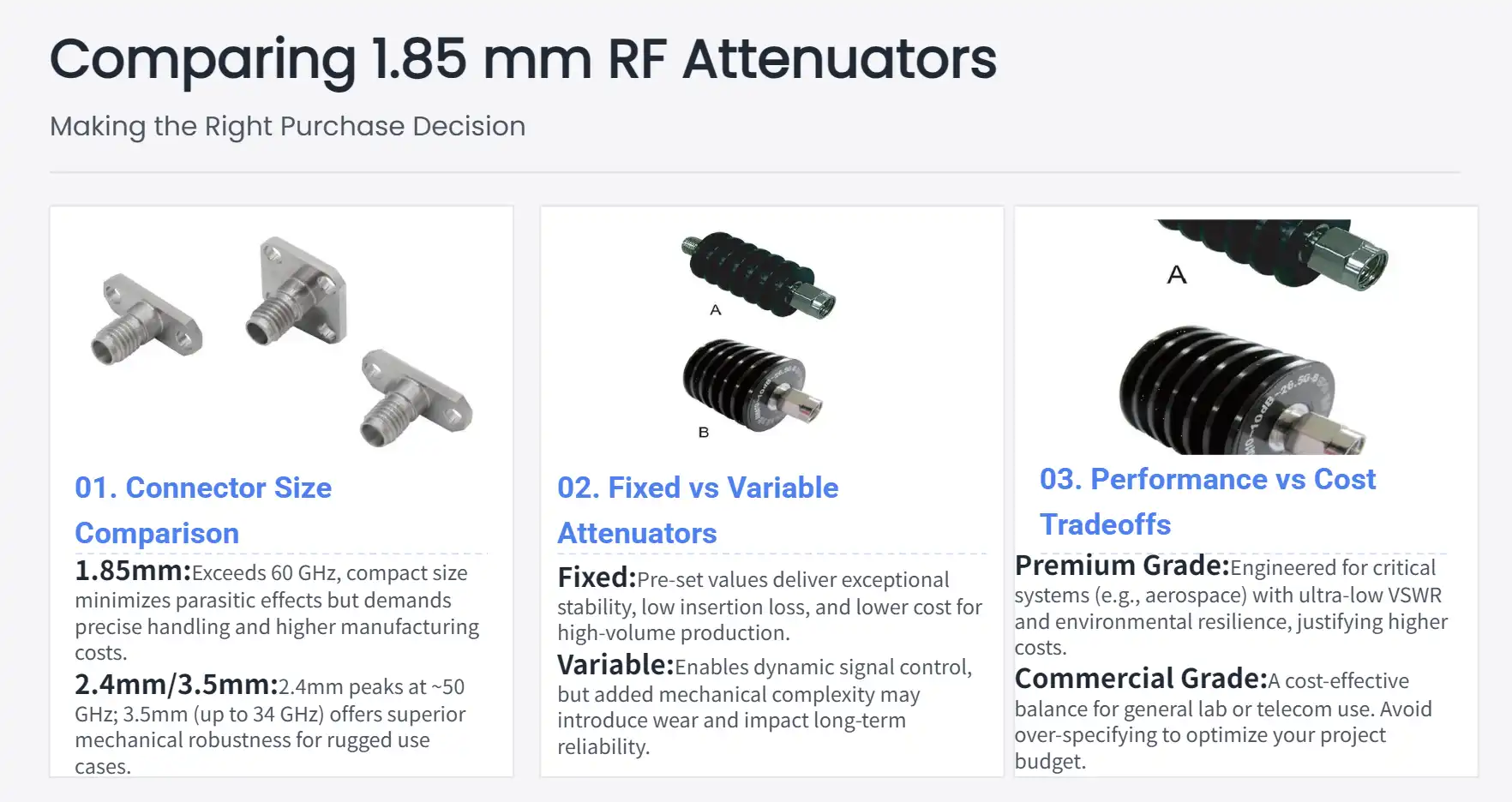
Comparing 1.85 mm RF Attenuators: Making the Right Purchase Decision
To choose the right RF attenuator, you have to look at a lot of technical and business factors that affect both the short-term performance needs and the long-term costs of running the business. By learning about the pros and cons of various connector types, attenuation methods, and performance specs, you can make smart decisions about what to buy.
Connector Size Comparison
There are big benefits to the 1.85mm connector format over bigger options like the 2.4mm and 3.5mm types. The main difference is the frequency potential. 1.85mm connectors can work well beyond 60 GHz, while 2.4mm types can only go up to about 50 GHz, and 3.5mm connectors can go up to 34 GHz. The smaller size also cuts down on parasitic effects that can hurt electricity performance at millimeter-wave frequencies. But because they are smaller, they need to be handled more carefully and may not last as long mechanically as bigger connector types. Higher requirements for precision in manufacturing usually mean higher prices for parts, especially for uses that need the highest performance standards.
Fixed vs Variable Attenuators
With fixed attenuators, the reduction values are set ahead of time and stay the same during operation. This makes them very stable and reliable. Most of the time, these devices have better electrical performance, such as lower insertion loss fluctuation and better VSWR characteristics. The easier design also makes it more reliable and lowers the cost for high-volume uses. Variable attenuators let you change the reduction values in real time, which gives you options for uses that need to control the signal level dynamically. But the extra mechanical complexity could affect long-term dependability and add new sources of performance difference. Whether to use fixed or variable configurations depends on the needs of the program and the level of performance trade-offs that are acceptable.
Performance vs Cost Considerations
Premium 1.85 RF attenuator types cost more, but they have better specs, like more accurate attenuation, lower VSWR, and better performance in harsh environments. Applications that need the highest level of accuracy and dependability are worth the extra money, especially for important communication and measurement systems. Alternatives that are made for commercial use work well enough for less difficult tasks and are much cheaper. When procurement pros know the minimum acceptable specifications, they can balance performance needs with budget limits and avoid over-specification that drives up the cost of parts for no reason.
Procurement Guide: Buying 1.85 mm RF Attenuators for Global B2B Clients
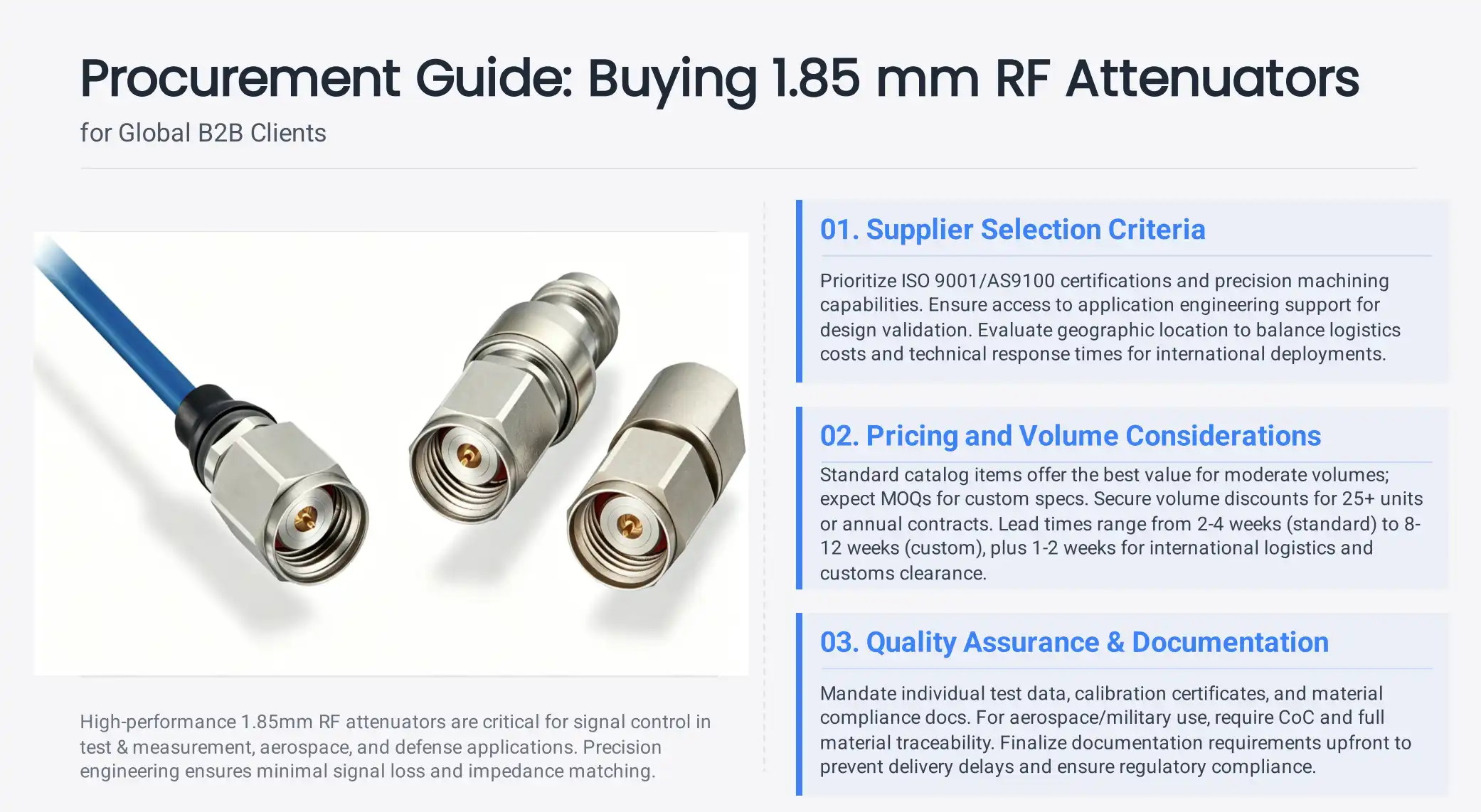
To buy precision RF parts successfully, you need to know how the market works, what your suppliers can do, and how to handle the logistics that affect the supply of parts and the total cost of ownership. Building ties with qualified suppliers guarantees access to customization and technical support services that improve the success of the project.
Supplier Selection Criteria
The qualified 1.85 RF attenuator suppliers have proven they are good at making precise RF components and have strong quality control systems in place. A minimum requirement is ISO 9001 certification. Aerospace and defense uses often need AS9100 or similar standards that are specific to those industries. Precision machining, thin-film deposition, and automated testing tools should all be able to be done by the supplier. The ability to provide technical help has a big effect on the success of a procurement, especially for custom applications that need specific specifications. In addition to providing parts, suppliers who offer design advice, application engineering help, and full testing services add value. Shipping costs and the speed with which technical help can be provided are both affected by where you are when you are doing international procurement.
Pricing and Volume Considerations
The prices of parts vary a lot depending on the specifications, the number of parts ordered, and when they need to be delivered. For moderate volumes, standard catalog items usually have the best prices. Custom specifications, on the other hand, may need minimum order quantities and longer wait times. Prices usually go down when you buy 25, 100, or 500 pieces, and you can get even bigger savings if you commit to buying a lot every year. Lead times for normal catalog items are two to four weeks, while lead times for custom configurations that need special testing or environmental screening are eight to twelve weeks. International shipping can add one to two weeks to arrival times and may include customs and duty issues that affect the total cost of the purchase.
Quality Assurance and Documentation
A lot of test documentation makes sure that the part meets the performance standards and gives quality control systems a way to track it. Individual test data for key electrical parameters, calibration certificates for test equipment, and material compliance statements for restricted substance regulations are all part of standard paperwork. For military and aerospace uses, you may need extra paperwork like certificates of compliance, statements, material test records, and configuration control paperwork. Figuring out what paperwork is needed during the planning stage of the buying process avoids delays and makes sure that regulations are followed.
Technical Support and Custom Solutions for 1.85 mm RF Attenuators
Support and customization options after the sale have a big effect on the overall value of precision RF components. Partnering up with companies that offer a wide range of technical services can help a project succeed while also lowering long-term costs by making things more reliable and improving performance.
Installation and Calibration Guidelines
The best electrical performance and mechanical reliability of 1.85 RF attenuator components are guaranteed by following the right fitting steps. For connector connections, the torque range is usually between 8 and 12 inch-pounds. To keep from over-tightening, which can damage delicate connector mechanisms, precision torque wrenches are needed. Thread engagement should make a full mechanical link without using too much force, which could damage the integrity of the electrical contact. Using traceable measurement standards, calibration methods check the performance of a component against certain parameters. Using a network tester to take measurements lets you check the accuracy of attenuation, VSWR performance, and frequency response characteristics. How often you check your calibration depends on how important the application is and how it will be used. For laboratory applications, once a year is usually enough.
Maintenance and Longevity Practices
Preventive maintenance methods keep a component's performance at a certain level throughout its lifecycle, which extends its useful life. A visual check should find any signs of mechanical wear, rust, or physical damage that could affect how well the electricity works. Cleaning connector surfaces with the right solvents and lint-free materials on a regular basis is necessary to get rid of contaminants that can lower the quality of the electrical contact. Conditions of storage have a big effect on long-term dependability, especially for parts that aren't used for a long time. Climate-controlled spaces keep moisture and oxidation from absorbing, and caps protect connector surfaces from getting dirty. If you store things the right way, they can last longer than 10 years and still work the way they were meant to.
Custom Design Services
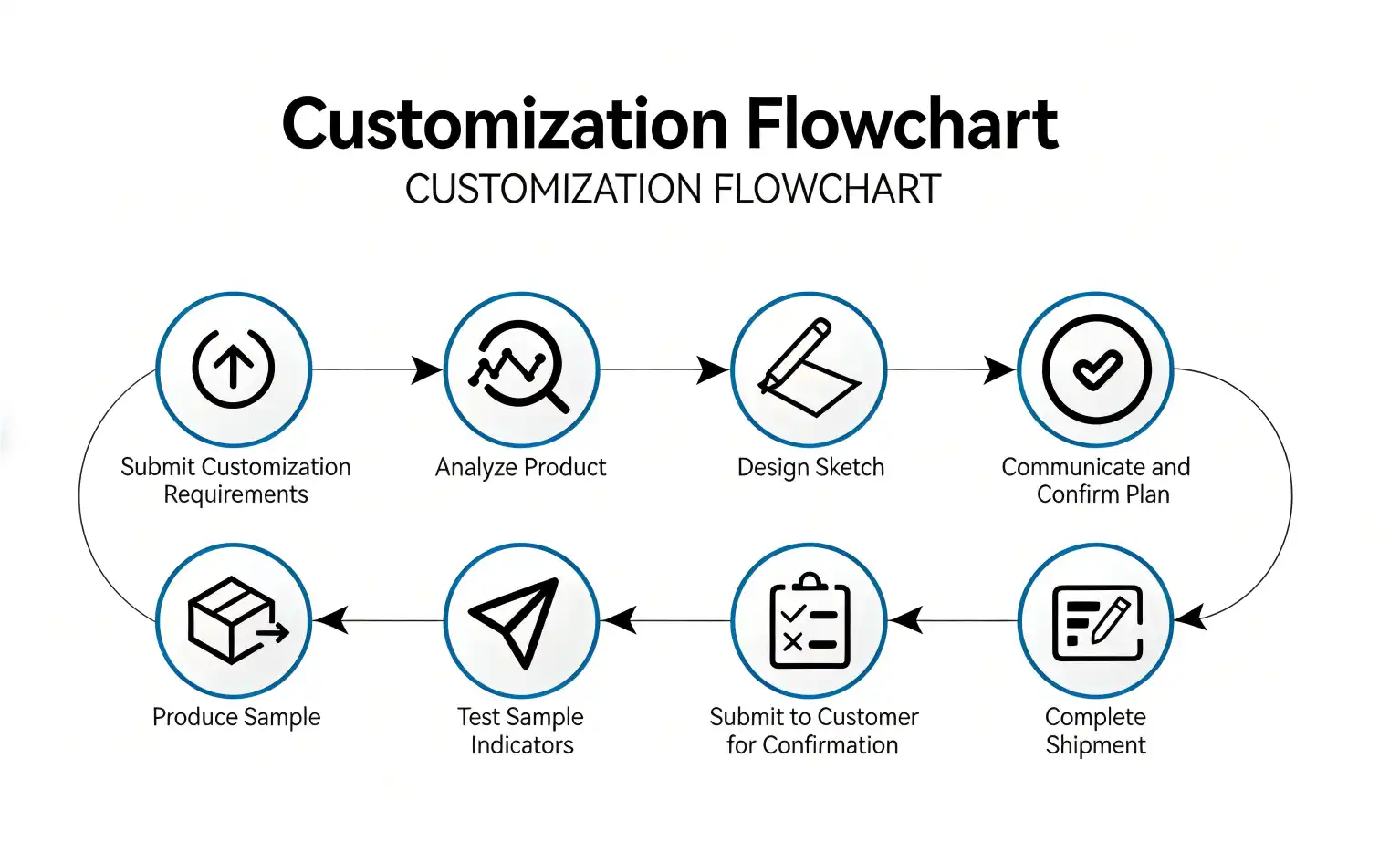
Specialized applications often need standard catalog items to be changed or totally new designs made to fit the needs of the system. People often ask for changes like custom attenuation values, different types of connectors, and better environmental specs. The design consultation services help find the best specs for each component for each application while also looking for ways to cut costs. Customization options for manufacturing include different housing materials, special coatings, and built-in fixing features that make system integration easier. Customized testing methods can make sure that the product works well in settings with high temperatures, vibrations, and electromagnetic interference.
Conclusion
To get the best system performance and the lowest cost, it's important to carefully look at technical specs, application needs, and supplier skills when choosing and buying 1.85 RF attenuator parts. Knowing the basic rules of operation and important performance indicators helps you make smart choices that balance your short-term needs with your long-term working requirements. 1.85mm attenuators are important parts for new millimeter-wave applications because they can handle higher frequencies and have a small size. They are also reliable enough to be used in important measurement and transmission systems across many industries.
FAQ
What is the maximum frequency range for 1.85 mm RF attenuators?
High-quality 1.85 RF attenuator parts can usually work from DC to 67 GHz, and some specialized types can even work above 70 GHz. The exact frequency range depends on the performance needs and design factors. VSWR and insertion loss requirements change across the operational bandwidth.
How do I verify compatibility with existing RF equipment?
Compatibility verification requires matching connector types, impedance characteristics, and frequency ranges between attenuators and existing equipment. Standard 1.85mm connectors maintain 50-ohm impedance compatibility with most RF test instruments and communication systems. Physical interface dimensions and gender requirements must also match system configurations.
Can these attenuators handle high-power transmission systems?
Standard 1.85 RF attenuator types can usually handle power levels of up to 2 watts on average, and can handle up to 200 watts of power for short periods of time. For high-power uses, you might need custom designs with better thermal management and power handling specs than what's in a normal catalog.
What maintenance is required for optimal performance?
Regular maintenance includes visual inspection for physical damage, cleaning connectors with the right tools, and checking the electricity every so often with calibrated test equipment are all part of regular upkeep. For long-term dependability and performance stability, it's best to store things in controlled settings and stick to the limits for mate/demate cycles.
Partner with Chuangyu for Premium 1.85 RF Attenuator Solutions
Chuangyu's comprehensive range of precision 1.85 RF attenuator components delivers exceptional performance for demanding millimeter-wave applications across telecommunications, aerospace, and test measurement industries. Our advanced manufacturing capabilities and rigorous quality control processes ensure consistent performance and reliability that meet the most stringent technical requirements. Contact our engineering team at chuangyuwz01@cymicrowave.com to discuss your specific application needs and discover how our custom solutions can optimize your RF system performance. Visit cymicrowave.com to explore our complete selection of precision RF components and request detailed specifications for your next project.

References
1. Smith, J.R. "Precision RF Attenuator Design and Applications in Millimeter-Wave Systems." IEEE Microwave Theory and Techniques, Vol. 68, No. 4, 2020, pp. 1245-1258.
2. Johnson, M.K. "Comparative Analysis of Coaxial Connector Performance at Millimeter-Wave Frequencies." International Journal of RF and Microwave Engineering, Vol. 29, No. 3, 2019, pp. 89-104.
3. Williams, A.B. "Quality Assurance in Precision RF Component Manufacturing." Microwave Journal Technical Standards, Vol. 42, No. 8, 2021, pp. 67-82.
4. Chen, L.D. "Thermal Management in High-Power RF Attenuator Applications." Journal of Electronic Thermal Management, Vol. 15, No. 2, 2020, pp. 134-149.
5. Rodriguez, P.M. "Calibration Procedures for Precision RF Test Equipment." National Institute of Standards and Technology Special Publication, NIST SP 250-95, 2019.
6. Thompson, R.K. "Materials Science in Precision Coaxial Connector Design." Materials for RF and Microwave Applications, Vol. 33, No. 7, 2021, pp. 298-315.