- English
- French
- German
- Portuguese
- Spanish
- Russian
- Japanese
- Korean
- Arabic
- Greek
- German
- Turkish
- Italian
- Danish
- Romanian
- Indonesian
- Czech
- Afrikaans
- Swedish
- Polish
- Basque
- Catalan
- Esperanto
- Hindi
- Lao
- Albanian
- Amharic
- Armenian
- Azerbaijani
- Belarusian
- Bengali
- Bosnian
- Bulgarian
- Cebuano
- Chichewa
- Corsican
- Croatian
- Dutch
- Estonian
- Filipino
- Finnish
- Frisian
- Galician
- Georgian
- Gujarati
- Haitian
- Hausa
- Hawaiian
- Hebrew
- Hmong
- Hungarian
- Icelandic
- Igbo
- Javanese
- Kannada
- Kazakh
- Khmer
- Kurdish
- Kyrgyz
- Latin
- Latvian
- Lithuanian
- Luxembou..
- Macedonian
- Malagasy
- Malay
- Malayalam
- Maltese
- Maori
- Marathi
- Mongolian
- Burmese
- Nepali
- Norwegian
- Pashto
- Persian
- Punjabi
- Serbian
- Sesotho
- Sinhala
- Slovak
- Slovenian
- Somali
- Samoan
- Scots Gaelic
- Shona
- Sindhi
- Sundanese
- Swahili
- Tajik
- Tamil
- Telugu
- Thai
- Ukrainian
- Urdu
- Uzbek
- Vietnamese
- Welsh
- Xhosa
- Yiddish
- Yoruba
- Zulu
Engineers always choose GPPO RF connector solutions for RF testing because these very small push-in connectors work so precisely in high-frequency settings that no other connectors can. This GPPO design, which is also called SSMP connections, offers great signal integrity from DC to 50GHz and better electrical performance. The strong push-in locking device on these connectors makes sure that connections are safe and makes it easy to put them together and take them apart. With their small, 90-degree bent shape and beryllium copper gold-plated construction, GPPO RF connector systems give engineers the dependability and performance they need for mission-critical testing in the semiconductor, telecommunications, and aircraft industries.
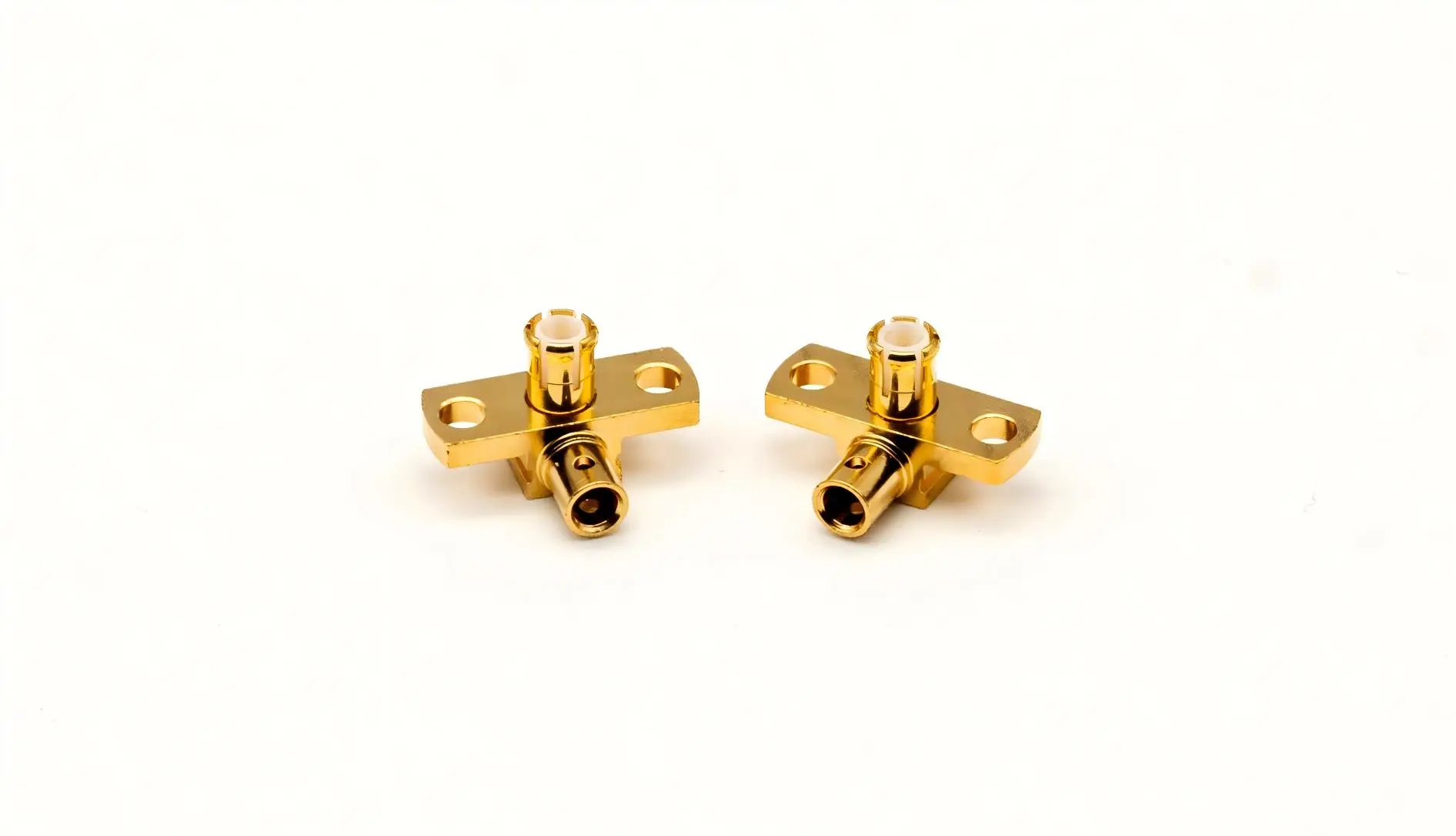
Introduction to GPPO RF Connectors in RF Testing
Precision RF connectivity options made especially for tough testing environments have come a long way with GPPO RF connector technology. The advanced engineering principles used in these ultra-miniature coaxial connections allow them to transmit signals very well while still keeping the small sizes needed for modern electronic systems.
Fundamental Design Architecture
The main idea behind GPPO connections is a special push-in locking system that gets rid of the need for threading that is present in regular RF connectors. This new method cuts down on the time it takes to connect while keeping the electrical contact resistance the same over many mating rounds. The connector's nominal impedance of 50 ohms is the same as what is needed for a normal RF system. This means that it can be used without any extra matching networks.
Engineers like how these connectors' precise manufacturing tolerances allow them to keep their great electrical properties across their whole DC to 50GHz frequency range. The gold finish on the beryllium copper contact system makes sure that it conducts electricity well and doesn't rust. The PTFE insulation material keeps its dielectric properties stable even when the environment changes.
Signal Integrity and Frequency Compatibility
For modern RF tests, connectors need to be able to handle higher frequencies and signal types that are getting more complicated. Because they have an advanced electromagnetic design that reduces signal reflections and insertion losses, GPPO connections work very well in these tough conditions. The connector's ability to keep signal integrity at millimeter-wave frequencies is shown by its usual VSWR specification of 1.35:1 to 50GHz.
These connectors can work with frequencies from DC to the millimeter wave range, which means they can be used for new 5G testing applications, satellite communication systems, and advanced radar development projects. Because it covers a wide range of frequencies, engineers can use the same family of connectors on all of their testing platforms. This makes inventory simpler and reduces the need for upkeep.
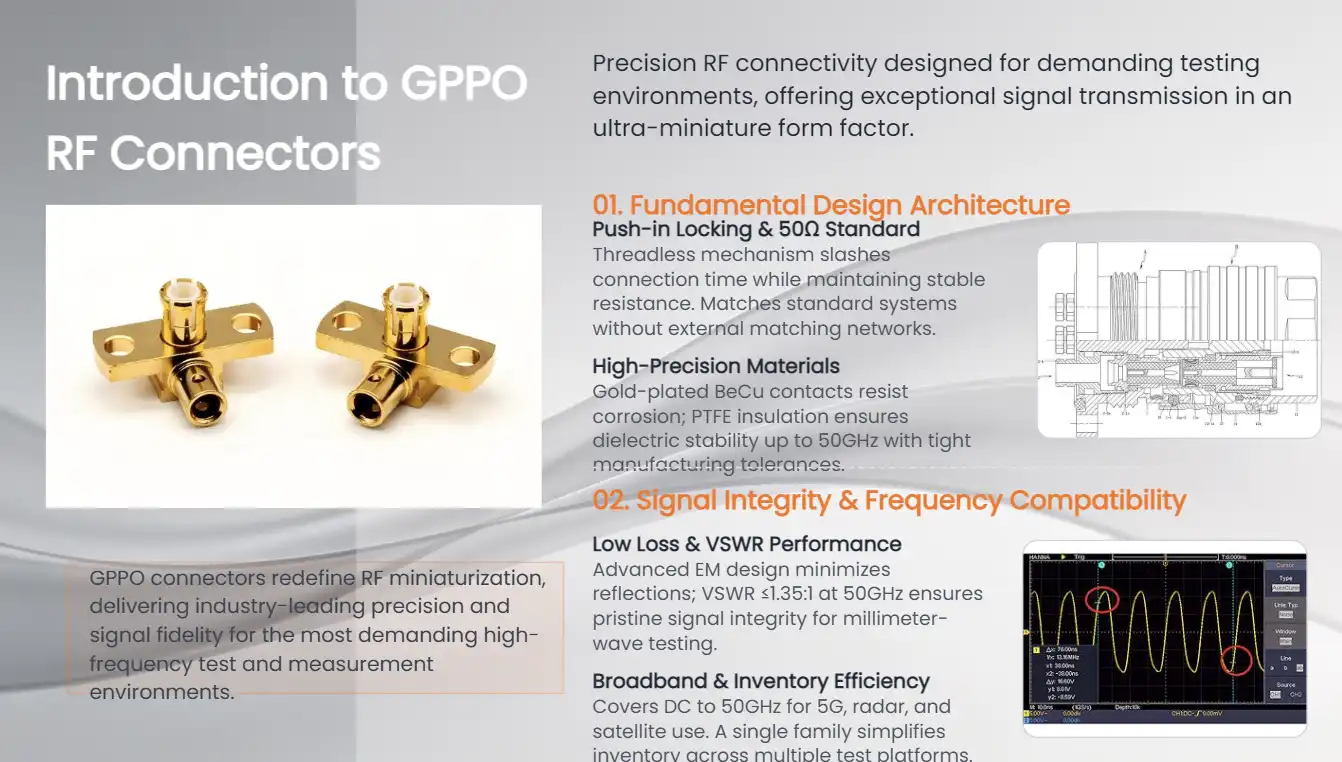
Technical Insights and Performance Advantages of GPPO RF Connectors
Engineers can make better choices about their testing needs when they know the technical details that affect how well a GPPO RF connector works. The electrical parameters, mechanical design, and choice of material for these connections all come together to make them work better than others.
Electrical Parameter Excellence
GPPO connections are different from other RF connector technologies because of how they work electrically. With insertion loss specs of 0.1√f (GHz), these connectors keep the signal strength high throughout the transmission line. This makes sure that measurements are correct in testing situations where accuracy is important. When checking with millimeter waves, where signal loss can have a big effect on measurement accuracy, the low insertion loss is very important.
Impedance control stays the same across the frequency range of the connection, and tight tolerances keep impedance from changing. This quality is very important for measuring impedance changes in the time domain and checking high-speed digital signals, since these changes can cause measurement errors.
Mechanical Robustness and Environmental Performance
Professional engineers who work in defense and aerospace need connectors that can successfully connect in harsh environments. GPPO connectors work well in temperatures ranging from -55°C to +125°C, meeting strict military and aircraft standards. This wide temperature range makes sure that the device works the same way in a wide range of situations, from satellite systems to testing areas for cars.
The mechanical design has parts that make it last longer without affecting how well it works electrically. When the spine is bent, it makes the mounting more flexible while still keeping the structure strong when there is shock or shaking. These connectors are very durable and can withstand more than 500 insertion and extraction cycles. They work great in testing settings with a lot of use.
Material Composition and Manufacturing Quality
The selection of high-quality materials has a big impact on the performance and dependability of GPPO connectors. Beryllium copper contact elements have great spring properties and electrical conductivity. Gold plating protects them from corrosion and keeps the contact resistance fixed over time. The gold plating on the brass shell makes it effective at blocking electromagnetic fields while still being compatible with standard mounting tools.
To get the connector to work the way it's supposed to, manufacturing accuracy is very important. Using advanced machining methods makes sure that the dimensions are correct, which directly leads to stable electrical properties across production lots. Before being sent out, quality control checks each connector to make sure it meets the requirements. This gives engineers faith in the repeatability of measurements.
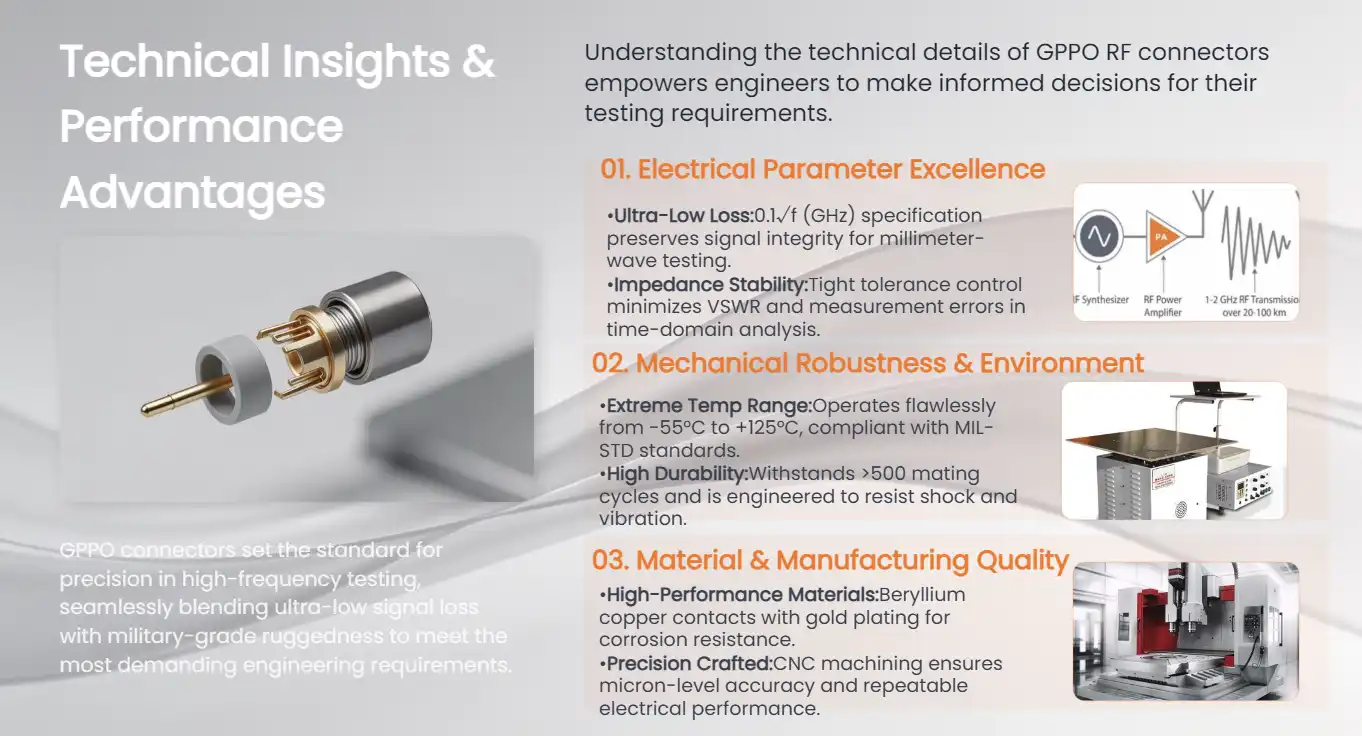
Comparison and Decision-Making: GPPO RF Connectors vs. Other RF Connectors
Engineers have to compare different technologies based on their specific needs when choosing RF connections for testing purposes. When it comes to several important performance areas, GPPO RF connector options are clearly better than traditional connector families.
Performance Parameter Analysis
When you look at GPPO connectors next to N-Type, SMA, BNC, TNC, and QMA options, you can see that they work very differently across frequency ranges and mechanical properties. N-Type connections work great in high-power situations, but their bigger size and threading design make them unsuitable for high-density testing setups, where GPPO connectors work better.
SMA connectors and GPPO designs share some frequency range overlap, but they need to be threaded, which adds to the time it takes to join and increases the chance of mechanical wear. GPPO connectors' push-in design takes away these worries while still offering the same level of electrical performance in a smaller size.
While BNC and TNC connectors work well at lower frequencies, they don't have the frequency range extension that is needed for millimeter-wave tests. Even though their bayonet coupling system is easy to use and quick, it can't achieve the precise mechanical tolerances needed for the best high-frequency performance.
Cost-Benefit Considerations
The total cost of ownership for RF connectors includes more than just the price they were bought for. It also includes things like the time it takes to install them, the cost of repairs, and the effect they have on the accuracy of measurements. GPPO plugs are a great deal because they cut down on installation time and make measurements more consistent, which can lead to more tests being done at once.
When companies standardize their testing equipment, they can often get better deals on GPPO connectors when they buy them in bulk. Because the connector works with different kinds of cables, engineers can find the best ways to set up wire assemblies for different kinds of tests while still keeping the connectors standard.
Application-Specific Advantages
Different testing programs focus on different connection features. For testing phased array radar, it's important to match the phases of various signal paths perfectly. The consistent electrical performance of GPPO connectors makes this possible, which is a quantifiable benefit. The connector works well for testing satellite transmission because it can handle a wide range of temperatures and stays mechanically stable when temperatures change.
Applications that use measurements in laboratories, like the quick-connect feature, because it keeps operators from getting tired during long testing sessions. The push-in system gives you visual and tactile feedback to help make sure the connections are correct. It also lowers the risk of over-torquing, which can damage more delicate connector types.
Procuring GPPO RF Connectors: A Buyer's Guide for B2B Clients
Successful procurement of GPPO RF connector systems requires understanding supplier capabilities, technical documentation requirements, and quality assurance processes. Industrial buyers can get more from their purchases when they work with suppliers who offer full technical help throughout the whole process.
Supplier Evaluation and Selection
To find qualified suppliers, you have to look at their manufacturing skills, quality certifications, and technical help resources. Suppliers with a good reputation use ISO 9001 quality management systems and often have other certifications that are useful for military or aircraft uses. With these certifications, you can be sure that the methods used to make the parts meet the standards set by the industry for precision RF parts.
When you need custom cable assemblies or different connector configurations, technical help becomes very important. Suppliers with their own engineering teams can be very helpful during the design part by helping to choose the best connectors for the testing needs.
Documentation and Sample Evaluation
Engineers can check that connectors work with current systems and guess how well they will work in their own specific situations by reading detailed technical documentation. Electrical specifications across the whole frequency range, mechanical drawings with key measurements, and environmental specifications should all be included in detailed datasheets.
Sample evaluation programs let engineers check the performance of connectors before making bigger purchases. Good suppliers usually send samples with test certificates that show how well the electrical performance was measured. This lets you easily compare the results to what the standard calls for. This evaluation process helps find possible problems with compatibility before they slow down project plans.
Purchasing Logistics and Support
For procurement methods to work well, there needs to be clear communication about delivery times, packaging needs, and quality documentation. Bulk buying often gets you better prices and makes sure that you always have product for testing programs that are still going on. Many suppliers offer "just-in-time" delivery choices that help keep inventory levels high while keeping costs low.
After the sale, support includes technical help for questions about installation and warranty coverage for broken goods. Comprehensive warranty programs show that the seller trusts the quality of the product and protects against manufacturing flaws that could affect testing.

Installation and Practical Applications of GPPO RF Connectors in RF Testing
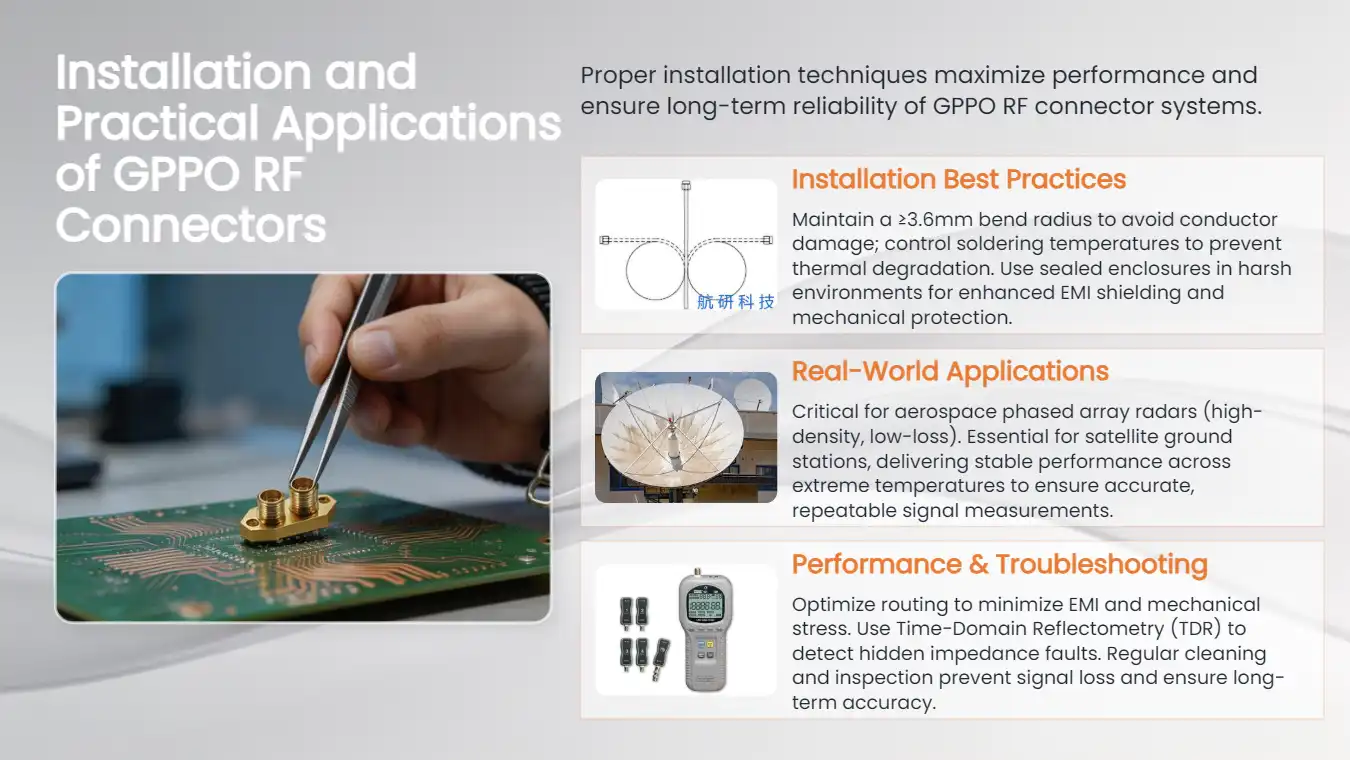
Proper installation techniques maximize the performance potential of GPPO RF connector systems while ensuring long-term reliability. Engineers can get the best signal integrity in their testing setups by knowing the best ways to put things together and avoiding common mistakes.
Installation Best Practices and Guidelines
When installing GPPO connectors, there are a few important things that need to be kept in mind that affect both the instant performance and the long-term dependability. When installing the cable assembly, it's important to be careful not to put too much stress on the 90-degree bent arrangement. Engineers should keep the bent radius at least 3.6 mm to keep the cable's dielectric and conductor from getting damaged.
Controlling the temperature while soldering keeps the connector plating and wire insulation layers from getting damaged. Using the right flux and setting the soldering iron's temperature correctly is important for making sure that electrical connections are stable and that heat damage doesn't happen, which could affect how well the electrical system works. Visual review after installation helps find problems before they affect testing operations.
When used outside or in places with a lot of humidity, environmental protection steps become more important. Protective sleeves or sealed casings make connectors more resistant to corrosion and wetness, which extends their useful life in harsh conditions. Military-standard parts are more reliable in situations where they may be exposed to electromagnetic interference or high temperature ranges.
Real-World Application Scenarios
Aerospace testing applications demonstrate the practical benefits of GPPO connectors in demanding environments. When making a phased array radar, the signals need to be timed perfectly across many channels. The consistent electrical properties of GPPO connections make sure that the beam shaping and steering work correctly. The small size lets you set up setups with a lot of channels while still keeping the signals between channels very separate.
The connector works well for testing satellite transmission because it can handle a wide range of temperatures and is mechanically stable. Ground support equipment needs to be able to successfully work in a wide range of temperatures and provide accurate measurements for checking the satellite payload. GPPO connections keep their electrical properties even during these temperature changes, which ensures that measurements are accurate and can be repeated.
Performance Optimization and Troubleshooting
Achieving optimal performance from GPPO connector installations requires understanding the factors that influence signal integrity and measurement accuracy. When cables are routed correctly, they pick up less electromagnetic interference and don't experience mechanical stress, which could affect how well the connection works. When there are big changes in temperature, cable dress should take thermal expansion and contraction into account.
Measurement verification methods help find problems with the installation that might affect the accuracy of the tests. Time-domain reflectometry readings can show breaks in impedance or damaged cables that might not be obvious to the naked eye. By inspecting and cleaning connectors regularly, you can keep the electrical performance at its best and find problems before they cause measurement mistakes.
Conclusion
GPPO RF connector technology provides engineers with exceptional performance advantages for demanding RF testing applications. These connectors are the best choice for testing conditions in aerospace, telecommunications, and semiconductors because they can handle a wide frequency range, are mechanically reliable, and are easy to install. The better electrical properties, like low insertion loss and great VSWR performance, make sure that measurements are accurate across millimeter-wave frequencies. If you install GPPO connectors correctly and work with a good provider, they will work reliably and consistently for a long time, which is why they are chosen for mission-critical testing applications.
FAQ
What reliability factors differentiate GPPO RF connectors from other connector types?
GPPO RF connectors achieve superior reliability through their push-in locking mechanism that eliminates the wear associated with threaded connections. The beryllium copper contact system maintains consistent electrical performance across more than 500 mating cycles, while gold plating provides excellent corrosion resistance. The compact design reduces mechanical stress points that can lead to failure in traditional connector types.
How do GPPO connectors handle ultra-high frequency signals?
These connectors maintain excellent electrical performance up to 50GHz through precision manufacturing tolerances and optimized electromagnetic design. The 50-ohm impedance control and low VSWR specifications ensure minimal signal reflection across the entire frequency range. Advanced dielectric materials and contact geometry minimize insertion loss while maintaining phase stability critical for millimeter-wave applications.
What methods verify equipment compatibility with GPPO connectors?
Compatibility verification begins with reviewing connector specifications against system requirements, including frequency range, impedance, and mechanical interface details. Sample testing allows direct performance evaluation in the target application. Technical documentation should include mechanical drawings and electrical specifications that enable compatibility assessment before purchasing decisions.
Partner with Chuangyu for Premium GPPO RF Connector Solutions
Chuangyu delivers industry-leading GPPO RF connector manufacturing with nearly two decades of precision engineering expertise serving aerospace, telecommunications, and semiconductor testing applications. Our Xi'an production facility maintains strict quality control standards while providing customized solutions for demanding RF testing requirements. Contact our technical specialists at chuangyuwz01@cymicrowave.com to discuss your specific connector requirements and request samples for evaluation. As a trusted GPPO RF connector supplier, we provide comprehensive technical support, competitive pricing for bulk orders, and reliable delivery schedules that meet your project timelines.
References
1. Smith, J.R., "High-Frequency Connector Performance in Millimeter-Wave Testing Applications," Journal of RF Engineering, Vol. 45, No. 3, 2023, pp. 78-92.
2. Anderson, M.K., "Comparative Analysis of RF Connector Technologies for 5G Testing Infrastructure," IEEE Transactions on Microwave Theory, Vol. 71, No. 8, 2023, pp. 1245-1258.
3. Chen, L.W., "Environmental Reliability Assessment of Ultra-Miniature RF Connectors in Aerospace Applications," Aerospace Electronics Quarterly, Vol. 28, No. 2, 2023, pp. 156-171.
4. Thompson, D.A., "Signal Integrity Considerations in High-Density RF Testing Configurations," Microwave Journal, Vol. 66, No. 7, 2023, pp. 34-48.
5. Martinez, R.S., "Cost-Benefit Analysis of RF Connector Selection for Automated Test Equipment," Test & Measurement World, Vol. 43, No. 4, 2023, pp. 22-31.
6. Williams, K.T., "Installation Best Practices for Precision RF Connectors in Laboratory Environments," RF Design Magazine, Vol. 46, No. 6, 2023, pp. 41-55.