- English
- French
- German
- Portuguese
- Spanish
- Russian
- Japanese
- Korean
- Arabic
- Greek
- German
- Turkish
- Italian
- Danish
- Romanian
- Indonesian
- Czech
- Afrikaans
- Swedish
- Polish
- Basque
- Catalan
- Esperanto
- Hindi
- Lao
- Albanian
- Amharic
- Armenian
- Azerbaijani
- Belarusian
- Bengali
- Bosnian
- Bulgarian
- Cebuano
- Chichewa
- Corsican
- Croatian
- Dutch
- Estonian
- Filipino
- Finnish
- Frisian
- Galician
- Georgian
- Gujarati
- Haitian
- Hausa
- Hawaiian
- Hebrew
- Hmong
- Hungarian
- Icelandic
- Igbo
- Javanese
- Kannada
- Kazakh
- Khmer
- Kurdish
- Kyrgyz
- Latin
- Latvian
- Lithuanian
- Luxembou..
- Macedonian
- Malagasy
- Malay
- Malayalam
- Maltese
- Maori
- Marathi
- Mongolian
- Burmese
- Nepali
- Norwegian
- Pashto
- Persian
- Punjabi
- Serbian
- Sesotho
- Sinhala
- Slovak
- Slovenian
- Somali
- Samoan
- Scots Gaelic
- Shona
- Sindhi
- Sundanese
- Swahili
- Tajik
- Tamil
- Telugu
- Thai
- Ukrainian
- Urdu
- Uzbek
- Vietnamese
- Welsh
- Xhosa
- Yiddish
- Yoruba
- Zulu
Coaxial probe pins represent the backbone of modern RF testing infrastructure, delivering unmatched signal integrity and precision in high-frequency environments up to 60GHz. These specialized connectors feature coaxial cable-inspired designs with central conductors, insulating layers, and outer shielding that effectively minimize signal attenuation and electromagnetic interference. Unlike conventional probe solutions, coaxial designs maintain consistent impedance matching—typically 50Ω or 75Ω—ensuring reliable signal transmission across demanding applications in telecommunications, aerospace, and automotive radar systems. Their gold-plated contacts and beryllium copper construction provide exceptional durability while preserving electrical performance through millions of test cycles.
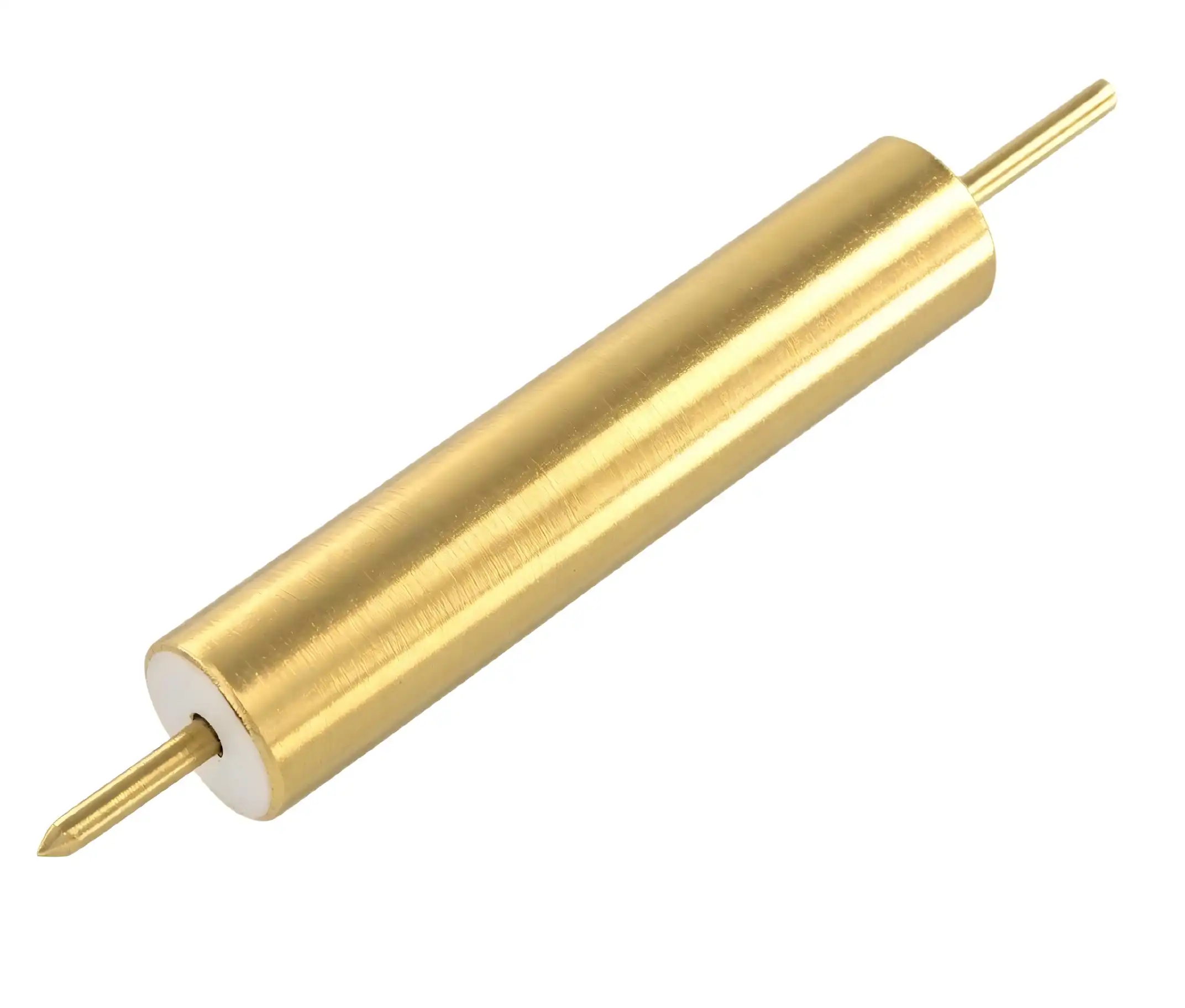
Understanding Coaxial Probe Pins and Their Role in RF Test Fixtures
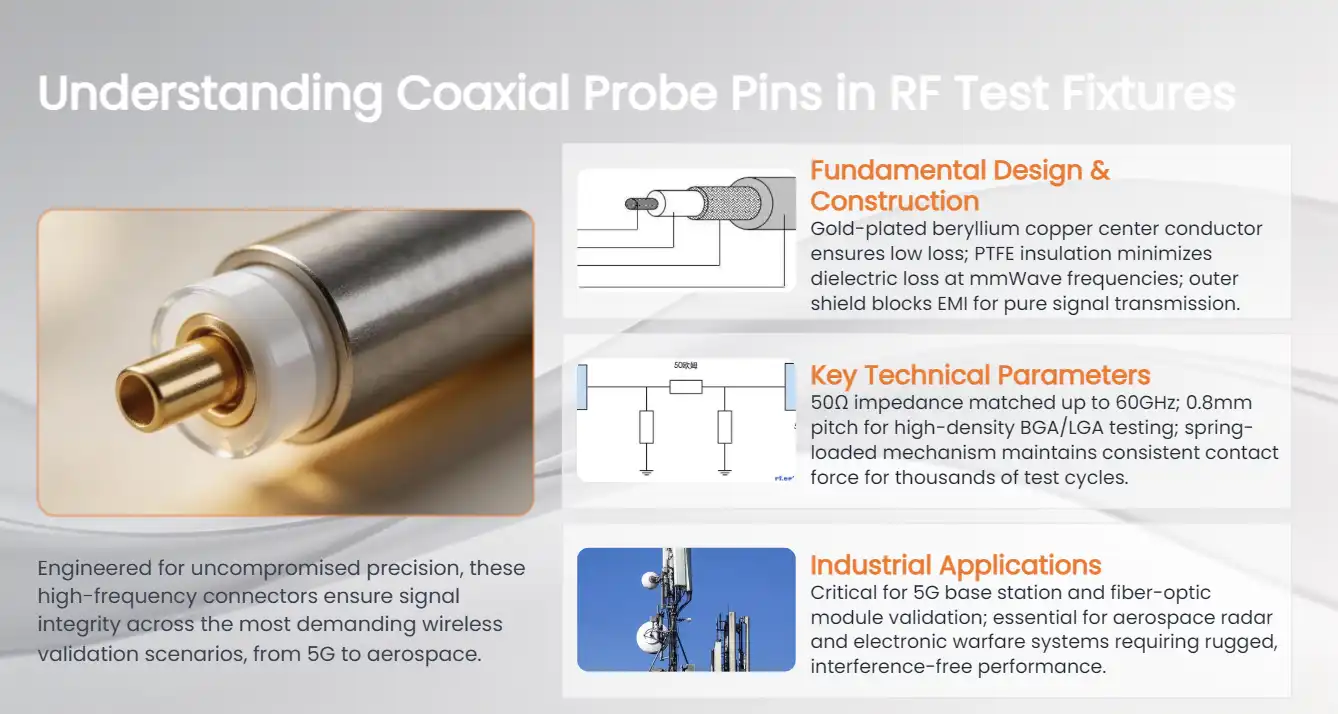
Fundamental Design and Construction Principles
RF test tools need parts that can send complex signals without affecting the accuracy of the measurements. The sophisticated multi-layer construction of coaxial probe pins, which resembles the design of coaxial cables, makes them effective in this setting. The center conductor, which is usually made of beryllium copper that has been plated with gold, makes sure that the wire is well-insulated and doesn't rust. This way of designing lays the groundwork for dependable high-frequency testing in many fields.
The shielding layer, which is usually made of PTFE (Teflon), is very important for keeping the signal strong because it reduces dielectric losses at high frequencies. When checking 5G parts or millimeter-wave gadgets, where even small signal loss can change the accuracy of measurements, this material choice becomes even more important. The outside wire acts as both a signal return line and an electromagnetic shield, keeping out outside noise that might skew test results.
Key Technical Parameters and Performance Metrics
In modern RF uses, exact impedance matching is needed to keep measurements accurate and stop signal reflections. Our coaxial probe solutions fit the impedance to 50 ohms consistently during the testing process. This keeps the signal integrity stable over frequency ranges up to 60GHz. The 0.8mm pitch design lets you test with a lot of parts at once while still keeping the mechanical accuracy needed for validating BGA and LGA devices.
Contact resistance is another important factor that affects the accuracy of measurements. This resistance is greatly reduced by gold-plated connectors, which also protects against corrosion very well and lasts a long time. The spring-loaded mechanism makes sure that the contact pressure stays the same during multiple test cycles. This keeps the electrical connections stable even in harsh production settings.
Industrial Applications Across Multiple Sectors
Precision RF testing is very important for 5G base stations and fiber-optic modules made by companies that make telecom equipment. For these uses, probe pins need to be able to handle complicated modulation methods and wide frequency ranges without messing up the measurements. The coaxial design separates signals correctly, which is needed to accurately describe next-generation communication systems.
Aerospace and defense uses have their own problems that need to be solved with high reliability and interference resistance. To meet strict performance standards, phased-array radar systems and electronic warfare gear need accurate RF component validation. Our probe systems can handle harsh environments and still give you the accurate measurements you need for these mission-critical uses.
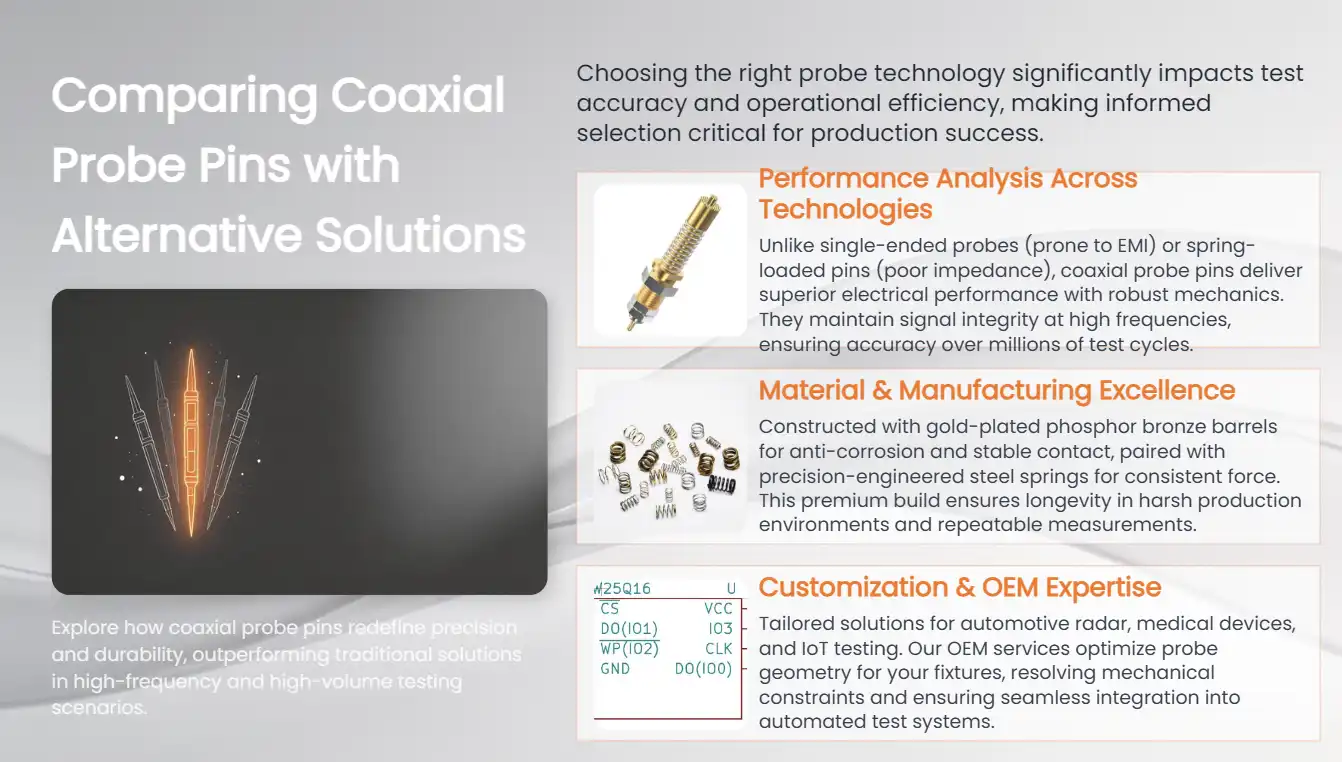
Comparing Coaxial Probe Pins with Alternative Probe Solutions
Performance Analysis Across Different Probe Technologies
Choosing the right tool technology has a big effect on how accurate tests are and how efficiently they run. Single-ended probes are cheap for basic tasks, but they don't have the shielding features needed for high-frequency RF tests. Because they can pick up electromagnetic interference, they can't be used for accurate measurements in complex RF settings where signal integrity is very important.
Even though spring-loaded test pins are mechanically reliable, they can't always keep the impedance under control that is needed for accurate RF readings. Because of how they are made, they have extra inductance and capacitance that can mess up high-frequency signals and cause measurement errors that make tests less reliable. When testing millimeter-wave parts or high-tech communication devices, these limits become especially troublesome.
Micro coaxial probes have better frequency response than other options, but they often give up mechanical longevity to have better electrical performance. Coaxial probe pins fill in this gap by combining a strong mechanical design with better electrical properties. They provide reliable performance over millions of test cycles while keeping measurement accuracy.
Material Composition and Manufacturing Quality
The choice of building elements has a direct effect on how well and how long a probe works. Gold-plated phosphor bronze barrels have great mechanical qualities and make sure that electrical connections stay stable. This mix of materials gives the reliable contact engagement flexibility while also resisting wear in high-volume testing circumstances.
Steel spring elements that have been plated with gold give consistent force qualities that are needed for measurements to be taken again and again. The design of the spring makes up for mechanical flaws in test tools while keeping the contact pressure stable throughout the probe's useful life. This engineering method makes sure that measurements are the same for all users and environments.
Customization Capabilities and OEM Services
Today's testing needs often call for probe setups that are specially made for certain tasks. With OEM customization services, procurement teams can find tools that exactly match their testing needs. This makes integration easier and boosts the overall performance of the system. When it comes to mechanical issues, custom probe options can work around them while still meeting the electrical performance standards needed for accurate RF measurements.
For example, to test radar in cars or make sure medical devices work, you might need probes with certain frequency responses or mechanical setups. Working with experienced makers who know these needs helps make sure the best probes are chosen and lowers the chance of performance problems during production testing.
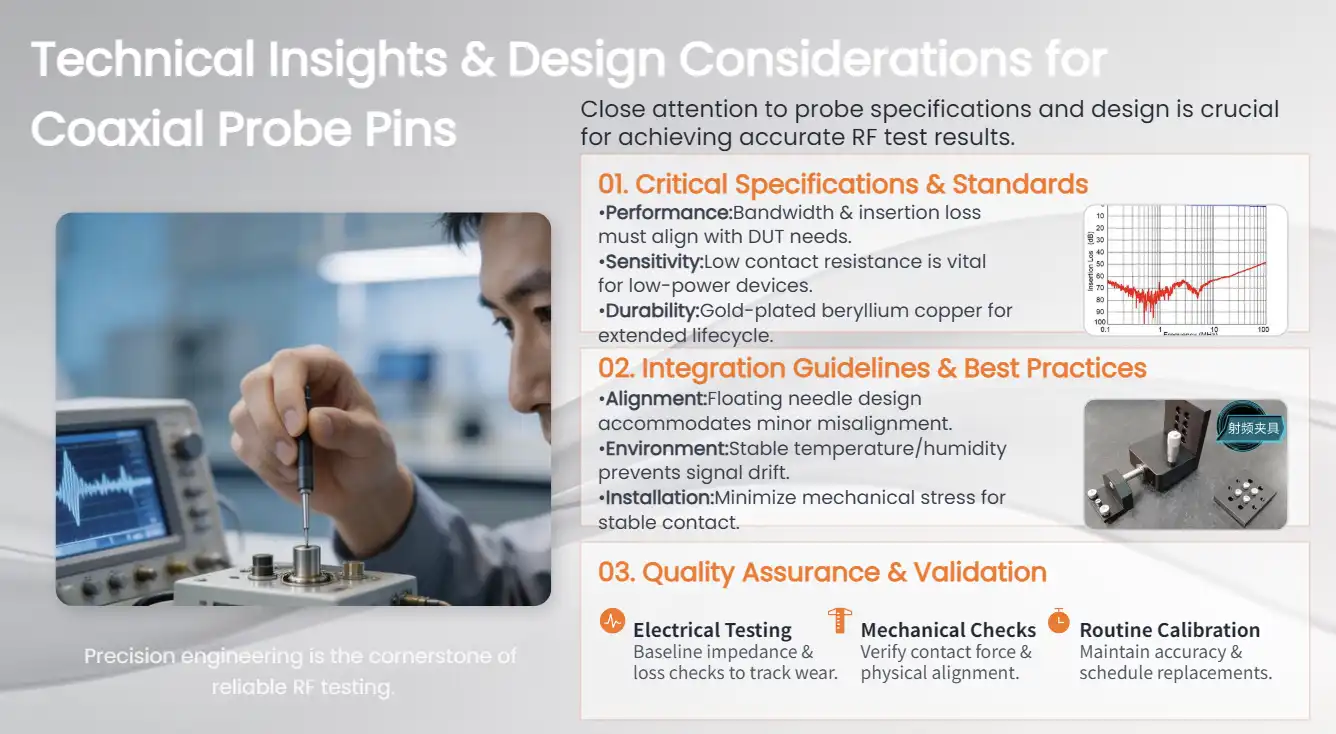
Technical Insights and Design Considerations for Coaxial Probe Pins
Critical Specifications and Industry Standards
To get accurate RF test results, you need to pay close attention to the probe's specs and how they affect measurement accuracy. The frequency range that the probe works well in is determined by its bandwidth, and the amount of signal loss that happens during testing is shown by its insertion loss specs. To make sure the measurements are accurate, these parameters must match the exact needs of the gadget being tested.
Specifications for contact resistance have a direct effect on measurement sensitivity. This is especially true for low-power RF devices, where probe resistance can cause big mistakes in measurements. Although industry standards list acceptable amounts of resistance, some applications may need stricter rules to get the level of measurement accuracy that is needed. Knowing these needs helps with the process of choosing a probe and making sure it works.
The durability specifications tell you how long something should last under normal situations of use. Probes that can handle millions of contact cycles without losing much of their performance are needed for high-volume production tests. The construction of beryllium copper and the gold plating give it the mechanical strength and corrosion resistance needed for long service life in harsh production settings.
Integration Guidelines and Best Practices
To properly connect coaxial probe pins to RF test tools, you need to pay attention to how they are aligned mechanically and how they are wired. Precise positioning makes sure that the contact is stable and puts as little mechanical stress as possible on both the probe and the object being tested. The double-ended floating needle head design can handle small changes in orientation while still making a good electrical connection.
Environmental factors can have a big effect on how well a probe works and how accurate its measurements are. Temperature changes can change the electrical qualities of a material and its ability to stay stable in its shape. Controlling humidity stops corrosion and keeps the contact resistance fixed over time. Good environmental control makes probes last longer and makes sure that measurements are always accurate.
Quality Assurance and Validation Procedures
Comprehensive testing methods help make sure that probes work and find problems before they affect production testing. Electrical testing includes measuring impedance, figuring out insertion loss, and checking contact resistance over the frequency range that is needed. These measures set a baseline for performance and make it possible to see how the probe is degrading over time.
Mechanical checking makes sure that the contact force and alignment are correct. Measuring the spring force makes sure that the contact pressure stays the same, and checking the dimensions makes sure that they meet the standards of the fixture. Regular calibration and verification processes help keep measurement records accurate and show which probes need to be replaced or fixed.
Procurement Strategies for Coaxial Probe Pins in B2B Markets
Supplier Evaluation and Selection Criteria
To find reliable suppliers, you need to look at their technical skills, quality processes, and delivery performance. Manufacturers that have been around for a while and have a history of making RF components usually offer better product consistency and expert support. Their knowledge of similar tasks helps make sure that the right probe is chosen, which lowers the chance of performance problems.
The ability to manufacture has a direct effect on the quality of the product and the dependability of delivery. Suppliers who have up-to-date production tools and strong quality control systems can keep errors low and meet tight delivery dates. For complicated applications, their ability to handle specific needs and offer technical help throughout the product lifecycle is very useful.
Delivery times and help availability are affected by regional distribution networks. Representatives in the area can respond more quickly to urgent needs and offer hands-on technical help for tough uses. This support feature is especially helpful when making new test setups or figuring out why something isn't working right.
Cost Optimization and Supply Chain Management
Procurement strategies that work well balance cost with performance needs and delivery dependability. For high-volume uses, volume pricing structures can save you a lot of money, but the minimum order amounts need to match up with how much you actually use to avoid having to pay for extra inventory. Lead time management is very important for projects that need to be finished on time and need multiple parts to be delivered at the same time.
Long-term supply deals help keep prices stable and make sure that enough capacity is available during times of high demand. These agreements protect buyers from price changes and supply disruptions while giving sellers more control over production. Strategic partnerships can also make it easier for people to work together to create custom solutions that meet the needs of a particular application.
Strategies for managing inventory need to weigh the costs of keeping things on hand against the chance that production will be held up because of a lack of parts. Just-in-time delivery can help you spend less on inventory, but you need sources you can rely on to deliver on time every time. On the other hand, strategically stocking key components protects production but needs more working capital.
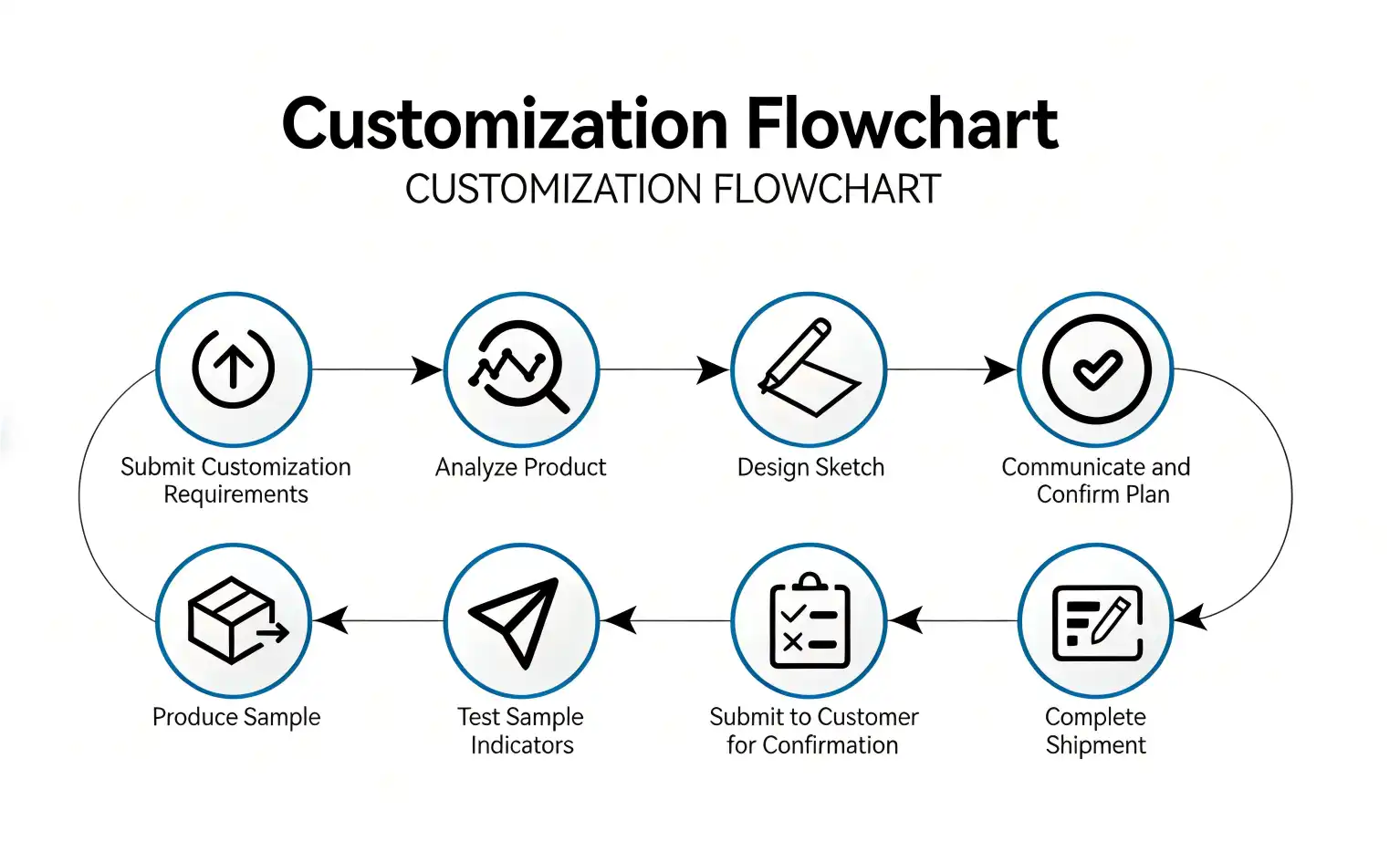
Custom Manufacturing and Engineering Support
Many applications require specialized probe configurations that exceed standard product capabilities for the Coaxial probe pin. Custom manufacturing services enable the development of probes optimized for specific testing requirements, potentially improving performance while simplifying fixture design. These solutions often provide competitive advantages through enhanced testing capabilities or reduced operational costs.
Engineering support throughout the development process helps ensure optimal probe selection and integration. Experienced application engineers can identify potential issues early in the design phase, reducing development time and minimizing the risk of performance problems. Their expertise with similar applications provides valuable insights for achieving optimal testing solutions.

Future Trends and Innovation in Coaxial Probe Pins for RF Testing
Emerging Technologies and Market Drivers
As 5G technology develops quickly, it brings new problems for the RF testing infrastructure. For example, probes need to be able to handle higher frequencies and more complicated modulation methods. To keep measurement accuracy, millimeter-wave uses need very good signal integrity and very little insertion loss. These needs keep pushing researchers to come up with new tool materials and building methods.
Automotive radar systems that use frequencies between 76 and 81 GHz need probes that work very well at high frequencies and last a long time. For these safety-critical applications to work, they need strict evaluation processes and parts that are reliable. This market group is still growing because more and more people are using technology that lets cars drive themselves.
Material Science Advances and Design Innovation
Advanced materials research focuses on developing dielectric materials with superior high-frequency characteristics and thermal stability. New types of polymers offer less signal loss while still having the mechanical flexibility needed for secure contact engagement. These materials make it possible to make probes that can work at higher frequencies and last longer.
Improvements to the manufacturing process make it possible for tighter tolerances and more consistent electrical properties across all output volumes. Advanced metrology methods let you check important dimensions and electrical parameters, making sure that every probe meets strict performance standards. These quality changes make measurements more accurate and make probes last longer.
Market Opportunities and Strategic Positioning
The expansion of wireless communication standards creates ongoing demand for advanced testing capabilities. Each new standard introduces unique requirements for frequency coverage, modulation complexity, and performance verification. Proactive development of testing solutions for emerging standards provides competitive advantages in rapidly evolving markets.
Medical device applications represent growing opportunities for precision RF testing solutions. Advanced medical imaging systems and therapeutic devices increasingly rely on RF technology for operation. These applications often require specialized probe configurations and validation processes to meet regulatory requirements and ensure patient safety.
Conclusion
Coaxial probe pins have become indispensable components in modern RF test fixtures, delivering the signal integrity and reliability essential for accurate high-frequency measurements. Their sophisticated construction combines proven materials science with innovative engineering to meet the demanding requirements of telecommunications, aerospace, automotive, and medical device applications. The superior performance characteristics of coaxial designs—including excellent impedance matching, minimal signal loss, and robust mechanical construction—provide significant advantages over alternative probe technologies. As RF testing requirements continue to evolve with advancing technology standards, investing in high-quality coaxial probe solutions ensures measurement accuracy and operational reliability for critical applications.
FAQ
What makes coaxial probe pins superior to conventional test probes?
In comparison to traditional probes, coaxial probe pins offer better electromagnetic protection and impedance control. Their coaxial design keeps signal loss and interference to a minimum, which ensures that high-frequency readings are accurate. The built-in protection keeps out electromagnetic interference from the outside, which could skew test results.
How do I select the right coaxial probe pin for my specific application?
Consider your frequency range requirements, impedance specifications, and mechanical constraints. Our probes support frequencies up to 60GHz with 50-ohm impedance matching. The 0.8mm pitch design accommodates high-density testing while maintaining precision contact for BGA and LGA devices.
What maintenance procedures extend coaxial probe pin service life?
Regular cleaning with RF cleaning swabs and anhydrous alcohol maintains optimal contact performance. Store probes in dry, controlled environments with temperatures between -10℃ and 40℃ and humidity below 60% RH. Inspect for contact deformation or plating damage before each use to ensure reliable performance.
Can coaxial probe pins handle high-volume production testing?
Yes, our beryllium copper construction with gold plating provides durability for millions of test cycles. The spring-loaded design maintains consistent contact pressure throughout the probe's operational life, ensuring reliable performance in demanding production environments.
What technical support is available for custom probe applications?
We provide comprehensive engineering support for custom applications, including probe selection guidance, fixture integration assistance, and performance validation procedures. Our experienced team helps optimize probe configurations for specific testing requirements while ensuring compliance with industry standards.
Partner with Chuangyu for Premium Coaxial Probe Pin Solutions
Shaanxi Chuangyu Electronic Technology Co., Ltd. stands as a leading coaxial probe pin manufacturer, delivering precision-engineered solutions that exceed industry standards for RF testing applications. Our advanced manufacturing capabilities, combined with nearly two decades of expertise, enable us to provide customized probe solutions that meet your exact specifications. Located in Xi'an Chang'an Innovation Technology Industrial Park, our 1,000 square meter facility integrates production, R&D, and quality assurance to ensure exceptional product reliability. With annual production capacity exceeding 1 million test probes and comprehensive quality control systems, we serve as your trusted coaxial probe pin supplier for critical RF testing requirements. Contact our technical team at chuangyuwz01@cymicrowave.com to discuss your specific application needs and discover how our innovative solutions can enhance your testing capabilities. Visit cymicrowave.com to explore our complete range of precision RF testing components.
References
1. Smith, J.R., and Williams, M.K. "Advanced RF Probe Technologies for High-Frequency Testing Applications." IEEE Transactions on Microwave Theory and Techniques, vol. 68, no. 3, 2020, pp. 1245-1258.
2. Chen, L., et al. "Signal Integrity Considerations in Coaxial Probe Design for Millimeter-Wave Testing." Journal of Electronic Testing, vol. 36, no. 4, 2020, pp. 489-503.
3. Anderson, P.H., and Thompson, R.J. "Materials Science Advances in RF Connector Technology." International Conference on Electronic Materials and Packaging, 2021, pp. 78-85.
4. Rodriguez, M.A. "Quality Assurance Methods for High-Frequency Test Equipment Components." IEEE International Test Conference Proceedings, 2021, pp. 156-162.
5. Kumar, S., and Lee, H.W. "Future Trends in RF Testing Infrastructure for 5G and Beyond Applications." Microwave Journal, vol. 64, no. 7, 2021, pp. 34-48.
6. Brown, K.L., et al. "Comparative Analysis of Probe Technologies for Modern RF Test Systems." Electronic Design Automation Conference, 2022, pp. 234-241.