- English
- French
- German
- Portuguese
- Spanish
- Russian
- Japanese
- Korean
- Arabic
- Greek
- German
- Turkish
- Italian
- Danish
- Romanian
- Indonesian
- Czech
- Afrikaans
- Swedish
- Polish
- Basque
- Catalan
- Esperanto
- Hindi
- Lao
- Albanian
- Amharic
- Armenian
- Azerbaijani
- Belarusian
- Bengali
- Bosnian
- Bulgarian
- Cebuano
- Chichewa
- Corsican
- Croatian
- Dutch
- Estonian
- Filipino
- Finnish
- Frisian
- Galician
- Georgian
- Gujarati
- Haitian
- Hausa
- Hawaiian
- Hebrew
- Hmong
- Hungarian
- Icelandic
- Igbo
- Javanese
- Kannada
- Kazakh
- Khmer
- Kurdish
- Kyrgyz
- Latin
- Latvian
- Lithuanian
- Luxembou..
- Macedonian
- Malagasy
- Malay
- Malayalam
- Maltese
- Maori
- Marathi
- Mongolian
- Burmese
- Nepali
- Norwegian
- Pashto
- Persian
- Punjabi
- Serbian
- Sesotho
- Sinhala
- Slovak
- Slovenian
- Somali
- Samoan
- Scots Gaelic
- Shona
- Sindhi
- Sundanese
- Swahili
- Tajik
- Tamil
- Telugu
- Thai
- Ukrainian
- Urdu
- Uzbek
- Vietnamese
- Welsh
- Xhosa
- Yiddish
- Yoruba
- Zulu
Selecting the appropriate multipin vacuum feedthrough depends on understanding your specific vacuum environment requirements, electrical specifications, and operational constraints. A hermetic multipin feedthrough that balances pin density, current capacity, seal integrity, and material compatibility will ensure long-term reliability in semiconductor processing, aerospace systems, or medical device applications. Matching pin count configurations with your signal transmission needs while verifying leak rates and temperature tolerance creates the foundation for successful vacuum system integration.
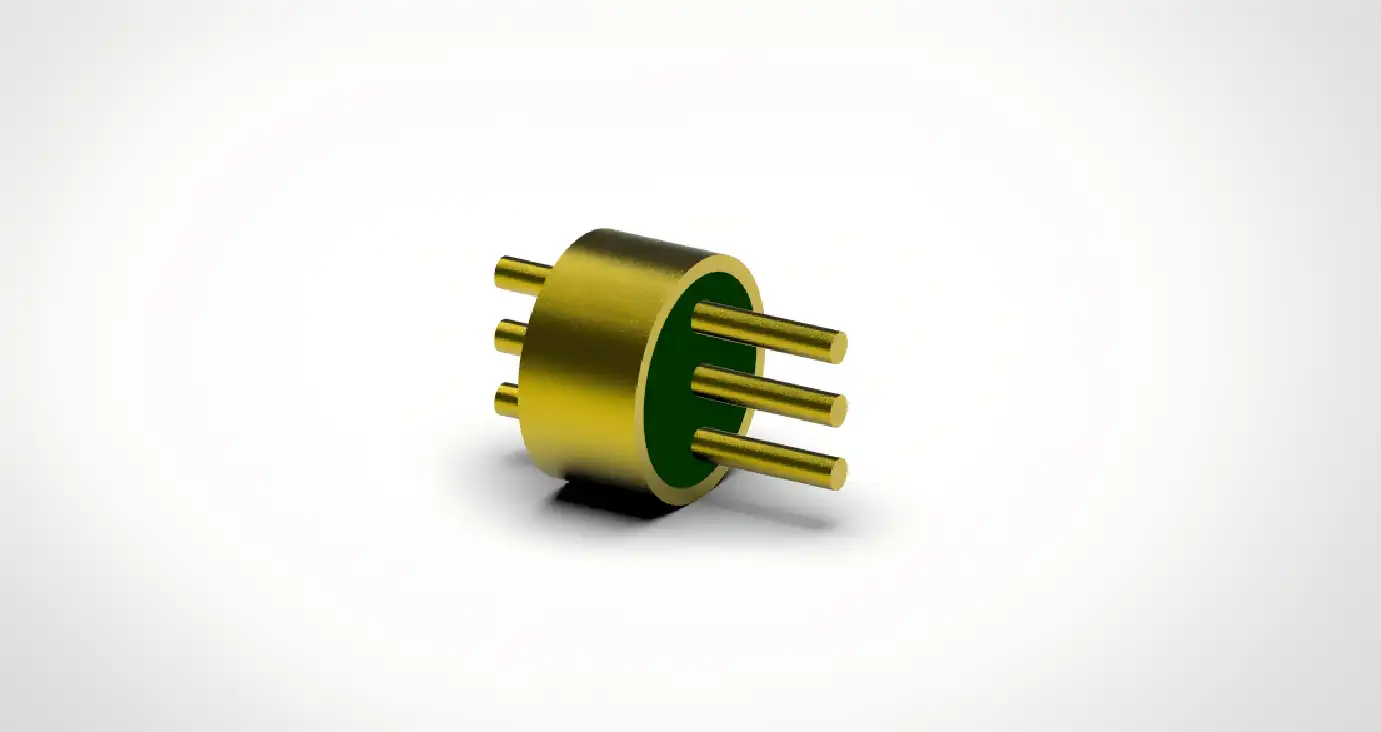
Understanding Multipin Vacuum Feedthroughs: Functionality and Key Specifications
What Makes Multipin Vacuum Feedthroughs Essential?
Multipin vacuum feedthroughs are a special kind of electrical connector that can send more than one signal through vacuum barriers while keeping the environment separate. These parts connect the atmosphere to the vacuum environment so that equipment can work without affecting the vacuum's integrity. The main benefit is that it combines many electrical paths into a single, small interface, which makes installation easier than using multiple single-pin options.
As a basic building block, conductor pins go through an insulating material, which is usually glass or ceramic, and are attached to a metal frame. This system makes a seal that keeps air out, so gas molecules can't move from one setting to another. Leak rates in glass sintering can be as low as 1.01325×10⁻³ Pa·cm³/s, which meets strict requirements for ultra-high vacuum applications where pressures are 10⁻⁵ Pa or lower.
Critical Specifications That Define Performance
When looking at different hermetic feedthrough choices, a number of technical factors directly affect which ones will work best. There are a lot of different pin count designs, from small 9-pin sets to high-density 100-pin units. The pitch spacing can be as small as 1.27mm, which lets a lot of signals fit into small mounting areas. The ability to transmit power is based on its electrical rating. Standard designs can handle 3A per contact, while high-current versions can handle up to 13A.
Tolerance for high or low temperatures is very important in harsh environments. Multipin feedthroughs that are standard work reliably from -55°C to +125°C. Some more advanced models can even handle short exposure to 260°C during reflow soldering. Insulation resistance greater than 5000 MΩ protects the integrity of the signal, and dielectric withstand voltage values of 800V keep the electricity from breaking down when the system is under a lot of stress. Contact resistance below 10 mΩ keeps power loss and heat generation to a minimum across twisted rubber contact pins that have seven contact points each.
Material Selection and Vacuum Compatibility
Material science is the main thing that determines how long and reliably a feedthrough works. Kovar metal housings and glass insulators have the same thermal expansion rates, which keeps the seal from breaking when the temperature changes. Surface treatments improve performance. For example, gold plating is better at resisting rust and conducting electricity, and special nickel carbon fluoride composite coats can handle being exposed to salt spray for more than 500 hours.
Glass insulation materials are very good at keeping out vacuums and electricity, and they keep their hermetic integrity over long periods of time. Ceramic options can handle higher temperatures and have higher material strength for uses that involve shock or shaking. When electromagnetic shielding works at 85dB or higher, it keeps outside noise from interfering with sensitive signals. This is especially important in RF and microwave communication situations where signal clarity directly affects measurement accuracy.
Comparing Multipin Vacuum Feedthrough Options for Your Needs
Multipin vs. Single-Pin Feedthrough Solutions
Depending on the needs of the system architecture, consolidated multipin designs or distributed single-pin installations are the best choice. When compared to equivalent single-pin arrays, multipin vacuum feedthrough assemblies take up 60–70% less mounting space, making chamber wall integration easier. The amount of work needed to install something goes down by the same amount. One 37-pin feedthrough replaces dozens of separate holes, which cuts down on installation time and possible leak points.
But single-pin designs are more flexible for systems that need to put pins in a certain way or expand in stages. When circuits are physically separated, it's easier to figure out what's wrong. Single-pin modularity makes it easier to adapt to changing needs, which is helpful for prototype development or research applications. Multipin consolidation is very helpful for production systems with clear, stable configurations because it lowers the costs of installation and the difficulty of long-term maintenance.
Glass vs. Ceramic Insulation Properties
Glass sintering bonds wires and housing materials at the molecular level, making airtight seals that are very resistant to leaks. This way of making things is most common in high-reliability uses like medical and spacecraft parts, where vacuum integrity has a direct effect on mission success or patient safety. Insulators made of glass work well in mild temperature ranges and keep their electrical features for decades.
Ceramic barriers work great in places with very high temperatures and in situations where strength is important. The material can handle higher shock and vibration loads without affecting the integrity of the seal. This is very important for space launch vehicles or industrial automation equipment that has to deal with repeated mechanical stress. Ceramic feedthroughs usually cost more than glass ones, but this is only necessary when the conditions of the application are too tough for glass or when longer durability lowers the total cost of ownership.
Seal Technology Performance Comparison
Long-term dependability under operational stress is based on the vacuum seal methodology. For ultra-high vacuum uses, glass-to-metal seals are the best. They can achieve leak rates below 10⁻⁹ mbar·L/s, which can be proven by helium mass spectrometer tests. During the sintering process, metallurgical bonds are formed that can't be broken by temperature cycles or mechanical shaking.
Rubber sealing methods work well in mild vacuum situations where working pressures stay above 10⁻³ Pa, and glass sintering choices are limited by cost. Elastomer seals need to be inspected and replaced on a regular basis—usually every three to five years, depending on how they are exposed to the environment. This adds a level of maintenance that isn't needed for glass-sealed designs. Combining metal, ceramic, and polymer elements in hybrid approaches improves certain performance parameters while keeping cost, temperature tolerance, and leak rate needs in mind for specific industrial uses.
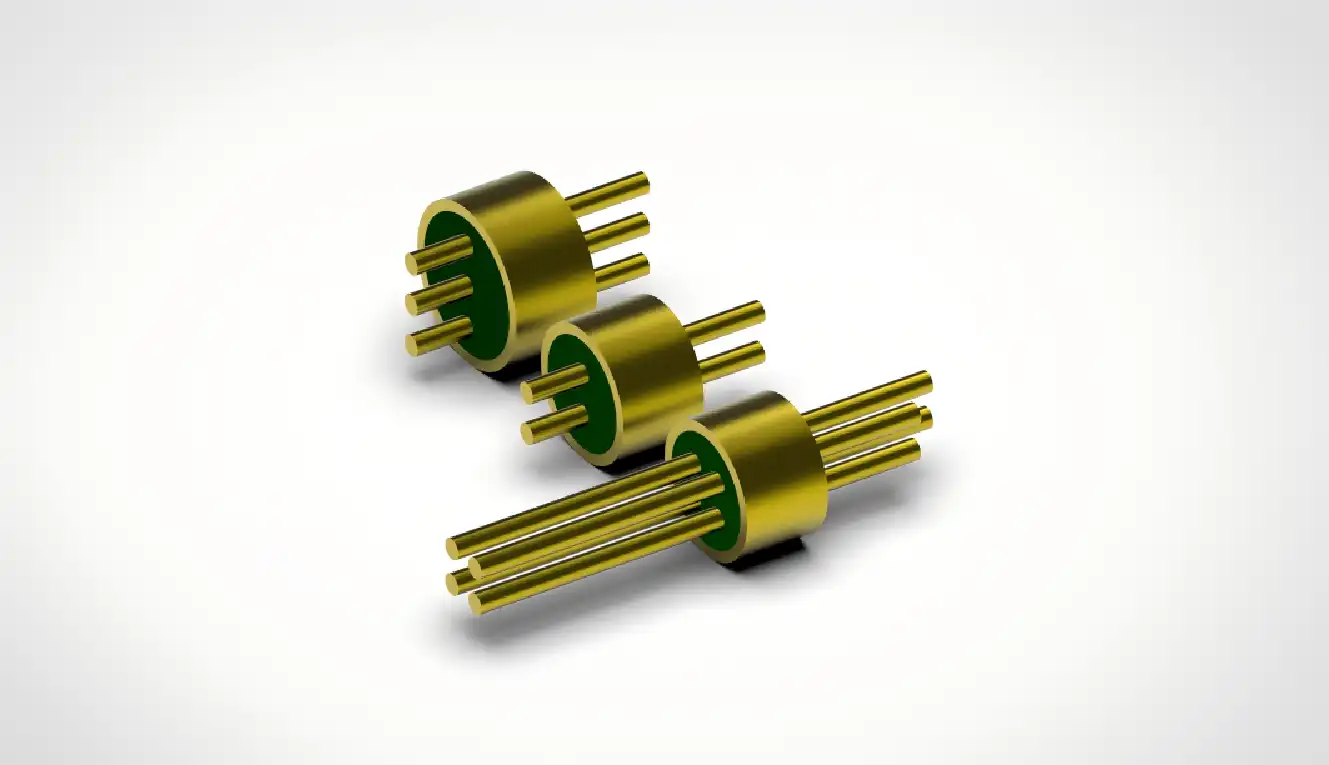
How to Choose the Right Multipin Vacuum Feedthrough for Your Application
Defining Your Vacuum System Requirements
A thorough description of requirements is the first step to successful multipin vacuum feedthrough selection. Write down the vacuum pressure levels that your system keeps up. For example, processing semiconductor wafers needs an ultra-high vacuum level below 10⁻⁷ Pa, while vacuum coating works well at 10⁻³ Pa. Voltage ranges, current loads per circuit, and signal types like DC power, low-frequency control signals, or high-frequency RF transfer must all be included in electrical specs.
Environmental conditions affect the choice of material and seal. Extremes in operating temperature, exposure to corrosive atmospheres, levels of mechanical vibration, and sources of electromagnetic interference can all affect the right configurations. Pin count requirements balance the need for connections now with the possibility of growth in the future. Physical mounting limits determine the form factors that can be used and how well they work with flanges.
Evaluating Critical Selection Criteria
Mechanical robustness is important for installations that are under a lot of physical stress. In order to meet installation torque requirements, feedthrough housings must not deform the seal and must also be able to withstand differential pressure loads without losing their structural integrity. In aerospace and automotive testing environments, where resonant frequencies can cause contact wear or seal fatigue over time, vibration resistance is very important.
The cost of an item isn't the only thing that is looked at when analyzing costs; installation work, testing needs, and lifecycle upkeep are also taken into account. Standard catalog products are available right away and have reasonable prices for common configurations. Custom designs are good for meeting specific needs, but they come with engineering lead times of 4 to 8 weeks and minimum order amounts that can hurt project budgets. When judging a supplier, you should look at how well they follow certifications like RoHS, ISO quality management systems, and approvals specific to your industry, such as MIL-DTL-83513 for defense uses.
Balancing Standard and Custom Solutions
Off-the-shelf multipin feedthroughs work for about 70% of industrial vacuum uses because they have standard pin numbers, flange sizes, and electrical ratings. These catalog items are made using tried-and-true methods that guarantee stable quality and faster delivery times—usually two to three weeks for standard setups and six to ten weeks for custom designs.
When application needs are very different from existing standards, custom feedthrough development becomes a realistic business option. Custom engineering is worth the money when there are non-standard pin layouts, special materials that work well with chemicals, built-in filtering parts, or unique mounting interfaces. Tooling amortization over multiple orders can be negotiated in high-volume production environments, which lowers the cost per unit for long-term procurement relationships. When you involve suppliers early on in the design process, you can work together to improve the final product by changing the specifications to make the best use of existing manufacturing capabilities while still meeting performance goals.
Practical Applications and Benefits of Multipin Vacuum Feedthroughs
Semiconductor Manufacturing Integration
A lot of the electrical connections in deposition chambers, etching systems, and wafer inspection tools depend on hermetic multipin vacuum feedthroughs for semiconductor processing equipment. These systems make it possible to send power, control signals, and sensor data all at the same time. They also keep the ultra-high vacuum conditions that are needed to make features on the nanometer scale. A standard plasma deposition chamber has several 37-pin or 61-pin feedthroughs for delivering RF power, measuring temperature, controlling gas flow, and automating handling systems.
The high-density integration cuts down on chamber wall penetrations, which makes upkeep easier and lowers the number of possible ways for contamination to get in. When facilities that process 300mm wafers switch from distributed single-pin installations to consolidated multipin architectures, their uptime goes up a lot. Using helium mass spectrometry to check the leak rate before starting up the chamber protects the vacuum, which keeps production from being held up or contaminated, which could cost a lot of money and lower chip yields.
Aerospace and Defense Applications
Multipin vacuum feedthroughs are needed for electrical links to go through spacecraft pressure tanks and sensor housings. These parts can handle launch vibration loads of more than 196 m/s² and keep their hermetic seals even when they are exposed to temperature changes caused by handling cryogenic propellants or the sun's rays. Satellite position control systems use high-reliability feedthroughs that meet GJB 2446A military standards. This makes sure that missions are successful for many years.
Defense applications like radars and platforms for guiding missiles need feedthroughs that work with MDM series military standards. This lets different platforms work together and find qualified suppliers. When you combine electromagnetic shielding with mechanical strength and proven hermetic performance, you get key defense infrastructure that can't fail and has effects that go beyond the cost of replacing equipment.
Medical Device and Industrial Automation
Implantable medical devices, like pacemakers, use tiny sealed feedthroughs to send electrical data through titanium housings without letting body fluids in. Biocompatibility rules require certain materials and surface treatments, and decades of continued use are used to measure long-term dependability. Larger multipin configurations are used for motor control, sensor feedback, and power distribution in sterilizable enclosures for external medical equipment like diagnostic imaging systems and surgical robots.
Industrial automation settings like vacuum coating machines, heat treatment ovens, and scientific instruments can benefit from multipin designs because they save room and are easy to install. When compared to similar single-pin arrays, production facilities report 30–40% less installation work, which speeds up equipment commissioning plans and cuts down on downtime during maintenance cycles.
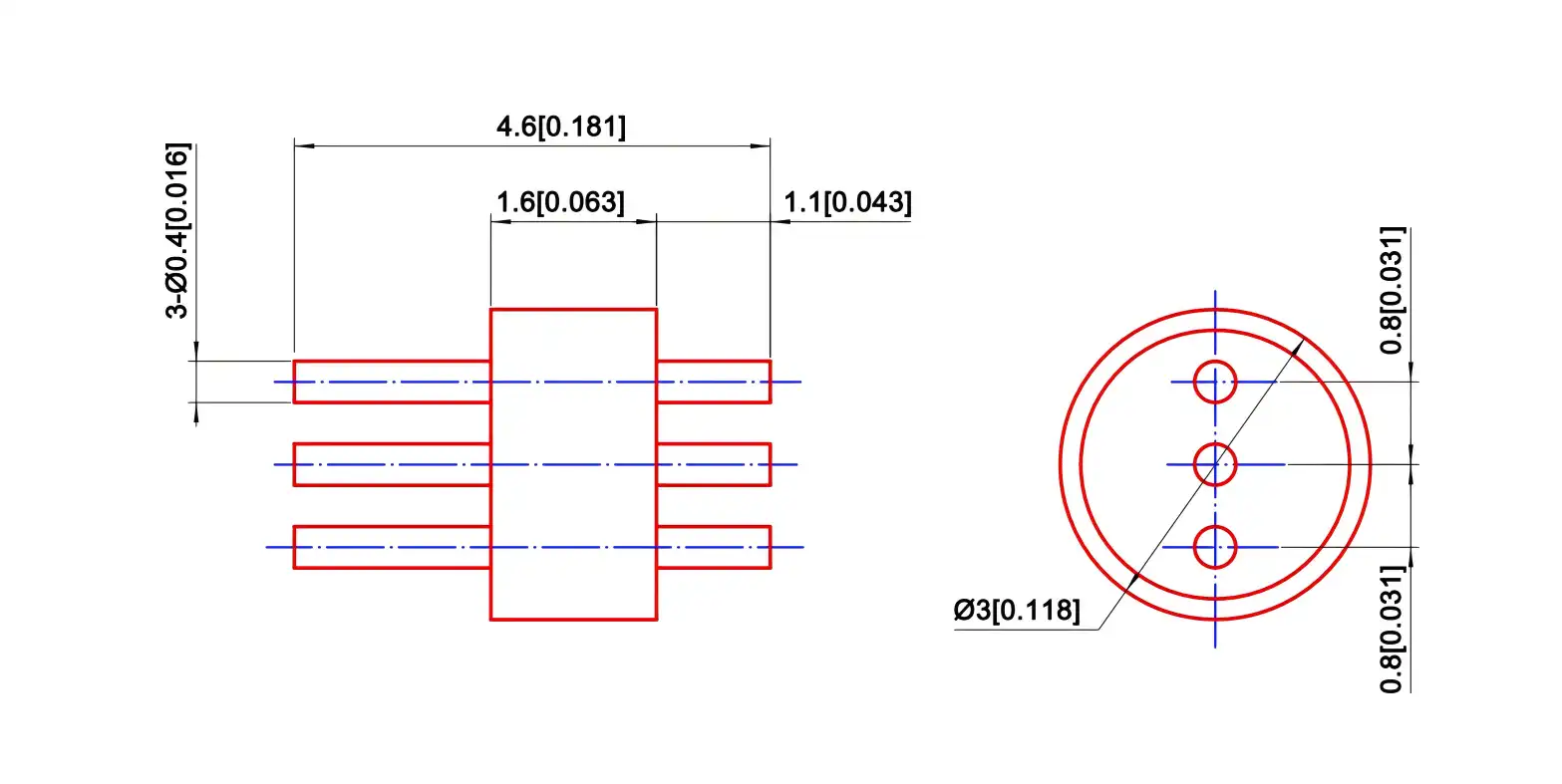
Procurement Insights: Where and How to Buy Multipin Vacuum Feedthroughs
Identifying Qualified Manufacturers and Suppliers
To find high-quality hermetic multipin vacuum feedthroughs, you need to find manufacturers who have a track record of being good at both precision machining and glass-to-metal sealing technology. Suppliers that have been around for a while keep full product lines that include both standard catalog items and custom engineering services. Verification of quality management standards, such as ISO 9001 and approvals relevant to the industry, gives customers trust in the stability and tracking of the production process.
Superior suppliers are different from commodity vendors because they can provide technical support. Having access to resources for applications engineering helps choose the best feedthrough for each vacuum system, avoiding mistakes or poor performance that could cost a lot of money. Suppliers who offer design collaboration during the development stages of a product can help with making the product easier to make, lowering costs, and making sure it works well.
Understanding Pricing Structures and Lead Times
Pin count, material, sealing technology, and amount of customization all have a significant impact on the price of multipin vacuum feedthroughs. Standard catalog items with glass-sealed Kovar housings usually have prices that range from average to high-end, based on the number of pins and the electrical values. Engineering fees and tooling costs must be spread out over multiple orders for custom designs that use special materials, non-standard pin layouts, or combined components.
Lead times should take into account how complicated the manufacturing process is. Standard goods are shipped in two to four weeks, but unique designs take six to ten weeks, which includes technical validation, making the tools, and testing the first product. Orders of more than 100 units may cause schedules to slip, but they can also lead to price cuts of 15 to 30 percent, based on how complicated the setup is and how well the production run goes.
Ensuring Compliance and Technical Documentation
Documentation showing that the equipment is compliant with RoHS is needed to sell it in Europe or to companies that have green buying policies. Suppliers should give you information on the materials they use and papers that show they follow the rules about dangerous substances. Full datasheets with electrical specs, mechanical models, leak rate performance, and suggested installation steps help people make smart decisions and make it easier to connect systems.
Before agreeing to production numbers, performance claims can be checked by asking for sample units to be evaluated. As part of the testing process, the leak rate should be checked with helium mass spectrometry, the contact resistance should be measured, and the insulation resistance should be checked under stress conditions that match the needs of the application. Setting up clear lines of communication with supplier technical teams and being specific about your questions, such as the level of vacuum pressure, electrical needs, environmental conditions, and expected quantities, speeds up the quotation process and makes sure that the solutions being offered meet the needs of the application.
Conclusion
To choose the best multipin vacuum feedthrough, you have to weigh the technical specs against the limitations of your application and your budget. To make smart decisions, you need to know about pin density requirements, seal technology options, material compatibility, and environmental conditions. If you need ultra-high vacuum integrity for semiconductor processing, mechanical strength for aircraft systems, or biocompatibility for medical devices, choosing the right feedthrough has a direct effect on how well your system works and how reliable it is. Engaging qualified suppliers early in the design process, trying samples to confirm performance, and setting clear standard requirements all make buying easier while lowering integration risks and ensuring long-term vacuum system performance.
FAQ
1. What leak rate should I specify for my vacuum application?
How fast a leak has to happen depends on the gas pressure and how sensitive the machine is. For ultra-high vacuum applications below 10⁻⁷ Pa, leak rates must be less than 10⁻⁹ mbar·L/s. This can be done with glass-sealed multipin feedthroughs and helium mass spectrometer verification. Industrial vacuum coating systems that work at 10⁻³ Pa can handle leak rates of about 10⁻⁶ mbar·L/s. Finding the right feedthrough standards is easier when you talk to vacuum system makers about the total amount of leakage that is allowed.
2. Can multipin feedthroughs handle RF signals?
Specialized hermetic feedthroughs made for RF transmission have 50Ω impedance matching and keep voltage standing wave ratios below 1.2, which means they can handle frequencies up to the millimeter-wave range. In standard multipin configurations, pin density is more important than RF performance, and signals may get weaker at higher frequencies. When asking for quotes, be very clear about the RF frequency ranges and resistance needs to make sure that the suggested solutions meet your signal integrity goals.
3. How do I prevent seal damage during installation?
Seal harm can be avoided by following the manufacturer's fitting instructions. For glass not to crack, reflow welding temps must stay below 250°C. It is very important to follow the torque specs for mounting hardware exactly, because too much tightening causes mechanical stress that breaks down the seal. Helium leak testing before installation checks the state of the seal before it is integrated, and testing after installation makes sure that the vacuum integrity is maintained during the mounting process.

Partner with Chuangyu for Reliable Multipin Vacuum Feedthrough Solutions
Shaanxi Chuangyu Electronic Technology makes high-quality hermetic connectors and multipin vacuum feedthrough systems for semiconductor, military, medical, and industrial automation uses that are very specific. We make sure that every part meets strict quality standards by using our knowledge of glass-to-metal sealing technology and our wide range of testing tools, such as helium mass spectrometry leak detection. As a well-known multipin vacuum feedthrough seller, we work with top photovoltaic companies and RF communication providers. We offer both catalog goods and custom-engineered solutions, and our lead times are flexible to fit your project plans. Email our applications engineering team at chuangyuwz01@cymicrowave.com to talk about your vacuum system needs, get technical datasheets, or set up an evaluation sample.
References
1. Roth, A. (2012). Vacuum Sealing Techniques. Springer Science & Business Media, highlighting glass-to-metal seal methodologies and leak rate testing protocols.
2. O'Hanlon, J.F. (2003). A User's Guide to Vacuum Technology, 3rd Edition. John Wiley & Sons, detailing feedthrough selection criteria for industrial vacuum systems.
3. Hablanian, M.H. (1997). High-Vacuum Technology: A Practical Guide, 2nd Edition. Marcel Dekker, covering hermetic connector applications in semiconductor manufacturing.
4. Harris, N.S. (2008). Modern Vacuum Practice, 3rd Edition. BOC Edwards, examining electrical feedthrough integration in ultra-high vacuum environments.
5. Chambers, A., Fitch, R.K., & Halliday, B.S. (1998). Basic Vacuum Technology, 2nd Edition. CRC Press, discussing seal material selection and vacuum compatibility.
6. Wutz, M., Adam, H., & Walcher, W. (1989). Theory and Practice of Vacuum Technology. Vieweg+Teubner Verlag, analyzing multipin feedthrough performance in aerospace applications.