- English
- French
- German
- Portuguese
- Spanish
- Russian
- Japanese
- Korean
- Arabic
- Greek
- German
- Turkish
- Italian
- Danish
- Romanian
- Indonesian
- Czech
- Afrikaans
- Swedish
- Polish
- Basque
- Catalan
- Esperanto
- Hindi
- Lao
- Albanian
- Amharic
- Armenian
- Azerbaijani
- Belarusian
- Bengali
- Bosnian
- Bulgarian
- Cebuano
- Chichewa
- Corsican
- Croatian
- Dutch
- Estonian
- Filipino
- Finnish
- Frisian
- Galician
- Georgian
- Gujarati
- Haitian
- Hausa
- Hawaiian
- Hebrew
- Hmong
- Hungarian
- Icelandic
- Igbo
- Javanese
- Kannada
- Kazakh
- Khmer
- Kurdish
- Kyrgyz
- Latin
- Latvian
- Lithuanian
- Luxembou..
- Macedonian
- Malagasy
- Malay
- Malayalam
- Maltese
- Maori
- Marathi
- Mongolian
- Burmese
- Nepali
- Norwegian
- Pashto
- Persian
- Punjabi
- Serbian
- Sesotho
- Sinhala
- Slovak
- Slovenian
- Somali
- Samoan
- Scots Gaelic
- Shona
- Sindhi
- Sundanese
- Swahili
- Tajik
- Tamil
- Telugu
- Thai
- Ukrainian
- Urdu
- Uzbek
- Vietnamese
- Welsh
- Xhosa
- Yiddish
- Yoruba
- Zulu
When your test bench needs millimeter-wave accuracy, every part counts. Signal integrity meets thermal stability at a GPPO RF coaxial load, ensuring precise measurements up to 65 GHz. These RF terminations absorb electromagnetic radiation while matching impedance, eliminating reflections that reduce the measurement accuracy of vector network analysers, spectrum analysers, and signal generator measurements. R&D engineers and procurement managers are under pressure to select components that function consistently throughout increasing frequency ranges. The migration to 5G infrastructure, satellite communications, and 6G prototypes requires small termination solutions with excellent electrical properties. This paper covers the technical qualities, application considerations, and sourcing methods of high-performance RF loads, helping you make educated purchase choices in challenging test conditions.
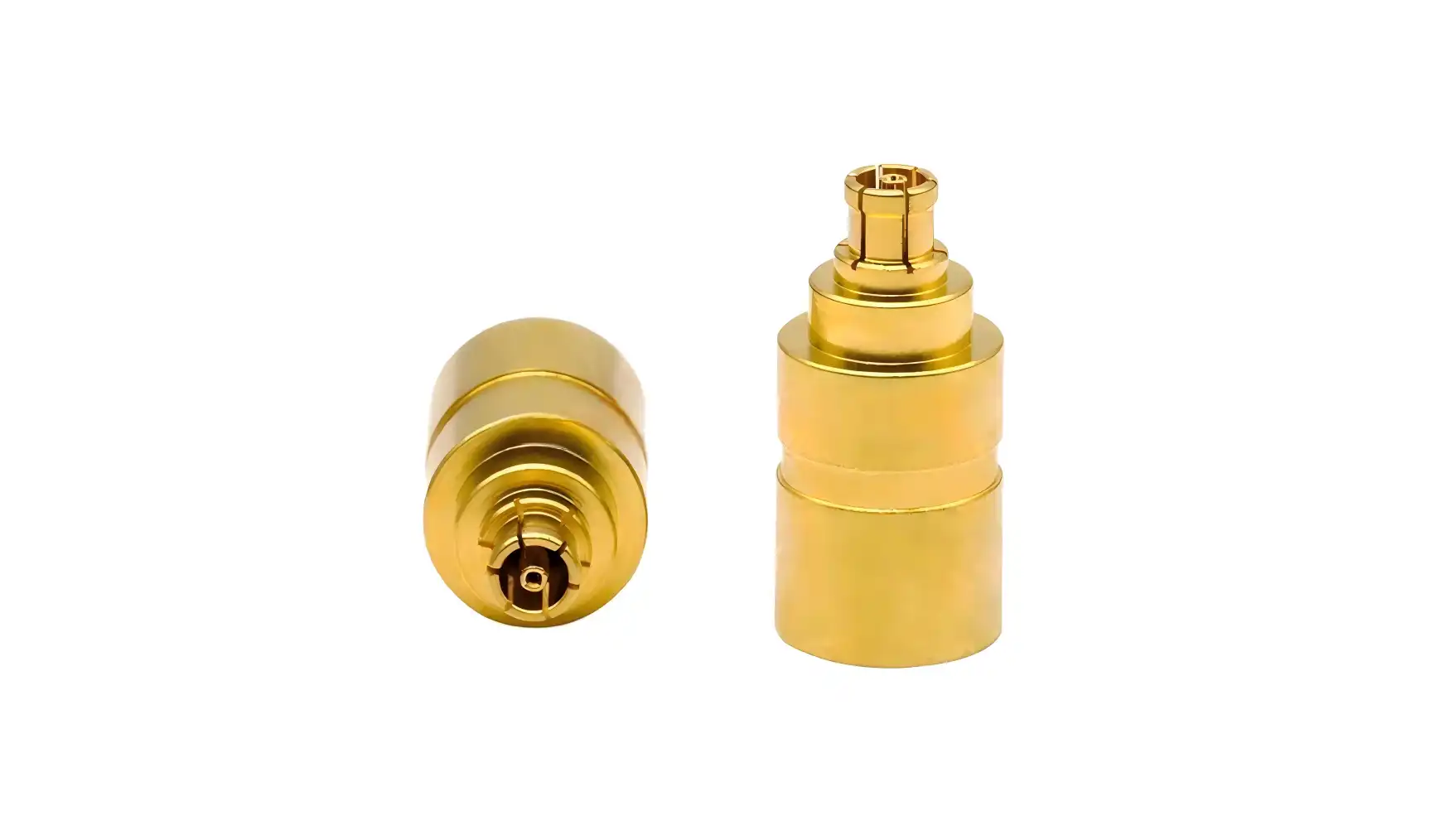
Understanding GPPO RF Coaxial Loads: Definitions, Features, and Applications
A GPPO RF coaxial load operates fundamentally as a precision termination that converts electromagnetic energy into heat while maintaining a standard 50Ω impedance. High-performance coaxial terminations achieve this through carefully engineered resistive elements—typically tantalum nitride resistive layers bonded to high-thermal-conductivity ceramic substrates. This construction enables controlled power dissipation without introducing signal reflections that distort measurement accuracy.
What Defines a High-Performance RF Termination
High-performance millimeter-wave loads distinguish themselves through three interconnected characteristics: ultra-wideband frequency coverage from DC to 65 GHz, minimal voltage standing wave ratio (VSWR ≤1.45), and adequate power handling capacity of 2W at standard temperatures. The combination of brass gold-plated outer conductors with polytetrafluoroethylene insulating media ensures signal integrity across the entire operational spectrum while withstanding mechanical stress from repeated connections.
Technical Specifications That Matter
Modern RF test loads incorporate SSMP male connectors featuring push-in connection mechanisms that eliminate tool requirements during assembly. The brass body construction supports ≥500 insertion-extraction cycles while maintaining electrical performance across an operating temperature range of -55℃ to +125℃. Compact metal packaging designs achieve these specifications while occupying minimal board space—essential for high-density RF subsystems where every millimeter counts.
Common Application Scenarios
The major use is millimeter-wave test measurement, where these loads are vector network analyser and signal generator terminal impedances. System calibration and device characterisation at 65 GHz need termination stability for reliable reference measurements. These components provide dummy GPPO RF coaxial loads and impedance matching for micro-interconnect modules in high-density RF subsystems of millimeter-wave radar and satellite communication equipment in aerospace and military applications. In severe space restrictions, 6G prototype development and ultra-compact test devices need signal absorption capabilities. Standard connection types are unfeasible.
Core Technical Features That Define High Performance in GPPO RF Coaxial Loads
Performance differentiation in RF terminations emerges from the interplay between materials science, thermal management, and precision manufacturing. Understanding these technical foundations enables specification decisions aligned with actual test requirements rather than generic component parameters.
Frequency Range Coverage and Power Rating
The DC to 65 GHz frequency coverage represents a defining characteristic, supporting measurements across traditional microwave bands through millimeter-wave frequencies. This continuous bandwidth eliminates the need for multiple load types across different frequency ranges, simplifying test setups and reducing inventory complexity. The 2W power capacity at 25℃ ambient temperature accommodates typical signal generator output levels while maintaining measurement accuracy, though capacity reduces to 0.2W at the upper temperature limit of 125℃—a critical derating factor for thermal management planning.
Durability Through Material Selection
Tantalum nitride resistive layers bonded to high thermal conductivity ceramic substrates form the core power-dissipating element. This material combination achieves stable impedance characteristics across wide frequency ranges while efficiently transferring thermal energy away from the resistive junction. Brass gold-plated construction provides both oxidation resistance and excellent electrical conductivity, maintaining connector performance through hundreds of mating cycles. The polytetrafluoroethylene insulating medium offers low dielectric loss and thermal stability, preserving signal integrity in demanding operating environments.
Connector Compatibility and Signal Integrity
SSMP connectors have lower parasitic inductance and capacitance than SMA or BNC connectors, improving high-frequency performance. Push-in mating delivers uniform contact force without threaded coupling variations, enabling reproducible VSWR measurements. In high-reliability applications where intermittent connections induce measurement error, gold plating on mating surfaces decreases contact resistance and prevents galvanic corrosion, which affects connection quality.
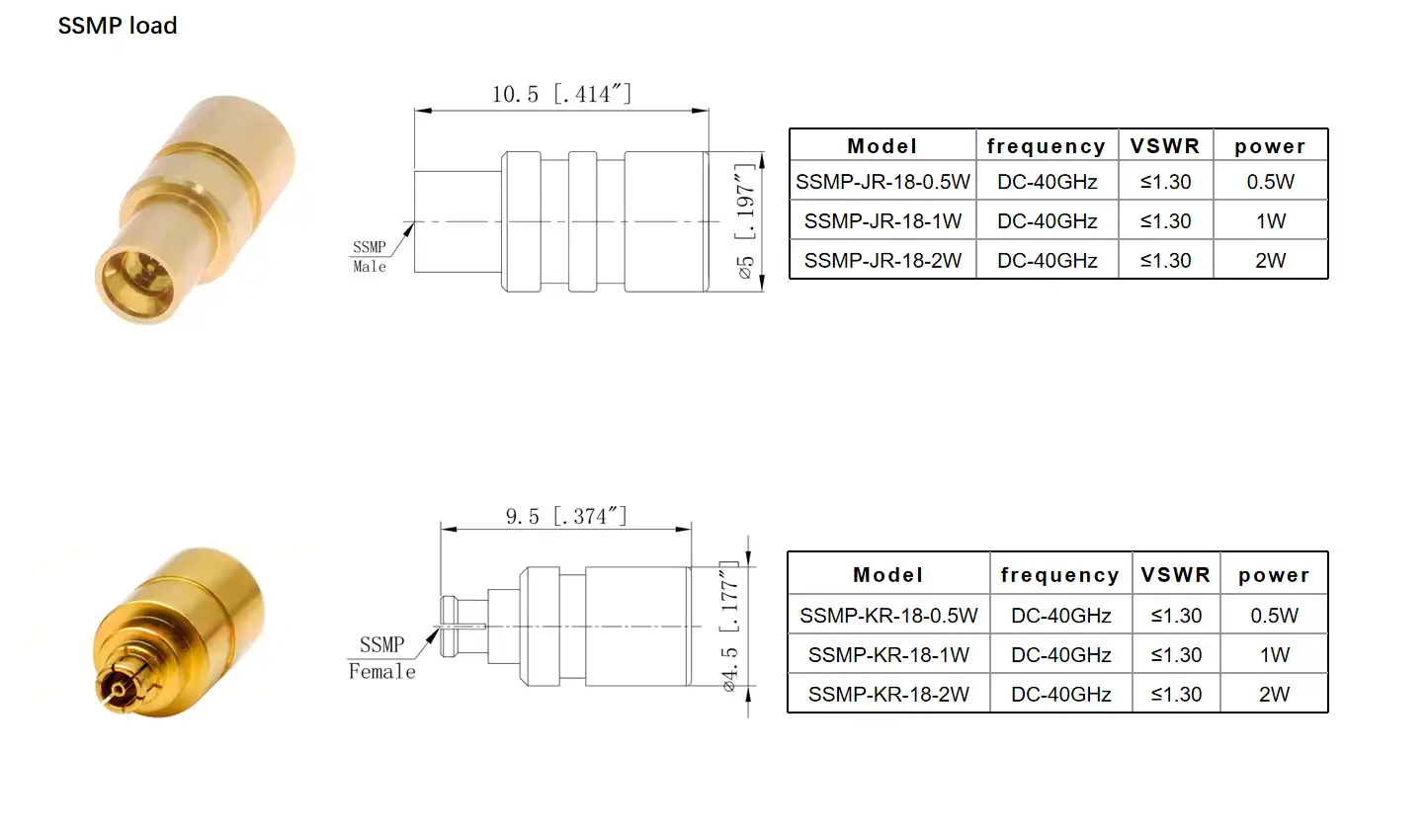
Comparing GPPO RF Coaxial Loads With Alternative RF Loads – Making the Right Choice
Understanding the competitive landscape helps procurement teams select appropriate termination technology for specific applications. Different connector families offer distinct advantages depending on frequency requirements, power handling needs, and mechanical constraints.
GPPO Versus SMA Terminations
SMA connections dominate RF testing due to their dependability and ability to operate up to 18 GHz with precision variations up to 26.5 GHz. GPPO RF coaxial loads cover DC to 65 GHz with decreased connection size and optimised dielectric interfaces. SMA footprints take up too much space on high-density circuit boards; hence, the small form factor is important. Power handling is comparable for technologies at similar price ranges; however,ver thermal management needs grow with frequency owing to decreasing conductor cross-sections.
N-Type and BNC Alternatives
N-type connectors excel in high-power applications, handling significantly greater power levels than miniature connector formats while maintaining adequate performance to 18 GHz. Applications requiring robust mechanical coupling and exposure to harsh environments benefit from N-type construction, though the larger connector body limits utility in space-constrained designs. BNC connectors offer quick-connect convenience for applications below 4 GHz but lack the frequency response necessary for millimeter-wave measurements. RF component testing requires careful matching between connector technology and actual frequency ranges to avoid systematic measurement errors introduced by connector limitations.
Supplier Reliability and Certification Considerations
Beyond component specs, B2B buying choices include supplier trust, production uniformity, and after-sales assistance. Reliable manufacturers give complete test data showing electrical specification compliance across manufacturing batches, lowering inspection requirements. AS9100 certification shows aerospace sector quality requirements for high-reliability applications, whereas ISO 9001 certification shows systematic quality management. Warranty, technical support, and calibration services lower the total cost of ownership beyond the original purchase price.
Procurement Insights – How to Source High-Quality GPPO RF Coaxial Loads Efficiently
Strategic sourcing balances technical requirements, delivery timelines, and budget constraints while managing supply chain risks. Effective procurement strategies incorporate multiple evaluation criteria beyond unit price to optimize total acquisition costs.
Identifying Trusted Manufacturers and Distributors
Chuangyu specializes in precision RF components with manufacturing capabilities extending to 110 GHz, offering comprehensive solutions for millimeter-wave applications. Their production facility in Xi'an Chang'an Innovation Technology Industrial Park operates integrated manufacturing lines producing 500,000 RF components and 1 million test probes annually, supporting both prototype quantities and volume production requirements. Direct manufacturer relationships provide access to technical expertise during specification development, customization options for non-standard requirements, and transparent quality documentation tracing manufacturing processes.
Pricing Structures and Lead Time Management
Component pricing reflects complexity factors including frequency range, power handling, and connector type, with millimeter-wave devices commanding premium pricing due to precision manufacturing requirements. Minimum order quantities vary significantly—catalog items may ship in single-piece quantities while custom configurations require minimum commitments justifying tooling investments. Lead times span 2-4 weeks for standard products versus 6-12 weeks for customized solutions, necessitating advance planning aligned with project schedules. Volume discounts typically activate at 100-piece quantities, with escalating discounts at 500- and 1,000-piece thresholds that substantially reduce per-unit costs for production programs.
Customization and After-Sale Support
Standard catalog offerings address common requirements, yet specialized applications often demand modified specifications—altered connector types, adjusted power ratings, or enhanced temperature ranges. Manufacturers with in-house design capabilities can adapt existing platforms more rapidly than those relying on third-party engineering resources. Comprehensive after-sale support includes calibration services, failure analysis for returned components, and application engineering consultation addressing integration challenges. These services prove particularly valuable during new product development when unforeseen technical issues emerge requiring rapid resolution to maintain program schedules.
Best Practices and Testing Methods to Ensure Optimal GPPO RF Coaxial Load Performance
Component specifications define capabilities under ideal conditions, yet achieving rated performance requires proper handling, installation, and maintenance practices throughout operational lifecycles.
Installation and Connection Standards
Push-in connection mechanisms demand careful coaxial alignment during insertion to prevent inner conductor deformation that degrades electrical performance. Applying lateral force or twisting during mating can misalign conductors, creating intermittent connections or permanent damage. The 90° bent configurations require particular attention to bending radius—maintaining a minimum 3.6mm radii prevents cable damage and connector stress that shortens service life. Proper installation technique directly impacts long-term reliability and measurement repeatability.
Environmental Protection Measures
Environments exceeding 60% relative humidity require dust caps when connectors remain unmated, preventing moisture ingress and corrosive gas exposure that attacks gold-plated surfaces. Contamination accumulation on mating interfaces increases contact resistance and introduces measurement uncertainty. Operating temperature ranges span -55℃ to +125℃, though power capacity decreases at elevated temperatures—power must decrease to 0.2W at the upper temperature limit to prevent thermal damage. Instantaneous peak power handling reaches 200W, accommodating pulsed signals common in radar and communication testing.
Routine Maintenance and Performance Verification
The cleaning protocol recommends isopropyl alcohol swabs after every 20 insertion cycles, carefully wiping connector end faces while focusing on gold-plated contact areas. Metal tools must never contact insulating media interfaces, as scratches compromise dielectric integrity and introduce leakage paths. Storage conditions maintain -20℃ to +60℃ with relative humidity below 50%, preserving connector integrity during idle periods. Monthly VSWR verification detects performance degradation requiring recalibration or replacement, preventing subtle measurement errors that compromise test validity.
Lifecycle Management Strategies
Total working hours exceeding 1,500 hours or exposure to severe mechanical shock triggers full-spectrum performance verification using network analyzers. This comprehensive assessment evaluates VSWR and power capacity across the entire DC to 65 GHz range, confirming continued compliance with specifications. Components failing verification require factory recalibration or replacement, as degraded terminations introduce systematic measurement errors affecting all subsequent tests. Proactive lifecycle management prevents undetected performance degradation that silently compromises measurement accuracy over extended periods.
Conclusion
High-performance GPPO RF coaxial load terminations meet millimeter-wave measurements with precise materials, thermal control, and manufacturing experience. Essential technical qualities for current test settings include 65 GHz frequency coverage, VSWR ≤1.45, 2W power capacity, and sturdy mechanical design. Strategic procurement strategies balance technological needs, supplier dependability, and lifecycle costs to optimise purchase choices and manage supply chain risks. Effective installation, environmental protection, and periodic maintenance maintain rated performance over operating lifecycles, maintaining measurement integrity and equipment investments.
FAQ
1. What frequency ranges do GPPO RF coaxial loads typically cover?
High-performance millimeter-wave terminations cover DC to 65 GHz, supporting measurements across microwave and millimeter-wave bands without requiring multiple load types. This continuous bandwidth accommodates both traditional and emerging communication standards, including 5G and developmental 6G systems.
2. How do GPPO loads compare to SMA terminations?
GPPO RF coaxial loads extend frequency coverage significantly beyond standard SMA connectors, reaching 65 GHz compared to 18-26.5 GHz for precision SMA variants. The compact form factor reduces board space requirements, while the push-in connection mechanism ensures consistent contact force and repeatable measurements.
3. Can I order customized GPPO terminations for specialized applications?
Manufacturers with in-house design capabilities offer customization options addressing specific connector types, power ratings, or temperature ranges beyond standard catalog offerings. Custom solutions typically require minimum order commitments and extended lead times but enable optimization for unique application requirements.

Partner With Chuangyu for Superior RF Termination Solutions
Chuangyu delivers precision-engineered millimeter-wave components backed by nearly two decades of RF manufacturing expertise. Our production capabilities support frequencies up to 110 GHz with comprehensive quality control ensuring electrical performance and mechanical reliability. Whether your project demands standard catalog items or customized termination solutions, our technical team provides application-specific guidance from specification development through production integration.
Contact our specialists at chuangyuwz01@cymicrowave.com to discuss your GPPO RF coaxial load requirements. We offer competitive pricing for volume orders, rapid prototyping capabilities, and comprehensive after-sale support, including calibration services and technical consultation. As a trusted GPPO RF coaxial load supplier, we're committed to delivering solutions that enhance your test capabilities while meeting aggressive project timelines.
References
1. Pozar, D. M. (2012). Microwave Engineering, 4th Edition. John Wiley & Sons, Inc.
2. Eisenhart, R. L., & Khan, P. J. (2006). "A Review of the State-of-the-Art in RF and Microwave Connectors," IEEE Transactions on Components and Packaging Technologies, 29(3), 515-528.
3. Holloway, C. L., & Kuester, E. F. (2009). "A Low-Frequency Model for Wedge or Pyramid Absorber Arrays," IEEE Transactions on Electromagnetic Compatibility, 51(3), 530-536.
4. Collin, R. E. (2001). Foundations for Microwave Engineering, 2nd Edition. Wiley-IEEE Press.
5. Maloratsky, L. G. (2004). Passive RF and Microwave Integrated Circuits. Elsevier Science & Technology.
6. Bahl, I. J. (2009). Fundamentals of RF and Microwave Transistor Amplifiers. John Wiley & Sons, Inc.