- English
- French
- German
- Portuguese
- Spanish
- Russian
- Japanese
- Korean
- Arabic
- Greek
- German
- Turkish
- Italian
- Danish
- Romanian
- Indonesian
- Czech
- Afrikaans
- Swedish
- Polish
- Basque
- Catalan
- Esperanto
- Hindi
- Lao
- Albanian
- Amharic
- Armenian
- Azerbaijani
- Belarusian
- Bengali
- Bosnian
- Bulgarian
- Cebuano
- Chichewa
- Corsican
- Croatian
- Dutch
- Estonian
- Filipino
- Finnish
- Frisian
- Galician
- Georgian
- Gujarati
- Haitian
- Hausa
- Hawaiian
- Hebrew
- Hmong
- Hungarian
- Icelandic
- Igbo
- Javanese
- Kannada
- Kazakh
- Khmer
- Kurdish
- Kyrgyz
- Latin
- Latvian
- Lithuanian
- Luxembou..
- Macedonian
- Malagasy
- Malay
- Malayalam
- Maltese
- Maori
- Marathi
- Mongolian
- Burmese
- Nepali
- Norwegian
- Pashto
- Persian
- Punjabi
- Serbian
- Sesotho
- Sinhala
- Slovak
- Slovenian
- Somali
- Samoan
- Scots Gaelic
- Shona
- Sindhi
- Sundanese
- Swahili
- Tajik
- Tamil
- Telugu
- Thai
- Ukrainian
- Urdu
- Uzbek
- Vietnamese
- Welsh
- Xhosa
- Yiddish
- Yoruba
- Zulu
When purchasing a high-quality N-panel connector, it is important to know the technical demands of your system, the environmental conditions it will be exposed to, and the long-term dependability requirements. These RF components are the vital link between your equipment chassis and external signal transmission lines; thus, the selection of RF components is important to the functioning of your system. Whether you’re an R&D engineer developing communications infrastructure or a procurement manager procuring components for semiconductor testing equipment, the selection of the correct panel-mounted RF connection directly affects signal integrity, operational uptime and maintenance costs. This book will take you through the key assessment criteria, technical specifications and practical procurement tactics to help you make informed buying selections that meet your application needs and budget.
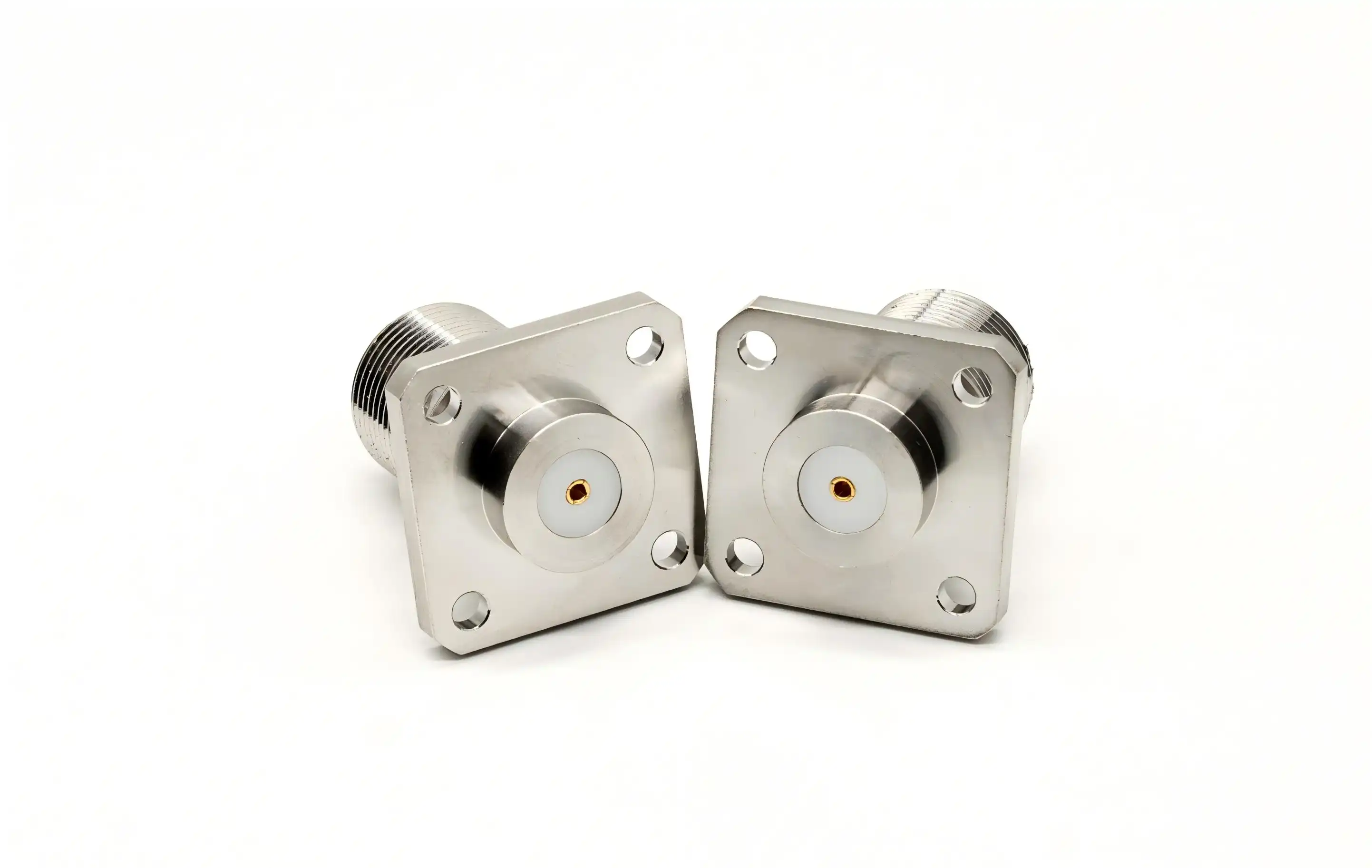
Criteria to Evaluate High-Quality N Panel Connectors
Environmental Protection and Mechanical Durability
Rugged RF Connectors for Panel Mount Applications should be rugged enough to endure the physical stress and environmental conditions found in your application environment. The IP rating system is a standard measure for ingress protection, and IP67-rated connections are dust-tight sealed and protected against momentary immersion. If you are choosing connections for outdoor telecommunications equipment or solar installations, be sure to check the IP rating via third-party certification and not only on the basis of manufacturer statements. If you’re working in a coastal or marine setting, you’ll want salt spray protection, so seek connections that satisfy ASTM B117 for a minimum of 96 hours of exposure without corrosion.
Mechanical resilience is a key factor in ensuring long-term dependability during repeated connection cycles and environmental stress. PremiumN panel connectors should be capable of 500 mating cycles minimum without compromise of electrical performance or mechanical integrity. The threaded connection must have a constant engagement torque of 12 - 15 inch-pounds throughout the life of the connector. Check flange thickness and hole reinforcement; thin flanges will flex under installation tension, leading to misalignment and probable seal failure. Corrosion-resistant hardware employing 300-series stainless steel provides mounting integrity in hostile conditions where cadmium- or zinc-plated fasteners would not.
Electrical Performance Parameters
Signal integrity requires good impedance matching and low insertion loss across the frequency range of operation. A good N-type panel-mount connection should have a 50-ohm impedance with tight tolerances (usually ±1 ohm) to avoid reflections that would affect the quality of the signal. VSWR is a measure of how well impedances are matched. Excellent connections may have VSWR below 1.25:1 to 6 GHz, which means very little power is reflected. The insertion loss should be less than 0.05√f dB, where f is the frequency in GHz, i.e., the loss is less than 0.15 dB at 6 GHz.
The dielectric withstand voltage is a measure of the connector’s capacity to carry high-power signals without arcing or breakdown. Ideal for use in transmitter applications and high-power test systems, professional-grade N panel connectors are rated at a minimum of 2500 Vrms. The center conductor contact resistance is less than 3 milliohms, which prevents resistive heating in continuous operation. If you’re working in the millimeter-wave region, nearing 18 GHz, make sure you consider the cutoff frequency of the connection and the higher-order mode suppression to avoid surprises that might degrade measurement accuracy.
Material Quality and Certification Standards
The electrical performance and the environmental resilience are directly affected by the materials used in the construction of the connection. Gold plating center conductors of beryllium copper prevents oxidation and provides excellent spring properties and conductivity. Brass bodies are very machinable and provide strong electromagnetic shielding when suitably coated with nickel, silver, or gold. The dielectric insulator material influences both electrical performance and thermal stability. PTFE remains the top option for its low loss tangent (0.0002) and steady dielectric constant (2.1) throughout a wide temperature range.
Certifications from recognised standards organisations ensure connection quality and compliance with industry regulations. UL recognition means that the connection fulfils the flammability and electrical safety requirements for the North American market. RoHS compliance ensures that no hazardous compounds such as lead and mercury are present, which is becoming more crucial for equipment supplied to regulated markets. CE label means it meets European rules on safety and electromagnetic compatibility. MIL-STD-348 military-spec connections are rigorously qualified for exposure to thermal stress, vibration and humidity, making them ideal for demanding aerospace and defence applications.
When considering vendors, ask for material certificates and test results that demonstrate the electrical performance throughout the necessary frequency range. Reputable producers give full traceability of raw ingredients and statistical process control data to show consistent quality of manufacturing. This paperwork is required for qualifying components for integration into production or for maintenance purchase.
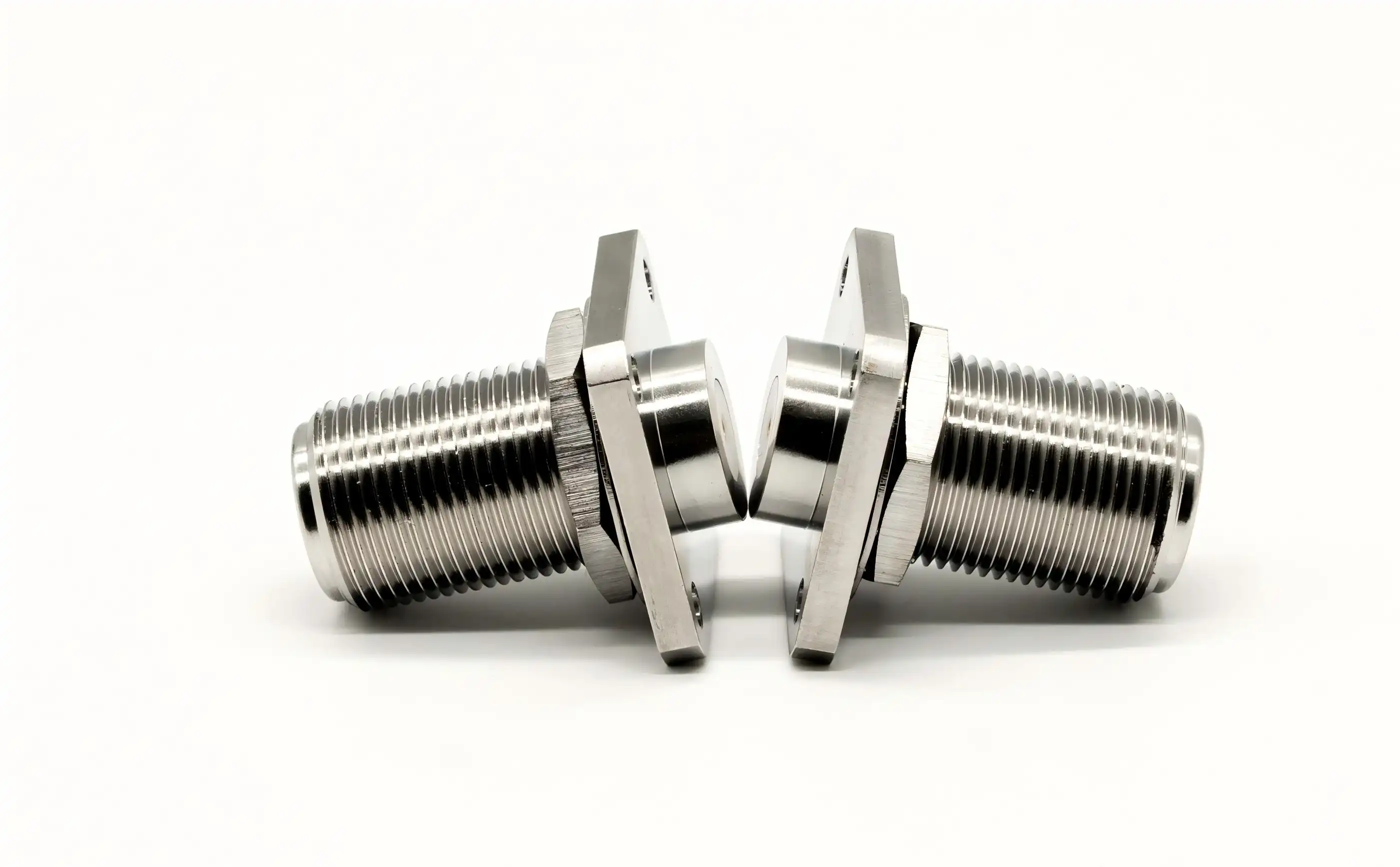
How to Select the Right N Panel Connector for Your Needs
Defining Your Application Requirements
A careful evaluation of your system requirements and operating environment is the key to selecting a successful connection. Determine the bandwidth you need for your application – ordinary N connections work well up to 11 GHz, but careful machining and stricter tolerances expand the usable bandwidth to 18 GHz for specialised testing purposes. Identify the maximum RF power to be sent or received by your system, including average and peak power levels. This defines the voltage rating and thermal management factors necessary.
Connector design decisions are strongly affected by environmental variables. Indoor lab equipment working in temperature-controlled areas without considerable environmental protection may utilise ordinary sealed connections. Outdoor telecom systems should be rated IP67 or IP68 and built with UV-resistant materials to avoid damage due to sunlight. Industrial automation panels need chemical-resistant housings in production facilities where cleaning solvents or process fluids are present. Record the anticipated temperature range, humidity levels, vibration profiles, and any corrosive substances in your installation area.
Space limits both connection type and mounting configuration. Check the available panel thickness to guarantee that the connection body and the mounting hardware will fit within the design of your chassis. Don't forget to think about cable routing on both sides of the panel - right-angle connections may help save space behind the panel if space is tight. Standard flanges need room to get the mounting screws in; bulkhead connections need space for the retention nut and wrench access during installation.
Comparing Connector Types and Configurations
Panel-mount RF connectors are different from cable- and wire-terminated variants in their structure and installation. Flange-mount connections provide the most secure attachment, bolting directly to the equipment chassis and dispersing mechanical load over numerous mounting points. This arrangement is suitable for permanent installations when the panel has to be removed seldom. The stiff mount stops the connection from rotating while attaching the cable, keeping it aligned and saving wear and tear.
Bulkhead connections are installed from the front or back via a panel cutout using a threaded barrel. The connection is secured to the interior side by a hex nut, enabling it to be installed without removing the panel—an advantage in retrofit situations or where access to the interior is restricted. The circular mounting footprint eliminates the need for a number of mounting screws. Only a single panel hole is required. This simplifies panel production. However, bulkhead-type connections depend on thread engagement for grounding and shielding continuity, making them less appropriate for high-frequency applications beyond 6 GHz, where flange-mount designs give greater electromagnetic performance.
Hermetically sealed connections have glass-to-metal sealing that provides complete environmental isolation. These specialised panel connections fulfil rigorous leak rates of less than 1x10⁻⁸ standard cubic centimetres per second, a requirement for aircraft, vacuum systems and pressurised equipment. The sealing technique with glass beads increases production complexity and expense but delivers unparalleled dependability for harsh conditions. If you need to withstand transient exposure to moisture, then sealing may be the way to go. If you need to be completely isolated from the outside environment, then you may need a hermetic.
Evaluating Suppliers and Brand Reputation
The choice of supplier affects not only the quality of components but also the efficiency of procurement and the long-term stability of the supply chain. Established manufacturers like Amphenol and TE Connectivity have broad product portfolios with detailed technical documentation and global distribution networks. These big companies invest in high-tech manufacturing equipment and quality procedures that assure the same performance from lot to lot. Their goods are usually priced at a premium, yet they are reliable, and replacement parts are easily accessible.
Regional experts and contract manufacturers may provide reasonable prices, especially for large-volume purchases or bespoke designs. When investigating other suppliers, check to see what quality management certifications they have. ISO 9001 accreditation shows they have at least a basic quality system, and AS9100 certification shows they have aerospace-level process controls. For electrical and mechanical testing, request qualifying samples before committing to production volumes. Create explicit acceptance testing standards and conduct inbound inspection so that faults are identified before parts reach your manufacturing line.
Lead times and minimum order quantities are key factors in procurement strategy. Distributor stock - Stock of conventional connection types is available immediately; however, customisation is limited. You can change specifications and get bulk pricing via direct contact with manufacturers, but you’ll usually have to deal with longer lead times and larger minimum commitments. Compare procurement lead times and your inventory carrying costs. Maintaining safety stock of crucial connections reduces production downtime but consumes working capital. Factor in things like after-sales support, technical help, replacement policies, and warranty terms into your supplier assessment process.
Practical Installation and Maintenance Tips
Pre-Installation Preparation and Best Practices
Proper installation occurs prior to contacting the connection. Check the panel cutout or mounting holes to verify that they meet connection requirements. An enlarged hole affects the efficacy of grounding and permits panel flexure that puts strain on the connector body. Remove burrs and sharp edges from the cutout that can harm sealing gaskets or scratch protective plating. Remove oils and other impurities that might interfere with electrical bonding and seal integrity from the mounting surface by cleaning with isopropyl alcohol.
Before installation, check the connection for shipping damage or manufacturing faults. Visually verify the pin protrusion and concentricity inside the dielectric insulator to check the center conductor alignment. Damaged center conductors produce excessive VSWR and possible mating problems with field connections. Make sure that sealO-ringsings are correctly inserted in their grooves and are free of cuts or deformation. Regardless of the IP rating, missing or broken seals degrade environmental protection.
When installing flange-mount connections, place mounting screws in a star pattern to distribute the clamping stress uniformly and avoid seal deformation. Torque screws to the manufacturer’s specification (usually 7-10 inch-pounds for M3 hardware) using a calibrated torque driver, not by hand tightening. Over-torquing distorts the flange and produces stress concentrations that lead to cracking. If the N panel connector is under-torqued, then it might move about when the cable is attached and cause intermittent connections. When stainless steel connections are installed on aluminium panels, a small coating of conductive grease should be applied to the mounting flange to avoid galvanic corrosion and to preserve low-resistance grounding routes.
Correct Mating Procedures and Connection Techniques
Proper mating procedure for cables can help prolong connection life and preserve electrical performance. Before screwing the cable connector into the panel receptacle, make sure they are aligned. If you force them together when they are not aligned, you can damage the center conductor and the coupling threads. Hand-tighten the coupling nut until it touches the coupling face and then tighten with a torque wrench set to 12 inch-pounds. This torque provides enough contact pressure without overstressing the connection body or cable termination.
The central conductor should mate smoothly with no binding or undue force. If you experience resistance while mating, it is an indication that there is a misalignment or foreign material contamination; never force a difficult union. Unplug and check both connections for damage or debris. Clean contacts with compressed air or lint-free swabs dampened with isopropyl alcohol. Don't use cotton swabs that leave fibre in the connection interface.
Cable strain relief avoids mechanical stress being transferred to the connection contact. Cables should be routed to prevent severe bends within 6 inches of the panel connection, using a minimum bend radius of 10 times the cable diameter. Use proper clamps or tie-downs for cables that absorb vibration and avoid bending at the connection. Safety wire or other mechanical locking measures should be used to prevent loosening of the coupling nuts due to vibration in mobile applications or when vibration is severe.
Maintenance Schedules and Troubleshooting
Scheduled inspections at regular intervals may reveal wear and environmental deterioration before they lead to system problems. Regular visual examinations every six months for corrosion of exposed metal surfaces, damage to coupling threads, and the integrity of the seals. Look for discolouration around the mounting flange, suggesting water has invaded beyond the seal. Outdoor installations need more regular examination - every three months - to monitor if the plastic parts are breaking down from ultraviolet rays and to confirm that the drain holes are still open.
Electrical testing may be done to verify connection performance without the need to disassemble. Measure insertion loss and return loss at your operating frequency using a vector network analyser. Compare measurements to baseline values taken at installation – rising insertion loss indicates growing contact resistance issues or interior corrosion. An increase in VSWR shows that there are impedance discontinuities caused by damaged center conductors or moisture entering the dielectric.
Typical difficulties include intermittent connections due to contamination or wear, increased insertion loss due to oxidation, and failure due to water intrusion. Intermittent problems are frequently solved by cleaning and reseating the connections using certified solvents and lint-free materials. Connector replacement may be required due to progressive deterioration in electrical performance – repair of precision RF connections seldom recovers original performance. If you have to replace it, make sure you note down the failure mode and operating circumstances so that the next time you make a specification, you may learn something or see if there is an opportunity to enhance the system design.
Where and How to Buy N Panel Connectors: Procurement Advice
Purchasing Channels and Distribution Options
Various procurement channels meet various buyers’ demands in terms of availability, affordability, and technical assistance. Major manufacturers have standard connection types in broad inventory with authorised distributors, including Digi-Key, Mouser, and Newark. Their websites allow quick stock visibility, datasheets, and speedy shipment of prototype quantities and emergency replacements. Normally, distributor pricing is a markup above the direct expenses of the manufacturer, but it allows for lower order volumes with no minimum purchase obligations.
For production numbers and unique configurations, direct manufacturer partnerships make sense. You get to work with manufacturers like Chuangyu and may modify the specifications, choose additional plating options, or customise the packaging to make the assembly process more efficient. Production orders get bulk pricing, which decreases the cost per unit by 20 to 40 percent above the distributor price. Direct sourcing provides longer planning horizons, with lead times of 6-12 weeks for basic items and 16 weeks for bespoke designs that need tooling revisions.
Marketplaces and regional distributors may provide reasonable prices, but you will need to weigh whether the product quality is legitimate and consistent. Counterfeit parts and unauthorised copies are found in the electronics supply chain, especially for the most common connection types. Check manufacturer-authorised dealer listings to verify supplier authenticity. Require material certificates and performance test data to validate product requirements. New suppliers need to go through qualification processes so that you don’t let poor-quality components into your supply chain.
Optimizing Procurement Through Volume Strategies
Bulk purchases may lower the cost per unit and guarantee continuity of supply for industrial needs. Manufacturers provide price cuts at certain quantities, often at 100, 500, and 1,000 pieces, and provide further savings for commitments to yearly output. Review your usage across many projects to combine orders and move up price levels. Simplifying inventory management and increasing influence in supplier negotiations is achieved by standardising on fewer connection types across product lines.
Minimum order numbers are totally dependent on the manufacturer and the intricacy of the product. Standard catalogue goods may be ordered in as few as 50 pieces, but unique combinations need 500- to 1,000-piece commitments to justify tooling expenses and production setup. If MOQs are more than you need, consider consignment inventory options wherein the supplier holds inventory at their site and issues materials per the delivery schedule. This strategy secures your supply at agreed prices while reducing your inventory holding expenses.
We need to analyse inventories carefully to balance cost reduction and supply chain flexibility. Find the economic order amounts with the cost of unit pricing, ordering costs, and inventory carrying costs. Safety stock levels should be sufficient to absorb lead time uncertainty and demand variations, generally two to four weeks' consumption of normal components from dependable sources. If it is a critical component with a lengthy lead time or a single supplier, you may justify a higher carrying cost.
Custom Orders and Specification Development
A lot of applications need connection requirements changed from conventional catalogue options. Custom designs may include various mounting flange patterns, expanded coupling threads for thick panels, or specific plating for corrosive conditions. Getting manufacturers involved in the design process early on is a great way to understand what changes are possible and avoid expensive redesigns. Provide precise mechanical drawings with dimensional specifications and explicitly explain electrical performance requirements throughout the whole operational frequency range.
Making a custom connection entails tooling, prototype making, and qualification testing. Tooling expenses vary from $2,000 for minor changes such as flange drilling patterns to $15,000 for sophisticated designs requiring special machining fixtures. Custom designs are economically viable when the tooling expenses are amortised throughout the production volume. High-volume programs justify the tooling investment, whereas low-volume applications may necessitate design concessions utilising standard components.
Timeline assumptions for bespoke projects are: quote (two weeks), tooling and initial item production (six to eight weeks), and qualification testing (two to four weeks). Premium pricing and priority manufacturing slots mean an accelerated timeline. Keep communication lines open with your connection manufacturer throughout development. Design reviews and prototype assessments can help identify difficulties before you go to production tooling. Working with vendors like Chuangyu makes bespoke development easier by using their knowledge in precision RF component design as well as their skills in PCB fabrication and electronic assembly integration.
Conclusion
When sourcing excellent N-panel connectors, it is important to take into consideration technical criteria, environmental needs, and the capabilities of the provider. The RF connection you choose for the panel mount is a vital part of the signal route for your system, and its electrical performance, mechanical reliability, and environmental robustness will all affect the performance, reliability, and robustness of the whole system. You may match connection specifications to your application requirements by considering IP ratings, materials of construction, electrical characteristics, and certification standards. Partnering with established and known manufacturers provides technical competence, consistent quality, and a supply chain that can support both prototype development and volume manufacturing. Proper installation methods and preventative maintenance will increase the service life of connectors and preserve signal integrity throughout the life of your equipment.
FAQ
1. What differentiates N-panel connectors from standard N-type cable connectors?
Panel connectors incorporate mounting hardware designed for chassis or bulkhead installation, providing a fixed interface point between equipment internals and external cabling. Cable connectors attach directly to coaxial cable ends for flexible connections. The panel-mount configuration includes flanges or threaded bodies for secure attachment and typically features O-ring seals for environmental protection that cable connectors lack.
2. How can I verify the IP rating before purchasing connectors?
Request third-party test reports documenting IP rating verification through standardized ingress protection testing per IEC 60529. Reputable manufacturers provide certification showing dust chamber and water immersion test results. Examine the connector design for continuous sealing paths—gaps in the sealing system compromise protection regardless of claimed ratings. When specification compliance is critical, purchase samples for independent verification testing before committing to production quantities.
3. Are metal panel connectors suitable for permanent outdoor installations?
Properly specified metal panel connectors excel in outdoor environments when constructed from corrosion-resistant materials with appropriate surface treatments. Stainless steel bodies with passivation or nickel plating resist atmospheric corrosion. Apply dielectric grease to mating threads and mounting hardware to prevent galvanic corrosion and facilitate future disconnection. Regular inspection and maintenance—cleaning, re-lubrication, and seal replacement as needed—ensure decades of reliable outdoor service in telecommunications infrastructure and antenna systems.
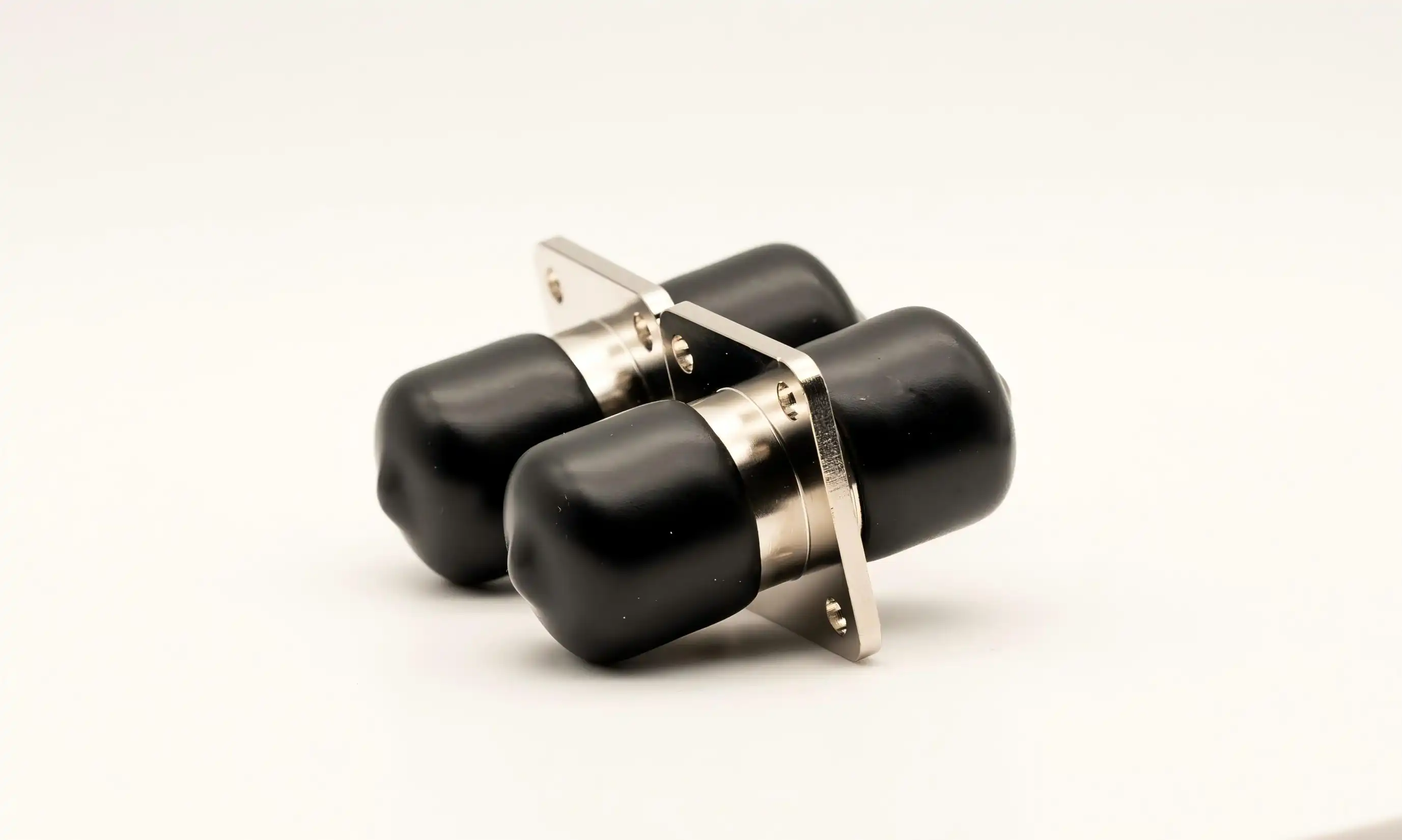
Partner with Chuangyu for Premium N Panel Connector Solutions
Shaanxi Chuangyu Electronic Technology delivers precision-engineered N-panel connectors and RF components manufactured to exacting international standards. Our millimeter-wave connectivity solutions—ranging from DC to 110 GHz—combine exceptional electrical performance with mechanical reliability that meets the demands of semiconductor testing, telecommunications infrastructure, and photovoltaic characterization systems. As an established N-panel connector manufacturer with comprehensive capabilities in high-frequency PCB design, precision machining, and electronic assembly, we provide integrated solutions that eliminate supply chain complexity. Our 800-square-meter production facility in Xi'an produces 500,000 RF components annually with consistent quality backed by rigorous testing protocols. Whether you need catalog components or custom-engineered solutions, our technical team collaborates with your design and procurement groups to optimize specifications, delivery schedules, and lifecycle costs. Contact our applications engineers at chuangyuwz01@cymicrowave.com to discuss your panel-mount connector requirements and receive detailed product datasheets tailored to your application.
References
1. Blackwell, Harold. RF and Microwave Connector Technology: Design, Manufacturing, and Applications. Boston: Artech House Publishers, 2018.
2. Gupta, K.C., and Singh, Amarjit. Microwave Integrated Circuits: Design and Analysis of Passive Components. New Delhi: New Age International Publishers, 2019.
3. Institute of Electrical and Electronics Engineers. IEEE Standard for Precision Coaxial Connectors at RF, Microwave, and Millimeter-Wave Frequencies. IEEE Std 287-2007. New York: IEEE Press, 2007.
4. Maloratsky, Leo G. Passive RF and Microwave Integrated Circuits. Burlington: Elsevier Academic Press, 2004.
5. Motorola Solutions. RF Device Data: Connector and Cable Assembly Specifications for Communications Systems. Technical Manual DM-100-1156. Chicago: Motorola Engineering Publications, 2017.
6. Rizzi, Peter A. Microwave Engineering: Passive Circuits. Upper Saddle River: Prentice Hall International Editions, 1988.