- English
- French
- German
- Portuguese
- Spanish
- Russian
- Japanese
- Korean
- Arabic
- Greek
- German
- Turkish
- Italian
- Danish
- Romanian
- Indonesian
- Czech
- Afrikaans
- Swedish
- Polish
- Basque
- Catalan
- Esperanto
- Hindi
- Lao
- Albanian
- Amharic
- Armenian
- Azerbaijani
- Belarusian
- Bengali
- Bosnian
- Bulgarian
- Cebuano
- Chichewa
- Corsican
- Croatian
- Dutch
- Estonian
- Filipino
- Finnish
- Frisian
- Galician
- Georgian
- Gujarati
- Haitian
- Hausa
- Hawaiian
- Hebrew
- Hmong
- Hungarian
- Icelandic
- Igbo
- Javanese
- Kannada
- Kazakh
- Khmer
- Kurdish
- Kyrgyz
- Latin
- Latvian
- Lithuanian
- Luxembou..
- Macedonian
- Malagasy
- Malay
- Malayalam
- Maltese
- Maori
- Marathi
- Mongolian
- Burmese
- Nepali
- Norwegian
- Pashto
- Persian
- Punjabi
- Serbian
- Sesotho
- Sinhala
- Slovak
- Slovenian
- Somali
- Samoan
- Scots Gaelic
- Shona
- Sindhi
- Sundanese
- Swahili
- Tajik
- Tamil
- Telugu
- Thai
- Ukrainian
- Urdu
- Uzbek
- Vietnamese
- Welsh
- Xhosa
- Yiddish
- Yoruba
- Zulu
A hermetic feedthrough with multiple pins is a precision electrical component that enables the transmission of electrical signals, power, or data through a sealed barrier while maintaining complete environmental isolation. Unlike standard connectors, these devices create airtight or vacuum-tight seals using advanced technologies such as glass-to-metal or ceramic-to-metal bonding. They prevent gas, moisture, and contaminants from penetrating sensitive enclosures, making them indispensable in aerospace, medical implants, semiconductor testing, and industrial automation where even microscopic leaks can compromise system integrity and performance.
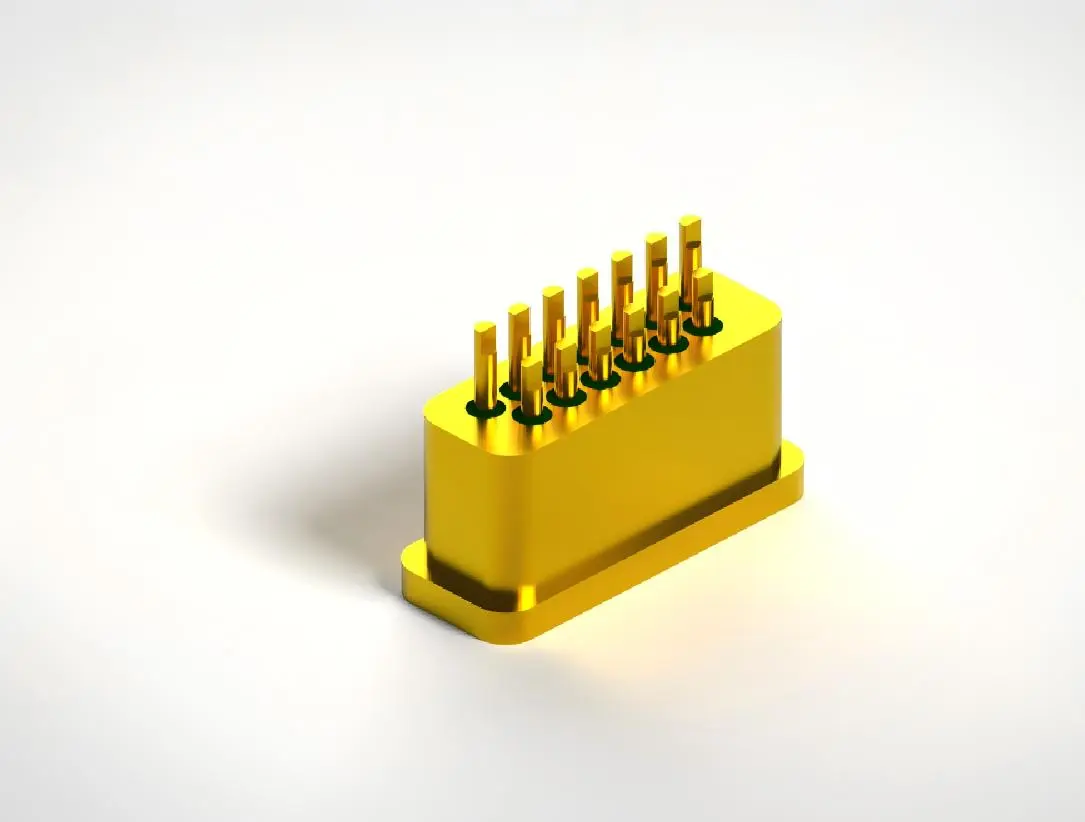
Comparing Hermetic Feedthroughs With Multiple Pins
Multiple-Pin vs. Single-Pin Configurations
When looking at different hermetic feedthroughs with multiple pin choices, it is important to know the pros and cons of both consolidated multi-pin assemblies and distributed single-pin installs. When systems need to connect to a lot of electrical devices, multiple-pin designs make installation easier, take up less space, and cost less to put together. There is a lot less space on the panel for a 37-pin feedthrough than for 37 separate single-pin units, but the sealing performance is the same or better. But single-pin feedthroughs are better for keeping high-power wires separate from sensitive data lines. This stops electromagnetic interference and thermal coupling between circuits that are next to each other.
Feedthroughs vs. Bulkhead Connectors
It's common for procurement managers to mix up hermetic feedthroughs and normal bulkhead connections, but they are actually very different. Bulkhead connectors allow mechanical attachment and electrical continuity, but they rarely achieve true hermetic sealing. Over time, small amounts of gas can pass through elastomer seals. Electric feedthroughs have permanent glass or ceramic seals that stay in place even after decades of changing temperatures and pressures. This difference is very important in situations like medical implants or space systems, where any damage to the seal could cause unacceptable risks.
Glass vs. Ceramic Insulation Materials
Choosing between glass-to-metal and ceramic-to-metal feedthroughs affects both how well they work and how much they cost. Glass sealing technology has lower production costs and better sealing performance for uses below 250°C that need a modest amount of power, less than 1000V. Ceramic insulators have a dielectric strength of more than 10kV, can handle temperatures higher than 400°C, and last longer when subjected to vibration and shock loading. Engineers who work on RF microwave systems often choose ceramic designs because they have lower dielectric loss and can keep signals intact in high-frequency situations up to 40 GHz.
Design Challenges in High Pin Count Assemblies
Adding more conductors to hermetic enclosures makes engineering more difficult, which affects how reliable and easy to make the product is. Mismatches in thermal expansion between pins that are close to each other can cause damaging forces during temperature cycles, which could cause insulator materials to crack. To get the same quality seal on 50 or 100 glass-metal contacts at the same time, precise tools and process control are needed, which drives up the cost of production. As the space between conductors gets smaller, it gets harder to keep them electrically separate. This means that when putting the parts together, you have to pay close attention to the insulator's thickness and any surface contamination.
How to Choose the Best Hermetic Feedthrough With Multiple Pins
Defining Environmental Operating Conditions
To choose the right hermetic feedthrough with multiple pins, you must first carefully describe the operating environment your system will be used in. Extreme temperatures affect how well materials work together and how seals are made. For example, cryogenic medical uses close to -196°C need different solutions than geothermal tracking at +300°C. Whether there is a vacuum at 10⁻⁶ Torr or high pressure at 15,000 PSI, the difference in pressure across the seal contact affects the thickness of the housing wall and the shape of the seal. Chemical exposure to corrosive fluids, cleaning solvents, or reactive gases means that the housing and insulator parts need to be made of the right materials to keep them from breaking down too quickly.
Electrical Specification Requirements
By giving exact electrical details, you can be sure that the multi-pin hermetic feedthrough you choose will meet the performance needs of your system without adding too many extra costs. The minimum conductor cross-sectional area is set by the amount of current it needs to carry. For signal applications, this is usually 1A per pin, and for dedicated power contacts, it's 13A. Ratings for voltage must take into account both working potentials and short-term surges, with adjustments made for altitude and contamination levels. Specifications for insulation resistance, usually 5000MΩ or higher, make sure that there aren't too many leakage currents between wires that are next to each other and from active pins to ground.
Pin Count and Physical Arrangement
To find the best amount of wires and the best way to lay them out, you have to balance cost, density, and system design. Choosing extra pins gives you more options for making changes to the design in the future, but it also raises the initial costs and footprint. Pin setups range from straight lines that work for connecting ribbon cables to circles that fit standard mil-spec connector shapes, making it easier to choose the right connector. The type of contact—whether pins stick out for plug mating or sockets accept male contacts—affects both how strong the mechanical system is and how easy it is to put together in the field.
Evaluating Customization vs. Standard Products
Standard stock items from well-known companies have quicker wait times (usually 4 to 6 weeks) and lower unit costs for tried-and-true designs. However, custom hermetic feedthroughs are the best option when standard configurations don't work with certain mounting dimensions, pin counts that aren't normal, or special materials. Chuangyu specializes in unique, non-standard probe and connector solutions. They use their nearly 20 years of technical experience to make feedthroughs that exactly meet the needs of the application. When off-the-shelf parts don't work in solar testing systems, semiconductor equipment, or medical devices, our team works closely with R&D experts to make custom solutions.
Testing and Quality Verification Standards
Thorough testing procedures prove that hermetic seals will work reliably for decades of product lifecycles. Using mass spectrometers to test for helium leaks can find leak rates as low as 10⁻¹⁰ Torr·L/sec, which proves the seal's integrity far beyond what is normally required. Electrical performance testing checks the response of the insulator to stress conditions like high humidity and temperature, as well as the ability to handle voltage. In mechanical testing, parts are put through routines of vibration, shock, and temperature cycles that mimic the worst possible service conditions. This finds possible failure modes before they are put into use in the field.
Manufacturing and Design Considerations
Precision Assembly Processes
To make a high-reliability hermetic feedthrough with multiple pins, the process has to be carefully controlled at every stage of production. Before choosing a raw material, its chemical makeup and size must be checked to make sure they will work with the closing steps that will follow. Precision grinding is used to get glass or ceramic insulators to very tight standards, usually within ±0.025mm. This makes the exact shapes needed for hermetic bonding to work. Before heating cycles melt glass or activate brazing alloys, pin alignment fixtures place conductors with micron-level accuracy. This creates the permanent seals that determine how well the product works.
In our 1,000-square-meter plant in Xi'an, Chuangyu has dedicated production lines for making coaxial connectors, RF wire assemblies, and glass-sealed feedthrough components. Our 800-square-meter production workshop has the precise tools needed for Kovar alloy glass encapsulation processes. This lets us make 500,000 RF components every year that meet the high-quality standards needed by top photovoltaic companies and phone companies.
Managing Thermal Expansion and Mechanical Stress
Matching the coefficient of thermal expansion (CTE) of the conductors, insulators, and housings is very important for long-term reliability when temperatures change. Kovar metal housings have CTE values that are very close to those of borosilicate glasses. This means that they don't have to deal with as many thermal stresses during factory heating cycles or changes in service temperature. When used with carefully chosen brazing metals and ceramic insulators, the same level of stress control can be achieved at higher temperatures. To make sure that maximum tensile stresses stay below material failure levels even during rapid thermal transients, design engineers must use finite element analysis tools to figure out stress patterns.
Electromagnetic Shielding and Signal Integrity
Electromagnetic interference (EMI) suppression and signal path impedance control need to be carefully thot out for high-frequency electrical systems. Multi-pin hermetic feedthroughs for RF microwave uses have grounded metal housings that block outside interference by more than 85dB, keeping sensitive measurement circuits from being affected. The characteristic impedance for controlled-impedance signal routes is based on the spacing between the conductors and the dielectric properties of the insulator. This is important for keeping the signal integrity in gigahertz-range uses. Putting ground pins in multi-conductor groups helps keep crosstalk between neighboring signal channels that carry fast-edge-rate digital data or analog sensor information to a minimum.
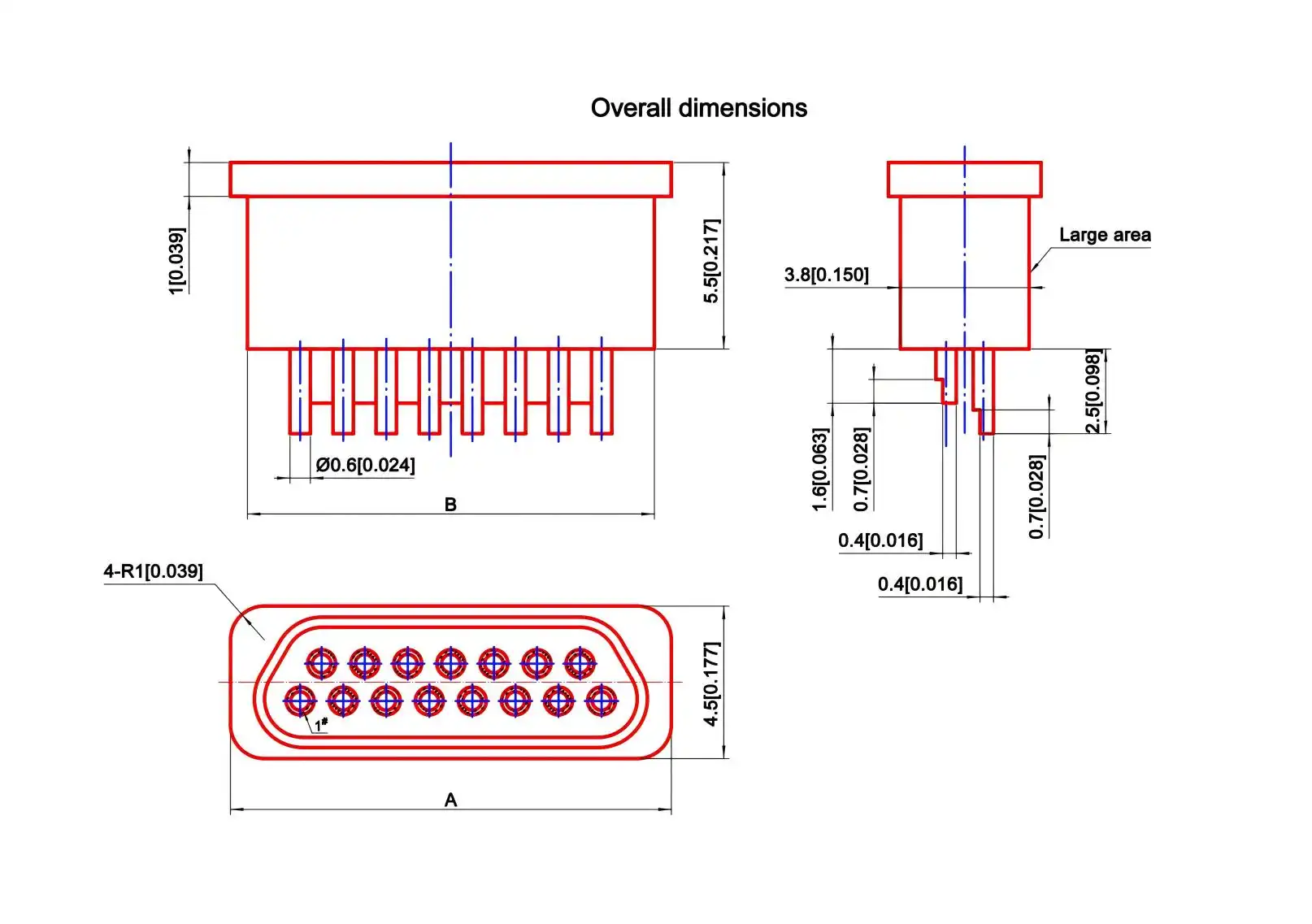
Procurement Guide for Hermetic Feedthroughs With Multiple Pins
Identifying Reliable Suppliers and Manufacturers
To find hermetic feedthroughs with multiple-pin components, you need to find suppliers who have both technical know-how and a track record of delivering high-quality products. Authorized distributors of well-known brands like TE Connectivity, LEMO, and Fischer Connectors sell catalog items that have a history of dependability and come with a lot of technical information. OEM manufacturers that focus on custom designs offer technical help for solutions that are made for specific needs. They work together to improve specifications and lower the overall cost of the system. Checking that suppliers have certifications like ISO 9001 quality management and AS9100 aerospace standards helps make sure that manufacturing processes are strong and that products can be tracked.
The company Chuangyu makes precise parts and works with engineers to come up with special solutions that solve problems in the new energy, medical, and telecoms sectors. Because we are in the Xi'an Chang'an Innovation Technology Industrial Park, we have access to strong supply chain networks that let us get raw materials and finished products faster than the average in our industry by over 20%. This business efficiency directly leads to faster turnaround times for prototypes and faster production ramp-ups for product launches that need to happen quickly.
Understanding Pricing Factors and Lead Times
A big part of the price of a hermetic feedthrough is how much the materials cost. Compared to normal materials, valuable metal contacts, high-purity ceramics, and specialty alloys cost more. Customization that is too complicated, like non-standard pin configurations, strange mounting flanges, or specific sealing needs, adds to engineering time and tooling costs, which affects the cost per unit. The number of units ordered has a big effect on the price. Usually, prices break at 100, 500, and 1,000 units because set labor costs are spread out over longer production runs.
Standard catalog items usually ship 4 to 8 weeks after an order is placed. Custom designs, on the other hand, take 8 to 16 weeks, depending on how complicated they are and how busy the factories are at the moment. For urgent needs, there are options for expedited manufacturing, but extra fees of 25 to 50 percent usually apply. Strategic buyers place framework orders that set prices and delivery dates for expected yearly amounts. This secures production capacity and good prices while keeping their options open by releasing goods at times that match real consumption.
Custom Design vs. Catalog Product Decision Framework
When deciding between custom-engineered hermetic feedthroughs and normal stock items, you need to look at the total costs of ownership, which go beyond the initial purchase price. Custom designs improve performance and integration for specific uses, which could lower the cost of assembly, make the system more reliable, or make it possible to do things that aren't possible with standard parts. But the costs of development and the low minimum order quantities (usually 50 to 100 units for custom designs) mean that catalog products are better for low-volume uses or early stages of development.
Custom engineering works best for uses that need to be protected from certain environments, have special electrical needs, or have specific mounting needs. Our Chuangyu team is very good at turning application needs into optimized feedthrough designs. They do this by using their many years of experience with photovoltaic test probes, semiconductor testing fixtures, and medical device interconnects. We support customers throughout the entire lifecycle of a product by offering variable minimum order amounts that can be used for both prototyping and mass production.
After-Sales Support and Documentation Requirements
The successful coupling and ongoing supportability of hermetic feedthrough components are made possible by comprehensive technical documents. Good sellers give thorough datasheets that list electrical rates, mechanical measurements, building materials, and limits for environmental performance. Assembly mistakes that could damage the seal's integrity can be avoided by following installation instructions that include torque recommendations, mounting suggestions, and information on how to make sure the connectors fit together properly. For important uses, test results that show measures of voltage withstand, insulation resistance, and leak rates help with quality control and keeping track of the product.
The warranty lasts for 12 to 24 months and covers problems with the way the product was made. It does not cover damage caused by poor fitting, mechanical abuse, or using it beyond its recommended limits. Access to technical support, whether through application engineers, online resources, or field service staff, is very helpful for fixing problems with integration or making the system run more efficiently. Chuangyu gives companies ongoing engineering help and a 200-square-meter research and development (R&D) lab to back it up. Performance is checked for each application before full production commitment.
Conclusion
During the buying process, choosing the best hermetic feedthrough with multiple pins means matching the needs of the environment, electrical requirements, physical limitations, and business concerns. By learning about closing technologies, material qualities, and design tradeoffs, you can make smart choices that will give you years of reliable service in tough situations. Whether you're looking for catalog items from well-known names or working with specialized makers to make custom solutions, you need to carefully look at the skills, quality systems, and technical support of your suppliers to make sure the project goes well. Choosing the right components is an investment that pays off in the form of fewer failures in the field, easier assembly processes, and better system performance that meets the ever-stricter requirements of the industry.
FAQ
1. What differentiates hermetic feedthroughs from standard electrical connectors?
Standard electrical connections allow for mechanical attachment and electrical continuity, but small amounts of gas can leak through elastomer plugs, with leak rates usually around 10⁻³ to 10⁻⁴ Torr·L/sec. Hermetic feedthroughs with multiple pins use permanent glass-to-metal or ceramic-to-metal sealing technologies to keep leak rates below 10⁻⁹ Torr·L/sec. This gives vacuum systems, pressure vessels, and biomedical implants the complete environmental isolation they need.
2. How long do multi-pin hermetic feedthroughs last in harsh industrial environments?
When properly chosen and set up, hermetically sealed connectors usually work well for 20 to 30 years in tough situations. When used within certain temperature ranges, glass and ceramic seals stay stable through millions of thermal cycles. Service life rests mostly on keeping mechanical damage to a minimum during installation and staying away from chemicals that break down housing materials instead of seals.
3. Can multi-pin feedthroughs be customized for specific voltage or current requirements?
You can customize the conductor size to handle currents ranging from milliamps to tens of amps per pin, the insulator material to handle voltages ranging from hundreds to tens of thousands of volts, and the coatings or contact materials that work best with certain signal types or environments. Leading makers offer a lot of design options that maintain airtight integrity.
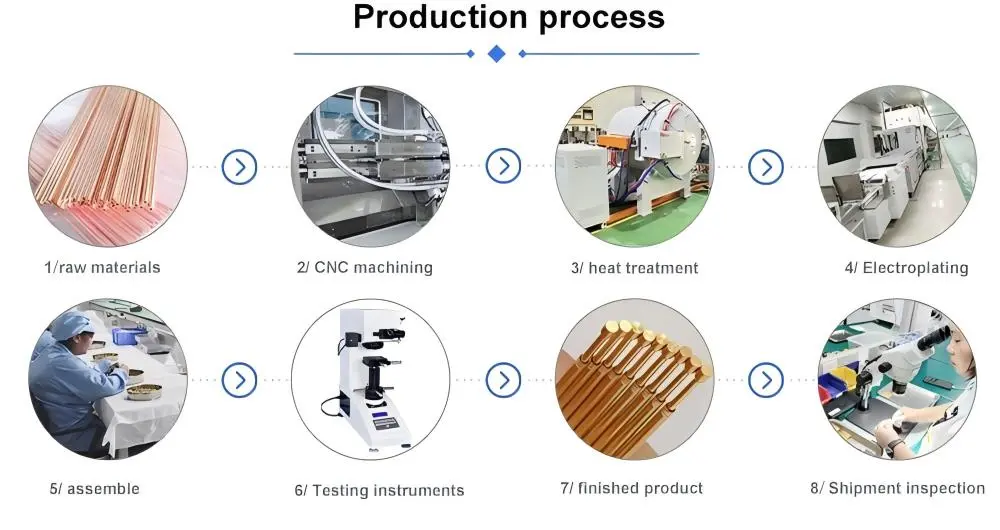
Partner With Chuangyu for Precision Multi-Pin Hermetic Feedthrough Solutions
The engineers at Shaanxi Chuangyu Electronic Technology are the best at designing and making special hermetic feedthroughs with multiple pins. They have almost twenty years of experience working with clients in the medical, telecommunications, industrial automation, and new energy sectors. We can make precise RF connectors up to 110 GHz, millimeter-wave wire systems, and specialty sealing technologies, such as Kovar alloy glass encapsulation that meets the strictest standards for external separation. We are a reliable hermetic feedthrough supplier that offers advanced manufacturing infrastructure and flexible customization services. We help with projects from validating prototypes to high-volume production, and each year we can make more than 500,000 RF components and 1 million precision test probes.
Hardware design engineers and procurement managers get a partner who knows how to strike the right mix between performance requirements, quality assurance, and making money. Get in touch with our applications team at chuangyuwz01@cymicrowave.com to talk about your multi-pin feedthrough needs and find out how Chuangyu's precision production can help you make your next-generation system designs work better.
References
1. Hanson, D. & Williams, R. (2021). Hermetic Sealing Technologies for Electronic Systems: Materials, Processes, and Applications. Materials Engineering Press.
2. Chen, L., Park, J., & Schmidt, M. (2020). "Glass-to-Metal Sealing in Multi-Pin Feedthroughs: Stress Analysis and Reliability Prediction," Journal of Electronic Packaging, 142(3), pp. 031-045.
3. Thompson, K. (2022). Advanced Connector Systems for Aerospace and Medical Devices. Technical Publications International.
4. ISO 3529-3:2019. Vacuum Technology – Vocabulary – Part 3: Vacuum Gauges and Leak Detectors. International Organization for Standardization.
5. Miller, A. & Zhang, Y. (2023). "Ceramic-to-Metal Sealing for High-Temperature Electronics: Process Optimization and Performance Characterization," IEEE Transactions on Components, Packaging and Manufacturing Technology, 13(1), pp. 78-92.
6. Foster, P., Kumar, S., & Larson, B. (2021). Electrical Feedthrough Design Guide: Engineering Solutions for Sealed Enclosures. Precision Components Publishing.