- English
- French
- German
- Portuguese
- Spanish
- Russian
- Japanese
- Korean
- Arabic
- Greek
- German
- Turkish
- Italian
- Danish
- Romanian
- Indonesian
- Czech
- Afrikaans
- Swedish
- Polish
- Basque
- Catalan
- Esperanto
- Hindi
- Lao
- Albanian
- Amharic
- Armenian
- Azerbaijani
- Belarusian
- Bengali
- Bosnian
- Bulgarian
- Cebuano
- Chichewa
- Corsican
- Croatian
- Dutch
- Estonian
- Filipino
- Finnish
- Frisian
- Galician
- Georgian
- Gujarati
- Haitian
- Hausa
- Hawaiian
- Hebrew
- Hmong
- Hungarian
- Icelandic
- Igbo
- Javanese
- Kannada
- Kazakh
- Khmer
- Kurdish
- Kyrgyz
- Latin
- Latvian
- Lithuanian
- Luxembou..
- Macedonian
- Malagasy
- Malay
- Malayalam
- Maltese
- Maori
- Marathi
- Mongolian
- Burmese
- Nepali
- Norwegian
- Pashto
- Persian
- Punjabi
- Serbian
- Sesotho
- Sinhala
- Slovak
- Slovenian
- Somali
- Samoan
- Scots Gaelic
- Shona
- Sindhi
- Sundanese
- Swahili
- Tajik
- Tamil
- Telugu
- Thai
- Ukrainian
- Urdu
- Uzbek
- Vietnamese
- Welsh
- Xhosa
- Yiddish
- Yoruba
- Zulu
When designing RF systems, the choice between microwave adapters and connectors can significantly influence signal integrity and system performance. Microwave adapters serve as interface converters, bridging mismatched connector types—such as converting SMA to N-Type or BNC to SMA—ensuring compatibility across diverse components. Connectors, conversely, provide the primary signal pathway, establishing stable, low-loss connections between cables and equipment. Both play essential but distinct roles in maintaining reliable signal transmission, particularly in high-frequency applications up to 110 GHz.
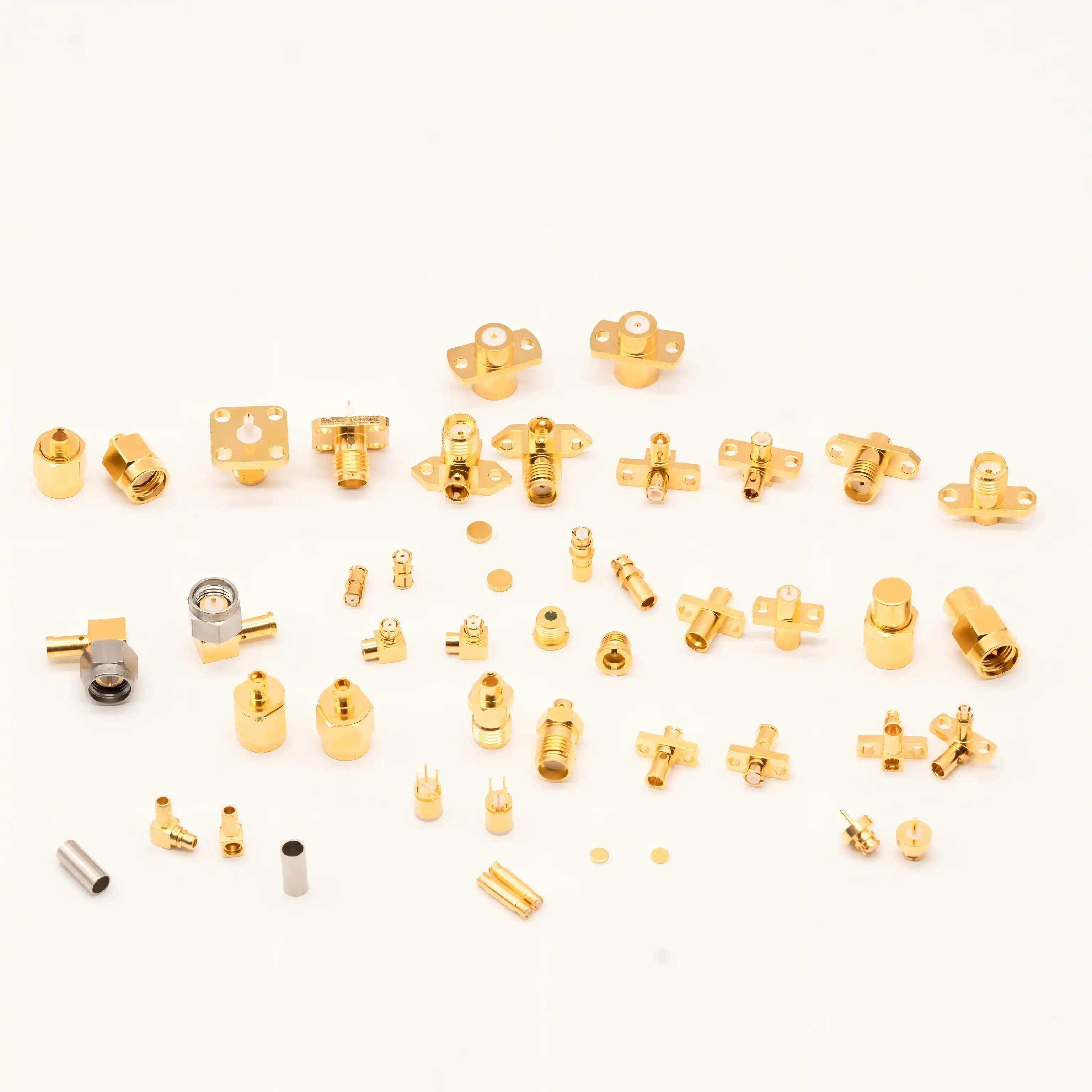
Introduction
Microwave adapters and plugs are important parts of RF systems that make sure signals are sent correctly and the system works well. Choosing the right solution is very important for procurement professionals, engineers, and OEMs who work in the B2B sector to maintain performance standards and reduce downtime. The goal of this guide is to make the differences between microwave adapters and plugs clear, explain what each one does, and give you useful information that you can use to make smart purchasing choices that meet your technical and financial needs. Technical teams can avoid making mistakes that cost a lot of money, keep signals from getting weaker, and make RF systems that meet strict requirements in areas like semiconductors, medical device manufacturing, telecommunications, and solar tests by understanding these differences.
Microwave Adapters vs Connectors: Key Differences and Performance Comparison
This part compares microwave adapters and connectors in great detail, paying special attention to signal quality, frequency range, durability, and upkeep. Procurement managers can make smart choices when they know how important factors like insertion loss and return loss affect the overall performance of an RF system in uses like 4G/5G networks. To help with choices about working reliability and lifetime costs, mechanical robustness and ease of installation are considered.
Signal Quality and Electrical Performance
In RF system design, signal quality is still the most important thing. Because they create straight signal paths without converting them, connectors usually have smaller insertion loss than adapters. At frequencies up to 18 GHz, good connections keep insertion loss below 0.1 dB. However, microwave adapters add extra loss—usually between 0.15 dB and 0.3 dB—because of the interface change. The efficiency of return loss follows a similar trend, with connectors usually getting better VSWR numbers than adapters. But in many situations, well-made adapters from reputable companies can match the performance of connectors. When you stack multiple adapters on top of each other, losses add up and could lower the signal quality in long cable assemblies or complicated test setups. To make sure that performance margins are acceptable, engineers must carefully calculate total system loss budgets.
Frequency Range and Application Suitability
Connectors are designed to work with certain frequency ranges, which makes them very good at what they're supposed to do. SMA connections work reliably from DC to 18 GHz, and some high-precision versions can even work at 26.5 GHz. N-Type plugs work well with power and cover DC to 11 GHz. For millimeter-wave uses, specific connections like 2.92 mm and 2.4 mm can work up to 40 GHz and 50 GHz, while 1.85 mm and 1.0 mm connectors can handle up to 67 GHz and 110 GHz, respectively. It is harder to build microwave adapters because they have to work well across two different connector interfaces and maintain their performance over their frequency bands. It is possible that between-series connections have smaller useful bandwidths than individual connectors. This is especially true at higher frequencies, where small differences in size become very important. Choosing adapters that are rated for frequencies that are much higher than your real working range gives you performance headroom and makes sure that the system will work reliably.
Durability and Mechanical Robustness
Lifecycle costs and system stability are directly linked to how long something lasts mechanically. Connectors made to be used in the field are made to last. They have strong bodies made of brass or stainless steel, gold or silver plating, and sealed surfaces that keep out moisture, dust, and rust. A lot of industrial-grade connectors can be mated hundreds or even thousands of times without losing their effectiveness. Since microwave adapters are passive interface converters, they usually handle less mechanical stress than connectors at the ends of cables or at the points where equipment connects. However, adapters in test rooms may connect and disconnect many times, which is why mating cycle scores are important. Premium adapters have housings made of stainless steel and center contacts made of beryllium copper, so they last as long as high-end connections. When used over and over, cheap adapters made of brass with thin plating may wear out quickly, causing connections to drop out and signal interruptions that make troubleshooting harder.
Procurement Insights and Cost Considerations
Prices for microwave adapters and plugs vary a lot depending on the frequency range, the materials used, the level of precision, and the name of the maker. Precision millimeter-wave connections can cost more than $100 each, while standard SMA connectors may only cost a few dollars per piece. Adapters that work between series usually cost between $10 and $50, but high-frequency versions cost a lot more. Buying in bulk can save you a lot of money. When you order more than 100 pieces, you can usually get a 20% to 40% discount. You should also look at the warranties that the supplier offers; reputable makers offer performance guarantees and will repair broken parts, which lowers the total cost of ownership. Check a supplier's quality certifications, measurement tools, and expert help resources before choosing one. Well-known brands have large application libraries and engineering teams that can help you choose the right product, which could save you hours of research time.
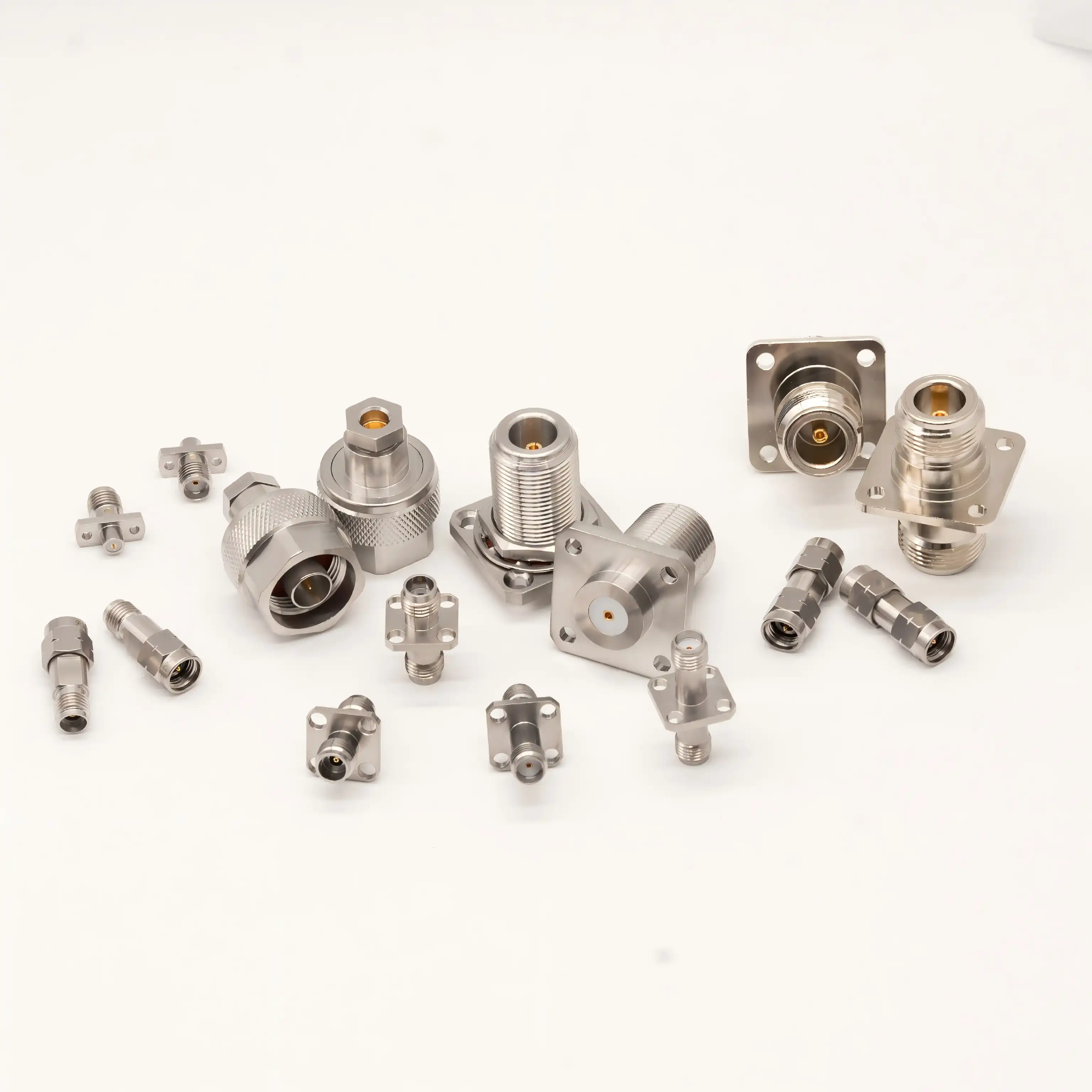
How to Choose the Best Option for Your RF System
Before you can choose the best adapter or connector, you need to know what your system needs, such as frequency, environment, and budget. This method helps procurement teams and design engineers make decisions by walking them through the evaluation process. It helps them find the best balance between technical performance and cost-effectiveness, while also making sure that the product will last for a long time.
Assessing Your System Requirements
Start by writing down the electricity requirements for your device. In what frequency range does your RF system need to work? Are you making things for 5G bands below 6 GHz, millimeter-wave frequencies above 24 GHz, or specific uses that need performance above 50 GHz? Connector and microwave adapter choices are directly based on frequency needs. Power levels are also important. For example, high-power transmitters need strong connectors that can work nonstop without breaking down or arcing. The environment affects the choice of materials. For example, outdoor installations need weather-sealed connectors with finishes that do not rust, while standard grades can be used for lab equipment. There are fewer choices for components because of mechanical issues like room limitations, mounting arrangements, and expected mating cycles. Making a thorough needs matrix helps make sure that all important factors are taken into account before a purchase is made.
Evaluating Leading Manufacturers and Product Portfolios
The market for microwave adapters and connectors is dominated by a few big names. Amphenol has a wide range of products that meet business and military requirements, and they can be customized in a lot of ways. Pasternack keeps a lot of adapters and plugs in stock and can ship them the same day. This makes them useful for making prototypes and fixing things quickly. Radiall is an expert in making high-quality parts for defense, communications, and aerospace. They are especially good at making millimeter-wave connectors. TE Connectivity offers low-cost options for high-volume uses, matching good performance with low prices. When looking at different manufacturers, it's important to read their technical datasheets very carefully. Specified values for insertion loss, return loss, and frequency range should include test conditions and measurement uncertainty. Manufacturers who offer a lot of application support, like 3D CAD models, S-parameter files, and integration guidance, make it easier to qualify their products and get them on the market faster.
Customization Capabilities and Non-Standard Solutions
Most RF system needs can be met by standard catalog parts, but some applications may need custom adapters or connectors. Custom non-standard electrical component manufacturers, like Chuangyu, give custom solutions for different interface needs, wider frequency ranges, or unique mechanical setups. Custom adapters are especially useful for connecting old equipment to new systems or making the most of setups that do not have a lot of room. Usually, the customization process starts with in-depth technical talks about electrical needs, mechanical limitations, working conditions, and expected volume. Testing can be done on prototypes before committing to production tools. Custom parts cost more per unit and take longer to get than standard parts, but they do not have any compromises that could hurt system performance or make installation more difficult.
Installation Guide and Best Practices for Microwave Adapters and Connectors
To get the most out of microwave adapters and connectors, they need to be installed and maintained correctly. Following systematic processes lowers the variability of connections, stops harm, and increases the lifespan of components. This lowers the total cost of ownership and makes the system more reliable.
Pre-Installation Inspection and Preparation
Before you install any microwave adapter or connector, you should look it over very carefully. Look for damage, distortion, or pollution in the center contacts. Cross-threading, dirt, or rust on connection threads could make them not fit together properly. Check the barrier materials for cracks or changes in color that could mean heat damage or water getting in. Use the right tools to clean all the contact surfaces. Lint-free swabs with isopropyl alcohol work well for most jobs, but RF connector cleaning kits may be needed for tough dirt. Do not use rough materials that could scratch plated surfaces or hurt precision-machined parts. Make sure that the types of connectors and adapters you're using meet your needs. Mixing connection families that do not work together or using the wrong gender pairs can damage the signal and make it less useful. Protective caps should be kept on connectors that aren't being used to keep dust from building up and to avoid mechanical damage during storage.
Correct Mounting Techniques
Using the right amount of torque makes sure that mechanical and electrical links work well without hurting any parts. If you tighten something too much, the center contact pins get crushed, the insulators get deformed, and the connector bodies may crack. If you tighten something too little, holes form that make insertion loss and VSWR worse. When using torque tools, make sure they are set to the manufacturer's recommended settings. For SMA connectors, these are usually 7 to 12 inch-pounds, and for N-Type connectors, they are usually 12 to 15 inch-pounds. Smaller connectors, like MMCX and U.FL, need to be handled carefully. To connect these snap-together types, apply light axial pressure until you feel the detent engage. When putting in bulkhead or panel-mount connections, make sure the holes are the right size and the surface is flat. If they aren't, mechanical stress could cause insulators to crack or center contacts to become out of alignment. Apply anti-seize powder to threads on outdoor setups to make them easier to separate in the future and stop galvanic corrosion between metals that are not the same.
Post-Installation Testing and Validation
After installation, make sure the system works by taking the right measurements. To find out the return loss and insertion loss for your working frequency range, use network testers that have been calibrated. Check the measured values against the component specs and the system requirements. If there is a big difference, it means that there are installation issues, damaged components, or connections that do not work with each other. Time-domain reflectometry can precisely locate impedance discontinuities, which can help find and fix small connection problems that lower signal quality. Keep an eye on the temperatures of connectors while they're working in high-power systems. If they get too hot, it could mean that the connections are bad, there is contamination, or there are impedance mismatches that focus RF energy. Write down the initial measurements so you can use them again in the future. Changes in performance over time could mean that there is wear, corrosion, or environmental damage that needs maintenance.
Troubleshooting Common Issues
Signal loss is often caused by interference, mechanical damage, or differences in resistance. If the measures show that the insertion loss has gone up, you should unplug everything and check all of the connections for dirt, oxidation, or broken center contacts. Before replacing parts, clean and try again. Intermittent connections that make measures less accurate are usually a sign of worn contact surfaces, loose mounting hardware, or cable flex damage close to the connectors. It's possible for impedance discontinuities to be caused by the wrong type of connector, damaged insulators, or bad mating if the VSWR is high or the return loss is low. When using MMCX-to-SMA connectors or SMP female-to-female adapters, you need to make sure they are compatible. Mixing connector families without the right adapters can cause problems that slow things down. When fixing problems with complicated systems that have many adapters, check each connection separately to find the source of the issue instead of replacing whole assemblies.
Future Trends and Innovations in Microwave Adapters and Connectors
As 5G rolls out and new technologies come out, the RF scene changes quickly. This means that microwave adapters and connection designs must always come up with new ideas. Understanding these trends helps buying teams make decisions that look to the future. This way, they can make sure that the choices they make about components will still be useful as technology changes and that long-lasting goods do not become obsolete too soon.
Material Advancements and Miniaturization
Next-generation connectors are made from new materials that make them smaller and lighter while also improving their electrical performance. At millimeter-wave frequencies, signal loss is kept to a minimum by low-loss dielectrics such as PTFE composites and ceramic insulators. For sensitive receiver applications, new contact plating formulations make the materials last longer and cut down on passive intermodulation. As 5G devices, IoT monitors, and medical tools that you wear get smaller, miniaturization keeps going. Ultra-compact connectors that are almost half the size of standard designs allow circuit boards to have more components while still maintaining electrical performance. But smaller ports usually cannot handle as much power and can only mate a certain number of times. This means that application needs must be carefully weighed against size limitations.
Enhanced Integration and Smart Connectivity
New RF system designs include microwave adapters and connectors that have sensors and identification features built in more and more. RFID-tagged connectors make it possible to automatically manage inventory in large installations. They keep track of where parts are, when they were installed, and how many times they've been mated, which helps predict when maintenance needs to be done. Some experimental designs use temperature sensors to keep an eye on the temperature of the connectors and let the designers know early on when problems are starting to happen. These new ideas are still mostly just study, but they point the way toward better RF infrastructure that checks its own performance, predicts problems before they happen, and shuts down the system. Purchasing departments should keep an eye on these changes and work with makers who are thinking outside the box and investing in new technologies.
Adapting to New Industry Standards
Standards in an industry are always changing to meet new wants. New developments include connectors that work best with 77 GHz automotive radar systems that need to be very stable in terms of phase across a wide range of temperatures. More and more companies that make medical devices are asking for connections that meet strict biocompatibility standards for both internal and wearable devices. Photovoltaic test equipment needs connectors that can withstand being outside while still maintaining their precise electrical properties. Using industry groups, technical workshops, and maker technical bulletins to stay up to date on the development of standards helps procurement teams plan for changes and choose parts that meet future needs instead of yesterday's.
Conclusion
To choose between microwave adapters and connectors, you need to know what each does in an RF system. Connectors are the main ways that signals get from one part to another, and they work best when they're coupled with adapters, which change the contact so that different parts can work together. Both need a close look at the frequency range, insertion loss, mechanical longevity, and how well they work in the surroundings. When buying something, you should think about both the short-term technology needs and the long-term dependability and cost needs. Partnering with makers that offer a wide range of products, the ability to customize them, and strong expert support makes it easier to choose the right parts and put the system together. Keeping in touch with cutting-edge suppliers is important if you want to keep your systems competitive as RF technology moves toward higher frequencies and more complex designs.
FAQ
1. What are the key performance factors for microwave adapters?
Insertion loss is an important performance factor for microwave adapters. It should usually stay below 0.3 dB across the working frequency range to keep system cascade signals from getting weaker. The quality of impedance matching is measured by return loss. Values above 20 dB ensure that signal reflections are kept to a minimum. Usable bandwidth is based on frequency compatibility. To get better performance, choose adapters with ratings higher than your highest working frequency. Reliability and lifecycle costs are affected by mechanical robustness, which includes mating cycle ratings and the quality of the materials. In emitter uses, being able to handle a lot of power is important to avoid thermal damage or arcing when RF power levels are high. Knowing about these things helps buying teams choose devices that maintain signal integrity in the RF system.
2. Are microwave adapters and connectors interchangeable?
Even though they look a lot alike, microwave connections and plugs do not always work with each other. Adapters are specially made to convert interfaces, working with different types of connectors while keeping the electrical performance at a good level. Connectors are the main way that cables, equipment, and circuit boards send and receive signals. They are designed to have the least amount of signal loss and the longest life possible. When you use an adapter instead of a good connection, you lose insertion loss and could have reliability problems. On the other hand, connections cannot work as adapters do, which is to change the interface. Before replacing parts, make sure they are compatible by checking the connector types, genders, impedances, and frequency ranges. Looking at datasheets and technical support resources from suppliers can help you choose the right parts for each job.

Contact Chuangyu for Premium Microwave Adapters and RF Solutions
Shaanxi Chuangyu Electronic Technology is an expert in high-precision radio frequency (RF) parts. They provide a full range of microwave adapters, millimeter-wave connectors up to 110 GHz, and custom wire kits made to your exact requirements. Our factories in Xi'an follow strict quality standards and send 500,000 RF components to top companies that make semiconductors, medical devices, telecommunications equipment, and solar panels every year. Our engineering team can help you from the first idea to mass production, whether you need between-series adapters for test equipment, SMP female-to-female adapters for high-density assemblies, or custom non-standard solutions for difficult interface problems. We keep a large collection on hand so that we can serve quickly, and we can also customize our products to meet specific needs that normal catalogs cannot meet. Reach out to our team at chuangyuwz01@cymicrowave.com to talk about your project needs with experienced application engineers who know how hard it can be for RF system builders to get the parts they need.
References
1. Pozar, David M. Microwave Engineering, 4th Edition. Hoboken: John Wiley & Sons, 2012.
2. Harsany, Steven C. Principles of Microwave Technology. Upper Saddle River: Prentice Hall PTR, 1997.
3. Hickman, Ian. Practical RF Handbook, 4th Edition. Oxford: Newnes, 2007.
4. La Verghetta, Thomas S. Modern Microwave Measurements and Techniques, 2nd Edition. Boston: Artech House, 2000.
5. Vendelin, George D., Anthony M. Pavio, and Ulrich L. Rohde. Microwave Circuit Design Using Linear and Nonlinear Techniques, 2nd Edition. Hoboken: John Wiley & Sons, 2005.
6. Ludwig, Reinhold, and Gene Bogdanov. RF Circuit Design: Theory and Applications, 2nd Edition. Upper Saddle River: Pearson Prentice Hall, 2009.