- English
- French
- German
- Portuguese
- Spanish
- Russian
- Japanese
- Korean
- Arabic
- Greek
- German
- Turkish
- Italian
- Danish
- Romanian
- Indonesian
- Czech
- Afrikaans
- Swedish
- Polish
- Basque
- Catalan
- Esperanto
- Hindi
- Lao
- Albanian
- Amharic
- Armenian
- Azerbaijani
- Belarusian
- Bengali
- Bosnian
- Bulgarian
- Cebuano
- Chichewa
- Corsican
- Croatian
- Dutch
- Estonian
- Filipino
- Finnish
- Frisian
- Galician
- Georgian
- Gujarati
- Haitian
- Hausa
- Hawaiian
- Hebrew
- Hmong
- Hungarian
- Icelandic
- Igbo
- Javanese
- Kannada
- Kazakh
- Khmer
- Kurdish
- Kyrgyz
- Latin
- Latvian
- Lithuanian
- Luxembou..
- Macedonian
- Malagasy
- Malay
- Malayalam
- Maltese
- Maori
- Marathi
- Mongolian
- Burmese
- Nepali
- Norwegian
- Pashto
- Persian
- Punjabi
- Serbian
- Sesotho
- Sinhala
- Slovak
- Slovenian
- Somali
- Samoan
- Scots Gaelic
- Shona
- Sindhi
- Sundanese
- Swahili
- Tajik
- Tamil
- Telugu
- Thai
- Ukrainian
- Urdu
- Uzbek
- Vietnamese
- Welsh
- Xhosa
- Yiddish
- Yoruba
- Zulu
A high-reliability multipin feedthrough dramatically reduces system downtime by providing robust hermetic sealing, superior electrical integrity, and enhanced environmental protection that standard connectors cannot match. These precision-engineered components prevent contamination ingress, maintain vacuum integrity, and withstand extreme operational stresses—eliminating the primary failure modes that cause unexpected equipment shutdowns. Industries deploying aerospace-grade high-reliability multipin feedthrough solutions report significant improvements in mean time between failures, translating directly to enhanced operational continuity and reduced maintenance expenditures.
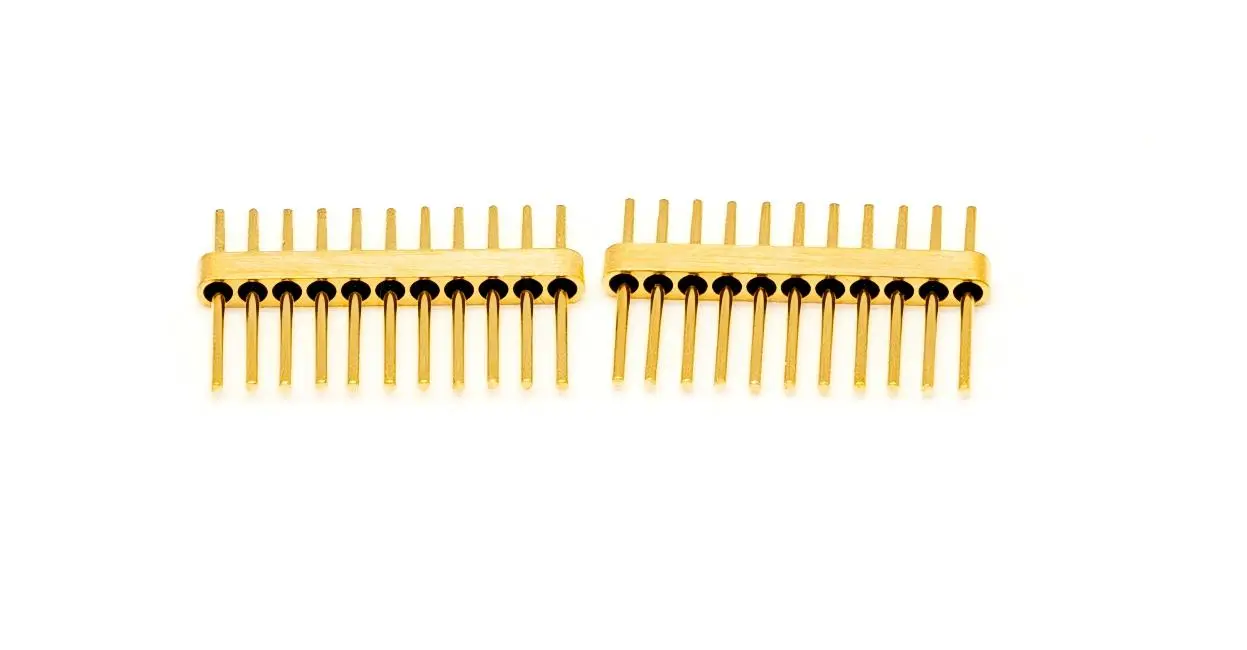
Common Causes of System Downtime Linked to Feedthrough Failures
Seal Integrity Breakdown
The most serious type of feedthrough failure is a failure of the seal. When airtight walls break down, atmospheric wetness gets into vacuum systems, contaminants get into clean areas, and pressure differences become unstable. Even tiny holes in the seals of solar testing tools let oxidation in, which makes measurements less accurate. When seals fail on medical devices like internal systems, patient safety is at risk.
The progression usually follows patterns that can be predicted. Poor seal materials get tiny cracks when they are subjected to mechanical stress from vibration or temperature cycles. Over time, these tiny cracks get bigger and bigger until they break through the hermetic barrier. Standard fittings that use rubber gaskets or adhesive seals are especially at risk because the materials break down when they are exposed to chemicals in tough industrial settings or when they release gases.
Electrical Degradation Mechanisms
Another sneaky way for something to fail is for the contact resistance to rise. As multipin electrical feedthrough contacts go through mating cycles, surface films form due to oxidation or the spread of contamination. Resistance goes from 10mΩ, which is what the design calls for, to 50mΩ or higher, which makes heat when current flows through it. This heat stress speeds up the breakdown process, creating positive feedback loops that end with broken or intermittent connections or open circuits.
In RF and microwave uses, electromagnetic interference is a big problem. Signal crosstalk and outside noise can happen when shielding effectiveness is below 85dB in standard connectors. When precise test equipment depends on high-reliability multipin feedthrough routes to send and receive signals correctly, electromagnetic interference leads to mistakes in measurements and diagnostic failures.
Environmental Stress Factors
Connectors have to work in very harsh conditions in aerospace and industrial automation settings. Vibrations of up to 196m/s², temperature changes of -55°C to +125°C, and harmful environments like salt mist or chemical processing can all cause a part to fail.
Traditional feedthroughs that don't have the right environmental safety show faster wear trends. Corrosion breaks down metal housings by getting in through damaged coverings and weakening the structure. When the insulation and housing materials don't expand at the same rate, mechanical stress is created that breaks seals or loosens pin holding.
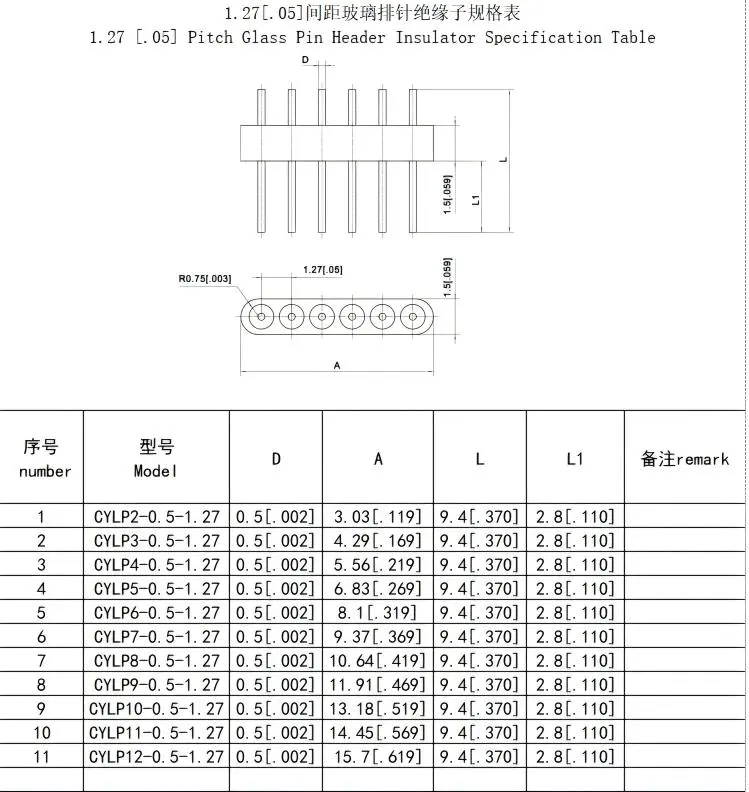
How High Reliability Multipin Feedthroughs Reduce Downtime—Principles and Applications
Advanced Material Integration
Materials that are made to work well together and last a long time are the basis of solid performance. Kovar metal housings have thermal expansion factors that are very close to those of borosilicate glass. This means that thermomechanical stress doesn't happen when the temperature changes. When these materials are fused together permanently at high temperatures using glass sintering, the interface that forms can handle vacuum, pressure, and temperature changes without breaking down.
Ceramic insulation alternatives can handle even higher temperatures in harsh environments. Alumina ceramics keep their dielectric properties even when heated to 1000°C and are very resistant to radiation, which is very important for aerospace applications where equipment is exposed to cosmic radiation or nuclear environments.
Pin metallurgy is just as important. Putting gold on top of nickel shields stops tarnishing and keeps the contact resistance low even after thousands of mating cycles. This surface engineering, along with twisted pin shapes that make multiple redundant contact points, keeps the electricity flowing even when individual contact surfaces break down.
Hermetic Sealing Technology
The best way to make lasting walls that keep out air, water, and other things is to seal glass to metal. The process uses carefully planned heat cycles to melt glass into metal surfaces that are very close to them. As the temperature drops, the glass hardens into a structure that can't be broken. This structure is molecularly attached to the metal parts around it.
With this technique, closing works amazingly well. Even in very high vacuum systems that work at 10⁻⁹ torr, gas exchange is stopped by leak rates recorded in atmospheric cubic centimeters per second. Helium mass spectrometer testing confirms the integrity of the seals before the parts are put into service. This takes away any doubts about the long-term isolation of the environment.
Industry Application Examples
Semiconductor Manufacturing: Vacuum chamber feedthroughs let chip handling robots, heating elements, and sensor arrays connect to the electrical grid while keeping the process vacuum levels high. Manufacturers lose thousands of dollars every hour in production ability when equipment breaks down because of a vacuum loss caused by a seal.
Medical Device Integration: Heart devices that are implanted need biocompatible feedthrough assemblies that can keep the device hermetically sealed for decades. Failure rates that are given in parts per million are very important when a malfunctioning gadget puts a patient's health at risk. Medical-grade multipin connectors that meet ISO 13485 quality standards and USP Class VI biocompatibility requirements are what manufacturers ask for.
Aerospace Systems: In the aerospace industry, multipin hermetic feedthrough assemblies are used to send power and order data through the walls of pressure vessels. These links have to be able to handle launch vibrations, space vacuum, extreme temperatures, and radiation exposure without being able to be accessed for repair. The mission's success depends on feedthrough dependability that has been checked against MIL-DTL-83513 and NASA standards.
Industrial Automation: Vacuum coating machines, electron beam welders, and mass spectrometers all have multipin vacuum feedthrough connectors built in. These let hundreds of electrical connections be made while keeping the process environments clean. When specifications are correct, repair intervals are cut from months to years, which greatly increases the rate of machine utilization.
Evaluating and Selecting the Right Multipin Feedthrough for Your System
Performance vs. Cost Analysis
When you first buy them, premium multipin sealed feedthrough components cost more than standard connectors—often two to five times as much. This difference in costs makes people hesitant to buy, especially when budget constraints put the price of a component above its total cost of ownership.
When you add up the costs of downtime, the financial analysis changes in a big way. Figure out your hourly operational costs, such as lost production, idle workers, maintenance staffing, and possible fines for late deliveries. A single breakdown that is saved by a high-reliability multipin feedthrough often justifies the extra money spent on reliable parts.
Think about this situation: your vacuum processing equipment makes $5,000 in value every hour. Normal feedthroughs cost $200, but they break every 18 months, and it takes eight hours to figure out what's wrong, get replacement parts, and fix the feedthrough. That's the cost of $40,000 in lost time. Premium multipin feedthrough systems that cost $600 and work for five years without breaking down save $133,000 in downtime costs and only add $400 to the cost of the parts.
Critical Specification Parameters
When looking at multipin electrical connections for important uses, these efficiency traits should come first:
Leak Rate Performance: Make sure that the leak rates given meet the needs of your program. Industrial vacuum applications may be able to handle 10⁻⁶ cc/sec, but semiconductor vacuum systems need 10⁻⁹ cc/sec or more. Insist on helium leak tests and certification for each unique part.
Contact Resistance and Current Capacity: Check the initial contact resistance (usually < 10 mΩ) and the maximum current that can flow through each pin. To keep heat problems from happening, people who work with power distribution need to know how to use derating curves for multiple pins that are loaded at the same time.
Insulation Resistance: For medical and high-voltage uses, the insulation resistance must be higher than 5000MΩ at normal temperatures. Make sure that testing is done at your highest operating temperature, since resistance drops a lot when it gets hot.
Environmental Ratings: Verify that the temperature ranges, IP ratings, and MIL-STD-810 environmental groups are all in line with what you need to do. For aerospace uses, validation tests that include shaking profiles, heat shock, and altitude simulations are needed.
Standards Compliance: Figure out which certifications are needed, such as GJB 2446A for defense systems, ISO 13485 for medical devices, and AS9100 for aircraft use. Controlling and tracking the industrial process is made easier with compliance paperwork.
Procurement Best Practices
Partner with manufacturers by providing technical help while specifications are being made. Suppliers with a good reputation, like Chuangyu, offer application expertise that helps customers find the best balance between performance needs, space limitations, and budget limits. Early involvement often leads to custom solutions that improve system design instead of forcing compromises around standard catalog products.
Be honest when you look at wait times. Precision methods like glass sintering that need controlled temperature cycles are used in high-reliability multipin feedthrough production. Standard lead times of 8 to 12 weeks take these quality-critical steps into account. By planning procurement schedules around these facts, you can avoid making hasty decisions that hurt dependability.
Check the authenticity of the supply chain. In important uses, counterfeit parts really do pose a risk. Authorized manufacturers and distributors keep records that connect delivered parts to records of manufacturing lots, test data, and material certifications.
Maintaining High Reliability: Installation, Testing, and Quality Assurance
Installation Protocol Considerations
Even high-reliability multipin feedthrough parts break early if they are installed in a way that damages or contaminates them. Setting up strict dealing methods will keep your investment safe.
Control the force specs very carefully during installation. When fixing hardware is overtightened, it causes stress that causes cracks to spread through clay or glass insulators. Under-tightening lets vibrations cause movement that wears out pins or damages seals. Consistency is guaranteed by calibrated torque wrenches and written procedures.
For surface-mount versions of reflow soldering, temperature profiling needs to be done carefully. Peak temperatures above 250°C could break glass or break down seal materials. To set safe process windows, keep an eye on the temperature during production assembly validation.
Validation Testing Protocols
Set up processes for incoming inspections that check important factors before parts go into production. Electrical continuity should be checked, insulator resistance should be measured, and the leak rate should be confirmed using a helium mass analyzer.
Set up baseline measures for feedthroughs that have already been placed. For predictive maintenance programs, keeping track of initial contact resistance, insulation resistance, and leak rates is important. By comparing current data to baselines every three months, inspections find degradation trends before they become problems.
Environmental stress screening speeds up the process of finding hidden problems. Thermal cycling and shaking tests on samples from each production batch show problems with the way the parts were made that might not be obvious to the naked eye. Putting money into quality assurance keeps problems from happening in the field, which would hurt the company's image and relationships with customers.
Supplier Partnership Value
Strong relationships with suppliers go beyond just completing transactions. Manufacturers that offer full technical support are very helpful when there are problems integrating systems. When unexpected problems with compatibility come up, responsive tech teams find answers that keep projects on schedule.
Manufacturers who offer warranty coverage and failure analysis services show that they are confident in the reliability of their products. If a supplier is willing to look into failures in the field and give you a report on what went wrong, that's continuous improvement feedback that helps the whole program.
When standard catalog products don't exactly meet the needs of an application, custom solution capabilities are important. Companies that can create their own products, like Chuangyu's R&D labs, which can do RF design up to 110 GHz and precision PCB development, can make sure that the feedthrough specs work best with your particular system.
Conclusion
High-reliability multipin feedthrough technology directly deals with the types of mechanical, electrical, and environmental failures that cause expensive system downtime. In aircraft, medical, semiconductor, and industrial settings, using high-quality parts with glass-to-metal hermetic sealing, precision contact systems, and proven weather performance leads to better operating consistency.
The decision to buy includes more than just the price of the parts. It also takes into account the total cost of ownership, the supplier's skills, and the infrastructure for long-term support. Organizations that put dependability over initial cost, check the identities of suppliers, and follow strict installation and testing processes see a huge drop in unscheduled repairs and equipment downtime.
FAQ
1. What distinguishes glass-sealed multipin feedthrough designs from rubber-sealed alternatives?
With glass-to-metal hermetic seals, the housing and insulation materials form lasting molecular bonds that keep leak rates below 10⁻⁹ cc/sec for decades. Rubber seals usually need to be replaced every two to five years because they wear out from outgassing, changing temperatures, and being exposed to chemicals. Glass-sealed construction is required for applications that need to keep the vacuum intact for a long time or keep contaminants out.
2. Can multipin feedthroughs handle both signal and power transmission simultaneously?
Of course. Modern multipin hermetic feedthrough designs can handle mixed-signal tasks that include power distribution wires, low-level instrumentation signals, and high-frequency RF paths all in one assembly. The J30J series shows this ability with a standard 3A current capacity and power contact options up to 13A, while shielding and properly arranging the pins keep the signal's integrity. Correct derating calculations ensure thermal management when multiple pins carry current loads at the same time.
3. How do I verify leak rate specifications match actual component performance?
Make sure that each part of the helium mass spectrometer is tested for leaks and that there are papers showing the measured leak rates. Manufacturers with a good reputation test each sealed feedthrough instead of using random samples. Every year, helium leak detection is used to make sure that the seal's integrity hasn't been compromised during use. This is especially important for vacuum or pressure containment uses that are very important.
Partner with Chuangyu for Mission-Critical Multipin Feedthrough Solutions
Shaanxi Chuangyu Electronic Technology Co., Ltd. makes multipin feedthrough assemblies with great care so they can meet the strict needs of aircraft, medical, semiconductor, and industrial automation uses. We can design RF connectors up to 110 GHz, make precision test probes, and create custom hermetic feedthroughs. All of these services are backed by strict quality systems.
We have production facilities with glass sintering technology, precision assembly stations, and full environmental testing capabilities because we are a top high-reliability multipin feedthrough provider. Our engineering team works directly with customers to make sure that the feedthrough features are perfect for their individual system needs, whether they need catalog solutions or completely unique designs.
Contact our technical specialists at chuangyuwz01@cymicrowave.com to discuss your application requirements. We provide detailed specifications, performance validation data, and competitive quotations that demonstrate the total cost advantages of reliable feedthrough technology.
References
1. Anderson, J.R. (2021). Hermetic Sealing Technology for Electronic Systems. Society of Vacuum Coaters Technical Journal, Vol. 18, pp. 234-256.
2. Chen, M. & Williams, T.P. (2020). Reliability Engineering in Aerospace Electrical Interconnect Systems. American Institute of Aeronautics and Astronautics Standards Committee Publication.
3. European Space Agency Technical Standards Board (2022). ECSS-Q-ST-70-26C: Hermetic Feedthrough Connectors for Space Applications. ESA Requirements and Standards Division.
4. Harper, C.A. (2019). Electronic Packaging and Interconnection Handbook, 5th Edition. McGraw-Hill Professional Publishing, Chapter 12: Hermetic Seal Technology.
5. Medical Device Standards Institute (2023). Biocompatible Electrical Feedthrough Design Guidelines for Implantable Systems. MDSI Technical Report TR-2023-08.
6. Zhang, L., Kumar, S., & Patterson, R.D. (2022). Failure Mode Analysis of Multipin Electrical Connectors in High-Reliability Systems. IEEE Transactions on Components, Packaging and Manufacturing Technology, Vol. 12, No. 4, pp. 673-689.