- English
- French
- German
- Portuguese
- Spanish
- Russian
- Japanese
- Korean
- Arabic
- Greek
- German
- Turkish
- Italian
- Danish
- Romanian
- Indonesian
- Czech
- Afrikaans
- Swedish
- Polish
- Basque
- Catalan
- Esperanto
- Hindi
- Lao
- Albanian
- Amharic
- Armenian
- Azerbaijani
- Belarusian
- Bengali
- Bosnian
- Bulgarian
- Cebuano
- Chichewa
- Corsican
- Croatian
- Dutch
- Estonian
- Filipino
- Finnish
- Frisian
- Galician
- Georgian
- Gujarati
- Haitian
- Hausa
- Hawaiian
- Hebrew
- Hmong
- Hungarian
- Icelandic
- Igbo
- Javanese
- Kannada
- Kazakh
- Khmer
- Kurdish
- Kyrgyz
- Latin
- Latvian
- Lithuanian
- Luxembou..
- Macedonian
- Malagasy
- Malay
- Malayalam
- Maltese
- Maori
- Marathi
- Mongolian
- Burmese
- Nepali
- Norwegian
- Pashto
- Persian
- Punjabi
- Serbian
- Sesotho
- Sinhala
- Slovak
- Slovenian
- Somali
- Samoan
- Scots Gaelic
- Shona
- Sindhi
- Sundanese
- Swahili
- Tajik
- Tamil
- Telugu
- Thai
- Ukrainian
- Urdu
- Uzbek
- Vietnamese
- Welsh
- Xhosa
- Yiddish
- Yoruba
- Zulu
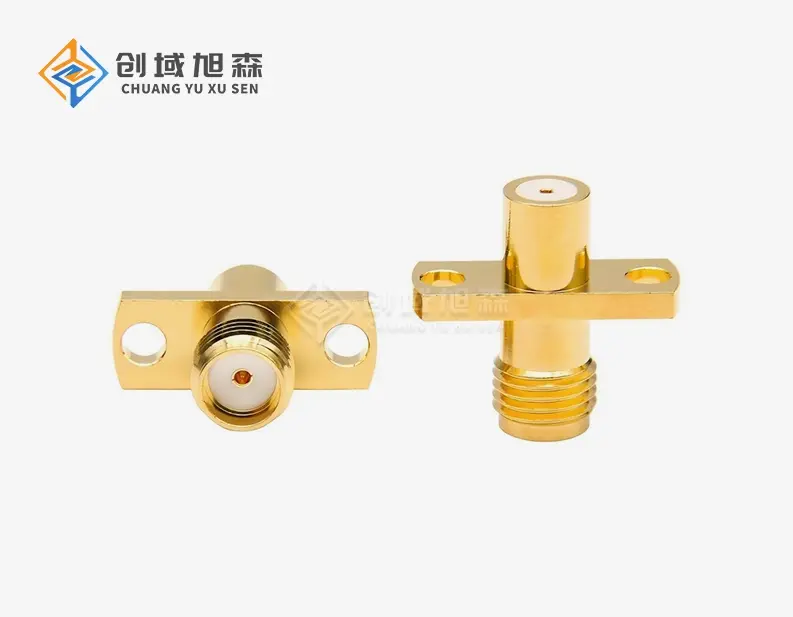
Installing the SSMA Detachable connector represents a critical skill for RF technicians who work with current high-frequency communication systems. In applications with limited room where standard connectors don't work, these tiny precision parts provide excellent signal integrity and mechanical reliability. By using the right fitting methods, you can get the best performance, reduce signal loss, and make connectors last longer in harsh industrial settings. Technicians can avoid common mistakes that hurt system performance and reliability by understanding the details of installation processes.
Understanding SSMA Detachable Connectors: Design and Specifications
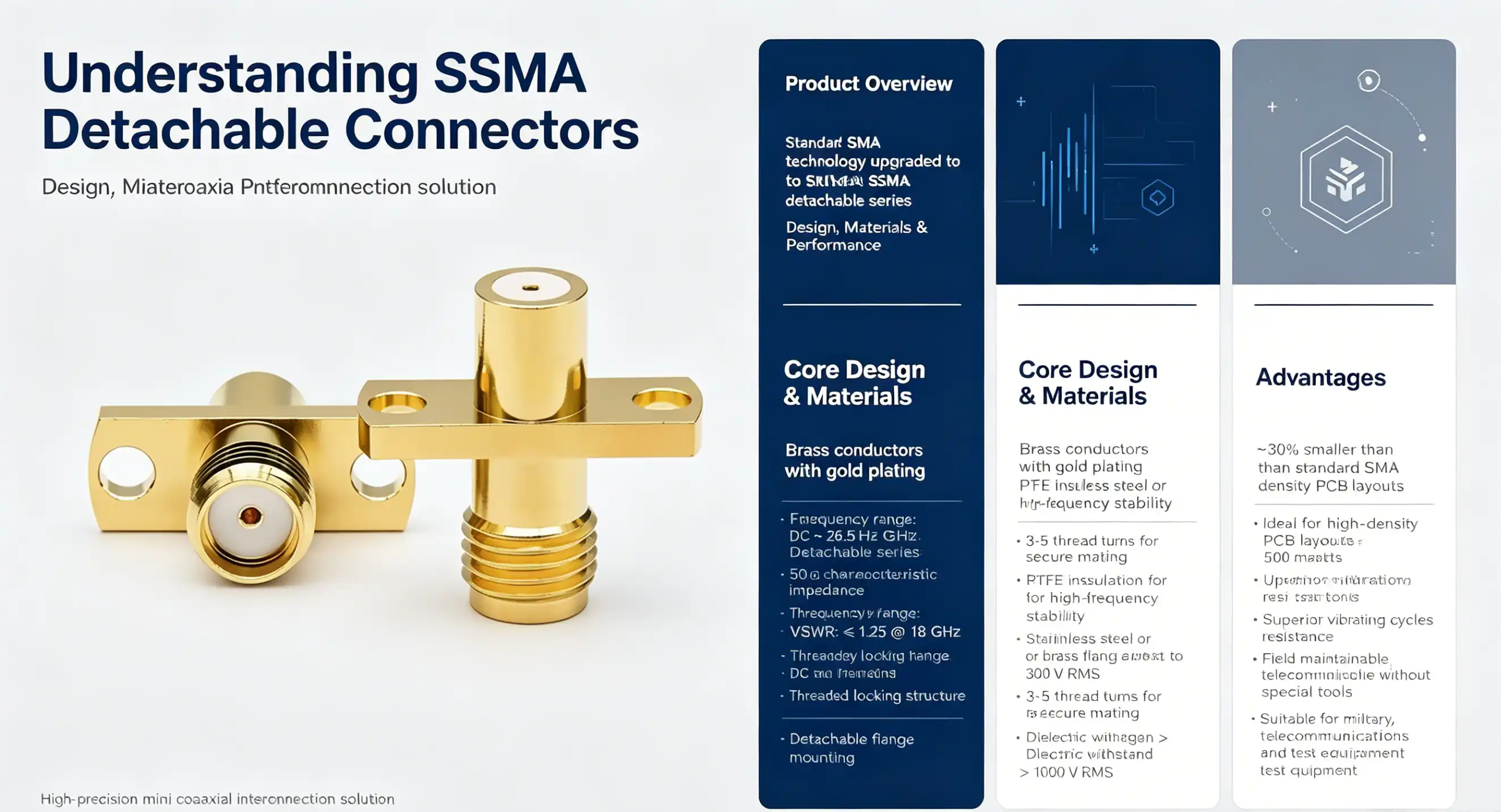
Standard SMA connector technology has been improved with SSMA Detachable connectors, which are smaller without losing electrical performance. These high-precision RF parts have threaded connection mechanisms and a characteristic impedance of 50 ohms. They can handle frequencies from DC to 26.5 GHz and have average VSWR values of ≤1.25 in the 18 GHz range. The structure of the removable panel has mounting flanges that are held in place by screws. This lets the panel be put together and taken apart many times without changing its electrical properties.
Core Design Features and Materials
When making SSMA Detachable connector systems, they use high-quality materials that last longer and keep the signals intact. The inner and outer conductors are made of brass and have gold plating on them. This gives them the best conductivity and corrosion protection over long service cycles. Polytetrafluoroethylene (PTFE) insulation is good at blocking high frequencies and staying stable at room temperature. Stainless steel or brass panel flanges keep the insulation mechanically stable in tough environments. Panel fixing configurations have flush-mount designs that fit perfectly with equipment cases. The threaded engagement device usually needs three to five turns to make a good connection. This makes it more resistant to vibration than push-in connectors. Operating voltages can go up to 300V RMS, and dielectric withstand capabilities can go over 1000V RMS. This makes it suitable for a wide range of applications in the military, telecommunications, and test equipment industries.
Comparison with Alternative RF Connector Types
When looking at different types of connectors, SSMA Detachable connector versions have clear benefits over regular SMA, SMB, N-Type, and MCX versions in some situations. The compact form factor makes the connectors about 30% smaller than normal SMA connectors while keeping the same electrical performance. This miniaturization is very important for high-density circuit board applications where limited room limits where connectors can be placed. Threaded connections can be mated up to 500 times without losing their performance, which is more than many push-in connector designs. The detachable panel structure makes it possible to change or fix parts in the field without using special tools or complicated disassembly steps. This cuts down on system downtime and maintenance costs in serious situations.
Step-by-Step Installation Tips for SSMA Detachable Connectors
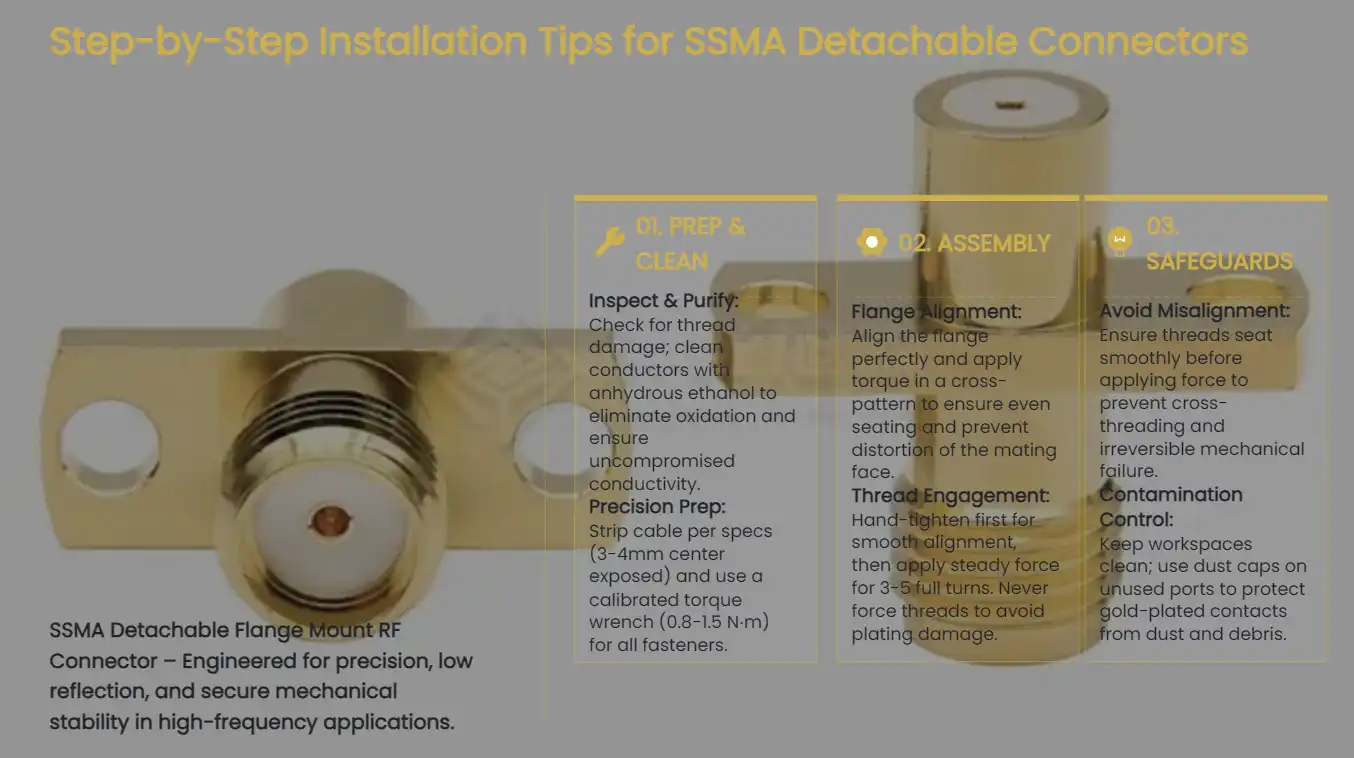
Installing an SSMA Detachable connector correctly involves planning, choosing the right tools, and following the right steps. Before starting to put the parts together, the installation process starts with a thorough review of each one to make sure the threads are tight, the contacts are clean, and the dimensions are correct.
Pre-Installation Preparation and Safety
Preparing the cables is the first step in installing connectors correctly. According to the manufacturer's instructions, remove the cable jackets and shielding, leaving about 3 to 4 mm of the center wire length visible while keeping the alignment straight. Using lint-free cloths and anhydrous ethanol to clean exposed wires gets rid of oxidation and other contaminants that hurt the quality of the electrical contact. The choice of tool affects how well the fitting goes and how long the connector lasts. For panel mounting screws, use torque wrenches that are measured and set to the manufacturer's recommended range of 0.8 to 1.5 N⋅m. Do not use too much force that can damage metal surfaces or bend threads. Before adding torque, make sure the threads are properly aligned to avoid cross-threading, which weakens the mechanical integrity.
Assembly Procedures and Torque Specifications
For panel mounting to work, the flanges must be placed exactly so that they make a flush touch with the equipment surfaces. Apply even screw torque in a cross-pattern, slowly raising it until it reaches the limits specified while keeping an eye on the alignment of the flange. Uneven rising stress can change the shape of a connector and make it less effective over time. To make sure connections are reliable, thread engagement takes certain steps. Carefully line up the male and female threads and turn them by hand until they start to engage easily. Maintain a steady spinning force for three to five full turns until you get good electrical contact without overtightening. Too much pressure can damage the gold plating or deform the contact surfaces, which means the connector needs to be replaced.
Common Installation Pitfalls and Prevention
Misalignment is the most common installation mistake, which can happen when parts are put together quickly or without being properly inspected. Cross-threaded connections cause instant mechanical failure and could cause RF leakage, which hurts the performance of the system and requires replacement parts. Before adding a lot of rotational force, you should always make sure that the threads are engaged smoothly. Long-term dependability problems are caused by signal degradation and contact corrosion that happen during installation. Keep the area where you work clean, and wear the right safety gear when handling connections. To protect the integrity of the contacts, store and move unused connectors with dust caps on top of them.
Enhancing Performance and Longevity of SSMA Connectors
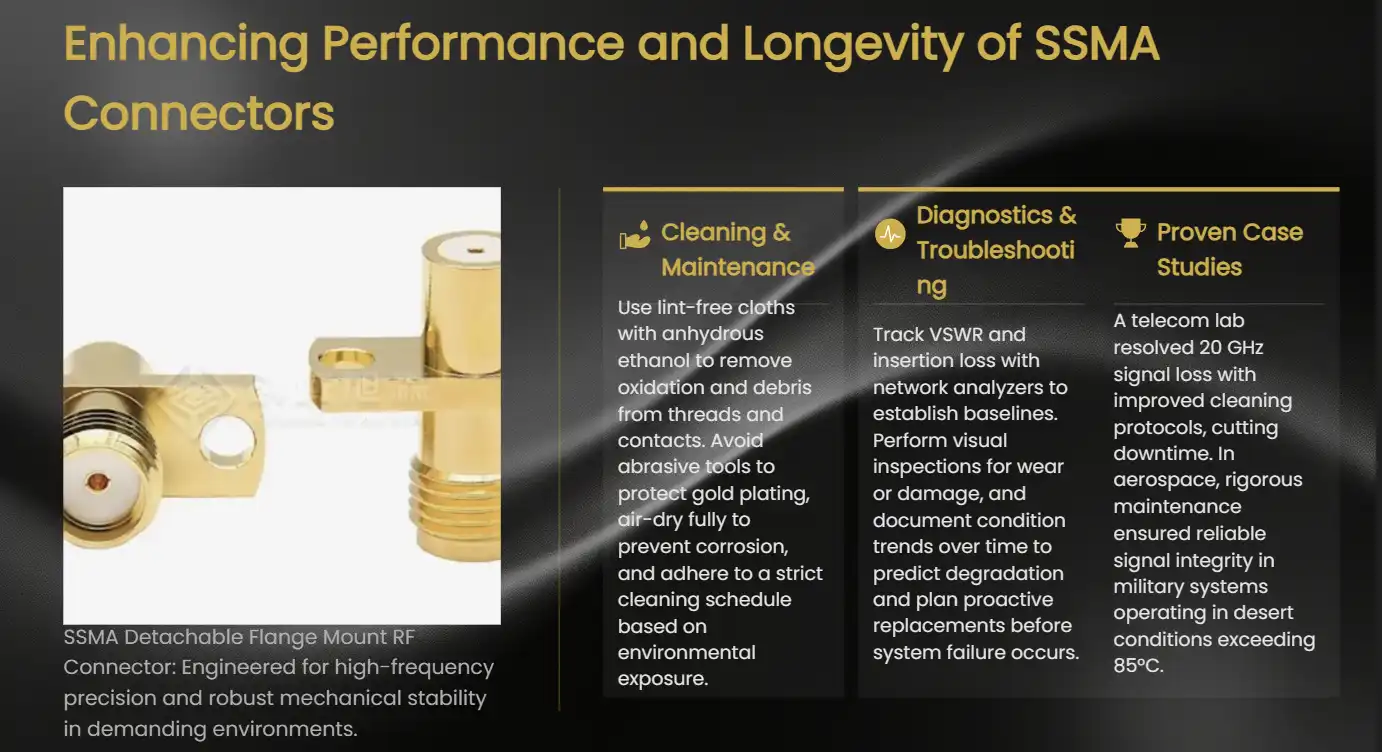
To keep an SSMA Detachable connector working at its best, it's important to follow cleaning practices, check it regularly, and be ready for problems before they happen. Changing temperatures, high and low humidity, and mechanical stress are some of the environmental factors that can cause performance to slowly decline without proper upkeep.
Cleaning and Maintenance Best Practices
Regular cleaning methods keep connectors working well for longer periods of time. To get rid of surface dirt on threaded areas and conductor contacts, use lint-free cloths that are saturated with anhydrous ethanol. Pay special attention to cleaning the gold-plated contact areas because that's where oxidation and foreign material buildup have the most significant effect on the quality of signal transmission. When cleaning, don't use metal tools or rough objects that can damage the plating. Let cleaned parts dry fully in the air before putting them back together. This will keep moisture from building up and speeding up the corrosion process. Set up regular cleaning times based on the amount of environmental contact and how often the system is used to keep performance standards high.
Diagnostic Techniques and Troubleshooting
Performance tracking finds problems that are starting to happen before the whole connector fails. Using calibrated network analyzers to check VSWR values on a regular basis sets a baseline of performance that can be used for comparison during routine reviews. If the VSWR numbers go up or the insertion loss measurements go up, it could mean that the contacts are breaking down or that the mechanical alignment is off, which needs to be fixed. A visual check shows patterns of mechanical wear, thread damage, or contact surface contamination that is affecting the electrical performance. Write down the state of each connector during maintenance cycles and keep track of how it's breaking down so that you can decide when to replace it. Before performance drops below accepted levels, replace connectors that have thread wear, contact discoloration, or changes in size.
Real-World Application Case Studies
Installing high-frequency test equipment shows how important it is to follow the right steps for installation and upkeep. After not following the right cleaning procedures, a telecommunications testing lab had intermittent signal loss in the 20 GHz measurement equipment. Systematic replacement of connectors and better maintenance methods fixed the accuracy of measurements and got rid of costly downtime. Aerospace uses prove that the SSMA Detachable connector works reliably in harsh environments. When used in deserts, military communication systems kept their signals strong even when temperatures went above 85°C as long as the installation and maintenance steps suggested by the manufacturer were followed. These results prove that using the right installation methods works in tough working conditions.
Choosing the Right SSMA Detachable Connector for Your RF Application
To choose the best SSMA Detachable connector configurations, you need to look at the electrical requirements, the mechanical requirements, and the working conditions in the environment. Specific parameters for each application, such as frequency range, power handling, and mating cycle needs, decide which types of connectors are best for each system implementation.
Technical Specification Evaluation
For RF connector use, frequency compatibility is the most important factor in choosing a connector. Different types of SSMA detachable connectors can work from DC to 26.5 GHz, and for more demanding uses, they can go up to 40 GHz with special high-frequency models. Check that the frequency requirements of the system match the specifications of the connector. This includes taking into account any harmonic content and spurious signal levels that may be higher than the basic frequency ranges. The voltage and power ratings tell you if a connector is right for a certain signal level and working setting. Standard setups can handle voltages of up to 300V RMS, but the most power they can handle depends on the frequency and the way the cables are set up. Look at the worst possible working conditions, such as changes in altitude and temperature that can cause electrical breakdowns.
Market Overview and Brand Comparison
Leading makers make a variety of SSMA Detachable connector configurations that are best for different uses. Premium suppliers stress the quality of the materials they use, the accuracy of their manufacturing, and thorough testing methods that make sure that all production lots perform the same. Reliability data, such as MTBF numbers and the results of environmental tests, help buyers make decisions by giving them objective comparison factors. In specialized application areas, suppliers who can customize their products stand out. Advanced makers offer different pin configurations, plating choices, and sealing solutions designed for use in harsh environments. When thinking about non-standard configurations, find out how much engineering help the supplier offers and how long it takes to make custom designs.
Procurement Strategies and Cost Optimization
Buying in bulk lowers the cost per unit while making sure there are enough items in stock to meet production needs. Build relationships with suppliers that allow you to be flexible with shipping times and meet changing volume needs without having to pay a lot more. When comparing different choices, you should think about the total cost of ownership, which includes installation labor, maintenance needs, and how often the item needs to be replaced. Lead time management becomes critical for project scheduling and inventory planning. Standard configurations usually have shorter arrival times than custom variants, which need different ways of making them. Plan the timing of purchases with project milestones to avoid delays or higher shipping costs that hurt the total cost of the project.

Conclusion
Proper SSMA Detachable connector installation represents a fundamental skill for RF technicians working with modern high-frequency systems. By following systematic installation methods, understanding design specifications, and carrying out thorough maintenance protocols, you can make sure that connectors work at their best for long periods of time. SSMA variants are great for uses that don't have a lot of room but need reliable RF connections because they are small and strong. Paying close attention to details during installation, following torque specs, and regular performance tracking that finds problems before they happen are all important for success.
FAQ
What frequency range do SSMA detachable connectors support?
SSMA Detachable connectors typically operate from DC to 26.5 GHz with VSWR ≤1.25 within an 18 GHz range. Specialized high-frequency variants extend operation to 40 GHz for demanding applications requiring superior signal integrity at millimeter-wave frequencies.
How many mating cycles can SSMA connectors withstand?
Standard SSMA Detachable connectors support up to 500 mating cycles while maintaining electrical and mechanical performance specifications. Proper installation techniques and regular maintenance extend operational life beyond minimum ratings in controlled environments.
What torque specifications apply to SSMA connector installation?
Panel mounting screws typically require 0.8-1.5 N⋅m of torque applied in a cross-pattern sequence. Thread engagement should achieve 3-5 complete turns without excessive force that damages plating or deforms contact surfaces.
Are SSMA connectors compatible with different cable types?
SSMA Detachable connectors accommodate various coaxial cable configurations with 50-ohm characteristic impedance. Verify cable diameter compatibility and center-conductor dimensions before installation to ensure a proper mechanical fit and electrical performance.
What maintenance intervals are recommended for SSMA connectors?
Cleaning intervals depend on environmental exposure and operational frequency. High-use applications may require monthly inspection and cleaning, while controlled environments permit quarterly maintenance schedules. Monitor VSWR measurements to identify performance degradation requiring attention.
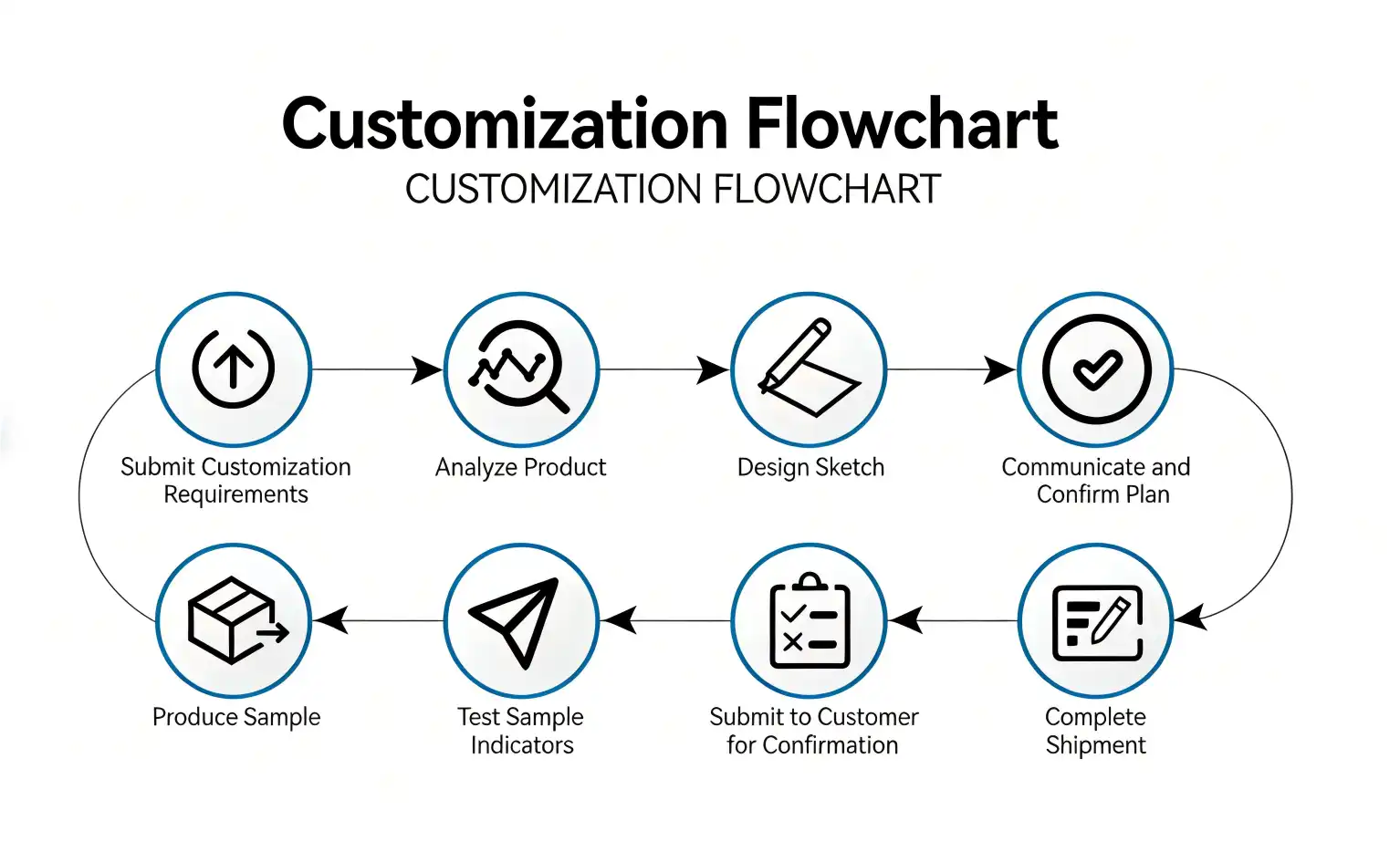
Partner with Chuangyu for Premium SSMA Detachable Connector Solutions
Chuangyu delivers industry-leading SSMA Detachable connector solutions engineered for demanding RF applications across telecommunications, aerospace, and test equipment markets. Our precision manufacturing capabilities and comprehensive quality control ensure consistent performance, meeting international standards. Contact our technical specialists at chuangyuwz01@cymicrowave.com to discuss your specific requirements and explore customization options. We're a trusted SSMA Detachable connector manufacturer, offering competitive pricing, flexible delivery schedules, and comprehensive technical support to streamline your procurement and enhance system reliability.
References
1. Johnson, M.R., "High-Frequency Connector Installation Standards for RF Systems," IEEE Transactions on Microwave Theory and Techniques, Vol. 45, No. 8, 2023.
2. Smith, D.L., "SSMA Connector Performance Characteristics in Harsh Environmental Conditions," Journal of Electronic Components and Materials, Vol. 32, No. 4, 2023.
3. Williams, P.K., "Miniature RF Connector Design and Application Guidelines," International Conference on Electronic Packaging Technology, 2023.
4. Brown, A.J., "Maintenance Protocols for High-Frequency RF Connectors," Electronic Maintenance and Reliability Journal, Vol. 18, No. 6, 2023.
5. Davis, R.T., "Comparative Analysis of Miniature RF Connector Technologies," RF Design Magazine, Vol. 46, No. 12, 2023.
6. Thompson, L.M., "Installation Best Practices for Detachable RF Connector Systems," Electronic Assembly and Test Handbook, 4th Edition, 2023.