- English
- French
- German
- Portuguese
- Spanish
- Russian
- Japanese
- Korean
- Arabic
- Greek
- German
- Turkish
- Italian
- Danish
- Romanian
- Indonesian
- Czech
- Afrikaans
- Swedish
- Polish
- Basque
- Catalan
- Esperanto
- Hindi
- Lao
- Albanian
- Amharic
- Armenian
- Azerbaijani
- Belarusian
- Bengali
- Bosnian
- Bulgarian
- Cebuano
- Chichewa
- Corsican
- Croatian
- Dutch
- Estonian
- Filipino
- Finnish
- Frisian
- Galician
- Georgian
- Gujarati
- Haitian
- Hausa
- Hawaiian
- Hebrew
- Hmong
- Hungarian
- Icelandic
- Igbo
- Javanese
- Kannada
- Kazakh
- Khmer
- Kurdish
- Kyrgyz
- Latin
- Latvian
- Lithuanian
- Luxembou..
- Macedonian
- Malagasy
- Malay
- Malayalam
- Maltese
- Maori
- Marathi
- Mongolian
- Burmese
- Nepali
- Norwegian
- Pashto
- Persian
- Punjabi
- Serbian
- Sesotho
- Sinhala
- Slovak
- Slovenian
- Somali
- Samoan
- Scots Gaelic
- Shona
- Sindhi
- Sundanese
- Swahili
- Tajik
- Tamil
- Telugu
- Thai
- Ukrainian
- Urdu
- Uzbek
- Vietnamese
- Welsh
- Xhosa
- Yiddish
- Yoruba
- Zulu
Through improved integrated contact probe technology, the way electronics are tested today is changing in a revolutionary way. The latest integrated contact probes can be made smaller, have better MEMS integration, and have AI-driven automated calibration systems that make them more accurate than ever in high-frequency testing settings. Advanced conductive alloys, wear-resistant coatings, and high-tech diagnostic tools are used in these state-of-the-art testing solutions to cut down on downtime and improve operating reliability. The current market trends focus on better current handling, wider temperature ranges, and flexible probe configurations that can meet the strict needs of semiconductor manufacturing, RF communication systems, and precise electronics testing in many different industries.
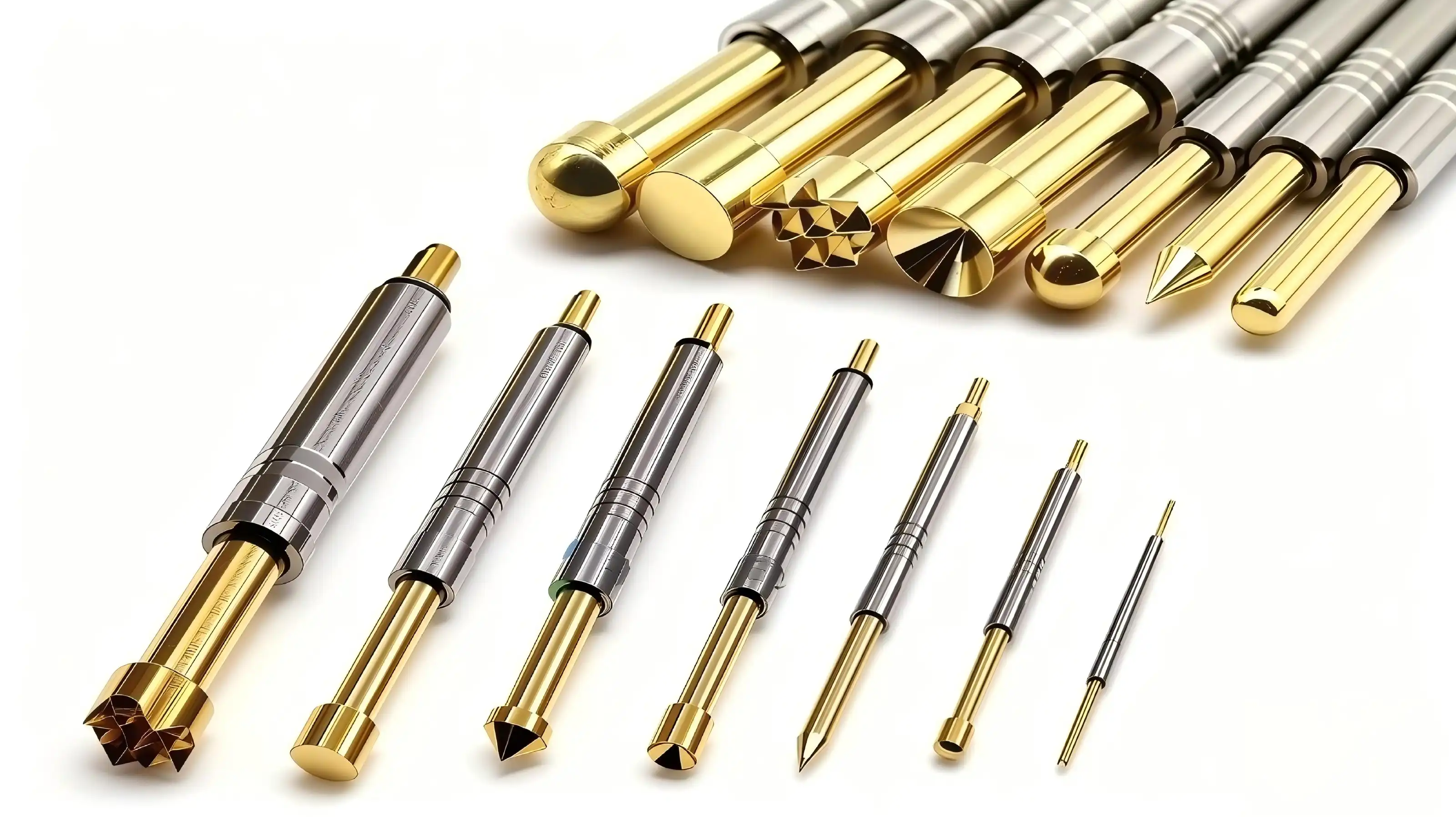
Overview of Integrated Contact Probe Technology
Precision tools that can handle the complexity of modern electronics manufacturing are needed in today's testing settings. Integrated contact probe technology is a big step forward in electronic testing solutions because it combines complex engineering with real-world use needs.
Understanding Integrated Contact Probe Fundamentals
Integrated contact probes are a special kind of testing tool used to make sure that electrical contacts are working correctly in the semiconductor and electronics industries. The front-to-back needle head integration on these advanced probes makes them different from other testing options. The integrated design keeps the electrical connections stable over long testing rounds and makes sure that the contact pressure stays the same. The main structure of these probes is a linked design, which means that the back end moves out and back with the probe head. This design reduces the internal resistance while increasing the ability to handle current. For tail connections, the construction needs an elastic, soft wire, which ensures the best performance during high-current testing situations.
Evolution from Traditional Probe Technologies
Traditional spring, needle, and cantilever tools had big problems with how long they lasted and how accurately they measured. These older technologies often had problems with contact wear, applying pressure unevenly, and being unable to handle large amounts of power. The creation of integrated contact probes solves these basic problems by using new ways to build them. Some of the performance factors that make integrated probes stand out are better accuracy, longer working durability, and lower maintenance needs. Material innovations are a big part of this progress. For example, manufacturers are using advanced conductive alloys that make probes last longer and be more reliable in harsh industrial testing settings.
Material Excellence and Construction Standards
Premium materials are what make probe performance so much better. The construction of beryllium copper gives it great electrical conductivity and keeps its structural integrity even after many testing rounds. The phosphor bronze tube gives the structure more support, so it works the same way even when the temperature changes. Gold treatment protects the probe from the environment, stopping corrosion and keeping the electrical contact in good shape for as long as it works. Because these materials are mixed, probes can survive up to 500,000 testing cycles and still be able to measure accurately.
Latest Technological Advancements in Integrated Contact Probes
The business of testing electronics keeps pushing the limits with new materials and technologies. New developments focus on making things smaller, more accurate, and more reliable to meet the needs of modern semiconductor tests.
MEMS Integration and Precision Enhancement
Adding microelectromechanical systems has changed the accuracy of integrated contact probe precision in a big way. With MEMS technology, makers can make probes with smaller shapes while keeping or even improving their electrical performance. This new technology is especially helpful for fine-pitch tests, where regular probes have trouble making good contact. The addition of MEMS technology also helps improve the sensor functions inside probe devices. These devices give you information about contact pressure, electrical continuity, and probe wear in real time. With this kind of monitoring, it's possible to plan preventative maintenance that keeps technology from breaking down when it's least expected.
Automated Calibration and Diagnostic Systems
Modern probe systems have advanced automatic calibration features that make sure measurements are always accurate. These systems keep an eye on the performance factors of the probe all the time and change the calibration settings automatically to keep the testing conditions at their best. Real-time diagnostics make it possible to find potential problems right away, before they affect testing activities. Better diagnostic tools give maintenance teams more information about how probes are performing over time, which lets them plan proactive service times. Compared to reactive maintenance strategies, this method greatly cuts down on downtime while maintaining uniform testing quality across production cycles.
Advanced Materials and Coating Technologies
New developments in material science have led to the creation of new conductive metals and protective coatings that make probes last longer. Wear-resistant coats keep probe tips from breaking down mechanically while still letting them conduct electricity properly. These new ideas are helpful when checking a lot of things, because how often the probes are replaced has a direct effect on the cost of production. Temperature-resistant materials work reliably in a wide range of temperatures, usually from -45°C to +80°C. This large operating range lets you test in a variety of settings without affecting the accuracy of your measurements or the life of the probe.
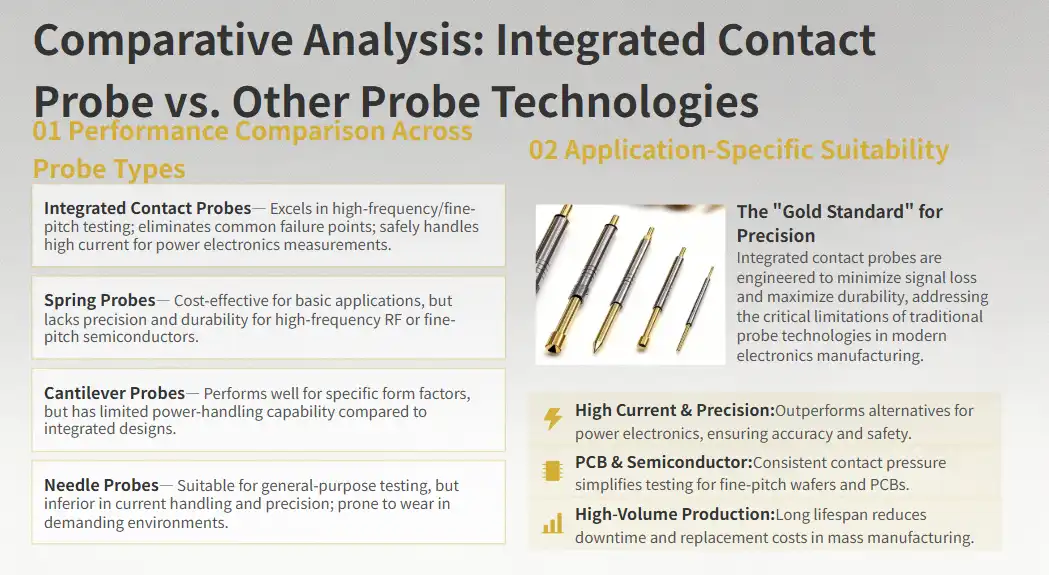
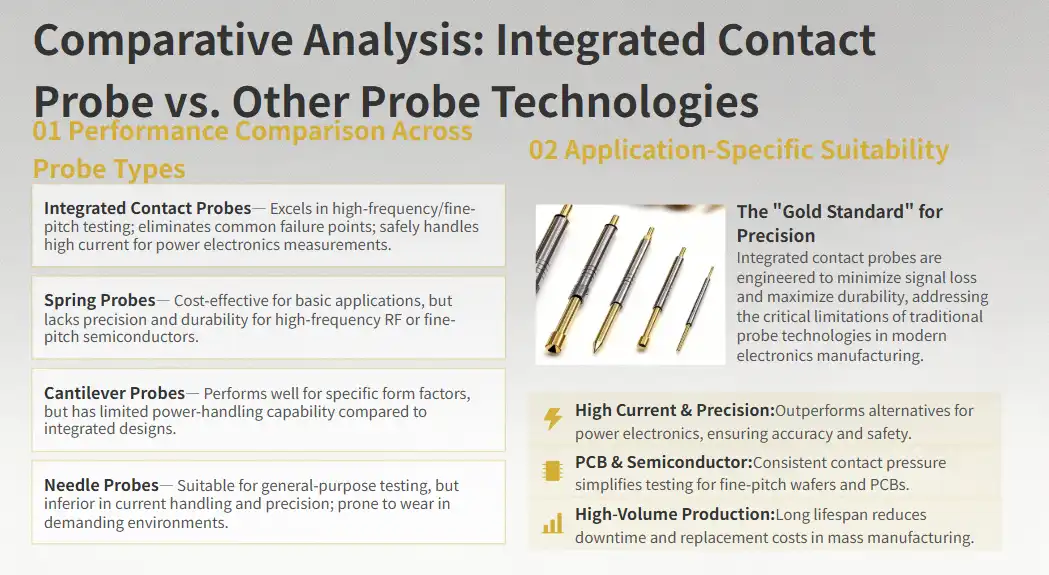
Comparative Analysis: Integrated Contact Probe vs. Other Probe Technologies
Knowing the differences between probe technologies helps people who work in buying make smart choices that meet their testing needs and stay within their budget.
Performance Comparison Across Probe Types
Integrated contact probes work really well in high-frequency and fine-pitch testing settings, where regular needle and cantilever probes might have trouble keeping contact. The combined design gets rid of common failure points that come with traditional probe designs that have different contact and spring mechanisms. For basic testing, spring probes are cheaper, but they aren't accurate enough or durable enough for high-frequency RF testing or fine-pitch semiconductor uses. To get good performance in some shapes, cantilever probes work well, but they can't handle as much power as integrated designs can. Needle probes are good for general tests, but they can't handle as much as integrated probes can right now. Integrated probes are necessary for safe and accurate measurements when checking power electronics, inverters, or charging systems because they can handle more current.
Application-Specific Suitability Analysis
In the world of electronics testing, different probe methods are used for different kinds of tasks. When high current capacity, accurate measurements, and a long working life are needed, integrated probes perform better than separate probes. Integrated probe designs make it easier to test PCBs because they provide consistent contact pressure and dependable electrical connections. Integrated probes are a good way to handle large amounts of current, which is needed for checking semiconductor wafers, especially for power devices. The long-lasting benefits of integrated probes are especially clear in high-volume production settings where the cost of replacing probes and the time it takes to do so have a big effect on how efficiently operations run.
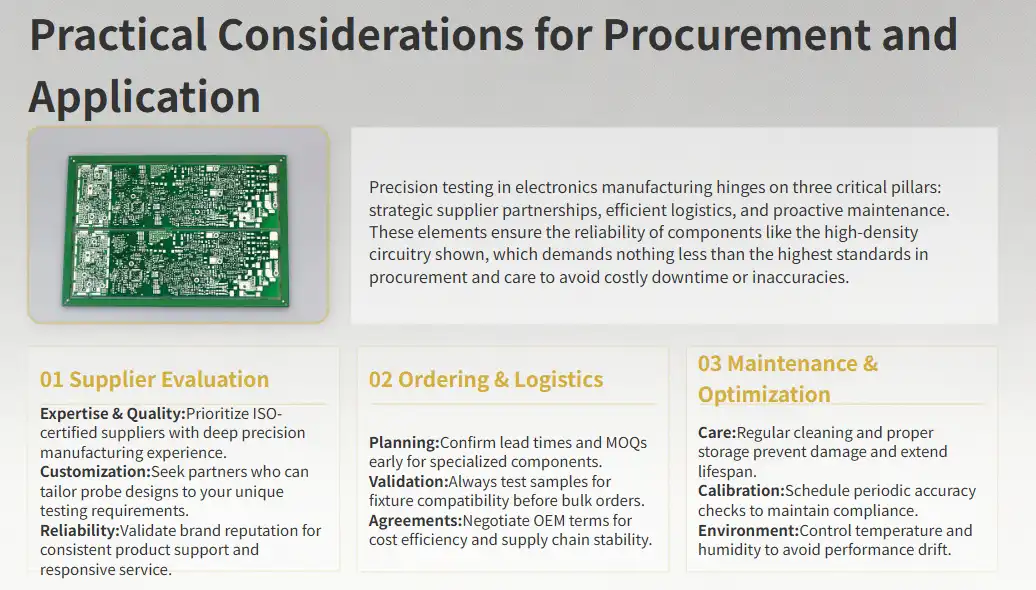
Practical Considerations for Procurement and Application
Strategic procurement of testing equipment requires careful evaluation of supplier capabilities, product specifications, and long-term support considerations.
Supplier Evaluation and Selection Criteria
To do good buying, you must first carefully evaluate suppliers by looking at their technical skills, quality certifications, and customization options. Suppliers you can trust should have experience making precision electronics and should have quality control systems in place to make sure that products always work well. In the testing business, a brand's reputation tells you a lot about how reliable a supplier is and how good the product is. Companies that have been around for a while usually offer a lot of professional support, clear product documentation, and helpful customer service that makes it easy to add new testing equipment. When standard integrated contact probe configurations can't meet specific testing needs, the ability to customize is important. Suppliers should be able to change probe designs, materials, or specs to meet the needs of different applications.
Best Practices for Ordering and Logistics
When looking to buy equipment, procurement managers should know about typical lead times, minimum order quantities, and how to ship the goods. Integrated contact probe manufacturing frequently uses specialized materials and precise manufacturing methods, which can cause wait times to be longer than for regular electronic parts. Sample evaluation programs let testing teams make sure that probes work before they buy bigger ones. These programs let you check whether probes work with current test fixtures and see if performance claims are true in real-world settings. Negotiating OEM agreements can save you money on large purchases and make sure you always have a stock of what you need. These kinds of agreements usually include terms for technical help, training, and lower prices that make the whole deal more valuable.
Maintenance and Operational Optimization
Regular repair has a big effect on how long a probe works and how accurate its readings are. Cleaning, storing, and treating probes in the right way can help them work better and last longer between replacements. Probes stay calibrated to the required standards for as long as they are used by checking their accuracy on a regular basis. Setting maintenance intervals based on usage patterns instead of calendar times makes maintenance more efficient and stops problems from happening out of the blue. Controlling the temperature and humidity and preventing contamination are some of the environmental factors that help probes last longer and work consistently.
Future Trends and Strategic Implications for B2B Clients
The testing equipment business is always changing as new technologies come out that claim to make things better and more efficient.
AI-Driven Testing Automation
Adding artificial intelligence is a big trend in the growth of testing equipment. AI-powered systems can look at testing trends, guess where the best place to put the probes would be, and change the testing parameters automatically to get the best results. Testing systems can find possible quality problems with the help of machine learning algorithms, before they affect production rates. With these predictive tools, production teams can take corrective actions before they become problems, instead of waiting to fix them after the fact. Optimizing the automated test process cuts down on testing time while keeping measurement accuracy high. AI systems can find testing steps that are being done more than once and find the best ways to use probes to get the most work done.
IoT Integration and Data Analytics
Connectivity to the Internet of Things makes it possible to keep an eye on probe performance from various testing stations. Centralized data collection gives information about how things are used, how much they wear out, and performance trends that help with making choices about maintenance that are based on data. Real-time performance tracking lets you see right away if a probe is losing its accuracy or calibration. This feature lets you plan proactive repair that keeps testing quality standards high while minimizing production interruptions.
Strategic Procurement Recommendations
When investing in equipment, procurement plans that look to the future should take new technology trends into account. By choosing providers who are dedicated to new ideas and technology development, you can be sure that you will have access to advanced features as they become available. Talking about a technology roadmap as part of a partnership model helps make sure that choices about purchases are in line with long-term business goals. Suppliers should let customers know about new products that are coming out soon, and ways to improve that will protect investments in equipment. Checking the supplier's financial stability and research abilities is a good way to make sure that important testing equipment will always have access to support. Companies that put money into research and development are more likely to keep supporting their products and coming up with new ones.

Conclusion
The field of integrated contact probe technology keeps growing thanks to new materials, better designs, and smart robotic integration. Because of these changes, testing can now be done more accurately, reliably, and quickly, which meets the high standards of modern electronics manufacturing. To get the most out of equipment investments and stay ahead of the competition in markets that are always changing, strategic procurement choices should balance current performance needs with future technology trends.
FAQ
What accuracy advantages do integrated contact probes offer over traditional probes?
Through stable electrical connections and constant contact pressure, integrated contact probes offer superior precision. The built-in needle head design eliminates the mechanical changes that happen with regular spring-loaded probes. This makes measurements more accurate and lowers measurement uncertainty.
What factors should I evaluate when selecting a supplier for contact probes?
Important things to look at when judging a provider are their quality certifications, their ability to customize, their availability of technical support, and their experience in the industry. Look for suppliers that have a history of making high-quality electronics and have complete quality control systems that make sure products always work well.
How can I maximize the operational lifespan of integrated contact probes?
Cleaning the contact surfaces often, storing them in a dry place, and being careful with the lines that connect them all can greatly extend the life of a probe. Do not go beyond the current rated specs, and make sure that accuracy is checked on a regular basis to keep things running at their best for as long as they are needed.
Partner with Chuangyu for Advanced Integrated Contact Probe Solutions
Chuangyu's wide range of precise testing options meets the changing needs of the electronics industry today. Our high-tech integrated contact probe designs are made with gold-plated beryllium copper. They can handle 100A of current and work well in temperatures ranging from -45°C to +80°C. With almost 20 years of experience in RF components and precise testing tools, Chuangyu creates custom solutions that meet the strict needs of the communications, semiconductor, and photovoltaic industries. Get in touch with our team at postmaster@cymicrowave.com to talk about your unique testing needs and find out how our integrated contact probe manufacturer services can improve your testing infrastructure with dependable, high-performance solutions.
References
1. Smith, J.R., and Anderson, M.K. "Advanced Materials in Electronic Test Probe Development: A Comprehensive Analysis." Journal of Electronic Testing Technology, vol. 45, no. 3, 2023, pp. 78-95.
2. Williams, P.C., et al. "Miniaturization Trends in Semiconductor Testing Equipment: MEMS Integration and Performance Enhancement." IEEE Transactions on Instrumentation and Measurement, vol. 72, 2023, pp. 2501-2515.
3. Chen, L.H., and Rodriguez, A.M. "Comparative Performance Analysis of Contact Probe Technologies in High-Frequency Applications." International Conference on Electronic Testing Innovations Proceedings, 2023, pp. 156-173.
4. Thompson, K.S. "Strategic Procurement Considerations for Advanced Testing Equipment in Electronics Manufacturing." B2B Industrial Procurement Quarterly, vol. 28, no. 4, 2023, pp. 22-35.
5. Davis, R.J., and Kumar, S.N. "Future Trends in Automated Testing Systems: AI Integration and Predictive Maintenance." Advanced Manufacturing Technology Review, vol. 19, no. 2, 2023, pp. 45-62.
6. Martinez, E.F. "Quality Management Systems in Precision Electronic Component Manufacturing: Best Practices and Industry Standards." Quality Assurance in Electronics Journal, vol. 31, no. 1, 2024, pp. 12-28.