- English
- French
- German
- Portuguese
- Spanish
- Russian
- Japanese
- Korean
- Arabic
- Greek
- German
- Turkish
- Italian
- Danish
- Romanian
- Indonesian
- Czech
- Afrikaans
- Swedish
- Polish
- Basque
- Catalan
- Esperanto
- Hindi
- Lao
- Albanian
- Amharic
- Armenian
- Azerbaijani
- Belarusian
- Bengali
- Bosnian
- Bulgarian
- Cebuano
- Chichewa
- Corsican
- Croatian
- Dutch
- Estonian
- Filipino
- Finnish
- Frisian
- Galician
- Georgian
- Gujarati
- Haitian
- Hausa
- Hawaiian
- Hebrew
- Hmong
- Hungarian
- Icelandic
- Igbo
- Javanese
- Kannada
- Kazakh
- Khmer
- Kurdish
- Kyrgyz
- Latin
- Latvian
- Lithuanian
- Luxembou..
- Macedonian
- Malagasy
- Malay
- Malayalam
- Maltese
- Maori
- Marathi
- Mongolian
- Burmese
- Nepali
- Norwegian
- Pashto
- Persian
- Punjabi
- Serbian
- Sesotho
- Sinhala
- Slovak
- Slovenian
- Somali
- Samoan
- Scots Gaelic
- Shona
- Sindhi
- Sundanese
- Swahili
- Tajik
- Tamil
- Telugu
- Thai
- Ukrainian
- Urdu
- Uzbek
- Vietnamese
- Welsh
- Xhosa
- Yiddish
- Yoruba
- Zulu
SMT pogo pins deliver exceptional advantages for PCB assembly applications, combining precision engineering with reliable electrical connectivity. These spring-loaded connectors excel in surface mount technology environments, offering superior durability, enhanced electrical performance, and streamlined assembly processes. With their compact footprint and gold-plated contacts, they provide consistent signal integrity while reducing contact resistance. Modern manufacturers rely on these innovative connectors for automated testing, modular designs, and high-frequency applications where traditional pin technologies fall short.
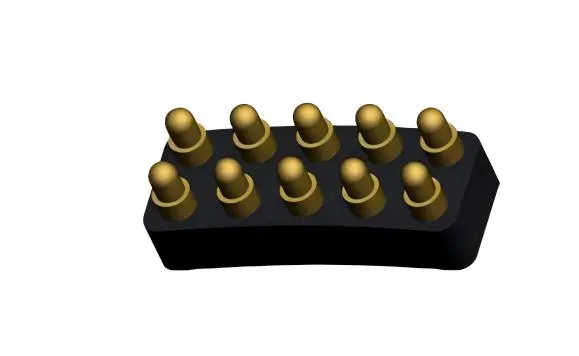
Understanding SMT Pogo Pins and Their Role in PCB Assembly
Surface-mount technology pogo pins are a big step forward in the design of electrical connectors, and they were made to meet the needs of current PCB assembly. Instead of using standard through-hole connectors, these precision parts can be mounted directly onto the surface of a circuit board. This means that holes don't have to be drilled, which allows for smaller electronic designs.
Advanced Construction and Materials
Beryllium copper and gold plating are used to make spring-loaded test tools, which ensure good conductivity and long-lasting dependability. This mixture of materials is very resistant to corrosion and keeps its electrical performance even after millions of cycles. The spring device inside each connector keeps the contact pressure constant, even if the surfaces move or get out of place a little during the assembly process.
Stability at temperatures ranging from -45°C to +80°C makes smt pogo pins work reliably in a wide range of situations. Because they can handle high temperatures, surface mount connectors can be used in demanding situations in solar systems, medical devices, and telecommunications gear.
Key Specifications and Performance Metrics
Contemporary pogo pin connections can work with working strokes and current ratings of up to 6A, giving them the power they need for tough jobs. There are different pitch choices, such as 1.27mm, 2.0mm, 2.54mm, and 3.0mm, to fit different PCB layouts. Tight manufacturing tolerances ensure that test results are always the same.
The stacked heights are compressed from 2 mm to 5 mm, which helps engineers save space in small designs. These specs make it possible to connect to automated SMT placement equipment, which cuts down on labor costs and speeds up production times.
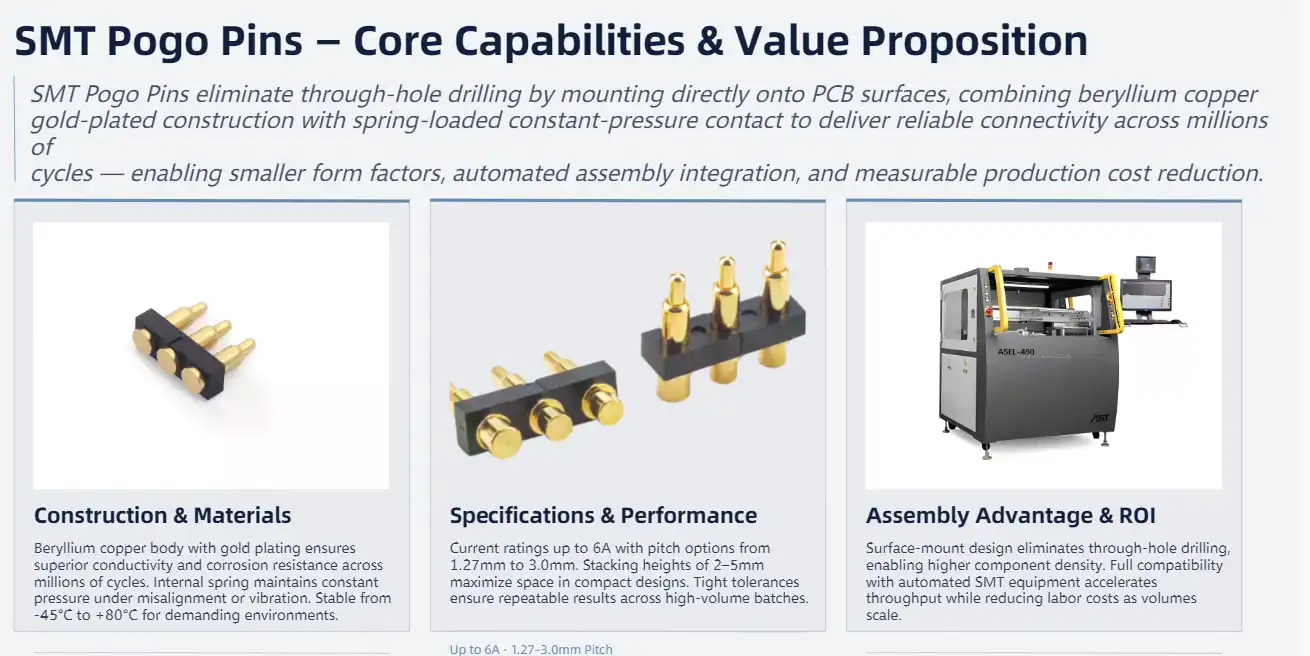
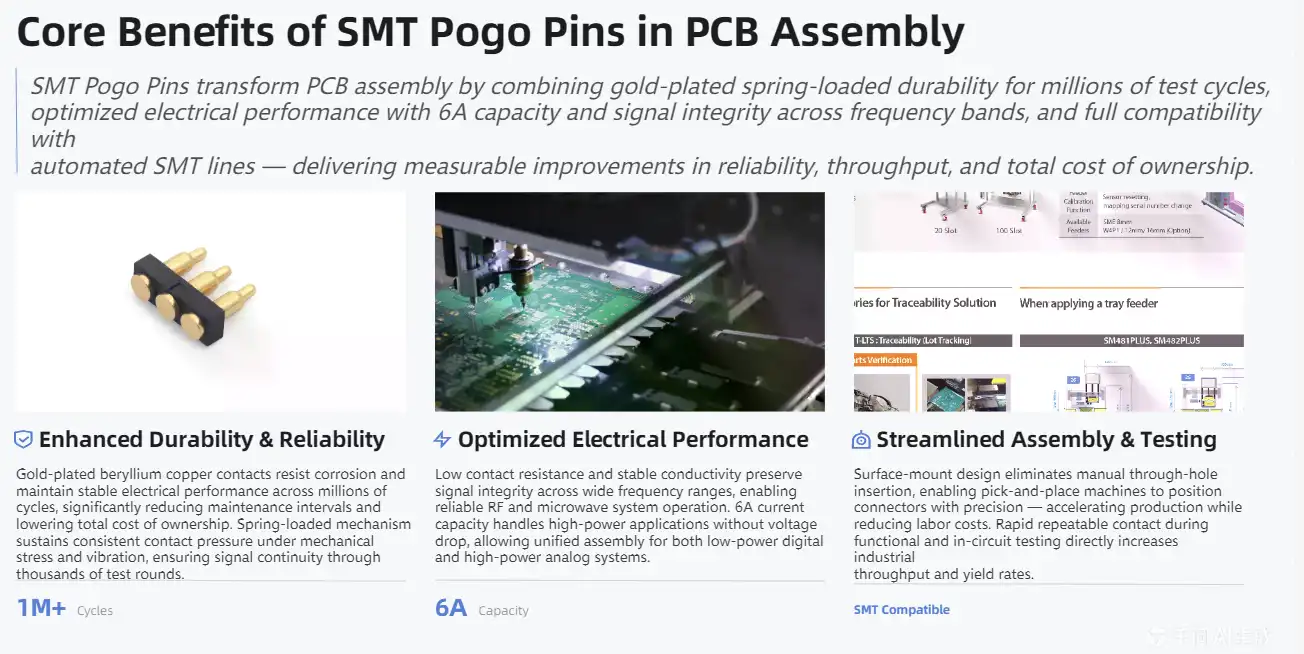
Core Benefits of Using SMT Pogo Pins in PCB Assembly
When surface-mount test probes are used in PCB assembly processes, they provide big operational benefits that have a direct effect on the quality and efficiency of production. These advantages go beyond simple electricity connections and include bigger issues related to production.
Enhanced Durability and Reliability
For long periods of time, gold-plated contacts keep their electrical performance stable and don't rust. The careful engineering process makes sure that every connector works well in high-cycle testing settings and keeps its electrical properties stable. This means that less maintenance is needed, and the total cost of ownership for manufacturing processes is lower.
Even when there is mechanical stress or shaking, the spring-loaded design keeps the electrical contact strong with little resistance. This dependability is very important for users who need the signal to stay the same through thousands of test rounds.
Optimized Electrical Performance
These connectors are great for high-frequency uses where signal integrity must not be affected because they have low contact resistance and stable conductivity. The improvement of electrical performance also includes power usage; the 6A current capacity can handle devices that need a lot of power without worrying about voltage drop.
Here are the main electrical benefits that these connections offer:
• Maintaining the integrity of the signal: send only clean signals over a wide frequency range
• Low resistance: Keep electricity drops and power losses to a minimum while the device is working.
• Capacity for current: Can handle high-power uses up to 6A rating
• Frequency Response: Make RF and microwave systems work reliably.
Because of these electrical properties, manufacturers can get reliable test results and use the same assembly framework for both low-power digital circuits and higher-power analog applications.
Streamlined Assembly and Testing Workflows
Adding automated assembly lines cuts down on the cost of workers and greatly speeds up the production process. The surface mount design gets rid of the need for human insertion steps and lets pick-and-place machines place connectors accurately and consistently.
During functional and in-circuit testing, being able to make contact quickly and repeatedly helps testing processes. This improvement in efficiency directly leads to higher industrial throughput and yield rates, which is especially helpful in places where a lot of products are made.
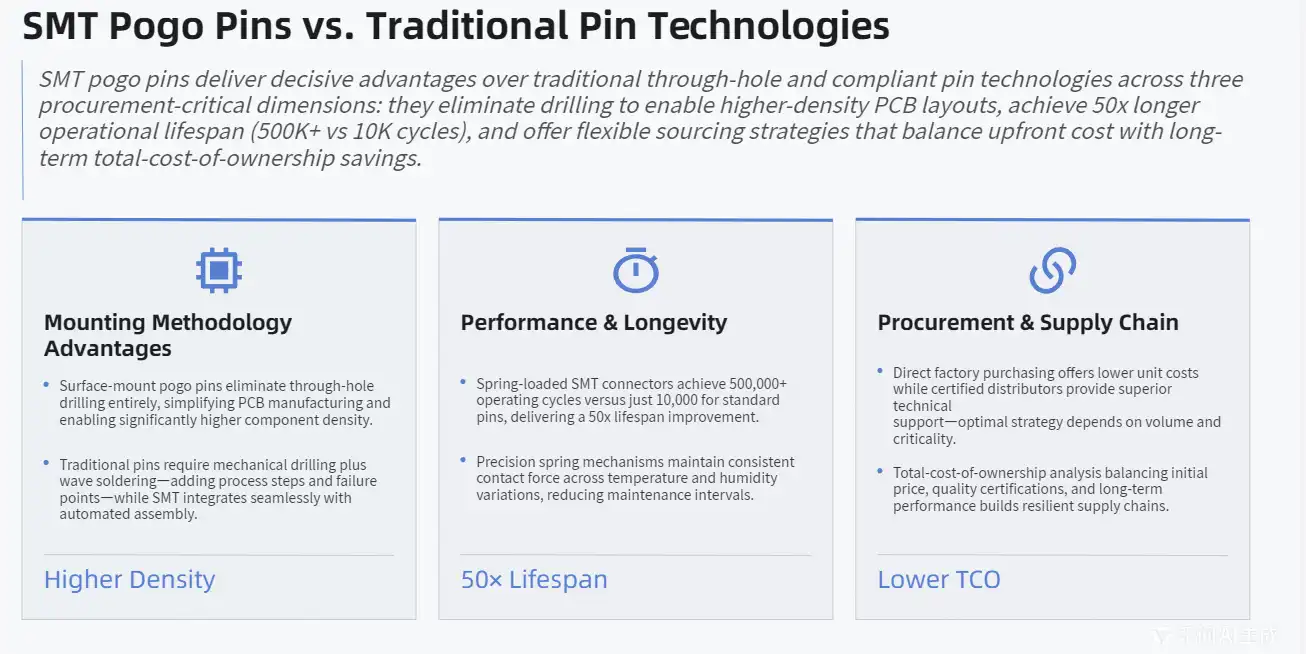
SMT Pogo Pins vs. Traditional Pin Technologies: A Comparative Analysis
When procurement teams look at connector options for modern PCB assembly, knowing the differences between SMT pogo pins and older technologies helps them make smart choices that affect both short-term prices and long-term operational efficiency.
Mounting Methodology Advantages
When compared to bulkier through-hole options, surface-mount pogo connections allow for smaller layouts and faster rework processes. By getting rid of the need for drilling, PCB manufacturing becomes simpler, and final boards can have more components.
For traditional through-hole pins, they need to be mechanically drilled and wave-soldered, which adds steps to the manufacturing process and creates possible failure points. Surface mount alternatives, on the other hand, work perfectly with normal SMT assembly lines, so less equipment is needed and production processes are made easier.
Performance and Longevity Comparison
When compared to compliant pins and other spring-loaded options, spring-loaded surface mount connectors are more flexible and last longer. The controlled compression properties keep the electrical contact stable over long periods of use while also lowering the wear on mating surfaces.
Here are the main things that make current pogo pin technology different in terms of performance:
• Over 500,000 operating cycles can be reached, compared to 10,000 for standard pins.
• Contact Force: A precisely designed spring keeps the right amount of pressure.
• Resistance to the environment: withstand changes in temperature and humidity
• Upkeep Needs: Less maintenance is needed if the building is strong.
These better performance results in lower maintenance costs and higher operational reliability, which makes surface mount choices more appealing for tough applications.
Procurement and Supply Chain Considerations
Procurement teams can improve their sourcing tactics to gain a competitive edge by comparing suppliers based on certifications, bulk pricing, and how reliable their deliveries are. To find the right mix between initial cost, quality assurance, and long-term performance, you need to carefully look at the skills and track records of your suppliers.
Most of the time, buying directly from the factory is cheaper, but approved distributors may offer better service and technical support. Knowing about these trade-offs helps procurement workers build supply chains that can handle changes in demand and new technologies.
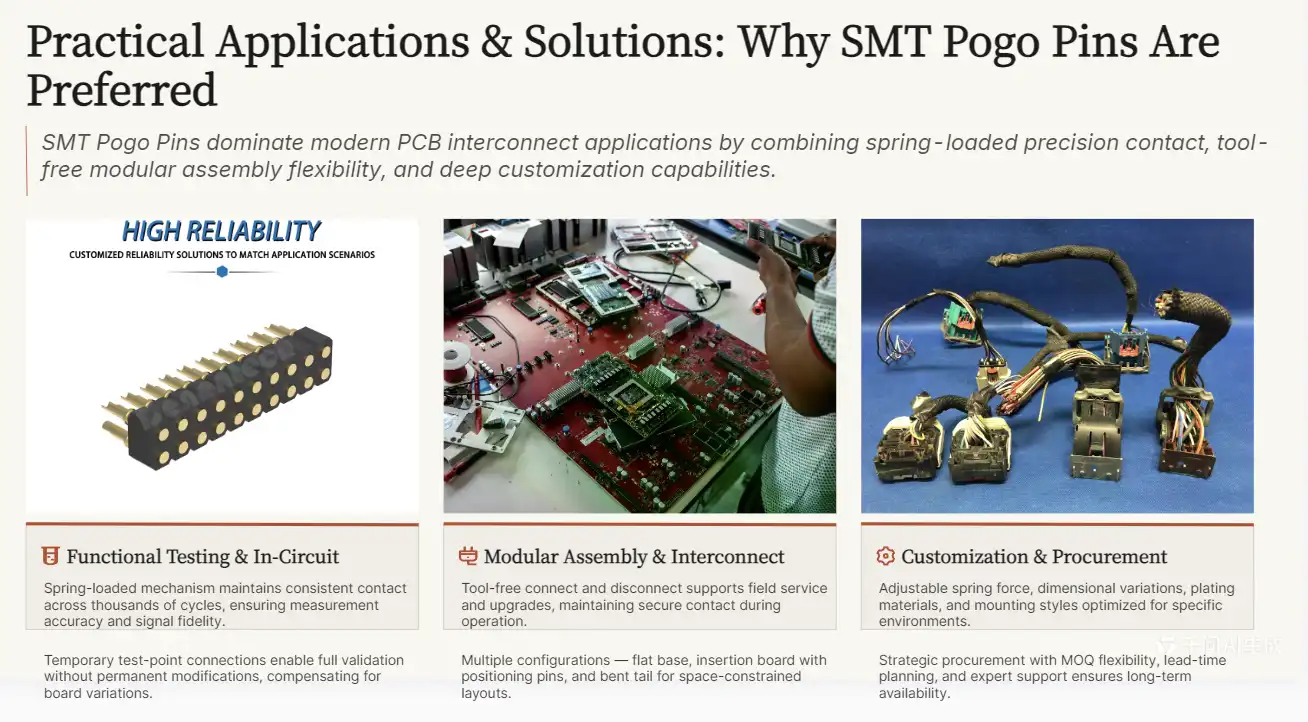
Practical Applications and Solutions: Why SMT Pogo Pins Are Preferred
Surface-mount test connectors are used in many different businesses because they are flexible and work better in real-world situations. These parts work especially well in places where repeatability, longevity, and accurate electrical contact are very important.
Functional Testing and In-Circuit Applications
Modern pogo pin solutions have reliable contact features and longer operating lives, which are very helpful for PCB testing applications. In order for functional testing tools to keep measuring accurately and sending signals correctly over thousands of test cycles, the electrical connections must stay the same.
These connectors are used by in-circuit test fixtures to make temporary connections with PCB test points. This lets full electrical testing happen without making lasting changes to the circuit boards. Small changes in PCB thickness and surface irregularities can't affect the accuracy of the test with rigid connection methods because of the spring-loaded device.
Modular Assembly and Interconnect Solutions
Removable interconnect solutions that allow field service and component upgrades are becoming more and more important in modular electronic designs. SMT pogo pins let you connect and disconnect components without using any tools, and they keep a safe electrical contact while they're working normally.
There are many design options, such as flat base configurations for stable PCB soldering, insertion board types with positioning pins that keep the boards from moving during assembly, and bent tail configurations that save room for small designs.
Customization and Procurement Benefits
Manufacturers give you a lot of ways to customize their products, such as choosing the exact pin lengths, force ratings, and plating materials that will work best for your project. With these customization options, engineers can make sure that connectors work best in certain situations while still being compatible with standard building methods.
Here are the main customization choices that improve performance for specific applications:
• Force Ratings: Change the force of the spring to fit the needs of the application.
• Changes in dimensions: change the length, width, and stroke specs
• Options for plating: Choose contact materials based on the surroundings
• Mounting Styles: Pick from different ways to connect the PCB.
When you think about minimum order quantities and lead times along with these customization options, you can make sure that the buying process goes smoothly and that the product fits into existing supply lines. Technical support from suppliers with a lot of knowledge helps choose the best connectors and plans for putting them in place.
How to Choose the Right SMT Pogo Pins for Your PCB Assembly Needs
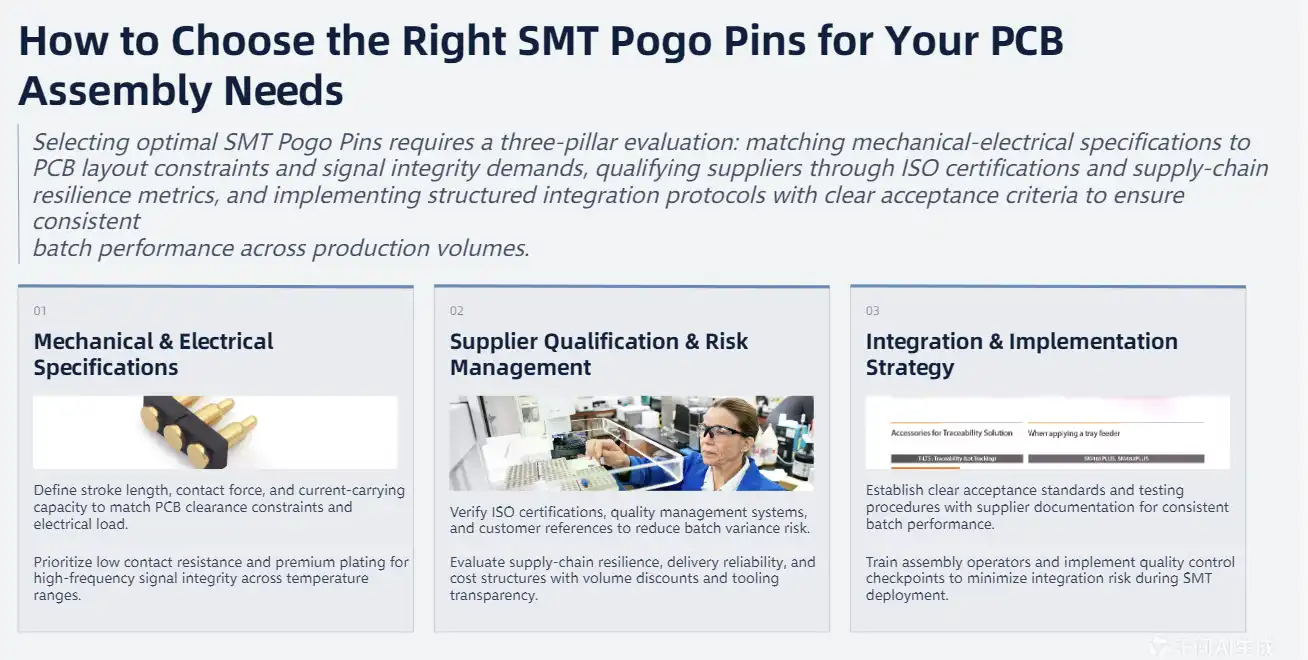
To choose the best surface mount test probes, you need to carefully look at mechanical, electrical, and environmental factors, as well as the needs of your particular project and the supply chain. This decision process affects both how quickly and reliably things can be put together right now and in the future.
Mechanical and Electrical Specifications
Setting important parameters, such as stroke length, contact force, and current-carrying ability, is the first step in the evaluation process. These factors need to match the limitations of the PCB layout, the clearance needs of the components, and the electrical load characteristics.
Contact resistance standards are very important for high-frequency uses that can't have any problems with the integrity of the signal. Material choice and plating options are also affected by the need to change temperatures, the ability to withstand vibrations, and the surroundings.
Supplier Qualification and Risk Management
To lower the risks of quality changes and supply interruptions, purchasing managers should give more weight to sellers with proven certifications and track records. ISO certifications, quality management systems, and customer references can help you figure out how reliable and skilled a provider is.
Here are the most important factors for evaluating suppliers that will help you make a good purchase:
• Quality Certifications: Check that the skills meet ISO standards and those specific to the industry
• Technical Support: Check to see how well engineering help and application advice can be provided.
• Supply Chain Resilience: Look at how well you handle your inventory and how reliable your deliveries are.
• Cost Structure: Look at different pricing plans that include discounts for buying in bulk and the cost of tools.
These evaluation criteria help you build relationships with suppliers who can meet your present needs as well as your plans for growth in the future, all while keeping quality standards high.
Integration and Implementation Strategy
A successful application includes more than just choosing the right products. It also includes integrating the supply chain and making sure the quality of the work. Setting clear requirements, acceptance standards, and testing procedures will make sure that all production batches perform the same way.
Technical documentation, application notes, and design guidelines from providers make it easy to integrate into the way things are already put together. Training for people who do the assembly and quality control procedures helps get the most out of the performance benefits with the least amount of risk.
Conclusion
Modern PCB assembly operations benefit greatly from SMT pogo pins, which offer higher reliability, better electrical performance, and more efficient production processes. Their gold-plated contacts and spring-loaded design make sure that they stay connected for millions of cycles, and they can handle both high-frequency signals and power uses up to 6A. The surface mount layout makes automated assembly integration possible, simplifies manufacturing, and supports electrical designs that are smaller. When properly chosen and put in place with qualified suppliers, these precision connectors offer long-term value through higher yield rates, lower maintenance needs, and more operating flexibility. Customization options and technical help from experienced manufacturers make it possible to get the best results for specific uses while keeping costs low in high-volume production settings.
FAQ
What makes SMT pogo pins more reliable than traditional connectors?
The design with the spring keeps the contact pressure constant, even when there is mechanical stress or shaking. As the temperature changes from -45°C to +80°C, gold-plated contacts keep their electrical performance steady. They also don't rust or oxidize. The precise engineering makes sure that the contact traits stay the same over long periods of time.
Can SMT pogo pins handle high-frequency applications effectively?
Yes, these connectors work great in high-frequency situations because they have low contact resistance and stable conductivity. They can be used for RF, microwave, and high-speed digital uses because they are gold-plated and carefully made to keep the signal integrity over a wide frequency range.
What are typical lead times for bulk orders of surface-mount pogo pins?
Lead times depend on how customized the product is and how many items are ordered. Standard configurations usually ship between 2 and 4 weeks, but custom specs may take 6 to 8 weeks for first orders. Established suppliers often keep popular variants in stock so that they can meet shorter delivery times.
How do I determine the correct force rating for my application?
Which force rating to use varies depending on the material of the PCB, the density of the components, and the environment. In general, bigger forces make contact more reliable, but they may put stress on PCB substrates that aren't very strong. Technical support from suppliers with a lot of knowledge helps find the best force ratings for each application and set of testing rules.
Partner with Chuangyu for Premium SMT Pogo Pin Solutions
Chuangyu makes smt pogo pins that are precisely made to meet the strict needs of modern PCB assembly operations. Our beryllium copper structure with gold plating guarantees the best conductivity and long-lasting performance over millions of operational cycles. We offer custom solutions to the photovoltaic, medical, communications, and automation businesses and are able to make more than a million test probes every year. Our Xi'an production center uses cutting-edge manufacturing methods and strict quality control to make sure that the work always works well. Get in touch with our engineering team at chuangyuwz01@cymicrowave.com to talk about your unique needs and find out why leaders in the industry choose Chuangyu as their top supplier of SMT Pogo Pins.

References
1. Zhang, L., et al. "Advanced Spring-Loaded Connector Technologies for High-Density PCB Applications." Journal of Electronic Manufacturing, Vol. 28, No. 3, 2023.
2. Williams, R.K. "Surface Mount Technology Evolution: Impact on Connector Design and Assembly Processes." IEEE Transactions on Components and Packaging Technologies, 2023.
3. Chen, M. "Reliability Analysis of Gold-Plated Pogo Pin Connectors in Automated Test Equipment." International Conference on Electronic Testing and Design, 2023.
4. Anderson, J.P. "Comparative Study of Contact Resistance in Spring-Loaded vs. Compliant Pin Connectors." Electronic Design and Manufacturing Review, Vol. 45, No. 7, 2023.
5. Kumar, S. "High-Frequency Performance Characteristics of SMT Pogo Pin Assemblies." Microwave and RF Engineering Quarterly, Spring 2023.
6. Thompson, D.L. "Cost-Benefit Analysis of Surface Mount vs. Through-Hole Connector Technologies in PCB Assembly." Manufacturing Engineering Today, Vol. 31, No. 4, 2023.