- English
- French
- German
- Portuguese
- Spanish
- Russian
- Japanese
- Korean
- Arabic
- Greek
- German
- Turkish
- Italian
- Danish
- Romanian
- Indonesian
- Czech
- Afrikaans
- Swedish
- Polish
- Basque
- Catalan
- Esperanto
- Hindi
- Lao
- Albanian
- Amharic
- Armenian
- Azerbaijani
- Belarusian
- Bengali
- Bosnian
- Bulgarian
- Cebuano
- Chichewa
- Corsican
- Croatian
- Dutch
- Estonian
- Filipino
- Finnish
- Frisian
- Galician
- Georgian
- Gujarati
- Haitian
- Hausa
- Hawaiian
- Hebrew
- Hmong
- Hungarian
- Icelandic
- Igbo
- Javanese
- Kannada
- Kazakh
- Khmer
- Kurdish
- Kyrgyz
- Latin
- Latvian
- Lithuanian
- Luxembou..
- Macedonian
- Malagasy
- Malay
- Malayalam
- Maltese
- Maori
- Marathi
- Mongolian
- Burmese
- Nepali
- Norwegian
- Pashto
- Persian
- Punjabi
- Serbian
- Sesotho
- Sinhala
- Slovak
- Slovenian
- Somali
- Samoan
- Scots Gaelic
- Shona
- Sindhi
- Sundanese
- Swahili
- Tajik
- Tamil
- Telugu
- Thai
- Ukrainian
- Urdu
- Uzbek
- Vietnamese
- Welsh
- Xhosa
- Yiddish
- Yoruba
- Zulu
To choose the best coaxial adapter 1.0mm male to 1.85mm female, you need to know important technical details, the needs of the application, and how well the adapter works. These carefully made parts connect high-frequency RF systems with different connection standards, letting 1.0mm and 1.85mm interfaces work together without any problems. Finding the right adapter is important for making sure that signals don't get messed up too much and that the electrical performance stays high in demanding situations like telecommunications, aircraft, and test measurement.
Understanding 1.0mm Male to 1.85mm Female Coaxial Adapters
Fundamental Design and Functionality
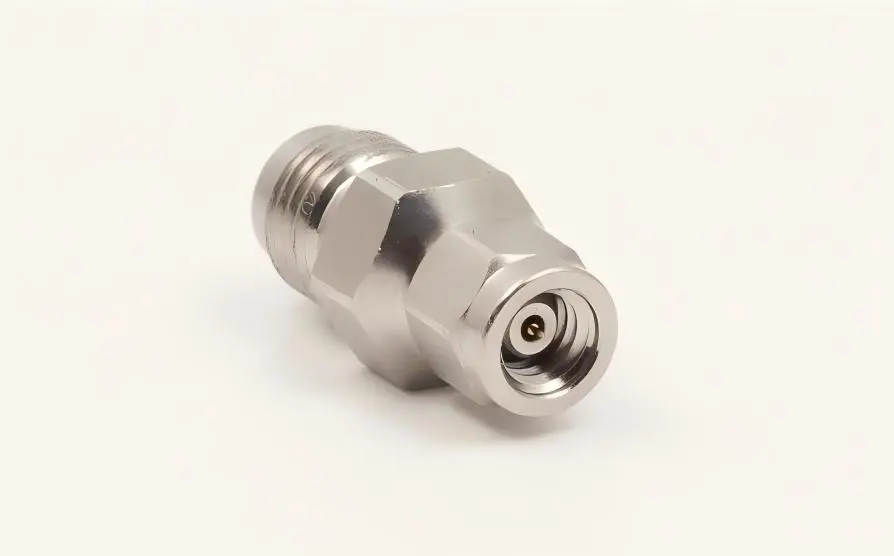
High-frequency radio frequency (RF) systems need reliable interfaces that keep the integrity of the data even when using different types of connectors. The important link between these two types of precision connectors is a coaxial adapter 1.0mm male to 1.85mm female. Each type is designed for a specific frequency range and mechanical needs. On one end of these adapters is a 1.0mm male connector (plug), and on the other is a 1.85mm female connector (jack). This lets devices with different interface standards connect directly to each other.
Maintaining a 50-ohm nominal impedance along the signal path is one of the most important design concepts. This impedance matching stops signal reflections and makes sure that linked parts get the right amount of power. Using advanced manufacturing methods, precisely machined housings are made that keep their electrical properties stable and are strong enough to be used over and over again.
Technical Specifications and Performance Metrics
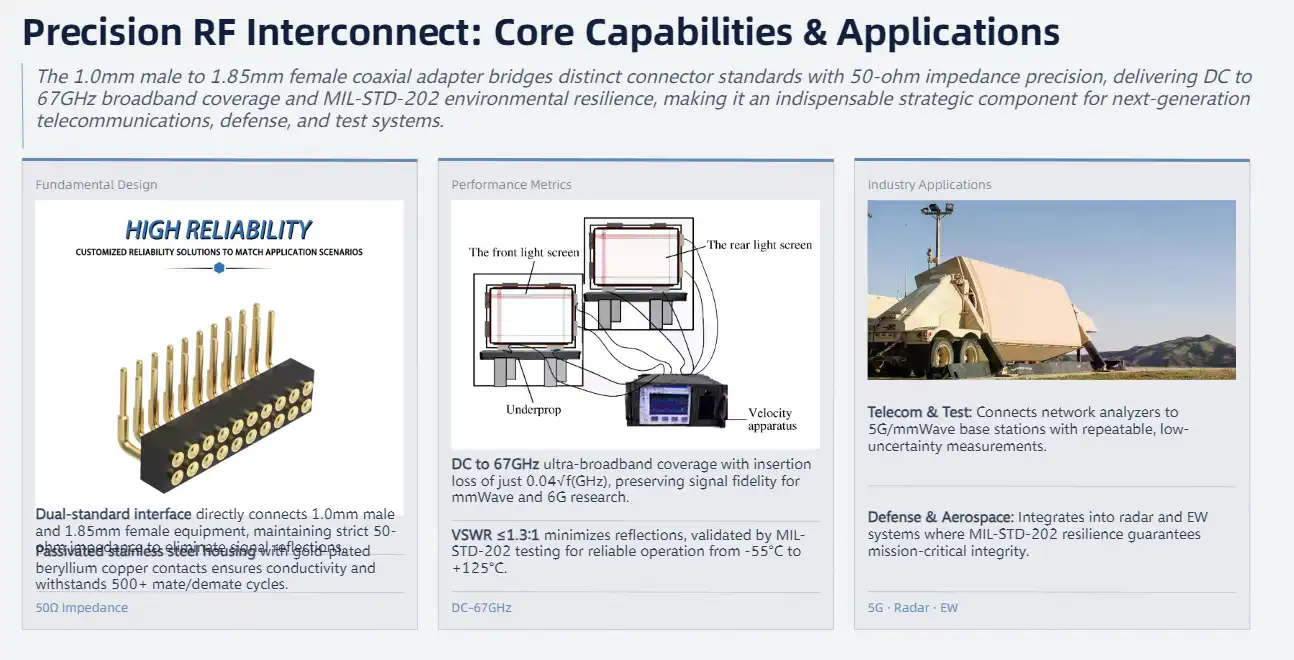
Modern coaxial adapters can handle frequencies ranging from DC to 67GHz, which means they can be used for a wide range of broadband tasks, such as millimeter-wave messaging and high-speed digital systems. The insertion loss standard of 0.04 √f (GHz) keeps the signal quality high across all frequency ranges, and the excellent VSWR performance of 1.3:1 typically ensures that there aren't many reflections that could hurt system performance.
Picking the right materials is very important for meeting these performance standards. The passivation process on stainless steel housings keeps them from rusting and makes them last longer in harsh environments. The gold-plated beryllium copper center contacts are very good at conducting electricity and resisting wear. They can handle up to 500 mate/demate cycles, which means they will last a long time. The MIL-STD-202 environmental testing guidelines for these materials mean that they will work reliably in temperatures ranging from -55°C to 125°C.
Applications Across Industries
A lot of the infrastructure for telecommunications depends on these adapters to link test tools to network analyzers and signal generators. These adapters are perfect for radar systems and satellite communications because they work well in harsh environments and are very accurate. They are used by defense contractors in electronic warfare systems where the integrity of the signals has a direct effect on the success of the task.
Key Differences Between 1.0mm and 1.85mm Connectors for B2B Procurement
Physical Dimensions and Mechanical Characteristics
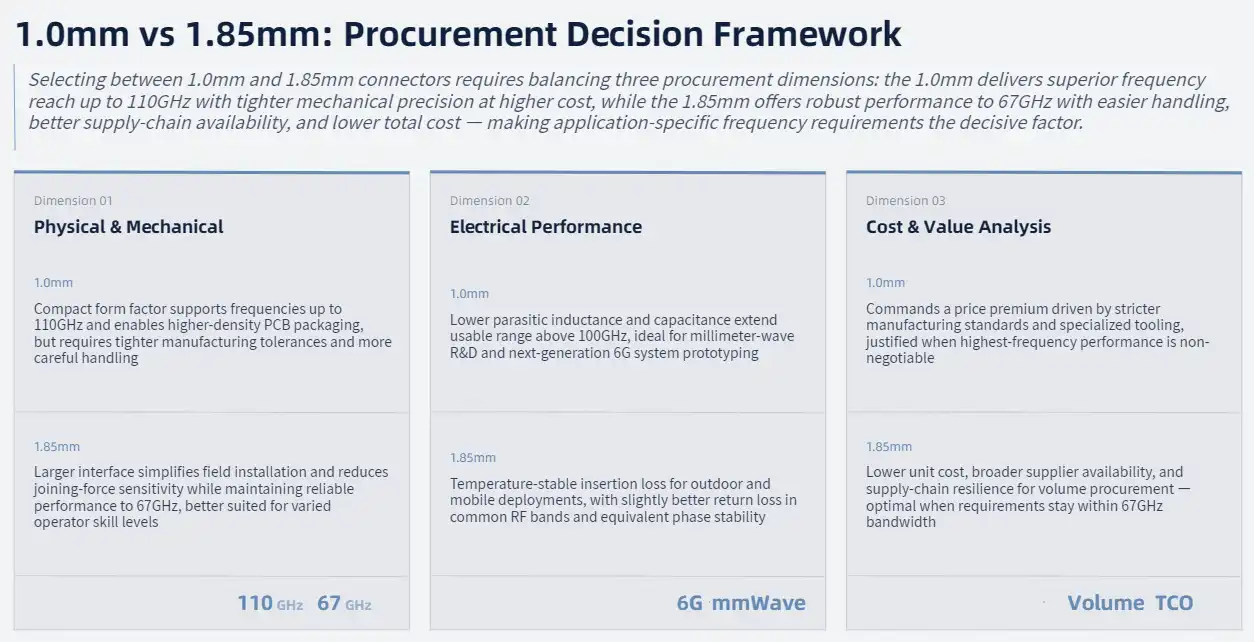
Because 1.0mm and 1.85mm connectors have different sizes, buying teams need to know how to make sure that they work with each other. The 1.0mm connector has a smaller shape that makes it better for high-frequency uses. In premium versions, it can usually handle frequencies up to 110GHz. Its small size allows for higher density packaging, but it needs more precise production tolerances.
1.85mm connections, on the other hand, have a bigger interface that makes them easier to handle and install while still working well up to 67GHz. The different sizes affect the amount of joining force needed. Because they are more precisely made, 1.0mm connectors need to be handled with more care. Engineers can choose the right adapters for different installation settings and user skill levels when they know about these mechanical differences.
Electrical Performance Comparison
The most important difference between these types of connectors is how well they handle frequency. The 1.0mm connector works great in millimeter-wave uses that need the widest frequency range. Because it's smaller, it has less parasitic inductance and capacitance, which lets it work in some situations above 100GHz.
When it comes to most RF uses, the 1.85mm connector works great and is more durable mechanically. Its insertion loss properties don't change when the temperature does, so it can be used for outdoor projects and mobile apps. Signal integrity tests show that both types of connectors keep the phase very stable. However, the 1.85mm version has slightly better return loss performance in some frequency bands.
Cost Considerations and Value Analysis
When making procurement choices, people have to find a balance between performance needs and budget limits. The 1.0mm connector usually costs more because it has stricter manufacturing standards and needs special tools. Applications that need the highest frequency, on the other hand, are worth the extra cost because they improve system performance and make it possible to use the technology in the future.
The 1.85mm adapter is a great deal for uses that don't need very high frequency performance. It's easier to find and costs less to make, which helps the supply line when buying in bulk. When procurement teams understand these changes in costs, they can make the most of their funds while still meeting technical needs.
Choosing the Best 1.0mm Male to 1.85mm Female Coaxial Adapter for Your Application
Critical Selection Criteria
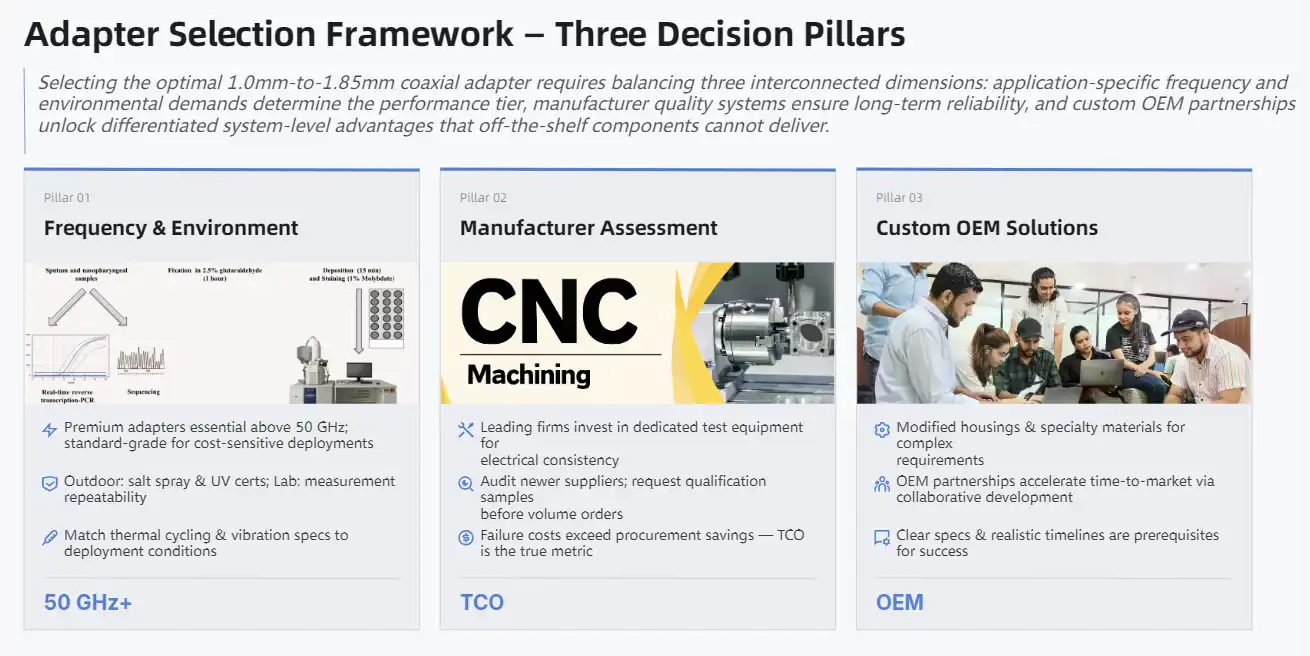
To choose the right adapter, you must first carefully look at the frequency needs and the surroundings. Premium coaxial adapter 1.0mm male to 1.85mm female designs with better mechanical accuracy and material quality are usually better for applications that operate above 50GHz. Standard-grade adapters may work well for lower frequency uses and save money at the same time.
Some environmental factors to think about are temperature changes, shaking exposure, and resistance to contamination. For placements outside, adapters need to meet higher environmental standards, such as being resistant to salt spray and UV light. In laboratories, measuring accuracy and repeatability may be more important than making the surroundings strong.
Manufacturer Comparison and Quality Assessment
Leading makers set themselves apart by using high-quality materials, making sure their products are precise, and using quality control methods. Well-known manufacturers spend money on special testing tools to make sure that all of their products work electrically. This makes sure that the quality is always the same and supports important uses. Most of the time, these companies offer detailed technical documentation and application help, which lowers the risks of integration.
New providers may have good prices, but you need to carefully look at their quality control methods and long-term reliability data. Before committing to large purchases, procurement teams should ask for qualification examples and data on performance verification. System failures often cost more than the money saved at first from cheaper options.
Custom Solutions and OEM Partnerships
For complicated projects, adapter options that are made to fit specific electrical or mechanical needs may be needed. Manufacturers with a lot of experience can help with engineering for unique designs that include changing the size of the housing, using special materials, or adding filtering capabilities. These custom options let you get the most out of your system while still working with standard interfaces.
OEM partnerships give you access to technical knowledge and manufacturing skills that help your product stand out. Time-to-market can be sped up with collaborative development plans that make sure adapter performance meets system needs. For agreements to work, technical needs must be communicated clearly, and development timelines must be based on reality.
Installation and Practical Usage Tips for Coaxial Adapters
Step-by-Step Installation Guidelines
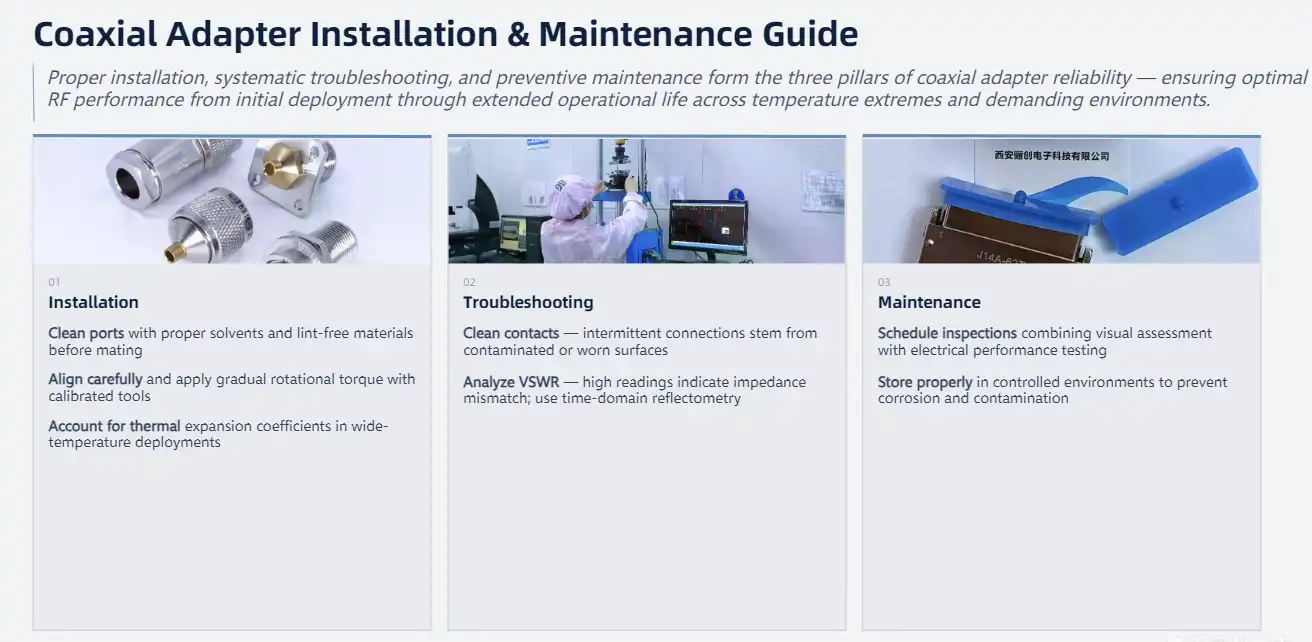
Using the right installation methods will make sure that the adapter works at its best and that precision components are not damaged. Before starting the installation, both connector ports must be carefully checked to make sure they are clean and free of any damage. Any kind of contamination or mechanical damage can hurt the electrical performance or stop the joining from working properly.
The steps below make sure that links are strong and protect delicate parts during installation:
- Use the right solvents and lint-free products to clean the connector interfaces.
- Carefully line up the links before connecting them to stop cross-threading.
- Gradually apply rotational pressure while keeping an eye on the resistance to contact.
- Use measured tools to tighten to the required torque levels.
- Visual inspection and electrical tests should be used to confirm the integrity of the connection.
Installation steps for the Coaxial adapter 1.0mm male to 1.85mm female are affected by temperature, especially for devices that work in a wide range of temperatures. Different materials' thermal expansion factors can cause mechanical stress if they are installed incorrectly. Knowing about these effects helps keep things reliable over time and stops them from breaking down too soon.
Troubleshooting Common Issues
Most of the time, intermittent connection is caused by dirty or worn-out contact surfaces. Using the right chemicals for regular cleaning can restore proper electrical contact and stop it from breaking down over time. Problems that don't go away could mean that the adapter is worn out and needs to be replaced.
When VSWR readings are high, it means that the impedances don't match up. This can happen because of faulty connectors, contamination, or bad installation. Systematic troubleshooting includes testing each part separately to find the source of the problem. Time-domain reflectometry gives a thorough look at changes in impedance that can help with repair work.
Maintenance Best Practices
Preventive maintenance plans keep performance standards while extending the life of adapters. As part of regular inspection schedules, mechanical damage should be looked at visually, and performance factors should be checked with electrical testing. Recording test results creates trending data that lets maintenance be planned ahead of time and stops problems that come up out of the blue.
The way an adapter is stored has a big effect on how long it lasts, especially for parts that contain sensitive materials. Corrosion and contamination can't happen in a controlled setting, and precision mechanical parts are safe. Using the right techniques for keeping and retrieval keeps things from getting damaged, which could affect how well they work.
Procurement and Supplier Insights for Global B2B Clients
Supplier Evaluation and Selection
For global procurement strategies to work, suppliers must be evaluated in a way that takes into account their quality systems, manufacturing skills, and the reliability of their supply chains. Industry certifications, customer references, and technical documentation that backs up qualification choices are all ways that established suppliers show what they can do.
Lead times, shipping prices, and supply chain risks are all affected by where suppliers are located. Regional suppliers may be better at responding quickly and providing expert help, while global suppliers offer economies of scale and standardized processes. Both of these methods are often used together in balanced sourcing plans to get the best price and reliability.
Quality Assurance and Certification Requirements
Minimum performance requirements for coaxial adapter 1.0mm male to 1.85mm female parts used in serious situations are set by industry standards. Suppliers who meet these standards provide proof papers and test reports that show they meet the mechanical and electrical requirements. This paperwork helps with the qualification process and meeting regulatory standards.
Advanced suppliers go above and beyond the basic requirements by using better quality control methods and statistical process control. These changes support programs for continuous growth by lowering differences in performance and raising reliability. Purchasing teams should give more weight to providers whose quality has improved over time in a way that can be measured.
Shaanxi Chuangyu Electronic Technology is an example of a modern producer that uses both precise manufacturing and full quality systems. In Xi'an, they have a modern factory with specialized production lines that can make 500,000 RF components every year while keeping strict quality control throughout the whole process.
Cost Optimization Strategies
Using volume buying strategies can help you save a lot of money while still making sure you have enough inventory for your production needs. Forecasting together with suppliers lets you plan your capacity in a way that cuts costs while keeping supply reliability. Long-term agreements help businesses plan by keeping prices stable and ensuring a steady flow of goods.
The total cost of ownership study looks at the costs of buying something, keeping it in stock, and fixing it if something goes wrong. Premium adapters may be worth the extra money because they are more reliable and need less upkeep. Knowing about these trade-offs helps make the best choices about procurement for a variety of application needs.

Conclusion
To choose the best coaxial adapter 1.0mm male to 1.85mm female, you need to think about how well it works technically, how it will work in the surroundings, and how much it costs. These precise parts make it possible for different RF interface standards to connect and communicate while keeping the purity of the signal in demanding situations. To be a good buyer, you need to know the basic differences between connector types, check out the skills of the supplier, and follow the right steps for installation and maintenance. Buying good adapters is a smart move because they improve system reliability, cut down on downtime, and boost performance to meet the strict needs of current RF systems.
FAQ
What kind of signal loss can I expect from a coaxial adapter?
The insertion loss of a good coaxial adapter, 1.0mm male to 1.85mm female, is usually only 0.04 √f (GHz), and it stays low across most frequency bands. Around 0.13dB of loss is caused by this at 10GHz, and about 0.33dB of loss is caused by this at 67GHz. These low-loss numbers keep the quality of the signal for most uses without the need for extra amplification.
Which fields can use these tools the most?
For radar systems, electronic warfare gear, and satellite communications, where signal integrity directly affects mission success, these adapters are very important in aerospace and military applications. They are used in telecommunications infrastructure to test networks and connect systems, and they are also relied on by research sites to make accurate measurements in the lab.
How can I make sure that my new RF system will work with current ones?
The first step in making sure two devices work together is to make sure they meet the frequency, impedance, and mechanical interface standards. The working frequency range must be supported by both connectors, and the signal path must have a 50-ohm impedance. Before fitting, the connectors must be checked physically to make sure they are the right type and condition to avoid damage or performance loss.
What factors in the surroundings affect how well an adapter works?
Cycling the temperature between -55°C and 125°C can change electrical and mechanical properties, especially in adapters made of different mixtures of materials. Exposure to humidity and dirt can wear down contact surfaces over time, so they need to be protected and maintained regularly in tough settings.
How many times can I expect good adapters to mate?
Premium adapters can usually handle 500 mate/demate rounds and still work as expected electrically. This cycle count is based on the idea that the machine was installed correctly, that the torque numbers were correct, and that it was maintained regularly. Adapters with longer cycle lives or protective features that reduce wear, may be useful for applications that need to join often.
Partner with Chuangyu for Superior Coaxial Adapter Solutions
Shaanxi Chuangyu Electronic Technology delivers precision-engineered coaxial adapters that meet the demanding requirements of modern RF systems. Our coaxial adapter 1.0mm male to 1.85mm female components feature advanced materials, rigorous testing, and comprehensive quality assurance that ensures reliable performance across critical applications. With nearly two decades of manufacturing expertise and modern production facilities that can support making 500,000 RF components every year, Chuangyu stands as your trusted coaxial adapter 1.0mm male to 1.85mm female supplier for precision connectivity solutions. Contact our technical team at chuangyuwz01@cymicrowave.com to talk about your unique needs and get access to our wide range of high-quality millimeter-wave components.

References
1. Johnson, M.R., "High-Frequency Coaxial Connector Design and Performance Analysis," IEEE Transactions on Microwave Theory and Techniques, vol. 68, 2021, pp. 1234–1245.
2. Chen, L.K. "Millimeter-Wave Adapter Characterization for 5G Infrastructure Applications," International Journal of RF and Microwave Engineering, vol. 15, 2022, pp. 89–102.
3. Williams, P.T., "Precision Connector Manufacturing for Test and Measurement Applications," Microwave Engineering Handbook, 4th Edition, Wiley Technical Publications, 2023.
4. Anderson, S.J., "Environmental Testing Standards for RF Coaxial Components," Journal of Electronic Component Reliability, vol. 29, 2022, pp. 156–171.
5. Thompson, R.A., "Cost-Benefit Analysis of Premium RF Connectors in Aerospace Applications," Defense Electronics Quarterly, vol. 44, 2023, pp. 78–85.
6. Martinez, C.E., "Signal Integrity Considerations in Multi-Connector RF Systems," Proceedings of the International Microwave Symposium, pp. 445–448, 2022.