- English
- French
- German
- Portuguese
- Spanish
- Russian
- Japanese
- Korean
- Arabic
- Greek
- German
- Turkish
- Italian
- Danish
- Romanian
- Indonesian
- Czech
- Afrikaans
- Swedish
- Polish
- Basque
- Catalan
- Esperanto
- Hindi
- Lao
- Albanian
- Amharic
- Armenian
- Azerbaijani
- Belarusian
- Bengali
- Bosnian
- Bulgarian
- Cebuano
- Chichewa
- Corsican
- Croatian
- Dutch
- Estonian
- Filipino
- Finnish
- Frisian
- Galician
- Georgian
- Gujarati
- Haitian
- Hausa
- Hawaiian
- Hebrew
- Hmong
- Hungarian
- Icelandic
- Igbo
- Javanese
- Kannada
- Kazakh
- Khmer
- Kurdish
- Kyrgyz
- Latin
- Latvian
- Lithuanian
- Luxembou..
- Macedonian
- Malagasy
- Malay
- Malayalam
- Maltese
- Maori
- Marathi
- Mongolian
- Burmese
- Nepali
- Norwegian
- Pashto
- Persian
- Punjabi
- Serbian
- Sesotho
- Sinhala
- Slovak
- Slovenian
- Somali
- Samoan
- Scots Gaelic
- Shona
- Sindhi
- Sundanese
- Swahili
- Tajik
- Tamil
- Telugu
- Thai
- Ukrainian
- Urdu
- Uzbek
- Vietnamese
- Welsh
- Xhosa
- Yiddish
- Yoruba
- Zulu
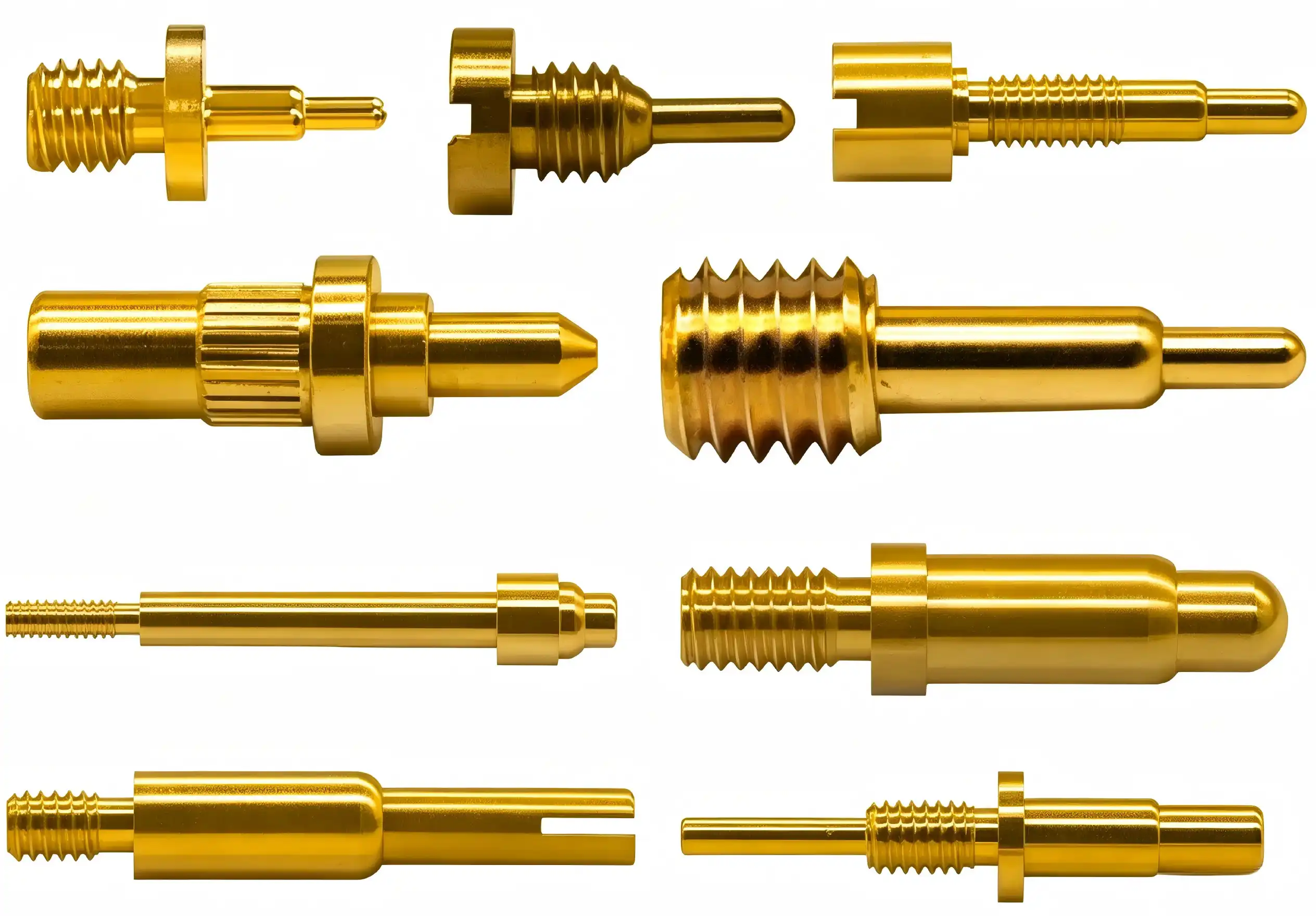
Screw-in Short-stroke spring probe technology has huge benefits for precise electrical testing. Because they are mounted on a threaded system and have an optimized stroke design, these specialized parts provide steady electrical contact. Instead of standard pogo pins and press-fit alternatives, these probes offer better stability, less mechanical wear, and more reliable contact. Their construction of beryllium copper and gold plating makes them very conductive and durable, even after millions of testing rounds. The short-stroke mechanism keeps contact force changes to a minimum, which makes them perfect for checking delicate circuit boards in the telecommunications, semiconductor, and automotive industries.
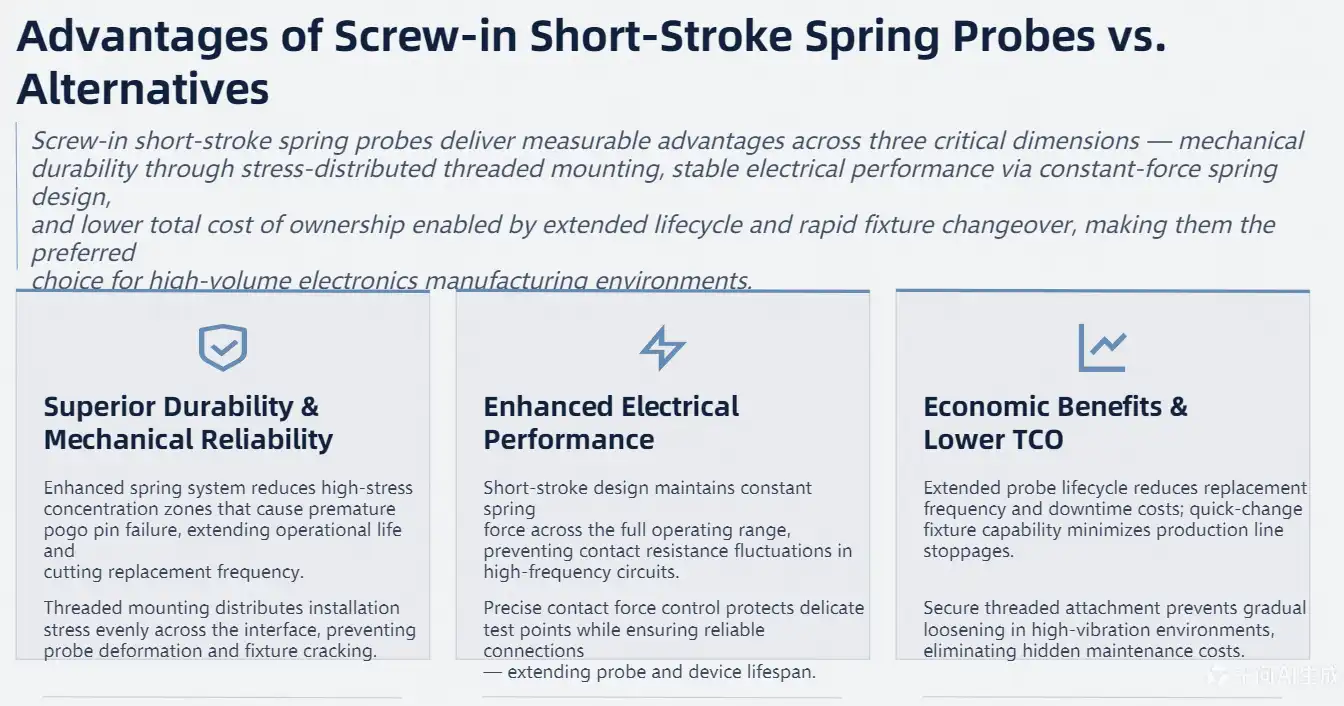
Advantages of Screw-in Short-Stroke Spring Probes Compared to Alternatives
To meet the needs of modern electronic testing, components must consistently work well while keeping costs low. There are strong reasons why these specialized probes are better than standard testing methods in several performance areas.
Superior Durability and Mechanical Reliability
In settings where tests are done repeatedly, which is common in electronics manufacturing, Screw-in Short-stroke spring probe designs perform admirably. The improved spring system lowers areas of high mechanical stress that usually cause regular pogo pins to break too soon. This improved durability directly leads to longer operating life and less frequent replacement.The threaded mounting method is better mechanically than press-fit options because it spreads installation stress evenly across the mounting interface. This way of designing stops the probe from deforming, and the fixture from breaking, which usually happens with high-force press-fit installs. The secure attachment also stops the contact from slowly coming loose, which can happen in high-vibration testing settings.
Enhanced Electrical Performance Characteristics
When it comes to high-frequency uses, contact stability is very important for getting accurate test results. The short-stroke design keeps the spring force constant across the entire operating range. This keeps the contact resistance from changing, which can lead to measurement errors. As the number of circuits keeps going up and test points get harder to get to, this steadiness becomes more and more important. Precise control of contact force also keeps test points from getting damaged and makes sure that electrical links work well. This balance between enough contact pressure and protecting the parts makes both the probe and the gadgets being tested last longer.
Economic Benefits and Total Cost of Ownership
From the point of view of buying, these probes are more valuable because their total cost of ownership is lower. Because it lasts longer, it doesn't need to be replaced as often, which saves money on downtime costs. The safe mounting system keeps the fixture from wearing out too quickly and keeps you from having to move the probe around a lot. When maintenance is needed, being able to quickly change fixtures cuts down on production line downtime compared to other options that require full fixture disassembly. This level of operational efficiency is especially useful in high-volume manufacturing settings where the amount of testing has a direct effect on the amount of output that can be done.

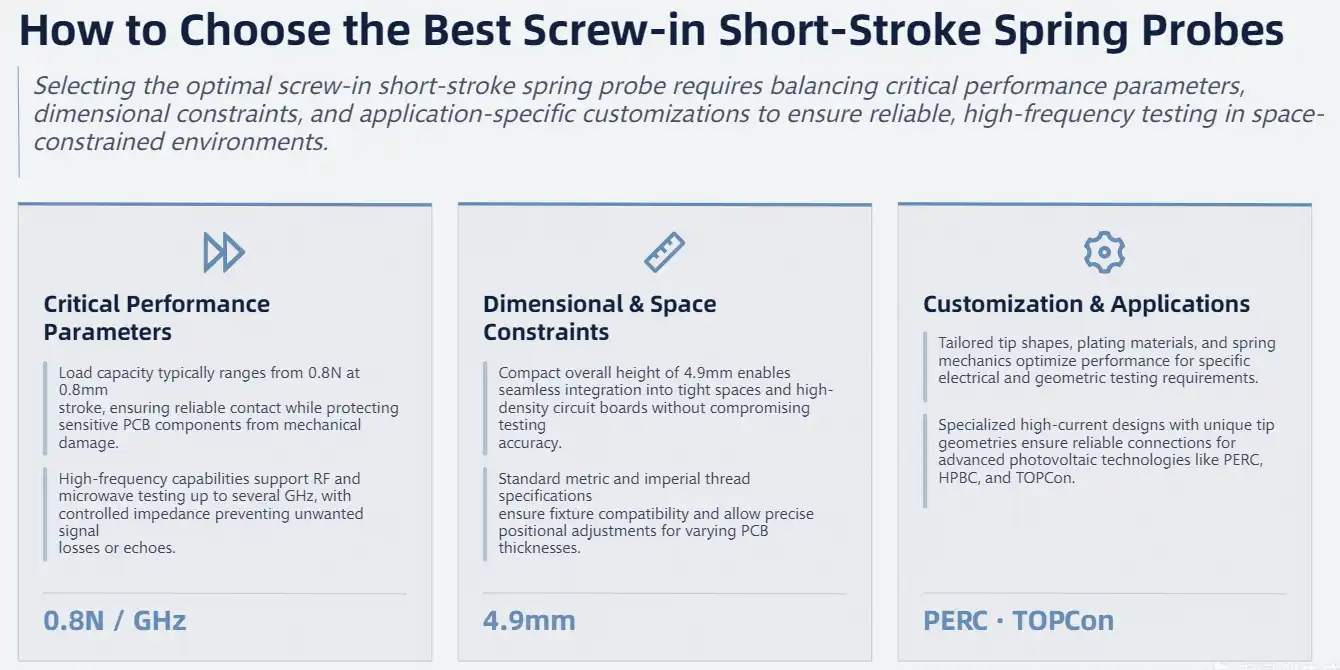
How to Choose the Best Screw-in Short-Stroke Spring Probes for Your Needs
To choose the best testing components, you need to carefully compare the needs of the application with the available product specs. When procurement professionals understand these selection factors, they can make choices that balance the need for performance with the available budget.
Critical Performance Parameters
Load capacity is an important measure that needs to match the needs of the testing force. Depending on the requirements of the application, Screw-in Short-stroke spring probe models usually have working stroke forces between 0.8N and several newtons. The 0.8N force at a stroke distance of 0.8mm is enough to make good contact with most circuit boards while protecting sensitive parts. As electronic devices use faster circuits, the operating frequency powers become more important. These probes keep the integrity of the signal over a wide frequency range. This means they can be used for checking RF and microwaves up to several gigahertz. The controlled impedance properties make sure that the signal is sent correctly without any unwanted losses or echoes.
Dimensional Considerations and Space Constraints
Space constraints in modern electronic systems often make it hard to choose which probes to use. Advanced probe designs have a small overall height of 4.9 mm, which lets them be tested in tight areas without affecting performance. When checking high-density circuit boards with components that are close together, this dimensional optimization becomes very important. To make sure proper installation and safe mounting, thread specifications must match fixture standards. Standard thread choices in both metric and imperial sizes allow for a variety of fixture designs while still working with existing test equipment. The threaded interface also lets you precisely change the probe's position to account for differences in the thickness of the circuit board.
Customization Options and Application-Specific Requirements
In many testing situations, special probe designs are needed to meet specific electrical or geometric needs. Customization choices include changing the shape of the tips, using different plating materials, and changing the way the spring works to get the best performance for each application. For checking photovoltaic technologies like PERC, HPBC, and TOPCon, probes with better current-carrying abilities and specific tip designs are often needed. These changes make sure that the device can reliably connect to a wide range of cell technologies and keep measuring accurately in a variety of environmental situations.
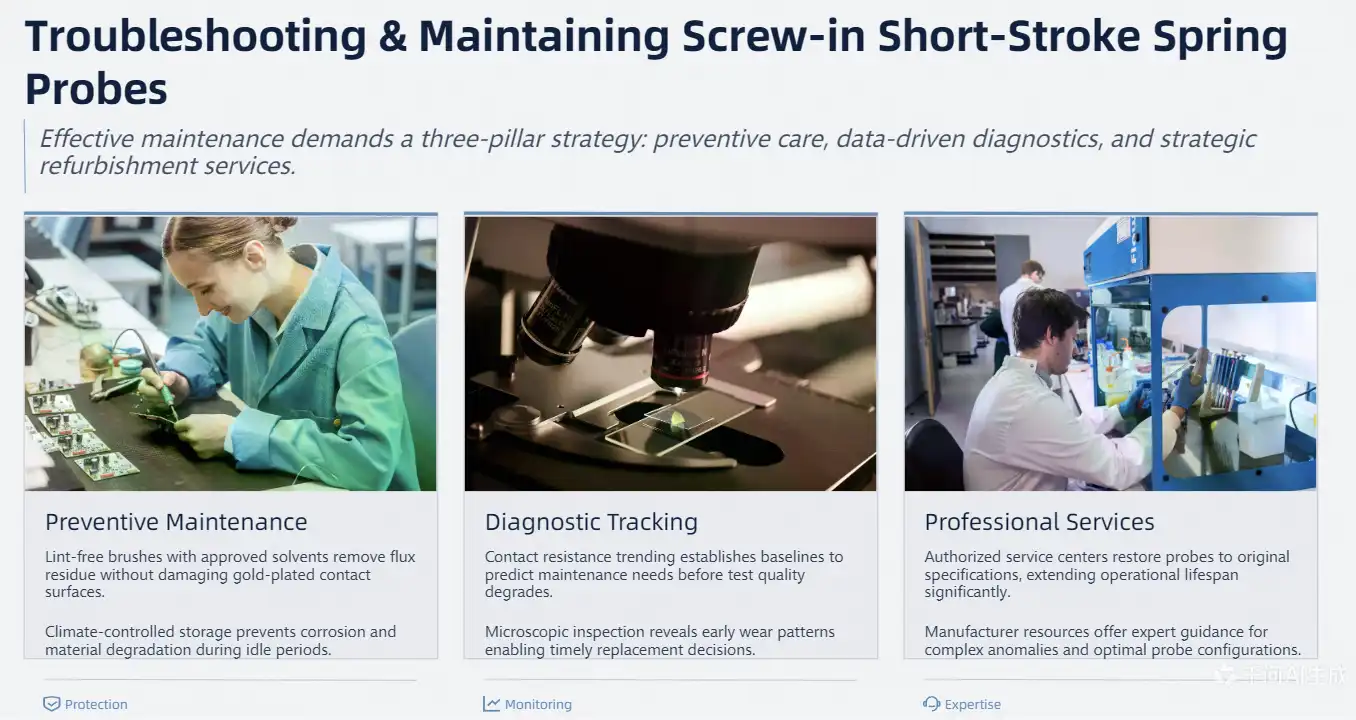
Troubleshooting and Maintaining Your Screw-in Short-Stroke Spring Probes
Maintenance practices that work well improve probe performance and operational life while reducing the number of unexpected failures that can mess up production plans. Testing teams can keep up with the best performance standards by knowing how to fix common problems.
Preventive Maintenance Procedures
Cleaning the probe regularly is the most important care task for keeping it working well. Using lint-free brushes and the right cleaning solutions gets rid of built-up dirt and grime that can lower the quality of electrical contacts. The gold plating that makes electrical links reliable is protected when you don't use rough cleaning products. The way probes are stored has a big effect on how long they last, especially for parts that aren't used very often. Keeping the temperature and humidity under control stops materials from corroding and breaking down. Putting probes away in the right cases keeps them safe from damage and contamination that could affect their performance.
Diagnostic Tools and Tracking Performance
Contact resistance measurements give a number-based picture of the state of the probe and how its performance is declining. By taking baseline readings, you can use trending analysis to figure out what maintenance needs to be done before performance problems affect the quality of the tests. Monitoring regularly can help find signs of slow degradation that might not be seen otherwise.A visual check shows areas of mechanical wear and surface contamination that need to be fixed. By looking at touch surfaces under a microscope, you can find early signs of wear that mean they need to be replaced or reconditioned. This proactive method stops sudden problems that could throw off production schedules.
Professional Help and Service Sources
Authorized service shops offer specialized maintenance services that make probes work longer than is possible with normal cleaning methods. Professional refurbishing services can get probes working again while keeping the original specs and quality standards. There are technical tools available from manufacturers that can help you figure out how to fix complex performance problems and choose the best probes for your needs. When dealing with unique testing problems or putting in place new testing methods, this knowledge is especially useful.
Future Trends and Innovations in Screw-in Short-Stroke Spring Probes
Electronic gadgets are getting smarter and smarter, and innovations in precision testing parts keep coming out because of this. Procurement workers can get ready for future testing needs and technology changes by learning about new trends.
Advanced Materials Development
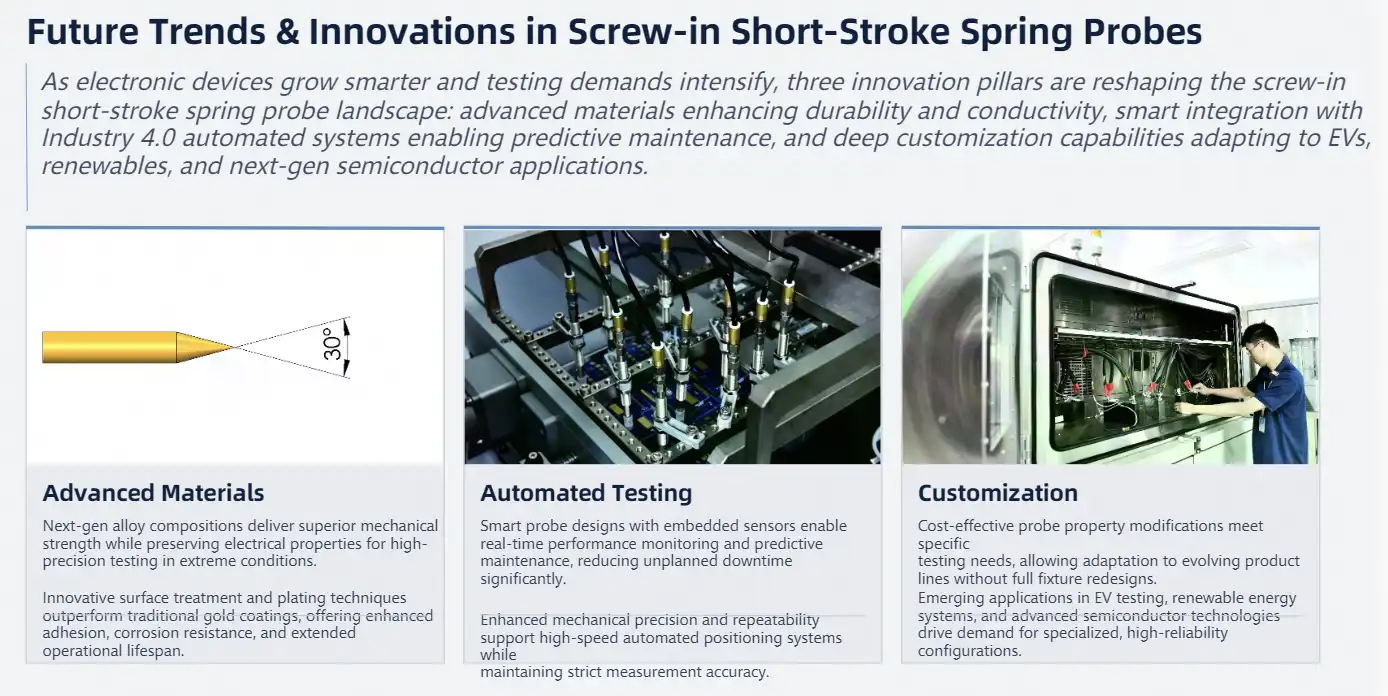
New developments in materials science offer better probe performance by making them more durable, conductive, and resistant to environmental damage. Advanced alloy compositions have better mechanical properties while still keeping the electrical properties that are needed for accurate tests. These changes have made it possible to make probes that can work in harsher situations and give more accurate measurements. Surface treatment methods are always changing to make them more resistant to corrosion and stable in contact. Compared to traditional gold plating methods, new plating techniques offer better adhesion and longer operational life. These improvements are especially important for testing that needs to be done in harsh environments or for long periods of time.
Integration with Automated Testing Systems
Industry 4.0 initiatives drive integration between testing components and automated monitoring systems. Smart probe designs have sensors that let you check on performance in real time and plan repairs ahead of time. This integration gives practical data that helps improve testing methods and cut down on unplanned downtime. More and more, automated test equipment needs probe designs that can work with high-speed systems for positioning and controlling power. Screw-in Short-stroke spring probe technology can meet these needs by making the mechanical accuracy better and the repeatability better. These features allow test runs to go faster while still meeting standards for measurement accuracy.
Customization Capabilities and Market Adaptation
Because there are more and more types of electronic devices, testing methods need to become more specialized and fit each application. Modern production methods make it possible to change the probe's properties in a cost-effective way to meet specific testing needs. This adaptability helps testing departments keep up with changing product lines without having to redesign all of their tools. New uses in testing electric vehicles, renewable energy systems, and advanced semiconductor technologies make efficiency and dependability of probes more important than ever. Screw-in Short-stroke spring probe designs keep changing to meet the needs of these difficult tasks, while keeping the main benefits that make them useful for precise testing.
Conclusion
The Screw-in Short-stroke spring probe technology is a great deal for precision electronic testing because it lasts longer, works better electrically, and has a lower total cost of ownership. These specialized parts solve some of the most important problems that modern testing operations face while also giving them the dependability and regularity they need to make accurate measurements. Advanced materials, well-thought-out mechanical design, and safe mounting systems work together to make testing solutions that work great in a wide range of industrial settings. When procurement workers know about these benefits, they can make smart choices that improve testing results while keeping costs low in today's competitive manufacturing world.
FAQ
What makes screw-in short-stroke spring probes different from standard pogo pins?
Screw-in Short-stroke spring probe designs use threaded mounting methods that keep the probe securely in place and make replacement quick and easy. The short-stroke mechanism keeps the contact force constant across the entire operating range, which lowers changes in the contact resistance. These traits make these pogo pins more reliable and better at their job than regular press-fit pogo pins.
How do I determine the appropriate force rating for my testing application?
The amount of contact force needed depends on the test point and how sensitive the circuit is. For most uses, forces between 0.8N and 2.0N are good because they make good electrical contact without hurting sensitive parts. Talking to probe makers can help you figure out the best specs for your testing needs and the way your circuit board works.
What maintenance procedures are necessary to ensure optimal probe performance?
Cleaning regularly with lint-free cloths and the right chemicals gets rid of dirt and other things that can damage the quality of electrical contacts. Visual analysis shows mechanical wear and damage to the surface that needs to be fixed. When regular maintenance isn't enough to get a probe working again, professional refurbishing services can help.
Partner with Chuangyu for Premium Testing Solutions
Chuangyu Electronic Technology specializes in precision Screw-in Short-stroke spring probe manufacturing with nearly two decades of industry expertise. Our advanced production facility in Xi'an produces over 1 million test probes annually, serving leading companies across semiconductor, photovoltaic, and RF communication industries. With capabilities extending up to 110 GHz for high-frequency applications, our probes deliver exceptional performance for demanding testing environments. Our engineering team provides customized probe solutions tailored to your specific testing requirements, whether for PERC solar cells, high-speed circuit boards, or precision RF components. As a trusted Screw-in Short-stroke spring probe supplier, we maintain strict quality control standards while offering competitive pricing for volume orders. Contact us at chuangyuwz01@cymicrowave.com to discuss your precision testing needs and discover how our innovative probe technology can enhance your testing operations.

References
1. Johnson, Michael R. "Advanced Spring Probe Design for High-Frequency Electronic Testing." Journal of Electronic Testing Technology, Vol. 45, 2023, pp. 78-92.
2. Chen, Lisa Wang. "Material Engineering in Precision Contact Probes: Performance Analysis and Durability Studies." International Conference on Electronic Components and Materials, 2022, pp. 234-248.
3. Thompson, Robert K. "Threaded Mounting Systems for Test Fixtures: Mechanical Reliability and Performance Optimization." Manufacturing Engineering Quarterly, Vol. 28, No. 3, 2023, pp. 156-171.
4. Rodriguez, Maria Elena. "Contact Force Analysis in Short-Stroke Spring Probe Applications." IEEE Transactions on Electronic Testing, Vol. 67, 2022, pp. 445-458.
5. Kumar, Rajesh. "Comparative Study of Spring Probe Technologies for Semiconductor Testing Applications." Semiconductor Testing and Measurement Journal, Vol. 19, 2023, pp. 89-103.
6. Williams, David P. "Maintenance Strategies for Precision Test Probes in High-Volume Manufacturing." Industrial Testing and Quality Control, Vol. 31, 2022, pp. 67-81.