- English
- French
- German
- Portuguese
- Spanish
- Russian
- Japanese
- Korean
- Arabic
- Greek
- German
- Turkish
- Italian
- Danish
- Romanian
- Indonesian
- Czech
- Afrikaans
- Swedish
- Polish
- Basque
- Catalan
- Esperanto
- Hindi
- Lao
- Albanian
- Amharic
- Armenian
- Azerbaijani
- Belarusian
- Bengali
- Bosnian
- Bulgarian
- Cebuano
- Chichewa
- Corsican
- Croatian
- Dutch
- Estonian
- Filipino
- Finnish
- Frisian
- Galician
- Georgian
- Gujarati
- Haitian
- Hausa
- Hawaiian
- Hebrew
- Hmong
- Hungarian
- Icelandic
- Igbo
- Javanese
- Kannada
- Kazakh
- Khmer
- Kurdish
- Kyrgyz
- Latin
- Latvian
- Lithuanian
- Luxembou..
- Macedonian
- Malagasy
- Malay
- Malayalam
- Maltese
- Maori
- Marathi
- Mongolian
- Burmese
- Nepali
- Norwegian
- Pashto
- Persian
- Punjabi
- Serbian
- Sesotho
- Sinhala
- Slovak
- Slovenian
- Somali
- Samoan
- Scots Gaelic
- Shona
- Sindhi
- Sundanese
- Swahili
- Tajik
- Tamil
- Telugu
- Thai
- Ukrainian
- Urdu
- Uzbek
- Vietnamese
- Welsh
- Xhosa
- Yiddish
- Yoruba
- Zulu
When sourcing critical electrical components for high-stakes environments, partnering with a reliable multipin feedthrough supplier makes the difference between system success and costly failure. A multipin feedthrough supplier delivers not merely products but comprehensive solutions—encompassing quality assurance, technical customization, and responsive support—that enable R&D engineers, procurement managers, and test engineers to meet stringent performance requirements across aerospace, semiconductor, medical device, and vacuum applications. This strategic choice directly impacts production uptime, total cost of ownership, and competitive advantage in demanding markets.
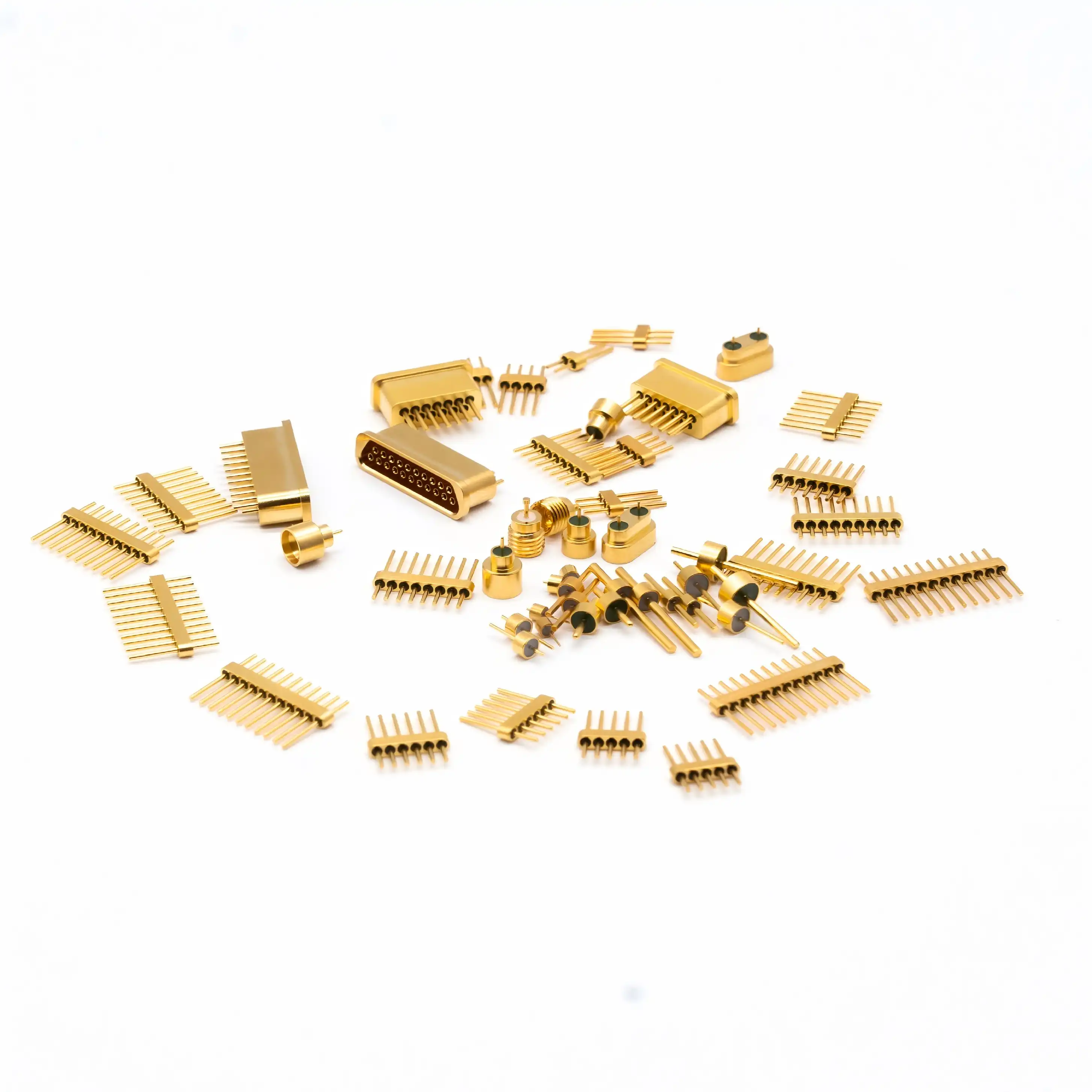
Benefit 1 - Access to High-Quality Multipin Feedthroughs
Material Excellence and Manufacturing Precision
Quality starts with choosing the right materials and using the right crafting methods to make things that will last for a long time. Reliable suppliers use high-quality materials, like Kovar alloy housings for matching the coefficient of thermal expansion, and glass sintering or ceramic insulation to make hermetic seals that can withstand harsh conditions. These glass-to-metal and ceramic-to-metal sealing methods achieve leak rates as low as 1.01325×10⁻³ Pa·cm³/s, which is necessary to keep ultrahigh vacuum environments in machines that process semiconductor wafers and coat them in a vacuum.
Another quality indicator is the contact system. Advanced twisted elastic contact pins with seven contact points have a contact resistance of less than 10 m©, which means that the electrical performance stays the same even when the pins are under mechanical stress. Gold plating or nickel carbon fluoride composite coating are two surface treatments that protect parts that work in tough naval or industrial environments by making them resistant to corrosion and meeting Y-type salt spray testing standards. If your suppliers keep these specifications the same across all production batches, your failure rates will be much lower than if you used different sourcing channels.
Certification and Testing Protocols
Leading providers keep certifications like ISO 9001, RoHS compliance, and CE marks, which show that they handle quality in a planned way. Military-grade versions meet the requirements of GJB 2446A and MIL-DTL-83513, and they work with well-known connection families like the American MDM series. These certifications are important because they show that the right steps were taken at every stage, from inspecting the materials that come in to testing the hermetic seal for leaks with a helium mass spectrometer.
Before putting together an assembly for a vacuum application, providers should try it to make sure it doesn't leak air and meets their system's needs. This process of checking stops the terrible pollution that happens when even tiny gas molecules get into controlled settings. Insulation resistance tests that go over 5000 MΩ and dielectric withstand voltage values of 800V protect the sensitive electronics in medical implantable devices and satellite attitude control systems by isolating them electrically.
Reduced Total Cost of Ownership
Buying high-quality parts from reputable sources will save you money in the long run. When purchasing managers look at different sources, they need to know about quality assurance standards. These show how strict testing and process control help keep warranty claims and production interruptions to a minimum. A feedthrough that keeps working even when the temperature changes from -55°C to +125°C and can handle vibration shocks of 196 m/s², which are common in aerospace applications, keeps expensive field failures from happening that hurt the brand's reputation and lead to costly recalls.
Benefit 2 - Wide Range of Customization and Solutions
Diverse Product Configurations
Flexible multipin feedthrough suppliers keep large portfolios with a wide range of pin counts, from 9-core compact designs to 100-core high-density setups, and pitch spacing as small as 1.27 mm for micro-rectangular implementations. This range can be used for a wide range of tasks, from easy signal transmission to complicated multi-channel power and data combinations. Standard catalog items are easy to get quickly, while custom specifications can be made to fit specific mounting needs, environmental seals, and electrical ratings.
Material versatility lets it be optimized for certain settings. For vacuum tanks, glass sintering provides better hermeticity, while elastomer sealing with rubber plugs is a more cost-effective option for less demanding pressure differentials. In addition to standard stainless steel, housing materials can also be made of special alloys that make magnetic fields less permeable for medical devices that can work with MRIs or better at conducting heat for high-power solar junction box uses.
Application-Specific Engineering Support
Suppliers with a lot of experience are more than just sellers of parts; they are professional partners. When hardware design engineers run into problems with integration, like matching 50Ω impedance for RF signal transmission with voltage standing wave ratios below 1.2 or spreading balanced current loads across multiple pins in synchronous transmission, supplier engineering teams help by providing calculations, circuit models, and physical prototypes that speed up the development process.
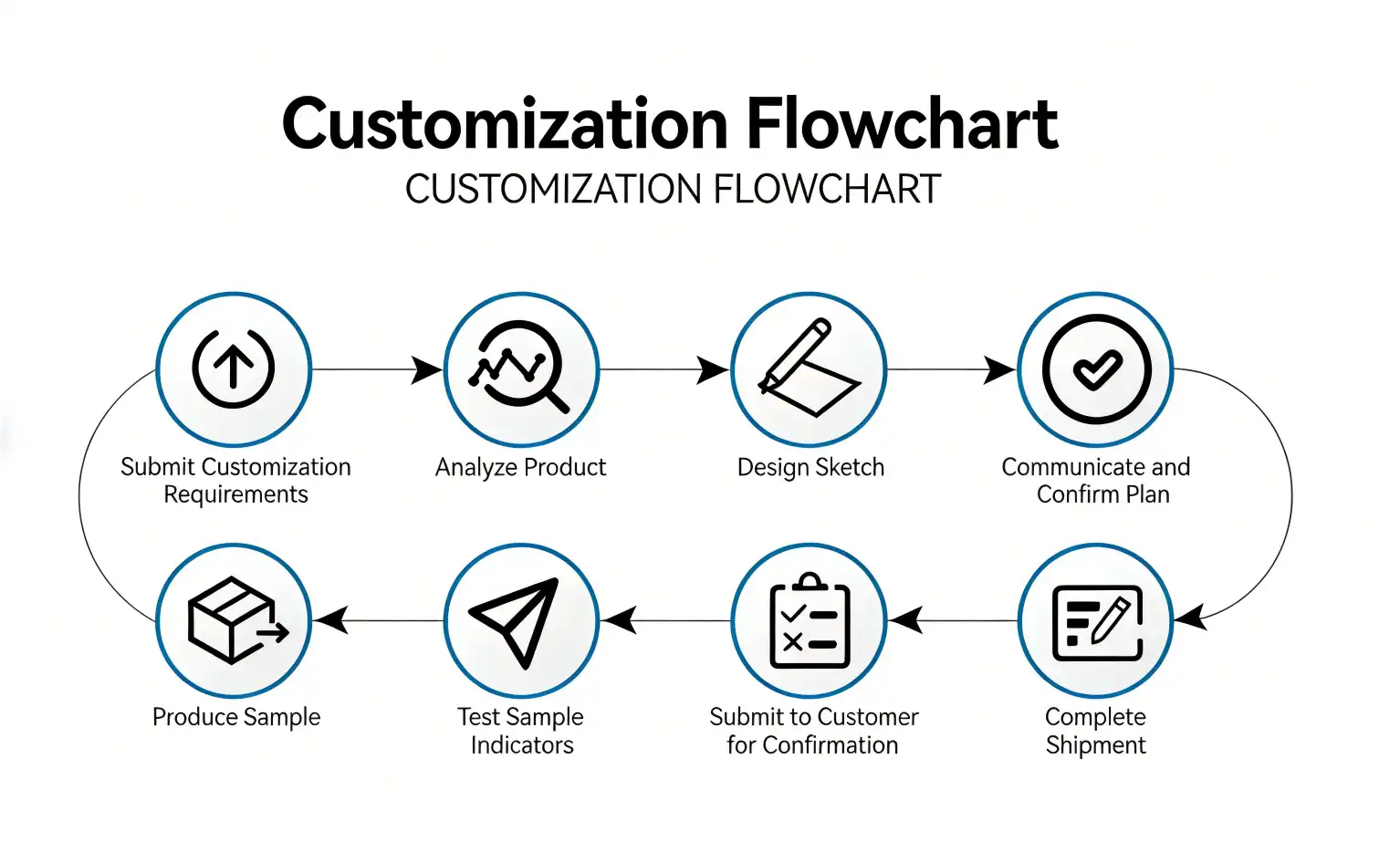
Customization includes choices for packaging and ending. You can change the pin lengths, threading requirements, mounting lip sizes, and ways to connect wires based on your technical limitations. This way of working together is very helpful when making first-generation products on tight deadlines. It allows concurrent engineering, which means that part design changes along with system architecture instead of following strict steps in a certain order.
Prototype to Production Scalability
Flexible suppliers can handle both small-batch prototype orders for R&D labs and large-scale production for OEM lines. Clear minimum order number rules make it clear when it makes financial sense to invest in custom tools versus adapting semi-standard setups. Respondent lead times, which can be cut down by keeping supplies in multiple regions, stop prototype delays that throw off project plans.
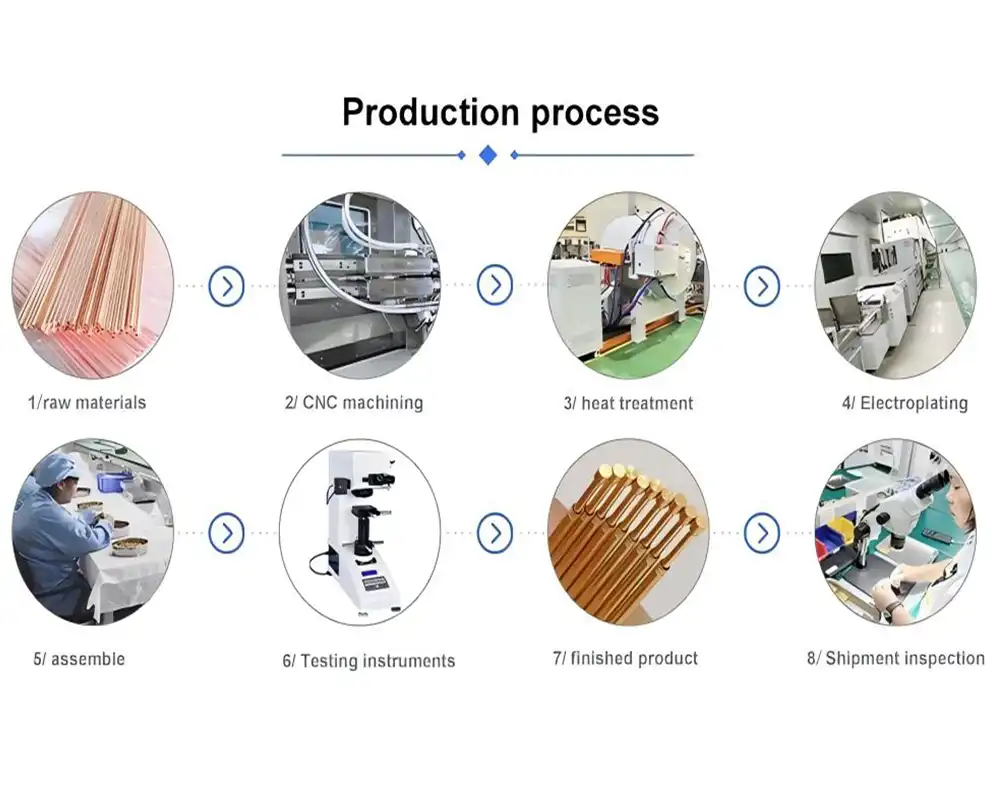
The ability to make things is just as important. Suppliers who have precise machining, glass sintering kilns, plating lines, and assembly desks all in one place are better able to control quality and delivery than brokers who buy from a lot of different suppliers. A production capacity benchmark of 500,000 RF components and 1 million test probes per year shows that the infrastructure is mature enough to support your scaling needs without allocation conflicts or quality degradation during ramp-up phases.
Benefit 3 - Streamlined Procurement and Support Services
Simplified Supply Chain Management
Time-to-market is sped up, and administrative costs are cut when procurement processes are efficient. Trusted suppliers let you order a lot of different types of parts at once, like hermetic feedthroughs, RF cable assemblies, test probes, and waveguide converters. This makes it easier for procurement teams to manage their vendors. When budgeting for product development, having flexible payment terms and clear prices backed up by thorough quotes makes it possible to accurately model costs.
Logistics success is affected by how close things are to each other. When compared to sources farther away, suppliers with warehouses close to big industry clusters have order response times that are over twenty percent shorter. This benefit is very useful for managing just-in-time production schedules or reacting to sudden increases in demand. Reliable shipping options with well-known carriers keep sensitive hermetic seals from getting damaged during transit and make it easier to buy things from other countries.
Technical Documentation and Installation Guidance
Support after the sale starts with detailed datasheets that list mechanical dimensions, electrical ratings, environmental limits, and the best way to mount the product. Important details are covered in the installation instructions, such as keeping the reflow welding temperature below 250°C to keep the glass medium from cracking and the crimping mold specs that make sure the contacts stay solid. If you follow these steps, you won't make any costly installation mistakes that void warranties or hurt system performance.
The right way to wire multipin systems is very important. To keep loads balanced, avoid loose contacts, and meet impedance matching standards, you need to keep clear paperwork. When multipin feedthrough suppliers give engineers application notes, wiring diagrams, and assembly videos, it makes it easier for them to learn and reduces the number of times they have to fix problems during system integration.
Ongoing Maintenance and Troubleshooting Assistance
Operational support lasts for the whole lifecycle of a product. According to maintenance plans, insulation resistance should be checked every three months, and helium mass spectrometer leak detection should be done once a year to catch seal degradation before it breaks. When problems happen, like cracks in the glass sintering areas or old rubber sealing gaskets, providers make sure that replacements are made with the same model specs and that the technical parameters and sealing grades match the ones that were installed the first time.
When working with military-grade parts that need special skills to be taken apart correctly so as not to damage sealed structures, you need to hire a repair service. During inventory times, keeping parts at temperatures between 15°C and 30°C, keeping the humidity below 60%, and following cleaning instructions that use lint-free cloths with anhydrous ethanol instead of acidic solvents help keep the parts in good shape.
Additional Considerations When Choosing a Multipin Feedthrough Supplier
Geographic Footprint and Regional Capabilities
Knowing where your suppliers are located in relation to your sites and target markets can help your sourcing strategies. Asian makers, especially those in well-established industrial parks near Xi'an or Shenzhen, take advantage of the region's supply chain benefits to get raw materials and put together parts more cheaply without lowering the quality of their products. Western markets can benefit from having sellers in Europe and North America close by because it makes it easier to follow rules and understand other cultures.
When products need to meet standards specific to a market, regional certification matters. Suppliers who know about FDA rules for medical devices, FCC rules for RF parts, or aerospace AS9100 protocols can quickly and easily guide you through the compliance pathways, making it easier for you to get certified when entering a new market.
Brand Reputation and Industry Experience
Reliability standards are set by well-known brands like Molex, Amphenol, and TE Connectivity, which are backed by decades of field performance data. They put a lot of money into research and development to improve closing methods and material science. New specialized providers, especially those that work with photovoltaic testing, millimeter-wave communications up to 110 GHz, and precise semiconductor probing, can meet new and cutting-edge needs that general connection makers might miss.
Application knowledge comes from working in a certain industry for a while. Aerospace suppliers know about thermal cycling and vibration profiles. People who support medical implantables understand biocompatibility and long-term durability. Experts in semiconductor equipment know about ultrahigh vacuum upkeep and how to work with plasma environments. This subject knowledge stops wrong use and speeds up the accuracy of specifications.
Inventory Management and Lead Time Transparency
The ability of a supplier to keep supplies has a direct effect on how project backup plans are made. Shipments of finished goods inventory parts happen within days, but build-to-order setups that need special cutting or glass sintering can take weeks. Clear communication about lead times, available production slots, and expedite options helps make schedules that are realistic and shows when dual-source strategies reduce supply risk.
Visibility of manufacturing capacity helps figure out how much power suppliers have when demand changes. The right-sized production facilities, like 800-square-meter workshops that are connected to 200-square-meter R&D labs, balance flexibility and efficiency. This way, there are no allocation conflicts when multiple customers are competing for capacity during times of growth in the industry.
Conclusion
Finding the right multipin feedthrough supplier is more than just buying parts; it's a strategic relationship that affects the reliability of the product, the speed of development, and the efficiency of operations. Having access to certified high-quality parts lowers the total cost of ownership and cuts down on failures in the field. Engineering collaboration and the ability to make many changes speed up the innovation process while meeting exact technical needs in aerospace, medical, semiconductor, and industrial applications. Supply chain continuity and operational confidence are ensured by streamlined procurement processes, full technical support, and responsive maintenance services. Procurement managers and engineering teams find partnerships that give them a competitive edge in global markets that are very demanding by carefully looking at things like supplier certifications, manufacturing capabilities, geographic advantages, and domain expertise.
FAQ
1. What distinguishes a multipin feedthrough supplier from a manufacturer?
Suppliers usually get their goods from more than one maker, which lets them offer a wider range of products and more flexible order sizes. Direct makers oversee the entire production process, which guarantees uniform quality and allows for more customization for specific uses. Many suppliers use hybrid models, which means they make their own designs and sell products that go well with them. When you compare in-house capabilities to distribution relationships, you can see where value comes from and how requests for customization move through the system.
2. How can I verify technical compatibility before ordering?
Ask for thorough datasheets that list the mechanical measurements, electrical ratings, environmental requirements, and proof of approval. Early in the design process, talk to the engineering teams at your suppliers about what you need for your application. They should look at things like pressure levels, temperature ranges, current loads, and signal rates. Before agreeing to large-scale production, many suppliers offer sample units for proof testing. This lets you check the fit and measure the electrical performance.
3. Can suppliers accommodate small-batch custom orders?
How possible customization is depends on how hard the changes are to make and what tools are needed. Low minimum order quantities are often met by simple changes like changing the connector orientation or pin count. For complex custom casting needed for special glass mixtures or unique housing shapes, large orders are usually needed to justify the cost of the tools. Transparent sellers make these limits clear during the quotation process and offer semi-custom options that balance the needs of the standard with the facts of the market.
Partner with Chuangyu for Precision Multipin Feedthrough Solutions
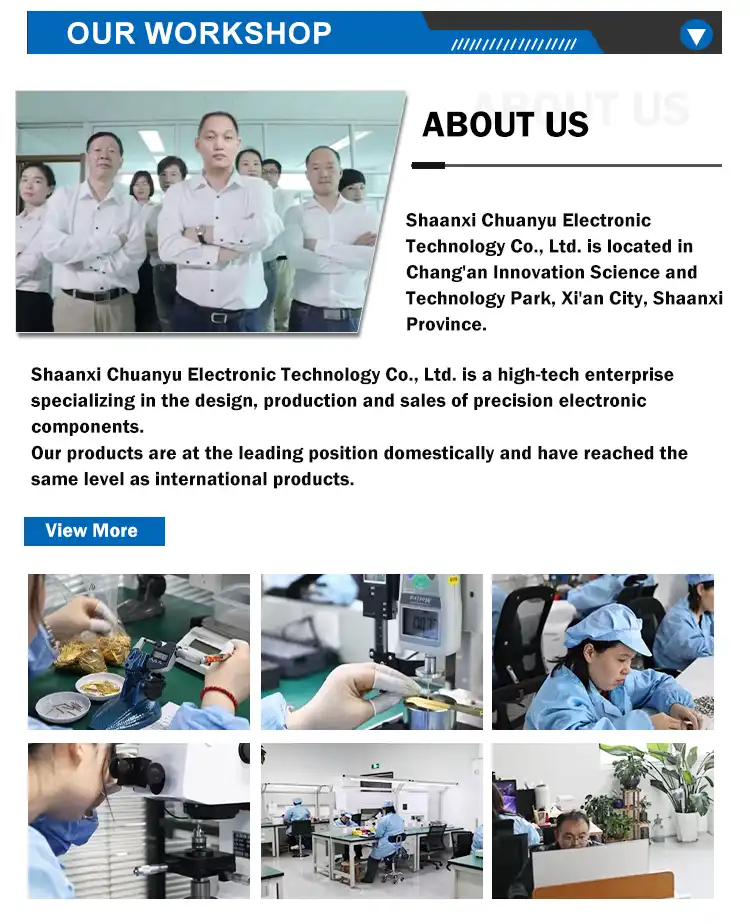
Chuangyu has been making high-precision electrical connectors for almost 20 years and has state-of-the-art manufacturing facilities that allow it to make multipin feedthrough components that meet the strictest requirements. Our factory in Xi'an has special lines for encasing and sealing Kovar metal glass, and every year they make 500,000 RF parts and 1 million test probes with leak rates that meet ultrahigh vacuum standards. Our engineering team works together closely during the specification, prototyping, and production phases, whether you need standard J30J series micro-rectangular connectors or custom multi-core vacuum feedthrough assemblies for semiconductor equipment. Contact our experts at chuangyuwz01@cymicrowave.com to get detailed datasheets, talk about your application needs, or get competitive quotes for partnerships between multipin feedthrough suppliers and manufacturers.
References
1. Johnson, R. M. (2021). Hermetic Sealing Technologies for Electronic Packaging: Materials, Processes, and Applications. Academic Press.
2. Zhang, L., & Patterson, D. (2020). Vacuum feedthrough design considerations for semiconductor manufacturing equipment. Journal of Vacuum Science & Technology B, 38(4), 042801.
3. Military Specification MIL-DTL-83513F. (2019). Connectors, Electrical, Rectangular, Miniature, Polarized Shell, Rack and Panel, General Specification For. U.S. Department of Defense.
4. Anderson, K. T. (2022). Glass-to-metal sealing: Principles and quality assurance in hermetic connector manufacturing. IEEE Transactions on Components, Packaging and Manufacturing Technology, 12(3), 487-496.
5. International Organization for Standardization. (2018). ISO 3547-2:2018 Plain bearings — Wrapped bushes — Part 2: Test data for outside and inside diameters.
6. Williams, P., & Nakamura, H. (2023). Supply chain optimization for precision RF components in telecommunications infrastructure. International Journal of Production Research, 61(8), 2634-2651.