- English
- French
- German
- Portuguese
- Spanish
- Russian
- Japanese
- Korean
- Arabic
- Greek
- German
- Turkish
- Italian
- Danish
- Romanian
- Indonesian
- Czech
- Afrikaans
- Swedish
- Polish
- Basque
- Catalan
- Esperanto
- Hindi
- Lao
- Albanian
- Amharic
- Armenian
- Azerbaijani
- Belarusian
- Bengali
- Bosnian
- Bulgarian
- Cebuano
- Chichewa
- Corsican
- Croatian
- Dutch
- Estonian
- Filipino
- Finnish
- Frisian
- Galician
- Georgian
- Gujarati
- Haitian
- Hausa
- Hawaiian
- Hebrew
- Hmong
- Hungarian
- Icelandic
- Igbo
- Javanese
- Kannada
- Kazakh
- Khmer
- Kurdish
- Kyrgyz
- Latin
- Latvian
- Lithuanian
- Luxembou..
- Macedonian
- Malagasy
- Malay
- Malayalam
- Maltese
- Maori
- Marathi
- Mongolian
- Burmese
- Nepali
- Norwegian
- Pashto
- Persian
- Punjabi
- Serbian
- Sesotho
- Sinhala
- Slovak
- Slovenian
- Somali
- Samoan
- Scots Gaelic
- Shona
- Sindhi
- Sundanese
- Swahili
- Tajik
- Tamil
- Telugu
- Thai
- Ukrainian
- Urdu
- Uzbek
- Vietnamese
- Welsh
- Xhosa
- Yiddish
- Yoruba
- Zulu
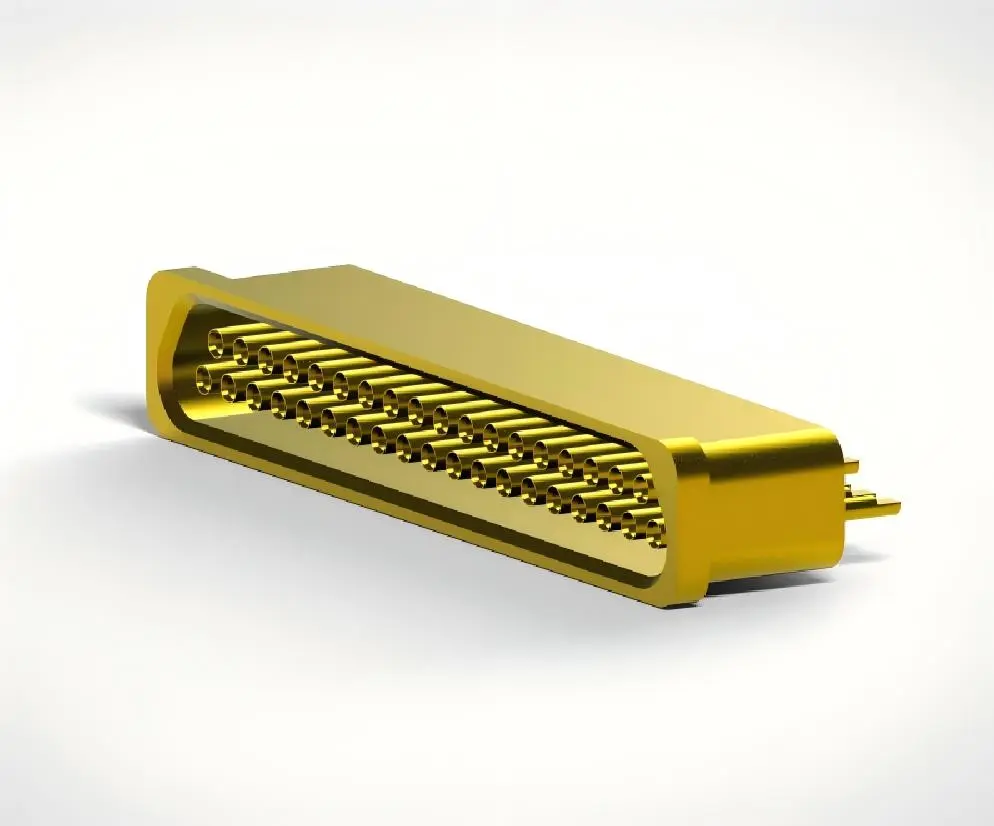
When your equipment operates in extreme environments—whether deep underwater, in high-altitude aerospace systems, or in vacuum chambers—reliable electrical connections become critical. A high-pressure multipin feedthrough delivers exactly this capability by consolidating multiple electrical pathways through a single sealed interface while withstanding enormous pressure differentials, temperature extremes, and corrosive atmospheres. Unlike standard connectors that fail under stress, these specialized components maintain hermetic sealing and signal integrity even when subjected to pressures exceeding several hundred bar, making them indispensable for mission-critical applications across aerospace, semiconductor manufacturing, and medical device industries.
Understanding High-Pressure Multipin Feedthroughs and Their Role in Extreme Conditions
To understand how these parts work when they are under a lot of stress, we need to know how they are put together and how they work.
What Makes Hermetic Feedthroughs Different
A hermetic feedthrough makes a barrier that is completely sealed and stops the flow of gas or liquid while letting electrical conductors go through the walls of the enclosure. The main thing that makes hermetic connections different from regular ones is the closing technology they use. By using glass sintering or advanced ceramic insulation methods, they can achieve leak rates as low as 1.01325×10⁻³ Pa·cm³/s. This environmental isolation keeps sensitive equipment safe from getting dirty, getting wet, and having its pressure change, all of which could hurt the system's performance otherwise.
The basic structure has a metal housing made of Kovar alloy to match the metal's thermal expansion, an insulation layer that keeps the pins from touching each other electrically, and conductor pins that carry power or messages. The hermetic seal between these parts is still the most important part, and it must not break down during the device's lifetime of use.
Core Construction Features of Multipin Designs
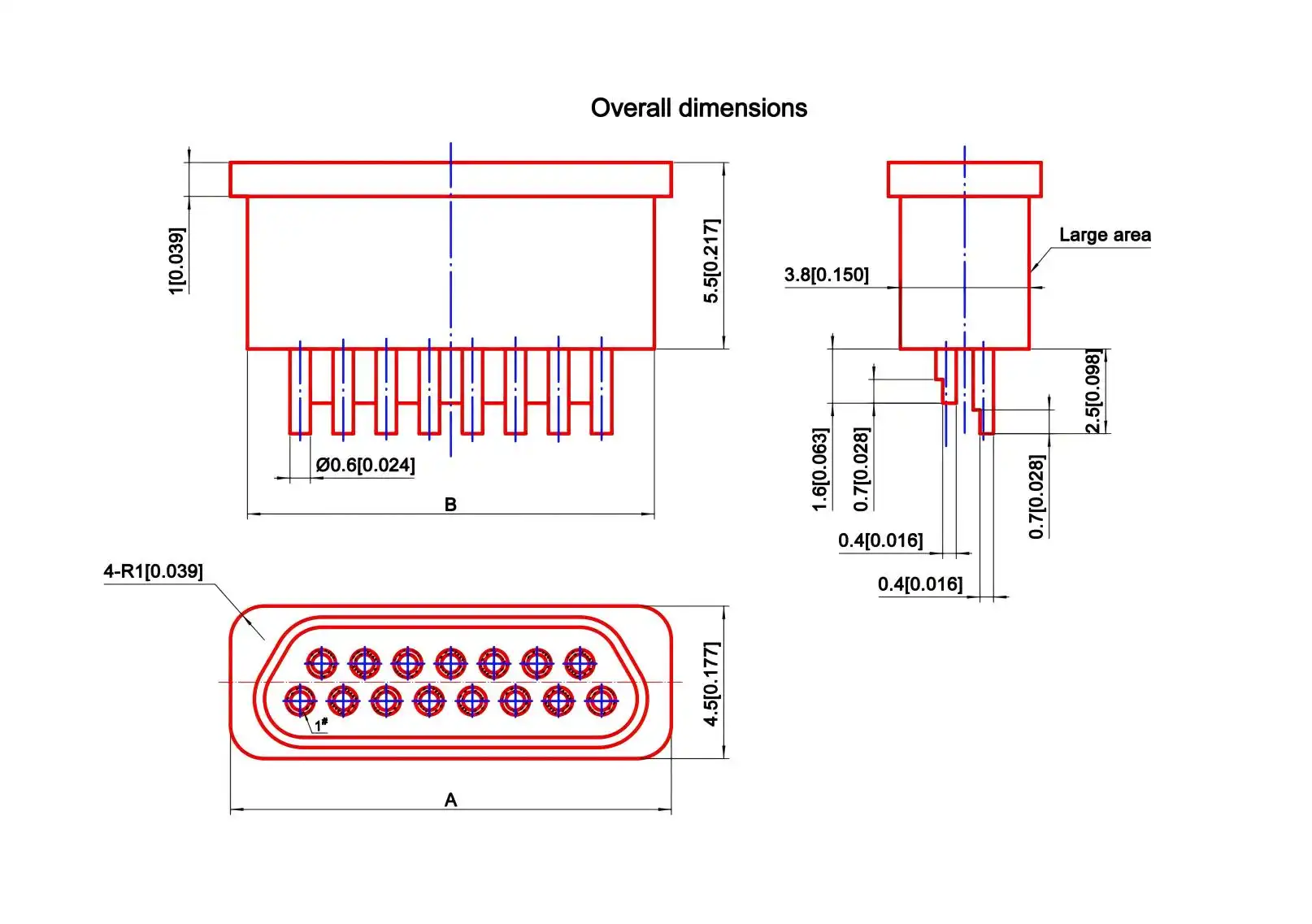
High-density integration has been made possible by multi-core feedthrough systems like the J30J line. The twisted elastic contact pins in these parts have seven contact points on each pin, which means that the contact resistance is less than 10 milliohms. There are 9 to 100 cores in a pin design, and the size can be as small as 1.27 mm. This lets a lot of signals fit into a small area.
The design of the housing blocks electromagnetic waves better than 85dB and makes it resistant to rust through special surface treatments. The materials used are mostly Kovar alloy bodies with ceramic or glass insulators. These materials balance mechanical strength with thermal stability over a wide temperature range, from -55°C to +125°C, and some types can even handle short exposures to 260°C.
Pressure Ratings and Environmental Specifications
The feature that sets these components apart from other options is their ability to withstand pressure. It is common for high-quality multipin high-pressure multipin feedthroughs to be able to handle differential pressures ranging from -10⁺ Pa to several hundred bar. Strong mechanical design and material qualities that don't break under load make this possible.
Electrical specs go along with mechanical specs. Rated currents can reach 3A per normal contact (with power variations supporting 13A), insulation resistance is over 5000 megohms, and dielectric hold voltage is up to 800V. These factors make sure that signals and power are sent reliably, even when outside conditions would stop other parts.
Key Advantages of Using High-Pressure Multipin Feedthroughs Under Extreme Conditions
Knowing what these specialized connectors can do for you helps engineers and procurement professionals figure out where they will be most useful.
Enhanced Durability and Service Life
Innovations in materials lead to longer operating lifespans. Modern ceramics don't get damaged by thermal cycles and keep their electrical properties even when the temperature changes a lot. In tough chemical environments, metal alloys that don't rust and special surface treatments, like nickel-carbon fluoride composite plating for salt fog conditions, keep things from breaking down. The mix makes the average time between failures a lot longer than with normal connector assemblies.
Using glass sintering techniques to connect the insulator and conductor at the molecular level makes these parts strong enough to withstand vibration shock loads of up to 196 m/s². This makes them useful for aerospace applications where launch speeds and flight dynamics put a lot of mechanical stress on the parts. The sealed design also stops wetness from getting in, which slows down the performance of open-link designs over time.
Signal Integrity and Electrical Performance
Professional-grade parts are different from consumer goods because they can keep their electrical properties clean in harsh situations. Several things help multipin feedthrough designs keep signal quality high: the twisted-pin contact system makes sure there are multiple redundant connection points, which lowers the chance of intermittent contact problems; controlled impedance pathways (usually 50Ω for RF applications) keep signal reflections to a minimum, achieving voltage standing wave ratios below 1.2; and electromagnetic shielding stops crosstalk between adjacent pins even when there are a lot of them.
These features are especially useful in systems for testing semiconductors and making precise measurements, where signal distortion has a direct effect on how accurate the measurements are. Being able to send multiple high-frequency signals at the same time through a single sealed link makes system design easier while keeping measurement accuracy high.
Space Efficiency and System Simplification
Putting together a lot of electrical connections into a single feedthrough assembly saves a lot of panel space and makes routing cables easier. Instead of installing dozens of separate sealed connectors, each of which could be a leak path, engineers can connect everything with a single hermetically sealed multipin unit. This combination cuts down on the time and money needed for installation and makes the system more reliable by reducing the number of places where something could go wrong.
The small integration is especially helpful for places that are hard to get to or don't have a lot of room, like underwater equipment housings, vacuum chamber ports, or implantable medical devices, where every cubic millimeter counts. Design engineers get more options for how to lay out the system, and procurement teams get fewer parts to keep track of and easier access to them.
Comparing High-Pressure Multipin Feedthroughs with Alternative Solutions
Before you can choose a connector, you need to know how well each technology works in tough situations.
Single Pin Versus Multipin Configurations
Single-pin high-pressure multipin feedthroughs are easy to use and can handle the highest pressures per connection point, but they can't be used when systems need dozens or hundreds of electrical paths. Putting in a lot of separate units makes sealing harder and makes it more likely that at least one seal will fail during the system's lifetime. Each new penetration also makes the structure of the pressure boundary less stable.
These connections are grouped together in multipin designs, which reduce the total sealed area and make a single leak path that can be tested. Individual pins may have slightly lower current ratings than similar single-pin designs, but the total stability of the system is higher because it is simpler. When there are more than ten connections, multipin solutions are usually cheaper, taking into account both the cost of the parts and the cost of the installation work.
Material Considerations: Metal, Ceramic, and Glass
Choosing the right material has a big effect on how well it works and what applications it can be used in. Metal-sealed designs work best in places with a lot of pressure and are great at transferring heat, but they may leak more often than ceramic or glass options. Precision thermal expansion matching and sintering methods make glass-to-metal seals that work better than other hermetic seals, with leak rates that meet strict vacuum standards. However, they need to be handled carefully during installation to avoid thermal shock cracking.
Ceramic insulators are great for high-voltage applications or extreme thermal cycling because they have great dielectric properties and can handle changes in temperature. The trade-offs are price—ceramic construction usually costs more than other materials—and fragility, which means that protective housing designs are needed. When selecting parts, engineers have to weigh these things against what the application needs.
Standard Versus Custom Engineered Solutions
Off-the-shelf multipin high-pressure multipin feedthroughs work well in a lot of situations and are easier to find and cheaper. Standard models, like the J30J family, have been used for a long time, have passed set qualification tests, and are widely accepted in the business. Throughout the lifetime of a product, lead times stay short, and new parts are always easy to find.
When a job needs special pin arrangements, chemically compatible materials, or merging with equipment designs that aren't made by anyone else, custom-engineered solutions are needed. OEM partnerships make it possible to create custom geometries, change electrical specifications, and find the best ways to seal things in tough environments. The money spent on development pays off in situations where normal goods can't meet all the needs, especially when the amount of work done justifies the cost of the tools.
Selecting and Procuring the Right High-Pressure Multipin Feedthrough for Extreme Environments
To make smart buying choices, you need to carefully look over technical details and the supplier's skills.
Critical Selection Criteria
The pressure number is the most important standard. Parts must be able to handle the highest working pressures with enough safety margins. Helium mass spectrometry testing is used to confirm leak rates in vacuum systems, while burst pressure numbers are written down for high-pressure systems. The second thing to think about is pin design. The number of pins, the distance between them, and the current capacity must all be able to handle all the necessary signals and power lines without overloading any one contact.
Electrical specs should be carefully looked over for more than just basic current rates. Insulation resistance (minimum 100 megohms in bad circumstances) determines how well something works in wet or dirty places, while dielectric hold voltage sets safety limits for high-voltage systems. In RF uses, there are extra factors like characteristic impedance, insertion loss, and frequency response that need to match the signal needs.
Environmental qualifications make sure that the part is suitable for the intended use. Military standards like MIL-DTL-83513 and GJB 2446A set strict testing rules that include changing temperatures, vibrations, shocks, and exposure to salt fog. Biocompatibility approvals are needed for medical uses where parts come into contact with bodily fluids or tissues. Making sure the right certifications are obtained during buying avoids having to do expensive redesigns when compliance problems arise during product validation.
Evaluating Manufacturers and Supply Chain Reliability
Choosing the right supplier has a big effect on the success of a project. Manufacturers that have been around for a while and have a good track record can give you confidence through documented quality systems and thorough testing protocols. Production facilities should show that they can perform important processes. For example, glass sintering needs special furnaces and control over the thermal profile. Precision machining needs to make sure that pins are aligned to very close tolerances. And plating needs tested methods to make sure that the coating is always the same thickness and sticks well.
Superior sellers are different from commodity vendors because they can offer technical help. Having access to application engineers who know the problems your industry faces can help you choose the best parts and avoid common mistakes. Custom design services let you make solutions that don't work with standard products, and rapid prototyping speeds up the development process.
Planning for procurement is affected by lead time management and inventory strategies. Standard parts usually get sent out within a few weeks, but custom designs can take 8 to 12 weeks for the first prototypes and more time for making the production tools. Supply chain disruptions that could push back project schedules can be avoided by making framework agreements with qualified suppliers and keeping strategic inventories of key parts.
Bulk Purchasing and Long-Term Partnerships
By committing to a certain amount of work, you can often get better prices and earlier production slots. When system designs use the same feedthrough models for multiple product lines, buying from a single seller makes it easier to control quality and gives you a better negotiating position. Long-term supply agreements keep prices stable and make sure that parts will be available even when the market is down.
OEM agreements are more than just business deals. During the development stages of a product, collaborative engineering makes sure that the feedthrough standards are exactly the same as the system requirements. Manufacturers like Chuangyu offer full design support, helping customers get the best electrical performance while keeping the hermetic integrity. This way of integrating lowers development risk and speeds up time-to-market.
Installation Best Practices and Troubleshooting Tips for High-Pressure Multipin Feedthroughs
Using the right installation methods will extend the life of parts and make the system more reliable while avoiding common failure modes.
Preparation and Mounting Procedures
The first step in getting a site ready is to clean the fixing surfaces very well to get rid of any dirt or dust that could affect the seals. Panel cutouts must be exactly the right size, with only the tiniest of errors allowed. Openings that are too big or too small can damage sealing elements during installation, and holes that are too small or too big can damage components. To keep the seal from getting damaged, burrs and sharp edges need to be taken off.
The torque specs for mounting tools should be followed to the letter. When you under-tighten something, leaks can get past gaskets or O-rings. But when you over-tighten something, ceramic insulators can crack or metal housings can bend, causing stress concentrations that cause the part to fail early. Using torque tools that have been calibrated guarantees the same results in all installations.
Sealing Techniques and Verification
When welding, glass-sintered feedthroughs need to be carefully managed at high temperatures. For the glass-to-metal seal not to be broken by heat shock, the reflow soldering temperature must stay below 250°C. Using controlled-temperature soldering profiles and the right solder alloys keeps the integrity of the seal and makes electrical connections that work well.
Leak testing checks the quality of the installation before the system is turned on. Helium mass spectrometry is the most sensitive way to find leaks, as it can find rates below the limits set by the manufacturer. Testing methods should be in line with industry standards, and there should be enough time for the system to stabilize after being pressed down before measurements are taken. If the verification goes well, it means that the assembly will stay isolated from its surroundings for the whole time it is working.
Troubleshooting Common Issues
Electrical connections that come and go are often caused by pins that aren't engaged properly or contact surfaces that are dirty. Many problems can be fixed by making sure that the plug and socket connectors have the right amount of mating force. To get rid of rust and residues, clean the contacts with lint-free cloths wet with anhydrous ethanol. Contact resistance tests find worn-out pins that need to be replaced before they break the system.
When a seal fails, the leak rate usually goes up enough to be noticed during regular tests. If you see cracks in the glass insulation or the rubber seal is getting old, you have to replace the whole thing with a new one that is the same. Trying to fix hermetic seals rarely works and can lead to catastrophic failures. Recording working conditions before replacement helps find the root causes, such as thermal cycling that goes beyond what was intended, vibrations that go beyond what was designed, or chemical exposure from places that are not compatible.
Electrical problems, like insulation resistance loss or arcing, are a sign of contamination or moisture getting in. Stopping the system right away stops any more damage, and a full inspection finds the breach. After the fix is done, it must be confirmed that all electrical factors have been fully restored before the equipment can be put back into service.
Conclusion
High-pressure multipin feedthroughs are very good at working in harsh conditions thanks to their use of special materials, precise engineering, and hermetic sealing technologies. When the pressure goes from a deep vacuum to hundreds of bar, the temperature goes from cryogenic to over 125°C, and harsh chemical atmospheres that kill regular links don't affect these parts. They keep their electrical integrity and environmental separation. Their multipin topology makes system design easier and makes it more reliable by lowering the number of penetrations. Careful selection based on application needs, strict installation following manufacturer instructions, and regular maintenance make sure that these important parts work reliably for decades in the toughest environments.
FAQ
1. Can multipin feedthroughs operate reliably in underwater applications?
When correctly defined for working depths and exposure times, hermetic multipin feedthroughs work very well in subsea settings. Saltwater attacks can be stopped by coatings that don't corrode, and pressure ratings must be higher than maximum depth pressures with the right safety factors. Leak testing before launch makes sure the seal is solid, and regular inspections during maintenance check for problems before they happen.
2. What industry certifications matter most for critical applications?
The ISO 9001 quality management approval sets the basic rules for manufacturing, and the MIL-DTL-83513 and GJB 2446A military standards make sure that strict environmental testing is done. For medical uses, you need ISO 13485 and the right biocompatibility certifications. Aerospace systems usually need AS9100 certification along with component-specific certifications that match the needs of flying gear. Instead of taking certifications at face value, you should always ask for test reports that show compliance.
3. How long do custom multipin feedthrough orders typically take?
Items from the catalog usually ship within two to four weeks. Custom designs, on the other hand, need eight to twelve weeks for engineering, prototyping, and testing, and then production units are sent out four to six weeks after approval. Using complex geometries or specialized materials can make projects take longer. Getting suppliers involved early in the design process speeds up delivery. Manufacturers can often suggest changes to the design that keep performance the same while using existing tools, which cuts wait times by a huge amount.
Partner with Chuangyu for High-Reliability Multipin Feedthrough Solutions
Shaanxi Chuangyu Electronic Technology Co., Ltd. can help you with your hardest jobs because they have been making precision connectors for almost twenty years. In aircraft, semiconductor testing, medical devices, and new energy systems where failure is not an option, our hermetic multipin feedthrough units are used in tough situations. Our Xi'an factory has strict quality control measures in place. Each year, dedicated production lines consistently make 500,000 RF components and 1 million test probes that top photovoltaic companies and high-end communication providers rely on.
Our engineering team works closely with your designers to make sure that the electrical performance is at its best while still maintaining the integrity of the seals under the conditions you specify. Chuangyu has the technical help and production ability to meet your deadline, whether you need regular catalog items or solutions that are engineered to fit your particular needs. We are an experienced maker of high-pressure multipin feedthroughs, so we know how hard it is for you to find the right parts. That's why we set up our processes to make finding parts easier while still ensuring the highest quality.
Email our team at chuangyuwz01@cymicrowave.com to talk about the needs of your application.
References
1. Smith, J.R., & Anderson, K.L. (2021). "Hermetic Sealing Technologies for Extreme Environment Electronics," Journal of Electronic Packaging, Vol. 143, Issue 2, pp. 021-034.
2. Wang, Y., Chen, X., & Liu, M. (2020). "High-Density Multipin Connector Design for Aerospace Applications," IEEE Transactions on Components, Packaging and Manufacturing Technology, Vol. 10, No. 6, pp. 1045-1053.
3. Thompson, D.A. (2022). "Material Selection Criteria for Pressure Vessel Electrical Penetrations," Pressure Vessel Technology Standards Handbook, 5th Edition, ASME Press, pp. 387-412.
4. Nakamura, T., & Kobayashi, H. (2019). "Glass-to-Metal Sealing Processes in Hermetic Feedthrough Manufacturing," Journal of Materials Processing Technology, Vol. 271, pp. 523-538.
5. Rodriguez, M.E., & Patterson, C.W. (2023). "Reliability Assessment of Hermetic Connectors in Subsea Instrumentation Systems," Ocean Engineering, Vol. 268, Article 113442.
6. Federal Standard MIL-DTL-83513F (2018). "Connectors, Electrical, Rectangular, Miniature, Polarized Shell, Rack and Panel, General Specification for," U.S. Department of Defense.