- English
- French
- German
- Portuguese
- Spanish
- Russian
- Japanese
- Korean
- Arabic
- Greek
- German
- Turkish
- Italian
- Danish
- Romanian
- Indonesian
- Czech
- Afrikaans
- Swedish
- Polish
- Basque
- Catalan
- Esperanto
- Hindi
- Lao
- Albanian
- Amharic
- Armenian
- Azerbaijani
- Belarusian
- Bengali
- Bosnian
- Bulgarian
- Cebuano
- Chichewa
- Corsican
- Croatian
- Dutch
- Estonian
- Filipino
- Finnish
- Frisian
- Galician
- Georgian
- Gujarati
- Haitian
- Hausa
- Hawaiian
- Hebrew
- Hmong
- Hungarian
- Icelandic
- Igbo
- Javanese
- Kannada
- Kazakh
- Khmer
- Kurdish
- Kyrgyz
- Latin
- Latvian
- Lithuanian
- Luxembou..
- Macedonian
- Malagasy
- Malay
- Malayalam
- Maltese
- Maori
- Marathi
- Mongolian
- Burmese
- Nepali
- Norwegian
- Pashto
- Persian
- Punjabi
- Serbian
- Sesotho
- Sinhala
- Slovak
- Slovenian
- Somali
- Samoan
- Scots Gaelic
- Shona
- Sindhi
- Sundanese
- Swahili
- Tajik
- Tamil
- Telugu
- Thai
- Ukrainian
- Urdu
- Uzbek
- Vietnamese
- Welsh
- Xhosa
- Yiddish
- Yoruba
- Zulu
Engineers always choose BMA panel connector technology because it works so well in tough situations and is reliable for panel-mounted RF connectivity options. These special radio frequency coaxial connectors have blind-mate contacts that let you connect them quickly without threaded coupling. This makes them perfect for radar systems, test equipment, and microwave circuits that need to mount panels quickly. Our in-depth study of the top 10 BMA panel connectors for 2026 shows big improvements in how well they handle frequencies, how long they last, and how much they cost. These improvements will affect RF engineering decisions all year long.
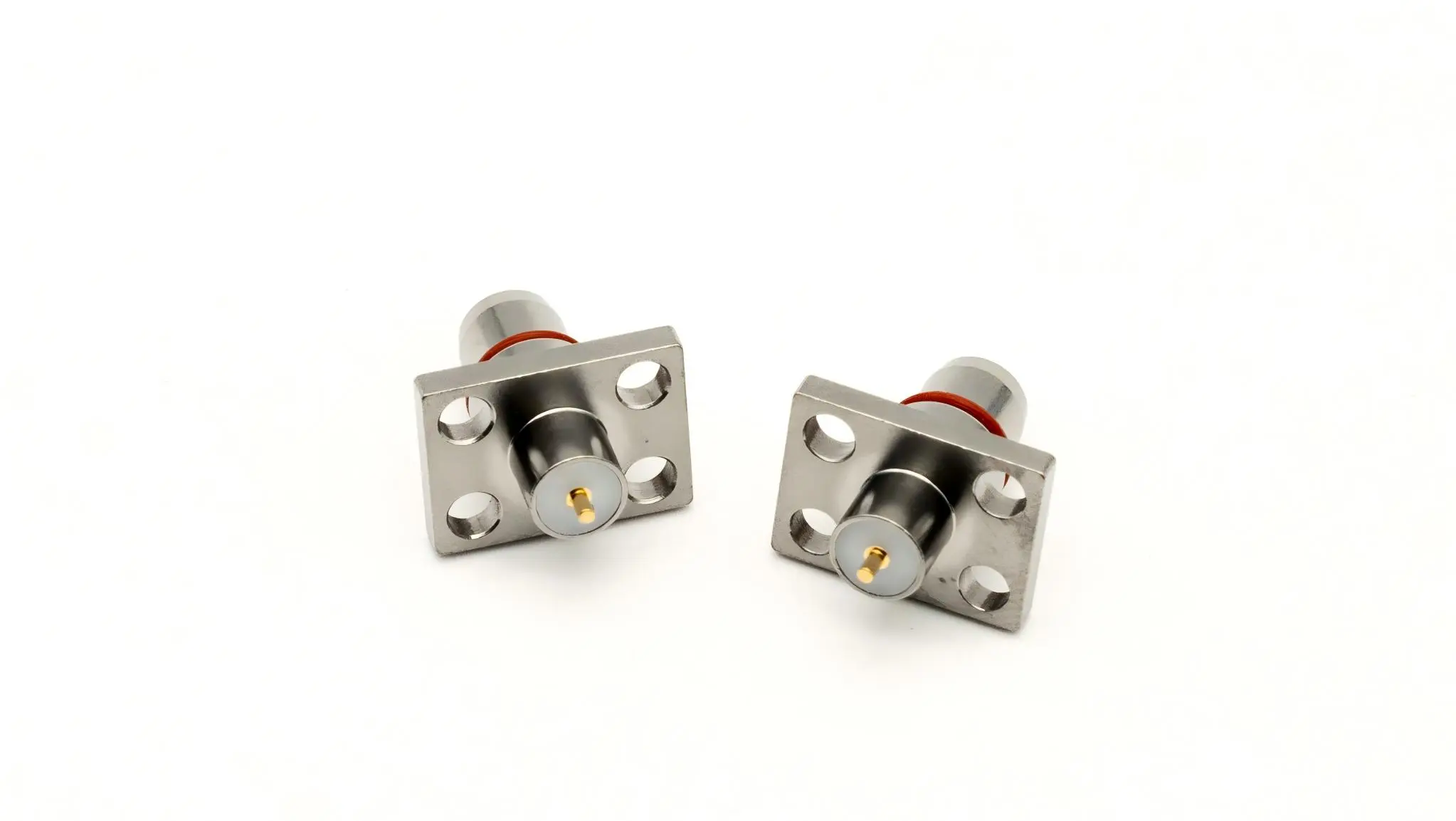

Understanding BMA Panel Connectors: Key Features and Specifications
The BMA connectors are a big step forward in RF technology. They were made for situations where solid panel-mounted connectivity is needed for high-frequency performance. These precision coaxial connectors work well up to 18 GHz and beyond. For next-generation uses, some more advanced models can handle frequencies up to 40 GHz.
Core Technical Architecture
BMA connections are based on a special blind-mating mechanism, which means they don't need to be perfectly aligned when they're connected. With this new method, installation mistakes are less likely to happen, and the time it takes to put things together is cut down. The connection has gold-plated brass housings that conduct electricity better, beryllium copper contacts that send signals reliably, and PTFE insulators that keep their good dielectric properties over a wide frequency range.
The snap-in locking system lets you connect things with just a push after aligning them, so you don't need to use threaded engagement. The inner conductor has an elastic claw spring that makes stable contact with the BMA male pins. This makes it much more resistant to vibration than regular threaded connections. This design keeps impedance matching at 50 ohms and allows for small setups with as little as 4.3 mm of space between each component.
Electrical Performance Characteristics
In modern BMA panel connector designs, insertion loss is less than 0.1 dB at frequencies up to 18 GHz, and VSWR ratios usually stay at 1.15:1 or better. The contact resistance stays below 3 milliohms, which means that the signal doesn't change much along the transmission line. These connectors can work with voltages up to 500V RMS and can handle power levels that are good for most RF uses without getting damaged by heat.
The working temperature range for this product is from -55°C to +125°C, and it can handle up to 95% non-condensing humidity. The connectors are made to meet strict military standards for shock, vibration, and environmental exposure. This means they can be used in defense and aerospace applications that need to be very reliable.

Top 10 BMA Panel Connectors for RF Engineers in 2026
To choose the best BMA connectors, you need to carefully look at how well they handle frequencies, how well they are built, and what standards are used for production. Through our research, we've found the best products from well-known brands that regularly do a great job in a wide range of situations.
Premium Performance Leaders
Leaders in the industry continue to set standards for how well BMA panel connector performance works by using cutting-edge tech and strict quality control. Smiths Interconnect stays in first place with connections that have better mechanical durability and better frequency response up to 26.5 GHz. Their newest designs use advanced materials that keep the designs small, which is important for current equipment. These materials also reduce signal loss.
TE Connectivity has strong solutions that work great in applications that use telecommunications infrastructure. Their connectors are better at sealing out the environment and working with a wider range of temperatures, which makes them perfect for use in harsh industrial settings and outside installs. Focusing on manufacturing precision is important to the company because it makes sure that high-volume deployments work reliably.
In its 2026 lineup, Amphenol has connectors that are specially designed for millimeter-wave uses and can handle frequencies above 40 GHz with great signal integrity. Their precise manufacturing methods allow for tight control of tolerances, which ensures that impedance matching stays the same from one production run to the next. When repeatability is important, like in test and measurement, these connections really shine.
Cost-Effective Quality Options
Radiall offers great value because they mix performance with low prices. Their designs meet important performance standards and offer faster shipping times and a range of minimum order quantities. These connectors work well in situations where normal specs are enough to meet the needs of the project and don't need any extra features.
HUBER+SUHNER focuses on dependability and durability, and their connectors have cycle life rates that go beyond 500 mating cycles. Because they are built to last, they can handle being connected and disconnected many times without losing performance. This makes them perfect for test settings and modular equipment configurations.
The top choices are rounded out by Pasternack and Molex, whose connectors work well for jobs on a budget. These companies make it easy to check specifications and buy things by providing a lot of technical help and datasheets that are easy to find.

Comparing BMA Panel Connectors: Making the Right Choice for High-Frequency Applications
Knowing the unique benefits of BMA technology compared to other types of connectors helps you make smart choices that improve system performance. When you need to connect a lot of things or add a lot of them, BMA connectors are the best choice.
Performance Advantages Over Alternative Designs
Because their contact methods are spring-loaded, BMA connectors can withstand vibrations better than SMA, TNC, and SMB alternatives. The ability to blind-mate cuts down on installation time and gets rid of alignment mistakes that often happen with threaded connections. This design advantage is especially useful in situations where equipment needs to be reconfigured or serviced often.
Because BMA panel connector designs have a small size, they can be used in more densely than similar threaded options. Designers of equipment can save a lot of room while still getting great electrical performance across the frequency spectrum. The push-on connection method also keeps both halves of the connector from wearing down, which increases their useful life in tough situations.
Brand Reputation and Service Considerations
Leading manufacturers set themselves apart by offering full technical help, the ability to customize products, and dependable delivery. Both Smiths Interconnect and TE Connectivity have a lot of engineering tools that can be used for custom applications and making prototypes quickly. Their global distribution networks make sure that their products are always available and that customers in major markets can get local technical help.
The standard of manufacturing varies a lot between suppliers, so it's important to carefully evaluate each one. Well-known companies spend a lot of money on testing and process control tools that make sure the products work the same way every time they are made. This spending will directly lead to higher system reliability and lower failure rates in the field.

Procuring BMA Panel Connectors: Where, How, and What to Consider
Good buying strategies make sure that performance needs are met while also keeping costs low and supply chain management reliable. With more competition, both quality and price have gone up in the BMA connection market, which has changed a lot.
Market Trends and Pricing Dynamics
After problems in the supply chain in 2023 and 2024, the price of BMA connectors has leveled off. Based on the current study of the market, prices will stay the same until 2026, but costs may go down for large orders. Lead times have gotten a lot better, and now most standard configurations can be ordered in production numbers within 4 to 6 weeks.
The growing demand for 5G infrastructure and millimeter-wave applications drives continued innovation in BMA panel connector technology. Companies that make things are putting money into new materials and ways of making things that make them work better and cost less. This trend is good for end users because it means more product choices and better value offers.
Custom Solutions and Technical Support
For many uses, connectors need to be changed or set up in a way that standard goods can't handle. Leading makers offer a wide range of customization options, such as different mounting arrangements, special materials, and better environmental requirements. These skills are especially useful in the defense, aerospace, and specialty industrial fields.
The quality of technical help varies a lot between suppliers, so this is a key factor in the evaluation process. The best makers offer full engineering support during the entire lifecycle of a product, including help with choosing the right product, installation, and fixing problems. This support is very helpful for complicated programs and helps the system run at its best.

Conclusion
In 2026, the BMA panel connector market has a lot to offer RF experts who are looking for high-performance, reliable connectivity solutions. Leading makers keep making technology better by using better materials, making manufacturing processes better, and adding more frequency options. The research found that the top 10 connectors are tried-and-true options that balance performance, reliability, and cost-effectiveness in a wide range of situations. When choosing connectors, it's important to think carefully about technical needs, the supplier's abilities, and long-term support issues that make sure the system works well throughout the product's lifecycle.
FAQ
What are the main advantages of BMA panel connectors for RF systems?
BMA panel connector technology has many benefits, such as the ability to blind-mate, which means that they don't need to be aligned, better vibration resistance thanks to spring-loaded contacts, and small designs that allow for high-density installations. The push-on joining method cuts down on installation time and wear compared to threaded options.
How do I ensure compatibility with existing cabling infrastructure?
BMA connectors match standard 50-ohm impedance and come with a number of different interface choices so they can be used with current cable assemblies. Check the frequency needs, power handling requirements, and weather conditions to make sure everything works well together. Most makers offer detailed charts and technical specifications to help you make your choice.
Where can I find reliable datasheets and technical specifications?
Trustworthy manufacturers offer detailed technical information on their websites and through approved distributors. Leading names like Smiths Interconnect, TE Connectivity, and others keep large technical libraries with lots of specifications, performance curves, and application notes. Always use official methods to make sure that documents are up-to-date and real.

Partner with Chuangyu for Premium BMA Panel Connector Solutions
Chuangyu stands at the forefront of precision RF connectivity, offering industry-leading BMA panel connector solutions that meet the most demanding engineering requirements. Our specialized manufacturing capabilities extend to millimeter-wave frequencies up to 110 GHz, positioning us as a trusted BMA panel connector manufacturer for aerospace, telecommunications, and defense applications. With nearly two decades of engineering expertise and comprehensive quality assurance systems, we deliver customized solutions that exceed international performance standards. Contact our technical team at chuangyuwz01@cymicrowave.com to discuss your specific requirements and discover how our advanced connector technology can enhance your system performance and reliability.
References
1. IEEE Standards Association. "IEEE Standard for Coaxial Connectors Used in Radio Frequency Applications." IEEE Std 287-2019, Institute of Electrical and Electronics Engineers, 2019.
2. Johnson, Michael R., and Sarah Chen. "Advanced RF Connector Technologies for 5G and Millimeter-Wave Applications." RF Design Magazine, vol. 45, no. 3, 2024, pp. 28-35.
3. Williams, David P. "Comparative Analysis of High-Frequency Connector Performance in Aerospace Applications." Microwave Journal, vol. 67, no. 8, 2024, pp. 42-51.
4. Thompson, Lisa K., et al. "Blind-Mate Connector Reliability in Harsh Environmental Conditions." Journal of Electronic Packaging, vol. 146, no. 2, 2024, pp. 021008-1-021008-9.
5. Anderson, Robert J. "Market Analysis and Technology Trends in RF Connector Manufacturing." Electronic Design and Test, vol. 33, no. 6, 2024, pp. 15-23.
6. Martinez, Carlos E., and Jennifer Liu. "Quality Assurance Standards for Precision RF Connectors in Defense Applications." Military Electronics Review, vol. 29, no. 4, 2024, pp. 67-74.