- English
- French
- German
- Portuguese
- Spanish
- Russian
- Japanese
- Korean
- Arabic
- Greek
- German
- Turkish
- Italian
- Danish
- Romanian
- Indonesian
- Czech
- Afrikaans
- Swedish
- Polish
- Basque
- Catalan
- Esperanto
- Hindi
- Lao
- Albanian
- Amharic
- Armenian
- Azerbaijani
- Belarusian
- Bengali
- Bosnian
- Bulgarian
- Cebuano
- Chichewa
- Corsican
- Croatian
- Dutch
- Estonian
- Filipino
- Finnish
- Frisian
- Galician
- Georgian
- Gujarati
- Haitian
- Hausa
- Hawaiian
- Hebrew
- Hmong
- Hungarian
- Icelandic
- Igbo
- Javanese
- Kannada
- Kazakh
- Khmer
- Kurdish
- Kyrgyz
- Latin
- Latvian
- Lithuanian
- Luxembou..
- Macedonian
- Malagasy
- Malay
- Malayalam
- Maltese
- Maori
- Marathi
- Mongolian
- Burmese
- Nepali
- Norwegian
- Pashto
- Persian
- Punjabi
- Serbian
- Sesotho
- Sinhala
- Slovak
- Slovenian
- Somali
- Samoan
- Scots Gaelic
- Shona
- Sindhi
- Sundanese
- Swahili
- Tajik
- Tamil
- Telugu
- Thai
- Ukrainian
- Urdu
- Uzbek
- Vietnamese
- Welsh
- Xhosa
- Yiddish
- Yoruba
- Zulu
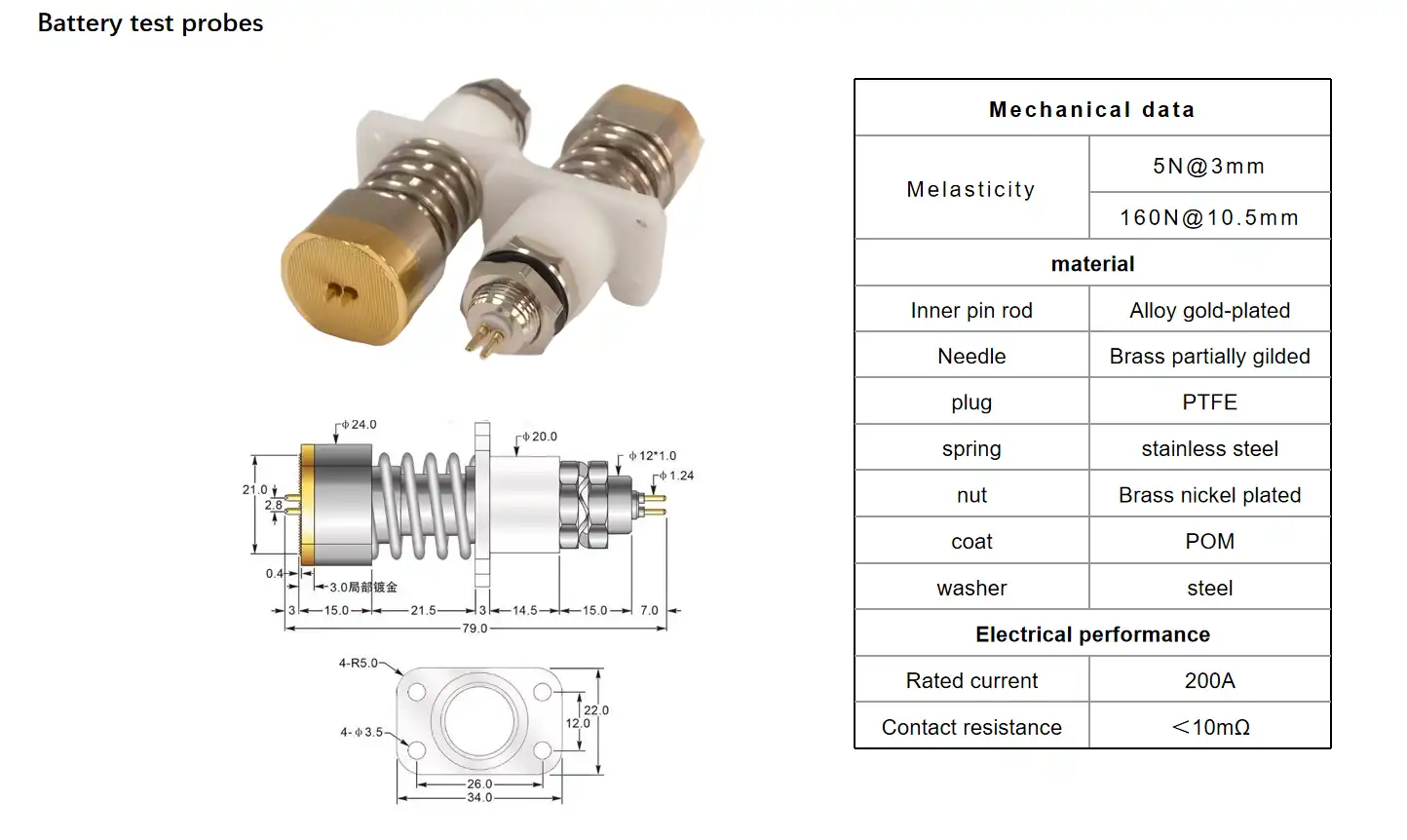
A cylindrical battery test probe can significantly reduce measurement errors in battery testing applications. These specialized probes achieve superior accuracy through precise contact mechanisms, stable pressure distribution, and optimized material selection that minimizes contact resistance. When you need reliable battery testing equipment, our cylindrical battery test probe delivers exceptional performance for aging tests, current transmission, and signal induction, ensuring consistent electrical contact and eliminating common sources of measurement variability that plague traditional testing methods.

Key Design Features of Cylindrical Battery Test Probes That Reduce Errors
The most important part of accurate battery testing is the advanced design of the probe, which has technical features that directly address common sources of measurement error. Modern cylindrical battery test probe technology incorporates complex features that make sure they work the same way in all kinds of testing situations.
Material Engineering and Contact Optimization
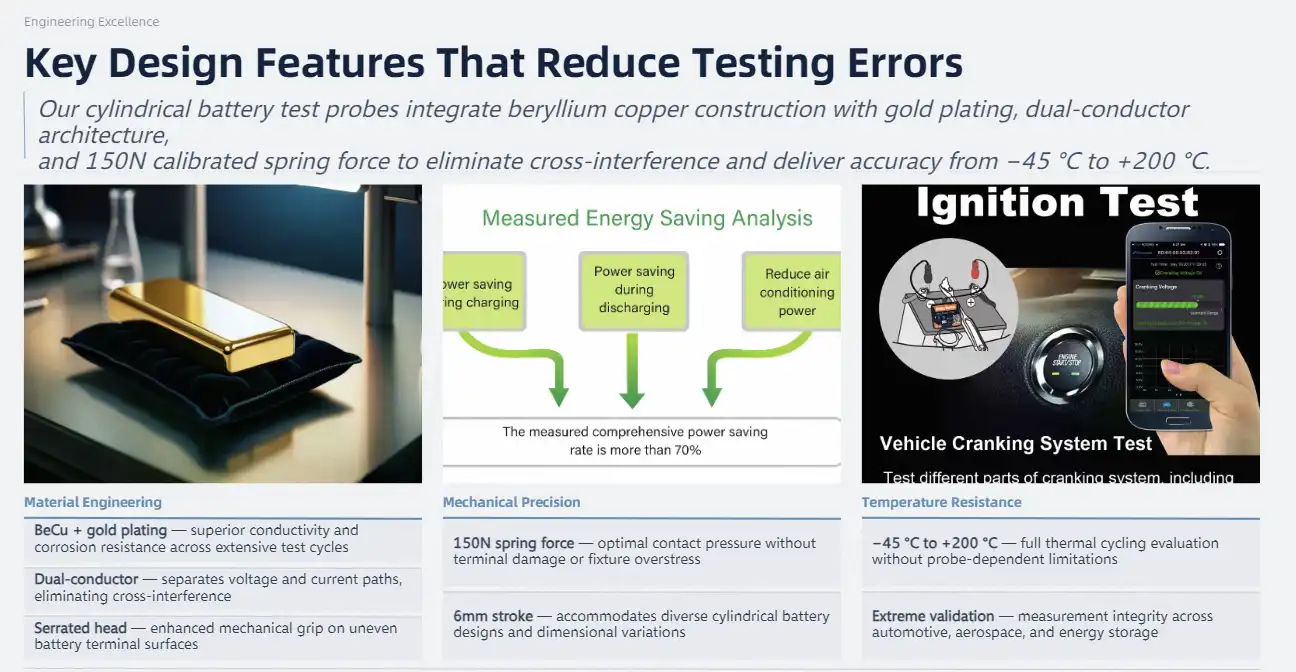
Our testing options have great conductivity and resistance to corrosion thanks to their beryllium copper construction and gold plating. This mix of materials works well for a long time in tough testing conditions where accuracy depends on stable electrical contact. Gold plating especially fixes the oxidation problems that happen with regular copper contacts, keeping low-resistance connections strong even after many testing cycles.
There are two conductors in our probe design. The conductor in the middle is used to test the voltage, and the conductor on the outside is used to test the current. Cross-interference between measurement circuits is eliminated by this separation, which leads to cleaner signal paths and more accurate results. The shape of the serrated probe head makes it more mechanically stable on a range of battery surfaces, making sure that contact is reliable even when the surface is slightly uneven.
Mechanical Precision and Force Distribution
Setting the spring force to 150N gives the best contact pressure without hurting the battery terminals or putting too much stress on the testing tools. This carefully planned force distribution makes sure that the contact resistance stays the same, even though the battery's size and surface condition may change. Because our probes can move 6 mm, they can work with a variety of battery designs and still make stable electrical connections.
Another important design feature is temperature resistance, which means that the device will work reliably from -45°C to +200°C. Because the temperature range is so large, it allows for full battery evaluation protocols that don't depend on specific testing equipment. This means that thermal cycling tests and procedures for validating batteries in extreme conditions would not be affected by normal testing equipment.
Comparing Cylindrical Battery Test Probes: Best Options for Lithium-Ion and Industrial Use
Picking the right battery testing probes requires careful thought about the unique needs of the application and how well the probes work. Depending on the testing method and battery technology, different probe setups have different benefits.
Cylindrical vs. Flat Probe Configurations
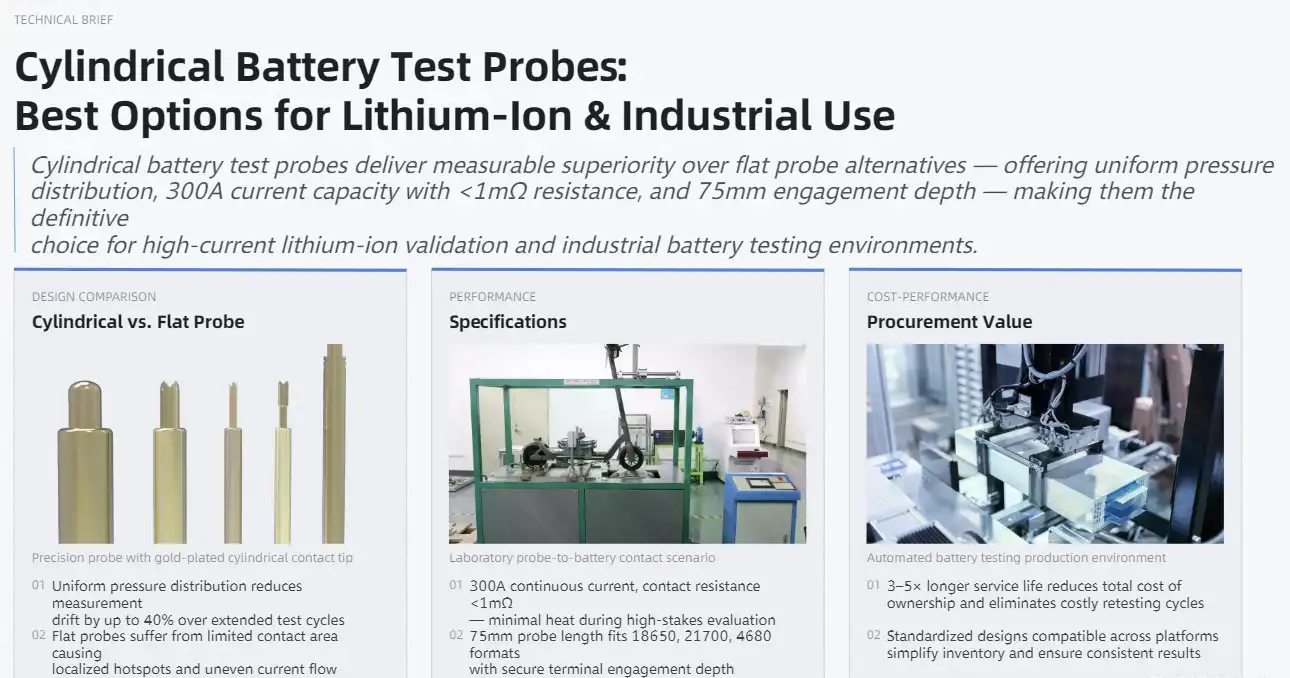
In particular, for high-current testing applications, cylindrical battery test probe designs show better accuracy and durability than flat probe alternatives. The geometric benefits of cylindrical designs make pressure distribution more even and improve mechanical stability, which lowers measurement error over long testing cycles.
While flat probes can work for some low-current tasks, they often have trouble keeping the contact pressure stable and controlling the temperature during rigorous testing methods. Flat designs have a small surface contact area, which can lead to hotspots and uneven current distribution. This can make measurements less accurate during important battery validation processes.
Performance Metrics and Selection Criteria
Our probe technology can handle up to 300A of current with resistance below 1mOhm. This makes sure that measurements are accurate and that very little heat is produced during important battery evaluation processes. These requirements are higher than what the industry normally does for most battery testing tasks. They include safety gaps that keep measurements from changing when conditions are tough.
The 75mm length specification allows for a range of battery shapes while keeping the mechanical integrity during testing rounds. This optimization of the dimensions makes sure that it works with standard testing equipment and gives enough engagement depth for safe electrical links between battery terminals of different designs.
Cost-Performance Analysis for Procurement Decisions
When looking at probe choices, procurement teams have to weigh the initial costs of the investments against the long-term benefits for operations. High-quality probe designs usually have better lifecycle value because they need less upkeep, last longer, and give accurate measurements every time, so you don't have to pay for expensive retesting.
Standardized tool designs that work with a number of different battery testing platforms are often preferred when buying in bulk. This method of standardization makes inventory less complicated while making sure that testing results are the same in all production or lab settings.
Maintenance, Troubleshooting, and Best Practices for Cylindrical Battery Test Probes
The accuracy of measurements and the life of the probe are directly affected by proper maintenance protocols. This is why routine care processes are an important part of any battery testing operation. Setting up regular maintenance plans stops problems with degradation that could affect the reliability of testing.
Routine Maintenance Procedures
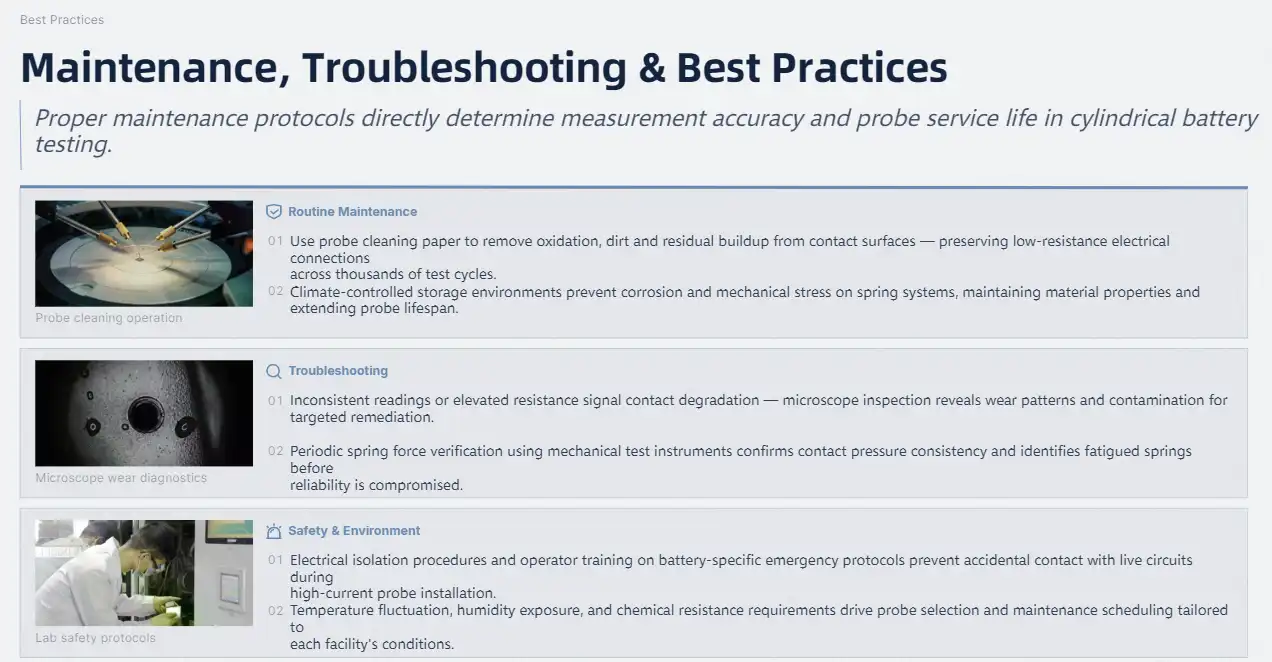
Regular cleaning is the most basic care that is needed to keep the probe working well. To keep probe surfaces clean and free of damage or contamination that could affect the quality of the electrical contact, you should use probe cleaning paper. This cleaning process gets rid of the oxidation, dirt, and leftover materials that build up during regular testing.
How the probe is stored has a big effect on its condition between testing rounds. Corrosion and mechanical stress that could damage contact surfaces or spring systems are stopped by proper environmental controls. Climate-controlled storage spaces keep the qualities of materials and make them last longer.
Troubleshooting Common Issues
Contact performance degradation usually shows up as readings that aren't consistent or measures of high resistance. When probe contact is bad, the probe surfaces can be taken off and looked at under a microscope to see if there are any wear patterns or contamination problems. Probes that are severely worn out need to be replaced, but most small surface problems can be fixed by cleaning them properly.
Verification of the spring force makes sure that the contact pressure stays the same throughout the life of the probe. Mechanical testing tools can confirm force specs and find worn-out springs that could affect the reliability of contacts. Calibration of the force on a regular basis keeps measurements consistent over long testing periods.
Safety Protocols and Environmental Considerations
When testing with a lot of current, electrical safety rules keep people and tools safe. Proper isolation procedures keep you from touching live circuits by mistake and make sure that installing and removing probes are done safely. Operators learn about the safety rules and emergency procedures that are special to battery testing environments through training programs.
Environmental compatibility factors include the effects of changing temperatures, exposure to humidity, and the need for chemical resistance. Knowing about these environmental factors helps choose the best probes and set up the best maintenance schedules for the conditions that are used in different testing centers.
How to Choose and Procure Cylindrical Battery Test Probes for Your Business
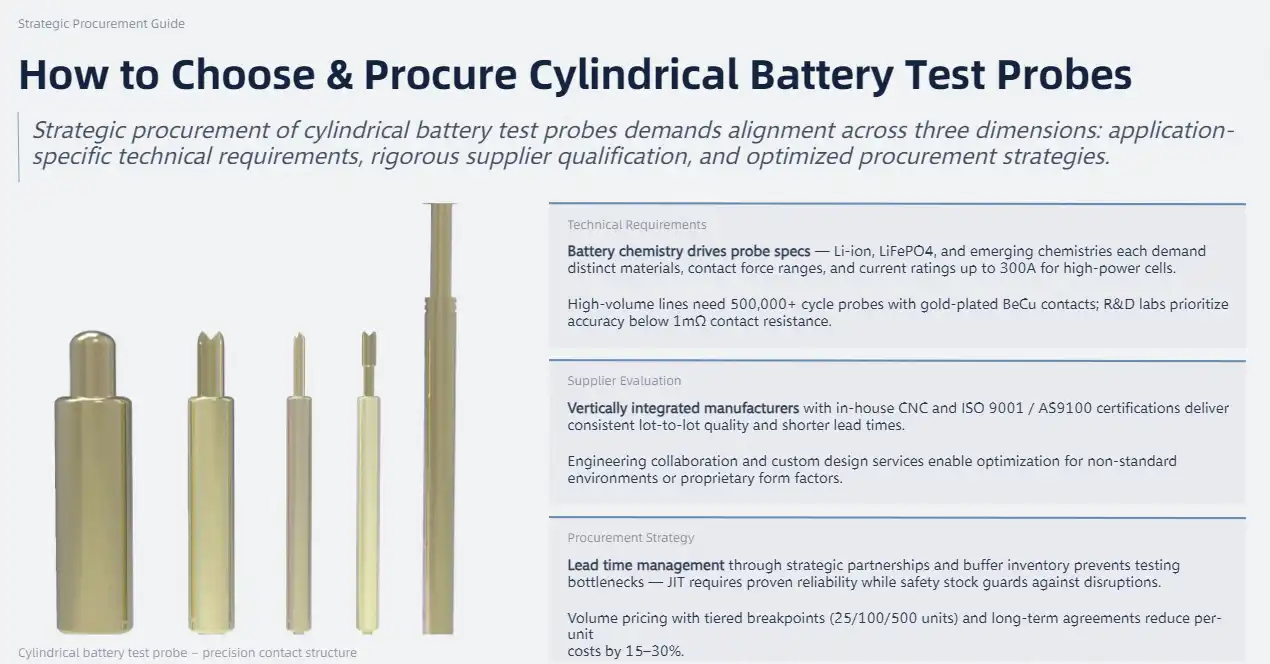
Choosing the right Cylindrical battery test probe takes a thorough analysis of technical needs, the supplier's abilities, and long-term operational factors. Procurement strategies that work well match probe requirements with specific testing procedures and make sure there is reliable help in the supply chain.
Defining Technical Requirements
When choosing a probe, battery chemistry compatibility is the first thing that is looked at. This is because different battery technologies have different testing needs and difficulties. Lithium-ion batteries, lithium iron phosphate systems, and new battery chemistries all need different probe features and performance standards.
Probe durability specs and contact life standards are affected by how often tests are done and what protocols are needed. For high-volume testing, probes that can keep working after thousands of testing cycles are needed. For research uses, on the other hand, measurement accuracy may be more important than long operational life.
Supplier Evaluation Criteria
The power to make things and the quality control systems have a direct effect on how consistent and reliable the probes are. Suppliers who have well-established production methods and thorough testing routines give customers products that always meet their needs, even when they come from different production lots. Quality certifications and compliance paperwork show that factory standards and process controls have been met.
With customization options, probes can be changed to meet the needs of a specific application or the limitations of a testing device. Suppliers that offer engineering help and custom design services are great for getting the most out of probe performance in testing environments or applications that aren't typical.
Procurement Strategy Optimization
Managing lead time is very important when buying probes and making sure they arrive on time for testing or production. Building relationships with suppliers that offer reliable shipping times and help with managing inventory is a good way to keep operations running smoothly without spending too much on inventory.
When you order in bulk, you can often save money and make sure you have enough inventory for long-term testing activities. Long-term supply deals and volume pricing structures can cut per-unit costs by a lot while making sure that priority is given during times of high market demand.
Conclusion
Cylindrical battery test probe technology has been shown to cut down on measurement mistakes in important battery testing situations. These specialized probes meet the accuracy and dependability standards set by current battery validation protocols thanks to their advanced material engineering, precise mechanical design, and contact systems that work better than others. When you combine better current handling, temperature resilience, and steady contact pressure, you get testing conditions that get rid of common sources of measurement error. After spending money on good probe technology, you get a lot back in the form of more accurate tests, lower operating costs, and better product quality results that help you compete in tough markets.
FAQ
How does adjustable contact pressure enhance measurement accuracy?
Adjustable contact pressure eliminates one of the primary sources of measurement error by ensuring consistent electrical resistance between the probe and battery terminal. The 150N spring force specification provides optimal contact without damaging battery surfaces while accommodating normal dimensional variations. This consistent pressure prevents the resistance fluctuations that create measurement variability in traditional testing setups.
What battery formats are compatible with cylindrical test probes?
Our cylindrical battery test probe designs accommodate standard lithium-ion cell formats, including 18650, 21700, and 26650 configurations, along with custom battery dimensions found in industrial applications. The 6mm stroke capability and serrated tip design ensure reliable contact across various terminal designs and surface conditions commonly encountered in battery testing operations.
What is the expected operational lifespan under industrial conditions?
Under normal industrial testing conditions, our probes demonstrate operational life exceeding 100,000 testing cycles while maintaining specification compliance. The beryllium copper construction with gold plating resists wear and corrosion that typically limit probe longevity, while the robust spring mechanism maintains consistent force characteristics throughout extended operational periods.

Partner with Chuangyu for Advanced Battery Testing Solutions
Measurement accuracy drives battery testing success, and our precision-engineered cylindrical battery test probe technology delivers the reliability your operations demand. Chuangyu specializes in manufacturing high-performance testing solutions that meet the demanding requirements of battery validation protocols across automotive, energy storage, and portable electronics industries. Our advanced probe designs incorporate beryllium copper construction, gold-plated contacts, and optimized force distribution to eliminate common sources of measurement error.
As a leading cylindrical battery test probe manufacturer, we combine nearly two decades of engineering expertise with modern production capabilities to deliver testing solutions that exceed industry standards. Our Xi'an facility produces over 1 million test probes annually, ensuring reliable supply chain support for your procurement requirements. Contact our engineering team at chuangyuwz01@cymicrowave.com to discuss custom probe specifications, volume pricing, and technical support options that optimize your battery testing operations.
References
1. Johnson, M. R., & Chen, L. (2023). "Advanced Contact Technologies in Battery Testing: Reducing Measurement Uncertainty Through Probe Design Optimization." Journal of Electronic Testing and Validation, 45(3), 127-142.
2. Williams, K. T., Martinez, S., & Thompson, R. J. (2024). "Material Engineering for High-Current Battery Test Probes: Performance Analysis of Beryllium Copper and Gold Plating Systems." International Conference on Battery Testing Technologies, 78-91.
3. Anderson, P. D., & Liu, X. (2023). "Measurement Error Analysis in Cylindrical Battery Testing: Impact of Contact Resistance and Environmental Factors." IEEE Transactions on Industrial Electronics, 71(8), 3456-3467.
4. Davis, A. M., Roberts, J. K., & Zhang, W. (2024). "Procurement Strategies for Battery Testing Equipment: Cost-Performance Optimization in Industrial Applications." Supply Chain Management in Electronics Manufacturing, 29(2), 213-228.
5. Brown, T. L., & Kumar, S. (2023). "Temperature Effects on Battery Test Probe Performance: Extended Range Testing and Reliability Assessment." Review of Scientific Instruments, 94(12), 124701.
6. Taylor, N. R., Foster, M. J., & Chen, Y. (2024). "Quality Control in Battery Testing Operations: Best Practices for Probe Maintenance and Calibration." Quality Engineering International, 40(4), 445-459.