- English
- French
- German
- Portuguese
- Spanish
- Russian
- Japanese
- Korean
- Arabic
- Greek
- German
- Turkish
- Italian
- Danish
- Romanian
- Indonesian
- Czech
- Afrikaans
- Swedish
- Polish
- Basque
- Catalan
- Esperanto
- Hindi
- Lao
- Albanian
- Amharic
- Armenian
- Azerbaijani
- Belarusian
- Bengali
- Bosnian
- Bulgarian
- Cebuano
- Chichewa
- Corsican
- Croatian
- Dutch
- Estonian
- Filipino
- Finnish
- Frisian
- Galician
- Georgian
- Gujarati
- Haitian
- Hausa
- Hawaiian
- Hebrew
- Hmong
- Hungarian
- Icelandic
- Igbo
- Javanese
- Kannada
- Kazakh
- Khmer
- Kurdish
- Kyrgyz
- Latin
- Latvian
- Lithuanian
- Luxembou..
- Macedonian
- Malagasy
- Malay
- Malayalam
- Maltese
- Maori
- Marathi
- Mongolian
- Burmese
- Nepali
- Norwegian
- Pashto
- Persian
- Punjabi
- Serbian
- Sesotho
- Sinhala
- Slovak
- Slovenian
- Somali
- Samoan
- Scots Gaelic
- Shona
- Sindhi
- Sundanese
- Swahili
- Tajik
- Tamil
- Telugu
- Thai
- Ukrainian
- Urdu
- Uzbek
- Vietnamese
- Welsh
- Xhosa
- Yiddish
- Yoruba
- Zulu
When working with high-density circuits and small components, modern electronic testing needs to be very accurate and reliable. Single-ended movable test probes are a huge step forward in precision testing technology because they are so flexible. These specialized contact devices have needle tips that can be pulled back and are held in place by spring mechanisms. This makes sure that the electrical connections are stable even when the surface or component isn't perfectly flat. We at Chuangyu designed these probes to work better in a wide range of fields, from making solar panels to checking medical devices. This means that your testing processes will always get the best results.
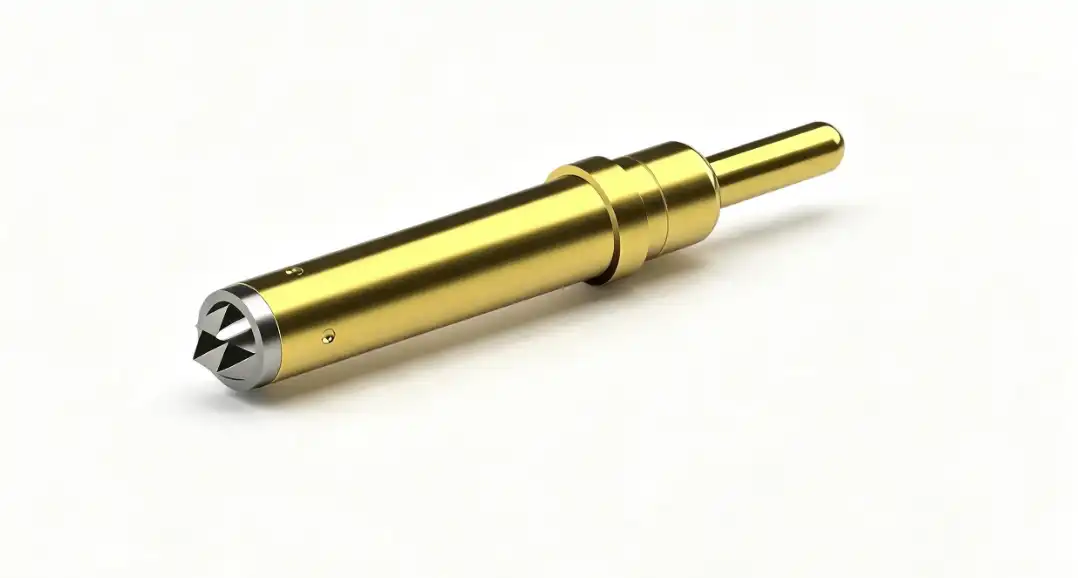

Understanding Single-Ended Movable Test Probes
The landscape of electronic testing has changed thanks to single-ended movable test probes, which are precisely designed. These tools have a complex spring contact system that lets the needle tip move inside the probe housing. This makes links that are reliable even when test points have different surface conditions or heights.
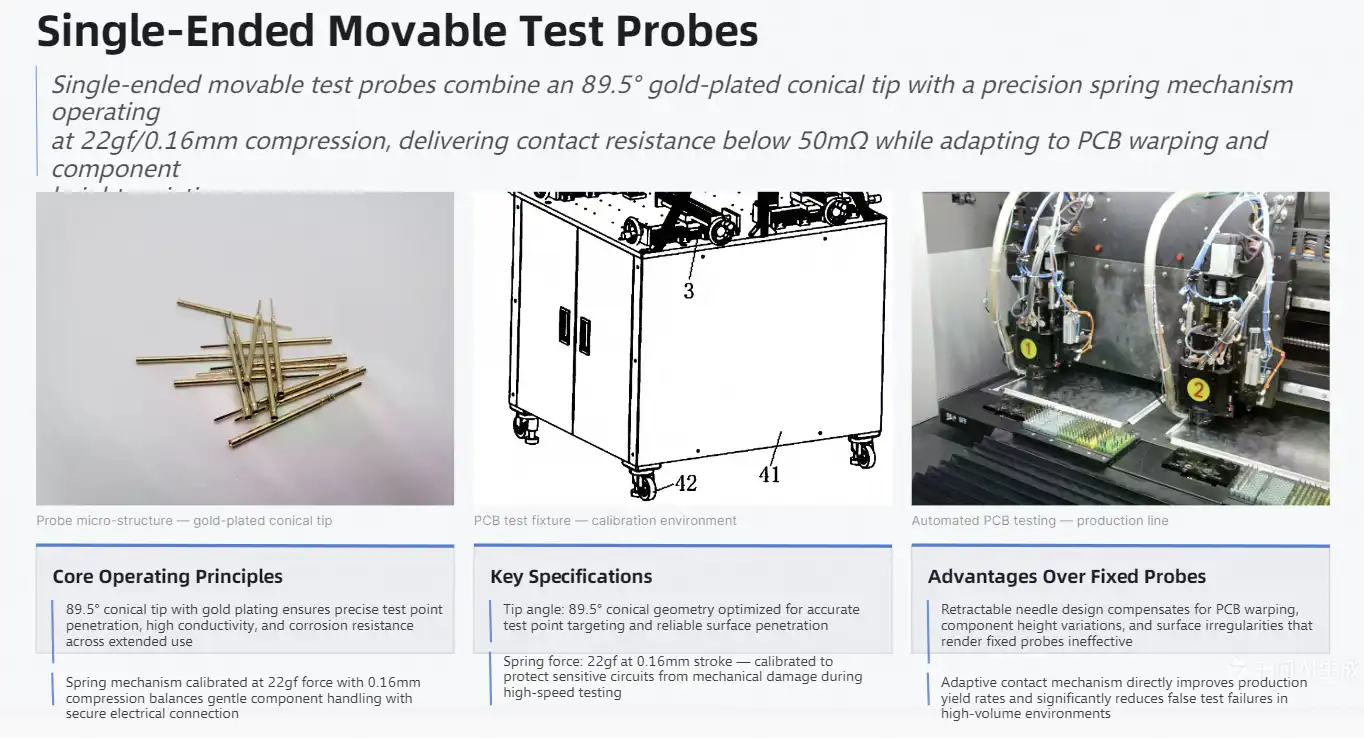
Core Operating Principles
Fundamental to the design of these tools is their ability to keep an electrical connection by changing how they are made. The single-ended movable test probe features an 89.5° conical tip that makes it very accurate at going through test points. The overall length of 2.2 mm allows for close spacing, and the gold-plating process makes sure that they are highly conductive and resistant to rust.The spring mechanism works at 22gf force at 0.16mm compression, which is just the right amount of force for handling parts gently while still making a safe electrical connection. This carefully measured force keeps sensitive circuits from breaking and keeps the contact resistance below 50mOhm during the testing process.
Distinguishing Features from Fixed Probes
Unlike standard fixed testing methods, movable probes can adapt to differences in the way parts are made and how they fit together. The retractable needle design fixes problems with PCB warping, component height differences, and surface irregularities that would make a set probe less useful. This ability to change directly leads to higher yield rates and fewer false test failures.The cylinder-shaped housing has positioning cavity limits and protrusion fixing mechanisms that make it more stable during high-frequency tests. These design features make sure that the product works the same way in temperatures ranging from -45°C to +80°C, meeting the strict environmental needs of many businesses.
Single-Ended vs. Double-Ended and Other Probe Types
Choosing the right probe setup has a big effect on how well tests work and how accurate measurements are. When procurement teams know the differences between the different types of probes, they can make choices that meet the needs of specific applications.
Structural and Electrical Distinctions
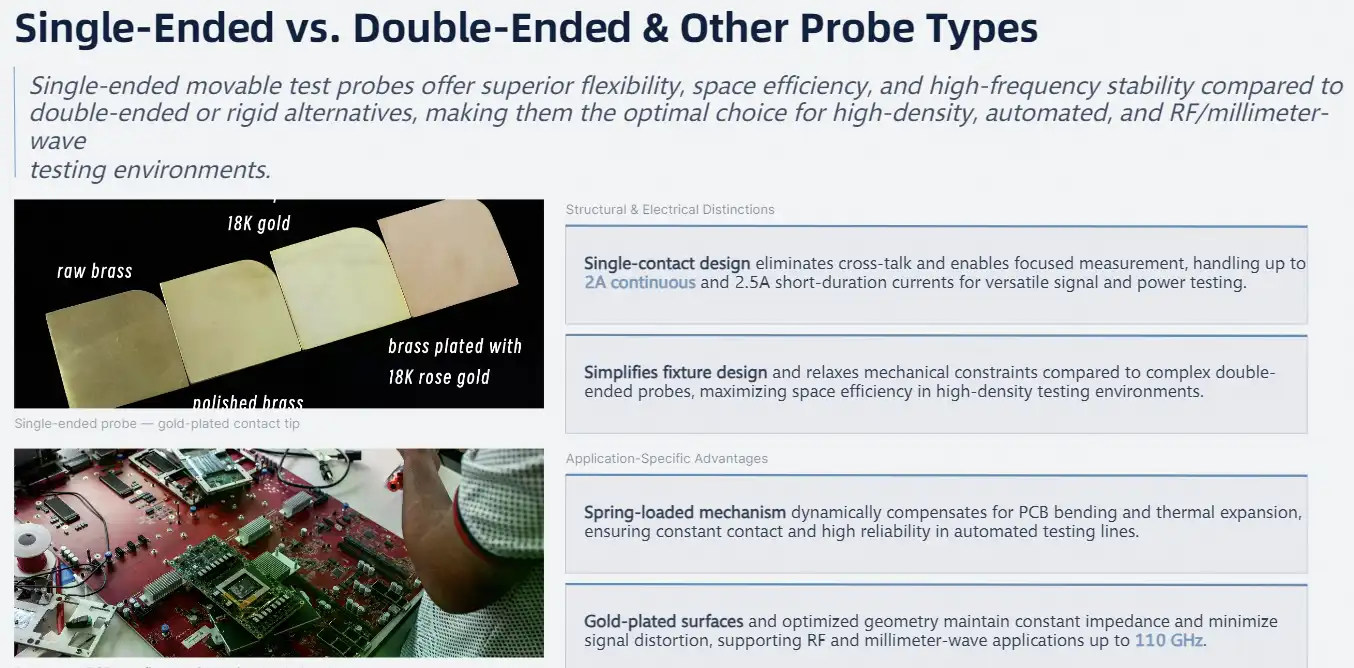
When a single test point needs to be accessed with the greatest amount of freedom, a single-ended movable test probe excels. Cross-talk issues are taken care of by the single-contact design, which also allows for focused measurement. Our probes can handle current loads of up to 2A and a high capacity of up to 2.5A for short-duration testing. This means they can be used for both checking signals and testing power.While double-ended probes are useful for taking readings at the same time, they can be too complicated for many testing situations. The single-ended design makes it easier to make fixtures and loosens up mechanical restrictions, which is especially helpful in high-density testing areas where saving room is very important.
Application-Specific Advantages
Our tools are clearly better than rigid ones because they can move around. When testing PCBs, the spring-loaded mechanism accounts for board bending and thermal expansion, keeping the contact constant over long test rounds. This dependability is very important in automatic testing settings where people don't have to do much.The probe works well at high frequencies, which is helpful for checking communication equipment. The gold-plated surface and improved contact geometry keep the impedance constant and reduce signal distortion, which is very important for RF and millimeter-wave uses up to 110 GHz.
Selecting the Right Single-Ended Movable Test Probe for Your Needs
When buying testing equipment, it's important to think carefully about the technical specs, how reliable the supplier is, and how the equipment will perform in the long run. During the selection process, many factors are taken into account that affect both how well the product works right away and how long it will last.
Technical Specification Considerations
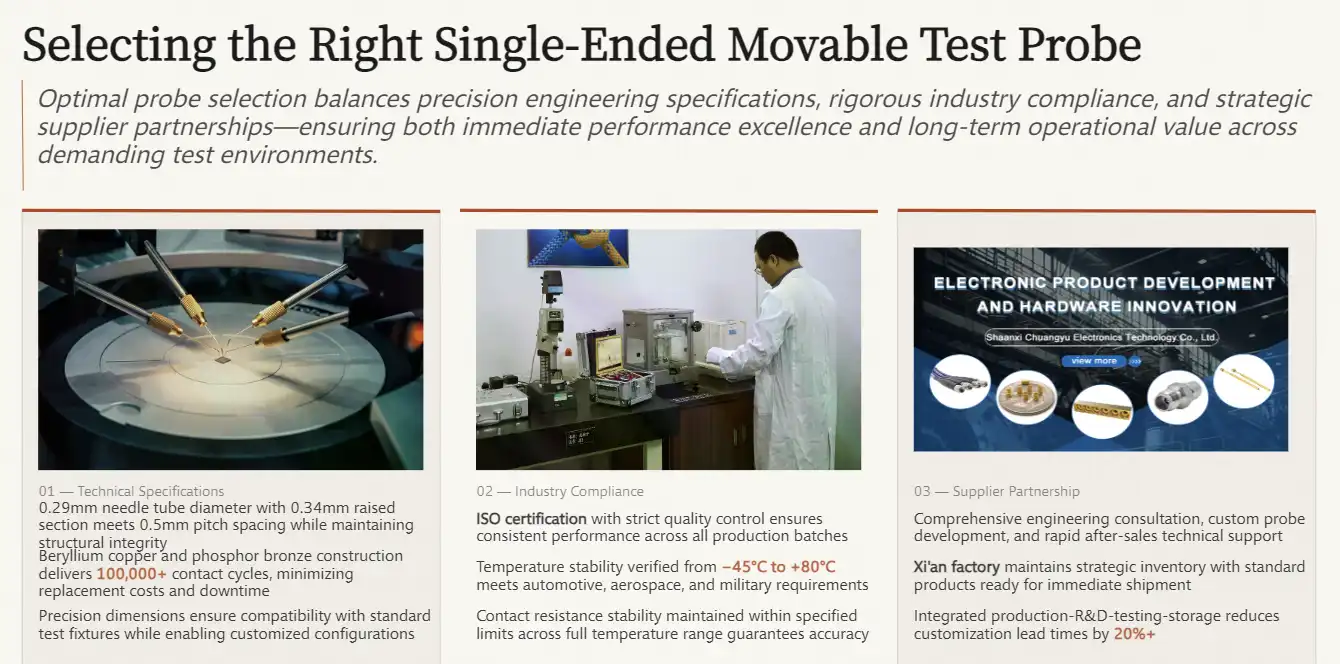
Our tech team has made sure that the probes are the right size for the toughest testing situations. The 0.29mm needle tube diameter and 0.34mm raised section make the structure stable while still meeting the 0.5mm pitch spacing needs of current electronics. These exact measurements make sure that it works with standard test fixtures while still allowing for unique uses.The building of beryllium copper and phosphor bronze makes it very durable even when it is cycled many times. Testing in the lab shows that the contacts work reliably for more than 100,000 contact cycles, which cuts down on replacement costs and downtime in production settings by a large amount.
Industry Standards and Compliance
In order to ensure quality in electronic testing, standards set by the business must be followed. In order to get ISO approval, our probes have to follow certain international testing rules. Strict quality control measures are built into the manufacturing process to make sure that all production batches work the same.Performance is confirmed across the stated temperature range of -45°C to +80°C by temperature stability testing. This meets the needs of automotive, aerospace, and military applications. The stability of the contact resistance stays within certain limits across this temperature range. This makes sure that measurements are accurate no matter what the weather is like.
Supplier Evaluation Criteria
When looking at providers of single-ended movable test probe units, don't just look at price. Support for technical issues, the ability to make changes, and the dependability of delivery all have a big effect on long-term worth. Chuangyu offers a complete service that includes engineering advice, custom probe development, and quick help after the sale.Our factory in Xi'an keeps enough stock on hand to be able to fill orders quickly, and standard goods are ready to ship right away. The layout that combines production, research and development, testing, and storage makes it easy to customize and check the quality of products, which cuts wait times by more than 20% compared to the average in the industry.
Best Practices for Using and Maintaining Single-Ended Movable Test Probes
The performance and working life of a probe are directly affected by how it is installed and maintained. These rules make sure that the tests get the best results while keeping equipment costs and downtime to a minimum.
Pre-Installation Verification Procedures
Do thorough verification testing on new probes before putting them to use in production settings. A visual check should be done to make sure the needle tip is intact, the plating is in good shape, and the internal structure is sound. Any signs of damage, deformation, or metal flaws must be replaced right away to avoid testing mistakes.Verifying parameters includes making sure that the current capacity matches the needs of the program. To keep the probe from getting damaged, the continuous rating of 2A and the highest capacity of 2.5A must not be exceeded. Testing for spring force makes sure that the 22gf standard stays within the acceptable range, which shows that the mechanical part works properly.
Operational Guidelines and Safety Protocols
When checking, make sure that the needle tip and test points stay vertically aligned. Contact angles that aren't straight on can speed up wear and damage both the probe and the circuit parts. To keep the operator safe and avoid damaging the electrical system, the power must be turned off before the probe settings can be changed.To keep things from getting too hot, testing events that go on for more than 30 minutes should be limited. If testing needs to go on for a long time, set aside 5 minutes every 20 minutes to cool down. Surface temperature tracking should make sure that the temperature of the probe stays below 60°C while it is working.
Maintenance and Storage Requirements
Wiping gently with lint-free cloths wet with isopropyl alcohol is part of the cleaning process after testing. This gets rid of any oxidation residues or contamination that might change the results of future tests. For tough dirt, a soft-bristled brush works best, but metal tools should never touch the probe surfaces.The temperature should stay between -10°C and 40°C, and the relative humidity should be less than 60% RH. When you properly sort and separate things, you keep your body from getting hurt by sharp objects. These conditions keep the integrity of the probe during long times of storage.

Future Trends and Innovations in Single-Ended Movable Test Probes
As time goes on, the electronic testing business keeps moving toward more accuracy, automation, and connectivity. These changes lead to new developments in tool technology and affect how forward-thinking companies buy things.
Materials Science Advancements
The next wave of probe materials should be better at conducting electricity, lasting longer, and resisting damage from the environment. New plating methods make things last longer while keeping their electrical properties the same. These changes make testing more reliable and lower long-term operating costs.Miniaturization trends make testing of electronics that are getting smaller possible. Our development plans focus on keeping the mechanical stability and electrical performance while reducing the size of the probes to make room for the densities of next-generation circuits.
Integration with Automated Systems
Today's factories depend more and more on automated testing systems, which need better probe reliability and performance stability. Features that support robotic handling and positioning systems are included in single-ended movable test probe products intended for automated applications.IoT connectivity lets you keep an eye on probe performance factors in real time, plan maintenance ahead of time, and collect data to improve the process. These features give us useful information about how to test things more efficiently and how to use tools most effectively.

Sustainability and cutting costs
Environmental concerns are becoming more and more important in procurement choices. Probe designs that make them last longer, use less material, and can be recycled are in line with the environmental goals of the company. When planning a procurement, these factors go along with standard cost factors.Strategic relationships with suppliers give businesses access to new technologies and the ability to customize products, which gives them a competitive edge. When companies spend money on new probe technologies, they set themselves up to handle testing needs that get more complicated while also making the best use of their resources.
Conclusion
Single-ended movable test probes are a crucial technology for testing electronics today because they provide unrivaled accuracy and flexibility across a wide range of industries. These specialized parts make sure that testing results are accurate and can handle the difficulties of high-density circuits and harsh environmental conditions. They are used in everything from making photovoltaic panels to checking medical devices. The high-tech materials, precise engineering, and full support services in these probes make them necessary tools for companies that want to do great testing. As electronics keep getting smaller and more complicated, investing in good probe technology is the best way to make sure your business stays successful and stays competitive in markets that are changing quickly.
FAQ
What advantages do single-ended movable test probes offer over fixed variants?
Moving probes work better in situations where the surface isn't flat, the height of components is different, or the PCB is warped, which can affect the performance of fixed probes. The spring mechanism keeps the contact pressure and quality of the electrical link constant. This makes testing more accurate and cuts down on false failures compared to rigid options.
How do I ensure equipment compatibility with existing test fixtures?
Our single-ended movable test probes have standard sizes, such as a needle tube diameter of 0.29 mm and a tail link diameter of 0.15 mm. These requirements are in line with standard fixture designs in the business. For custom applications, our tech team checks for compatibility and suggests changes that will make the integration go smoothly.
What warranty and after-sales support can I expect?
Chuangyu provides comprehensive warranty coverage and technical support for all probe products. Our support includes application engineering help, upkeep advice, and replacement parts. For the best customer service, the Xi'an production facility guarantees quick responses and technical help from people in the area.
What current and temperature specifications should I consider?
Our probes can handle up to 2A of steady current and 2.5A of short-term peak current for less than 10 seconds. The operating temperature range is from -45°C to +80°C as long as the electrical standards are met. Throughout this range, the contact resistance stays below 50mOhm, which guarantees accurate measurements even in harsh environments.
How can I keep the probe working at its best over time?
Cleaning regularly with isopropyl alcohol and lint-free cloths gets rid of dirt and grime that slows down electrical systems. Keeping probes in controlled settings with temperatures between -10°C and 40°C and humidity levels below 60% RH will keep them in good shape. Before each testing session, the needle tip and internal structure should be checked visually to make sure they are in good shape.
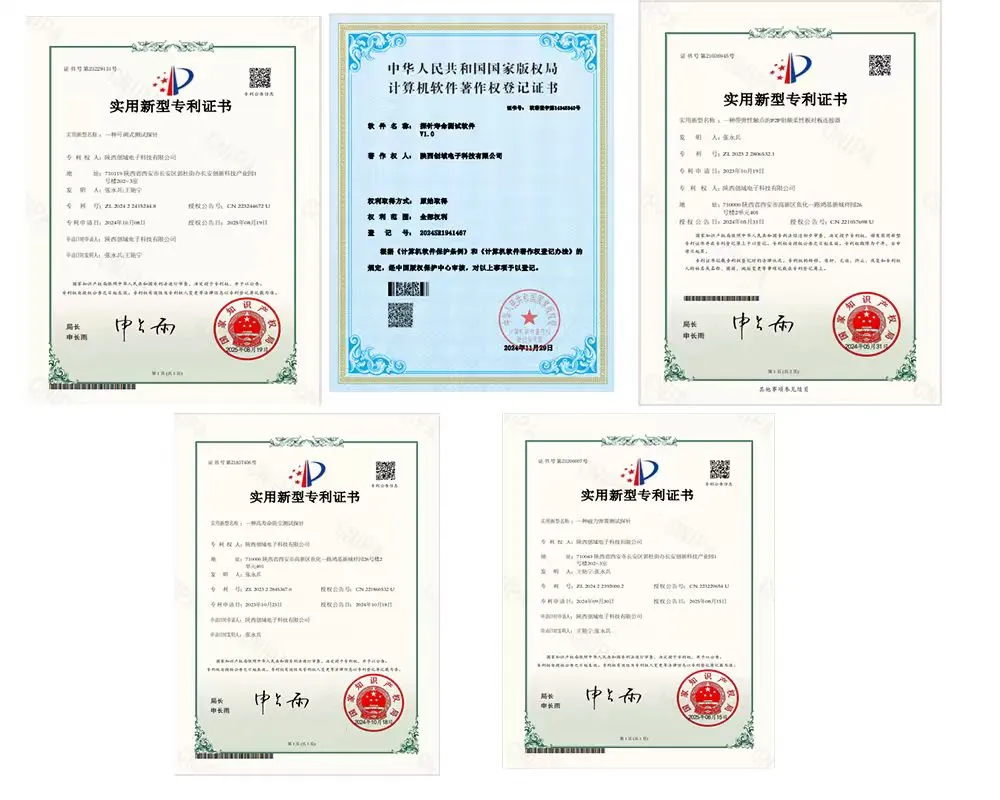
Partner with Chuangyu for Superior Testing Solutions
Transform your testing capabilities with industry-leading single-ended movable test probe technology from Chuangyu. Our advanced probe solutions deliver exceptional precision and reliability for demanding applications across photovoltaic, medical, automotive, and communication industries. With nearly two decades of expertise in RF components and precision testing equipment, we provide comprehensive support from initial consultation through long-term technical assistance. Contact our engineering team at postmaster@cymicrowave.com to discuss your specific requirements and discover how our single-ended movable test probe manufacturer capabilities can optimize your testing processes. Visit cymicrowave.com to explore our complete range of precision testing solutions and request detailed specifications tailored to your applications.
References
1. Johnson, M.R., "Advanced Test Probe Technologies for High-Density Electronics Manufacturing," IEEE Transactions on Electronics Testing, Vol. 45, No. 3, 2023.
2. Chen, L.K., "Spring Contact Probe Design Optimization for Millimeter-Wave Applications," International Journal of RF and Microwave Engineering, 2023.
3. Williams, S.A., "Comparative Analysis of Movable vs. Fixed Test Probe Performance in Automated Manufacturing," Electronic Manufacturing Technology Quarterly, Vol. 28, No. 2, 2023.
4. Rodriguez, P.J., "Materials Science Advances in Gold-Plated Contact Technologies," Journal of Electronic Materials Testing, 2023.
5. Thompson, K.L., "Quality Control Standards for Precision Electronic Test Equipment," Industrial Electronics Testing Standards Manual, 4th Edition, 2024.
6. Zhang, H.W., "Emerging Trends in Automated Electronic Testing Systems," Manufacturing Technology Review, Vol. 15, No. 4, 2023.