- English
- French
- German
- Portuguese
- Spanish
- Russian
- Japanese
- Korean
- Arabic
- Greek
- German
- Turkish
- Italian
- Danish
- Romanian
- Indonesian
- Czech
- Afrikaans
- Swedish
- Polish
- Basque
- Catalan
- Esperanto
- Hindi
- Lao
- Albanian
- Amharic
- Armenian
- Azerbaijani
- Belarusian
- Bengali
- Bosnian
- Bulgarian
- Cebuano
- Chichewa
- Corsican
- Croatian
- Dutch
- Estonian
- Filipino
- Finnish
- Frisian
- Galician
- Georgian
- Gujarati
- Haitian
- Hausa
- Hawaiian
- Hebrew
- Hmong
- Hungarian
- Icelandic
- Igbo
- Javanese
- Kannada
- Kazakh
- Khmer
- Kurdish
- Kyrgyz
- Latin
- Latvian
- Lithuanian
- Luxembou..
- Macedonian
- Malagasy
- Malay
- Malayalam
- Maltese
- Maori
- Marathi
- Mongolian
- Burmese
- Nepali
- Norwegian
- Pashto
- Persian
- Punjabi
- Serbian
- Sesotho
- Sinhala
- Slovak
- Slovenian
- Somali
- Samoan
- Scots Gaelic
- Shona
- Sindhi
- Sundanese
- Swahili
- Tajik
- Tamil
- Telugu
- Thai
- Ukrainian
- Urdu
- Uzbek
- Vietnamese
- Welsh
- Xhosa
- Yiddish
- Yoruba
- Zulu
When choosing between microwave adapters and RF adapters, understanding frequency capabilities becomes paramount. Microwave adapters typically operate at frequencies above 1 GHz, extending to 110 GHz or beyond, ideal for millimeter-wave applications in semiconductor testing and high-speed communication systems. RF adapters generally serve broader frequency ranges from DC to several GHz, supporting standard wireless and communication equipment. The distinction influences impedance matching, insertion loss performance, and connector interface compatibility. Selecting the appropriate adapter type directly impacts signal integrity, system reliability, and measurement accuracy across aerospace, medical device manufacturing, and photovoltaic testing environments where precision matters most.
Understanding Microwave Adapters and RF Adapters
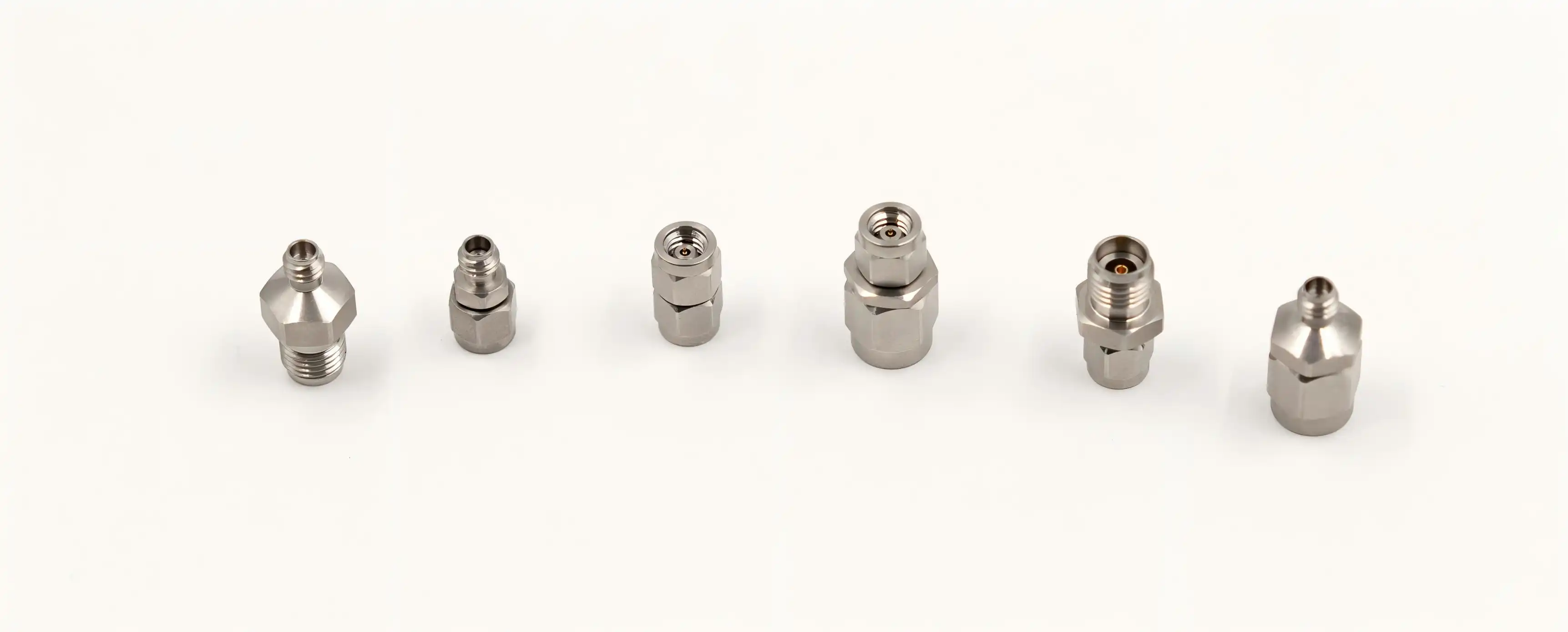
Microwave and radio frequency (RF) adapters both work as interface converters, letting different types of connectors work together in signal transmission systems. However, their design ideas and performance traits are very different depending on the operating frequency goals.
Defining Microwave Adapters
When it comes to advanced millimeter-wave applications, microwave adapters can go up to 110 GHz. They are precision-engineered passive components that are made to send high-frequency signals. These adapters focus on keeping the resistance under control (usually 50 ohms) across their whole frequency range. This keeps echoes to a minimum and keeps the signal's integrity. SMA, 2.92mm, 2.4mm, and 1.85mm plugs are all common types of interfaces. Each one supports a higher frequency limit. These adapters are used in fields where phase stability and a low VSWR (Voltage Standing Wave Ratio) of less than 1.3:1 are very important, like medical imaging equipment, 5G infrastructure testing, and aerospace radar systems.
Characterizing Standard RF Adapters
RF adapters are a bigger group that includes lower frequency bands, from DC to about 18 GHz, and includes interface converters like BNC, TNC, N-type, and SMA links. These parts are good at both performance and cost-effectiveness. They are used in a wide range of communication systems, radio equipment, and industrial control networks. Standard RF adapters put mechanical longevity and ease of installation ahead of the high level of accuracy needed in microwave frequency bands, as long as they meet realistic insertion loss requirements.
Technical Differentiators Between Categories
The processing margins make the difference between these groups the clearest. To keep the center conductor lengths and dielectric spacing uniform, microwave adapters need to be machined with micron-level accuracy. This has a direct effect on their ability to handle signals above 20 GHz without losing too much. Different types of materials are also used. For example, beryllium copper contacts with gold plating are often used in microwave adapters to make sure they don't oxidize and keep their conductivity over time. Standard RF adapters may have bodies made of brass or stainless steel, which work fine for lower frequencies but not for millimeter waves because of skin effect losses.
Core Selection Criteria for Microwave vs RF Adapters
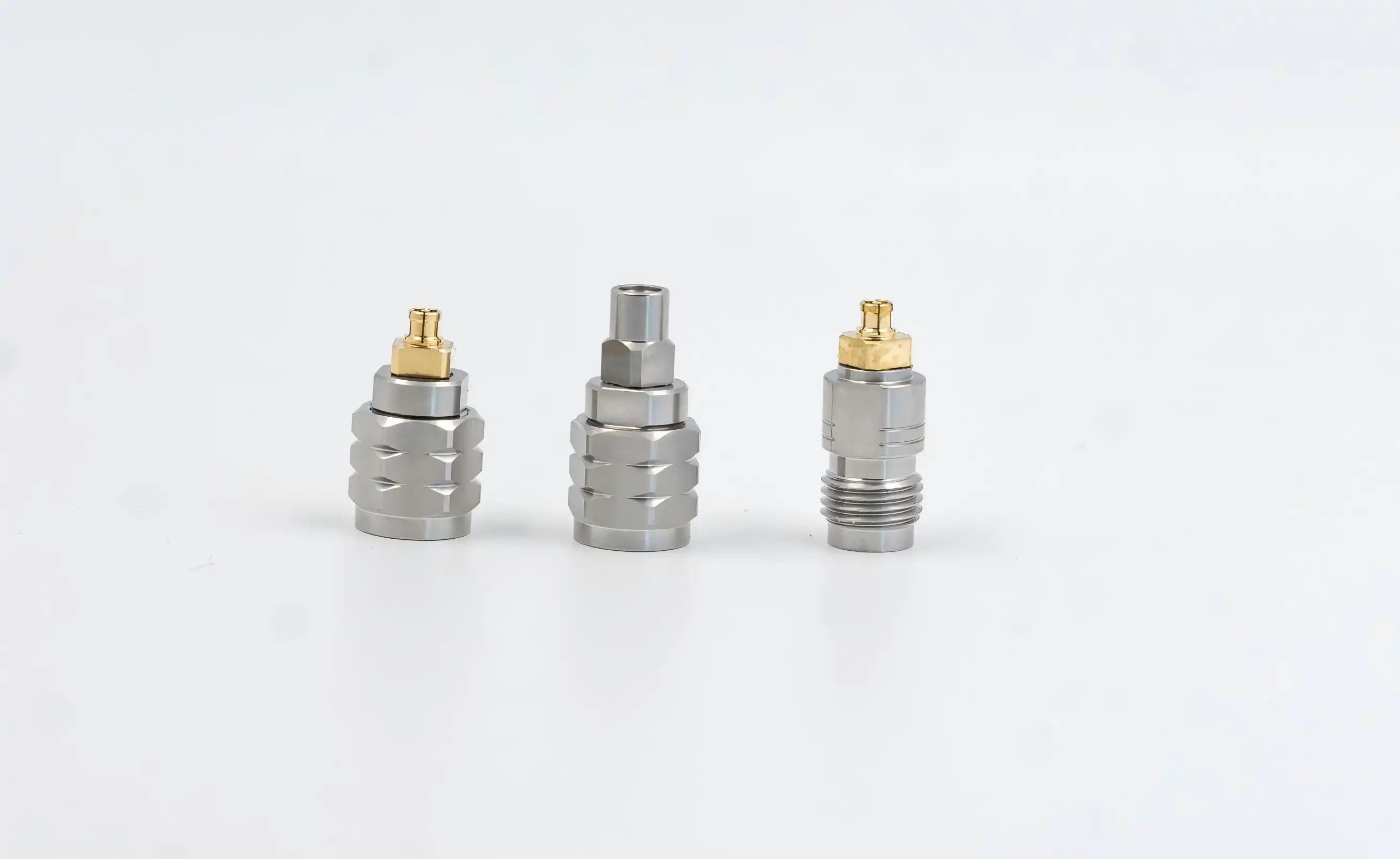
To pick the right connector type, you need to look at a number of interconnected factors that have a direct effect on how well the system integrates and how much it costs to run in the long run.
Frequency Range Alignment
The most basic selection criterion is making sure that the adapter's specs match the frequency at which your system works. If the parts you are testing work at 40 GHz, using a normal SMA adapter that is only designed for 18 GHz will cause measurement errors because it will reflect and weaken signals too much. On the other hand, choosing a 1.85mm adapter that can work at 67 GHz for a 5 GHz application wastes money and doesn't improve performance. Accurate recording of frequency requirements stops both the risk of not meeting requirements and cost increases that aren't required.
Insertion Loss and VSWR Performance
Insertion loss is a measurement in decibels of how much signal power the device absorbs or reflects. Up to their stated frequency, high-quality microwave adapters keep insertion loss below 0.2 dB. On the other hand, standard RF adapters may show 0.3 to 0.5 dB loss even at moderate frequencies. VSWR measures the difference in resistance; numbers closer to 1.0:1 mean better performance. Adapters with VSWR specifications below 1.25:1 are needed for test and measurement tasks that need consistent results, like characterizing semiconductor devices or calibrating network analyzers.
Connector Interface Compatibility
Between-series adapters change from one type of socket to another. Common examples are SMA to N-type or 2.92mm to SMA transfers. Gender matters make things more complicated; you need to say whether each end has a male or female interface. Because they are small and can blind-mate, SMP ports are very useful in high-density applications, but they usually only handle lower power levels than threaded interfaces. Knowing the number of connectors on your current equipment and your plans for future growth will help you choose an interface that uses the fewest adapter chains. Using too many adapter chains can lower the quality of the signal by adding up the losses.
Environmental and Mechanical Durability
Adapters are exposed to high and low temperatures, vibrations, and dirt and dust in industrial settings. Passivation-coated stainless steel bodies can handle the corrosive conditions in photovoltaic testing labs, while gold-plated brass bodies work well in labs with controlled temperatures. Mating cycle scores, which show how many connect-disconnect processes the adapter can handle before losing performance, are very important for fixtures that need to be rearranged often. Electronic testing equipment that needs to be very reliable needs adapters that can be paired and disconnected more than 500 times with little impedance drift.
Comparative Analysis Based on User Needs and Applications
Adapter solutions need to be customized for each working situation. This means that application-specific analysis is a must for making the best buying choices.
Semiconductor and High-Frequency Testing Requirements
Companies that test semiconductors and characterize RF integrated circuits and millimeter-wave devices need adapters that introduce little phase uncertainty and keep working well at a variety of temperatures. When a major semiconductor company switched its automated test equipment from standard SMA adapters to precision 2.4mm microwave adapters, measurement error dropped by 15%. The tighter tolerance stackup cut down on systematic errors, which made it easier to figure out the yield.
Photovoltaic and New Energy Equipment Integration
When photovoltaic makers set up automatic testing lines for inverter RF emissions, they need adapters that are mechanically strong and work well electrically. Panel-mount adapters with bulkhead setups make it possible for cables to be routed cleanly through equipment frames while still blocking noise above 100 dB. The cost-effectiveness analysis in this case goes beyond just looking at the unit price. For example, adapters with better mating longevity cut down on repair windows and increase line uptime measures that are important for production flow.
Medical Device System Connectivity
Medical imaging devices and RF therapy systems need connections that meet both electrical and biocompatibility standards. When you figure out the total cost of ownership, you have to include the costs of licensing and being able to track the supply chain. By buying adapters from companies that offer material certifications and lot tracking, you can shorten the time you need to get regulatory approvals, which more than makes up for the higher cost of the parts at first by letting you get into the market faster.
Communication Infrastructure and 5G Deployment
When building 5G infrastructure, network equipment integrators have to make sure that the adapters they use work well and can be serviced in the field. For setups outside, you need adapters that are waterproof (IP67) and made of materials that won't break down in UV light. Logistics become important when sending thousands of units across multiple cell sites. Buying from suppliers with regional distribution centers and volume prices cuts down on both costs and wait times during tight deployment plans.
Installation, Troubleshooting, and Maintenance Insights
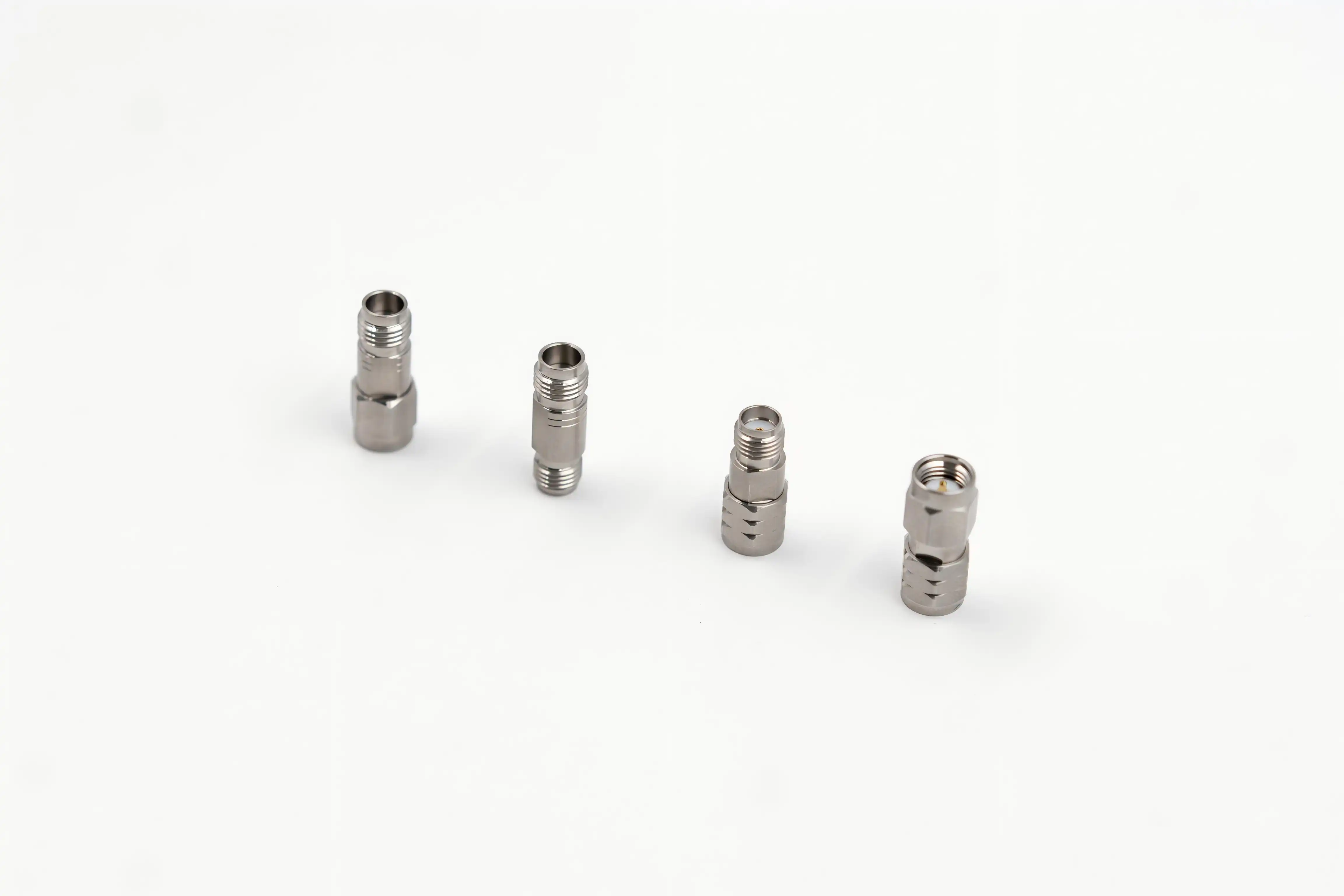
Using the right application techniques will help your adapters work better and last longer, protecting your investment in these parts.
Installation Best Practices for Microwave Frequency Components
When fitting microwave adapters, torque specs are very important. If you don't tighten them enough, the links can break when they're vibrated, and if you tighten them too much, the dielectric supports will deform, and the impedance will change. Follow the manufacturer's instructions for a calibrated torque wrench. For SMA connections, the force should be 7–10 inch-pounds, and for N-type connectors, it should be 12–15 inch-pounds. Carefully align the adapter bodies before starting the thread engagement process to avoid cross-threading, which damages precision interfaces in a way that can't be fixed. Cleanliness practices keep things from getting dirty. Even tiny bits between the sides of contacts cause changes in impedance that can be seen in time-domain reflectometry readings.
Common Signal Degradation Issues and Solutions
Problems with signal integrity are often caused by issues with the adapter. Too much reflection usually means that the resistance is off because the center wires are broken or the dielectric supports are worn down. Using a network monitor to measure VSWR helps find the connections in signal chains that aren't working right. If insertion loss goes up over time, it means that the contact surfaces are oxidizing. Taking adapters apart to inspect them and cleaning them with isopropyl alcohol often fixes the problem. Intermittent links during vibration testing could mean that there isn't enough mating force or that there is contamination that is stopping steady metal-to-metal contact.
Future-Proofing Connectivity Standards
As technology changes, frequency limits keep getting higher. If you choose adapters that have frequency headroom above your present needs, you can make upgrades without having to rethink the whole system. When choosing parts for millimeter-wave wire kits that will be used in new applications, picking interfaces that can work at 67 GHz instead of 40 GHz adds a small amount of cost but lets the system grow as 5G moves to higher frequency bands. This strategic approach makes equipment more useful for longer and delays the time when it needs to be replaced.
Recommendations for Procurement: Choosing the Best Adapter
To make smart decisions about procurement, you need to balance a lot of different factors within a structured evaluation framework.
Evaluating Supplier Capabilities and Support
When buying microwave adapters from manufacturers, look at both the part specifications and the level of technical support. Suppliers who offer custom, non-standard setups solve integration problems that can't be solved by standard store items. Engineering teams that can make custom probe solutions and precise test fixtures are more valuable than those that just supply standard parts. This is especially true for R&D labs that are working on new ways to measure things.
When going from making a sample to making a lot of them, production ability is important. Integrating the production of RF wire assemblies, waveguide converters, and connector parts by suppliers guarantees uniform quality and supply consistency. Chuangyu's Xi'an factory makes 500,000 RF components and 1 million test probes every year, meeting the needs of both prototype development and large-scale production without having to add extra lead times that throw off project schedules.
Quality Assurance and Certification Standards
Industrial-grade adapters that are used by companies that make medical devices or in flight must have strict quality paperwork. Check that providers keep their ISO 9001 certification and use statistical process controls to make sure that electrical performance is the same from batch to batch. Material traceability is important when parts need to meet REACH, RoHS, or conflict mineral compliance standards. Suppliers who offer certified material statements make the process of keeping track of compliance paperwork easier.
Decision Framework for Technical Specifications
Making a selection matrix helps make buying adapters more organized for a wide range of uses. Frequency range coverage, needed connector interface combos, environmental exposure rates, and mating cycle durability standards are some of the things that need to be looked at. How much weight you give to these factors depends on the needs of the application. For example, for test equipment integrators, measurement accuracy might be the most important factor, while for high-volume production line implementations, cost per unit is the most important factor.
For precise purposes, testing protocol compatibility is something that should be thought about. Adapters that support network analyzer calibration procedures with known correction factors make it easier to validate measurement systems. Some providers give measurement data that describes how well each adapter works across frequencies. This lets errors be fixed in serious situations where every 0.1 dB counts.
Conclusion
Understanding how frequency performance, precision manufacturing, and application requirements interact is key to telling the difference between microwave adapters and standard RF adapters. Microwave adapters provide the low loss and controlled impedance that are needed for millimeter-wave systems, characterizing semiconductors, and making precise test instruments. Cheap-frequency transmission tools and general industrial uses can connect to the internet with standard RF adapters at a low cost. You should choose based on how well the frequency capabilities match, how well the connectors work with other equipment, how long they will last in the installation setting, and how well the provider can meet both your current needs and the needs of the system as it grows in the future. Instead of just looking at unit price, it's better to look at the total cost of ownership, which includes things like how reliable the parts are, how responsive the supply chain is, and how well the supplier supports technical issues.
FAQ
1. When should I specify microwave adapters instead of standard RF adapters?
When working frequencies go over 18 GHz, insertion loss needs to be less than 0.2 dB for measurement purposes, or signal phase stability is important for performance, choose microwave adapters. Microwave adapter specifications are needed for testing semiconductors, millimeter-wave communication systems, and precise calibration standards. Standard RF adapters work well for broadcast equipment, industrial wireless systems, and uses below 6 GHz where saving money is more important than getting the best performance.
2. Can I use microwave adapters interchangeably with RF adapters of the same connector type?
Different frequency grades can physically work with connectors from the same series. For example, an SMA microwave adapter can mechanically connect to a standard SMA RF connector. Differences in performance show up in the electrical characteristics. When you use a regular RF connector in a microwave-frequency device, it causes too much loss and reflection, which makes measurements less accurate. When microwave adapters are used in RF applications, the budget is wasted without any loss of functionality.
3. What warranty and support aspects matter most for industrial adapter procurement?
Instead of general warranty periods, give more weight to suppliers who offer performance guarantees backed by electrical test data. Specifications for mate cycle longevity and replacement plans for early failures keep operations running smoothly. Having technical assistance to fix signal integrity problems and do custom configuration engineering adds value on top of providing the components. Inventory management programs that let you send items on sale lower the routine costs of buying things for people who do it a lot.

Partner with Chuangyu for Precision Microwave Adapter Solutions
Picking a trustworthy microwave adapter maker has a direct effect on the success of your project and the system's long-term performance. Chuangyu is an expert in making precise RF parts that work up to 110 GHz, millimeter-wave cable assemblies, and adapter configurations that are just right for medical devices, photovoltaic equipment, and testing semiconductors. Our factory in Xi'an has strict quality controls that make sure the VSWR is less than 1.25:1 and that all production batches have the same electrical performance. Technical teams with almost 20 years of experience in RF design help with the creation of custom probes and meeting non-standard interface needs that can't be met by standard stock components.
Volume price structures, faster production for small prototype numbers, and responsive transportation serving North American markets are all good for procurement managers. We help engineers with more than just supplying parts. We also work together on problems like designing test fixtures, improving cable assemblies, and integrating whole systems. Chuangyu offers options that meet both performance and cost needs, whether you need to convert from SMA to N-type, use precision 2.4mm microwave adapters for millimeter-wave testing, or create custom bulkhead setups for harsh locations.
Email our applications engineering team at chuangyuwz01@cymicrowave.com to talk about the adapter needs you have. We're ready to help you reach your buying goals by providing custom solutions backed by manufacturing know-how and a quality guarantee.
References
1. Pozar, David M. "Microwave Engineering, 4th Edition." John Wiley & Sons, 2012.
2. Institute of Electrical and Electronics Engineers. "IEEE Standard for Precision Coaxial Connectors at RF, Microwave and Millimeter-wave Frequencies." IEEE Std 287-2007.
3. Agilent Technologies. "Applying Error Correction to Network Analyzer Measurements." Application Note 1287-3, 2002.
4. Rumiantsev, Andrei and Nick Ridler. "VNA Calibration: Overview and Comparison of Methods." IEEE Microwave Magazine, Vol. 9, Issue 3, 2008.
5. Kaifez, Darko and Pierre Guillon. "Dielectric Resonators: Theory and Practice of RF and Microwave Components." Artech House Publishers, 1986.
6. National Institute of Standards and Technology. "Connector Care and Maintenance Guidelines for Microwave Metrology." NIST Technical Note 1526, 2015.