- English
- French
- German
- Portuguese
- Spanish
- Russian
- Japanese
- Korean
- Arabic
- Greek
- German
- Turkish
- Italian
- Danish
- Romanian
- Indonesian
- Czech
- Afrikaans
- Swedish
- Polish
- Basque
- Catalan
- Esperanto
- Hindi
- Lao
- Albanian
- Amharic
- Armenian
- Azerbaijani
- Belarusian
- Bengali
- Bosnian
- Bulgarian
- Cebuano
- Chichewa
- Corsican
- Croatian
- Dutch
- Estonian
- Filipino
- Finnish
- Frisian
- Galician
- Georgian
- Gujarati
- Haitian
- Hausa
- Hawaiian
- Hebrew
- Hmong
- Hungarian
- Icelandic
- Igbo
- Javanese
- Kannada
- Kazakh
- Khmer
- Kurdish
- Kyrgyz
- Latin
- Latvian
- Lithuanian
- Luxembou..
- Macedonian
- Malagasy
- Malay
- Malayalam
- Maltese
- Maori
- Marathi
- Mongolian
- Burmese
- Nepali
- Norwegian
- Pashto
- Persian
- Punjabi
- Serbian
- Sesotho
- Sinhala
- Slovak
- Slovenian
- Somali
- Samoan
- Scots Gaelic
- Shona
- Sindhi
- Sundanese
- Swahili
- Tajik
- Tamil
- Telugu
- Thai
- Ukrainian
- Urdu
- Uzbek
- Vietnamese
- Welsh
- Xhosa
- Yiddish
- Yoruba
- Zulu
When testing RF equipment, you need to terminate a signal route without reflections or distortion, and that’s where a TNC RF coaxial load comes in. These precision termination devices cleanly absorb electromagnetic energy at high-frequency ranges, keeping your vector network analyser results correct and your signal generators performing dependably. Quality RF termination loads provide standard 50Ω impedance and low VSWR performance to safeguard sensitive test equipment and eliminate standing waves that threaten measurement integrity. From calibrating communication systems to verifying military radar components or troubleshooting 5G base stations, selecting the proper coaxial terminator directly affects your testing results and the lifetime of your equipment.
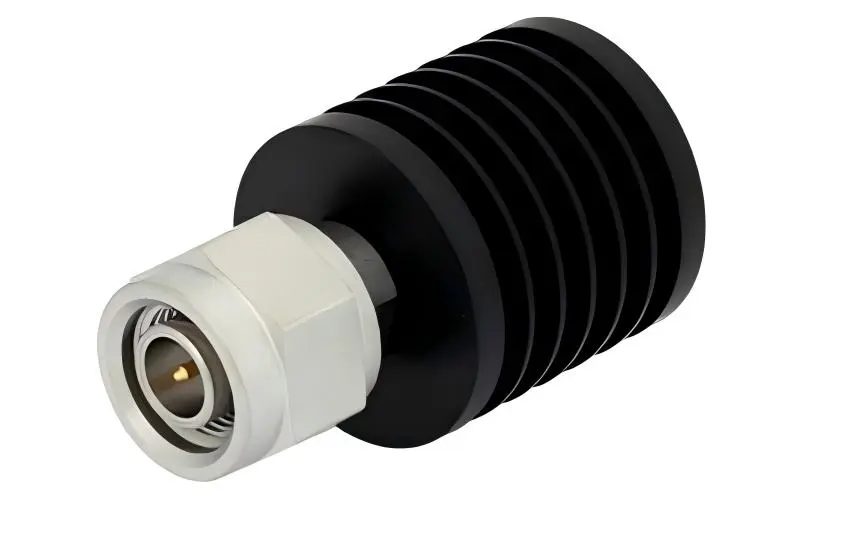
How to Choose the Right TNC RF Coaxial Load for Your Testing Needs
It really depends on what you are trying to do. You need to know the specifications of your application to choose the right RF termination. The choice process is one of matching frequency requirements, power handling requirements, and environmental circumstances to available product specifications.
Analyzing Frequency and Power Requirements
The model that is right for your application depends on your operation frequency. Conventional versions perform quite well for equipment testing below 12.4 GHz (which covers most cellular, WiFi, and typical microwave applications) and at affordable prices. For higher frequencies such as satellite uplink systems or sophisticated radar testing, you need high-end devices rated to 18 GHz. Power handling concerns are more than just average power. Continuous power ratings are for steady-state operation, but if you are evaluating transmitters that produce pulsed outputs, it’s the peak power specs that count. For example, radar systems have high peak powers while transmitting pulses. Matching the output characteristics of your source equipment to the power standards of the TNC RF coaxial load can avoid heat damage and preserve measurement accuracy.
Comparing Connector Types
The TNC interface has several benefits over other kinds of connectors. TNC connectors function better than BNC connectors at high frequencies because the threaded coupling offers a uniform contact pressure and improved shielding integrity. Unlike push-on BNC, which may work loose due to vibration, TNC threaded connections stay tight on mobile testing platforms and in manufacturing settings with mechanical activity. Compared to N-Type connections, TNC provides equivalent frequency performance in a more compact form factor, while N-Type handles greater power levels. SMA connections are also good for even higher frequencies, although they are more fragile. The TNC provides a realistic mix of frequency capabilities, robustness, and simplicity of use, making it excellent for production test settings and field applications where the equipment is subject to repetitive handling.
Environmental and Durability Considerations
Testing environments are all over the map by industry. In the lab, you regulate temperature and humidity. Out in the field, you might be exposed to harsh weather. Standard versions work well in climate-controlled environments, but outside cellular tower testing or military field operations need vast temperature variances. Humidity issues are important in either coastal or tropical regions. Such circumstances call for better sealing and platings that resist corrosion to lengthen service life. Don’t only think about the environment; think about how hard you’re using it. For high-volume production test facilities, connectors rated for a higher number of insertion-removal cycles are preferable as they will need to be replaced less often and are more likely to retain a constant calibration.
Procurement Guide: Where and How to Buy TNC RF Coaxial Loads
To find good sources for RF components, you need to know which vendors you can trust and which procurement characteristics will impact both initial cost and long-term value.
Identifying Reputable Manufacturers and Suppliers
The RF component market is dominated by well-known worldwide manufacturers and specialised regional makers. Global brands with large distribution networks and standardised product lines include Pasternack, Bird, Amphenol, Mini-Circuits and TE Connectivity. These firms provide uniform requirements and wide interoperability with test equipment from leading instrument manufacturers. Often, regional experts, like precision RF component makers, may give competitive benefits in customisation, lead times, and technical support. For example, Shaanxi Chuangyu Electronic Technology Co., Ltd. is a TNC RF coaxial loads manufacturer, specialising in high-frequency components up to 110 GHz. They have an integrated manufacturing, R&D, and testing facility in Xi'an, and their 1000 square metre, state-of-the-art production plant produces 500,000 RF components per year. The size allows for both prototype development and volume production, which is important for organisations transferring items from development to manufacture.
Evaluating Procurement Terms
Minimum order amounts vary widely amongst vendors. Large distributors would prefer lower starting quantities but at increased unit prices, while direct purchases from manufacturers usually demand bigger minimum order quantities but with improved pricing. The ability to customise is vital if your application doesn’t quite fit the basic standards. Some providers offer custom frequency ranges, unique coatings, or improved power ratings. Beyond initial product pricing, warranty coverage and after-sales assistance are what distinguish vendors. You are protected by an extensive warranty against manufacturing defects and may get timely technical help for application and troubleshooting concerns. Shipping logistics and customs procedures can influence lead times when sourcing for the U.S. market. Suppliers with existing North American distribution agreements or warehouses are able to provide speedier delivery than shipping directly from abroad, eliminating project delays.
Understanding Pricing and Value Factors
Component price is driven by materials, manufacturing accuracy, testing rigour, and supplier overhead. Lower-cost choices could employ cheaper resistant materials or simpler production procedures, which might impair long-term stability. Mid-range goods often provide dependable performance for common uses. More expensive choices make sense for tighter tolerances, wider frequency ranges, or better environmental ratings. Total cost of ownership, not just purchase cost. A device rated at 200 insertion cycles will cost more per insertion than a device certified at 500 cycles, even if the original cost is more. Similarly, components with improved heat management stay calibrated longer, eliminating the need for repeat testing and the accompanying cost of labour.
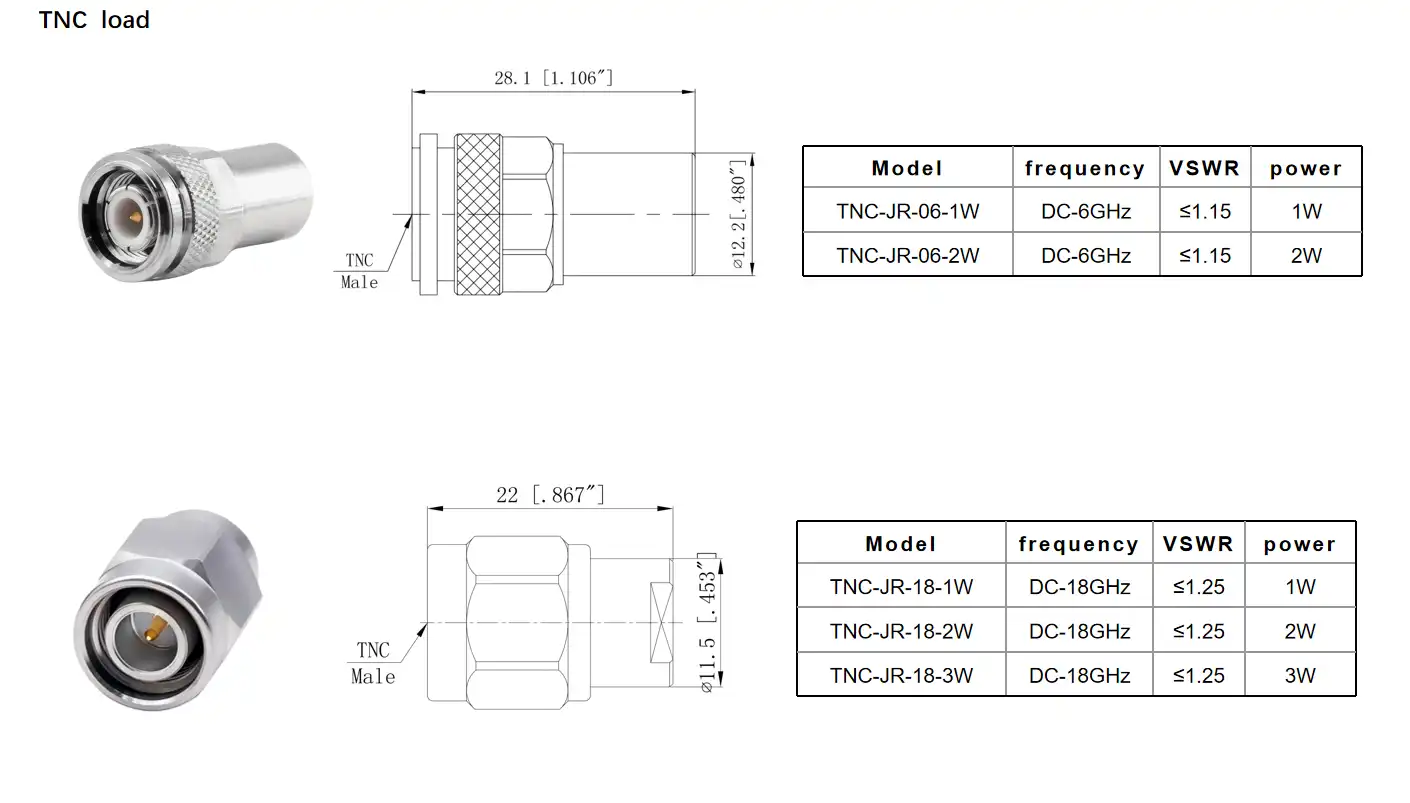
Testing and Maintaining Your TNC RF Coaxial Load
Good testing and maintenance processes guarantee continuous performance of your RF termination loads throughout their service life.
Performance Verification Procedures
Periodic testing assures your termination loads are within specifications. A vector network analyser (VNA) is used for the most complete examination by means of VSWR testing. Sweep the complete frequency range and stop the load in a calibrated VNA port. VSWR readings should be less than 1.4 for all frequencies. If the VSWR is higher, then something is wrong and should be investigated. Load impedance tests confirm the load is 50Ω. The temperature increases throughout the power test, which means it is absorbing the energy properly. Apply the rated continuous power and check the housing temperature using an infrared thermometer. Overheating signals intrinsic deterioration or poor heat dissipation. Peak power capability needs unique pulsed RF sources, although the TNC RF coaxial load may be assured of transient capability without harm with periodic testing.
Maintenance Best Practices
Proper maintenance prolongs the life of the components and ensures accurate measurements. After every 20 insertions and removals, clean the connection end face, inner conductor, and interface gaps using a cotton swab soaked in isopropyl alcohol. This procedure provides oxidation and pollutant removal from gold-plated surfaces without damage to delicate platings. Do not use metal tools or abrasive materials, which may damage protective coatings. Store unused units in controlled conditions. Storage temperature between -20°C and +60°C with relative humidity less than 50%. Load placement should be avoided near sharp items that might damage connections or near strong magnetic fields that could interfere with sensitive equipment. Long-term storage: Visual checks monthly to detect early corrosion, deformation,n or plating deterioration. Connection techniques are an important factor for the lifetime of the component. Make sure that the connections are properly aligned before tightening. Torque between 1.2 and 1.8 N·m. Enough to make good contact, not enough to crush parts. Over-tightening may bend inner conductors, distort housings, or break insulating media, which might result in sporadic failures or permanent damage. To detach, pull straight on the connector axis instead of twisting, which strains the interface threads.
Service Life and Replacement Criteria
Good maintenance or not, RF loads will ultimately have to be replaced. After 1,000 hours of operation, do thorough VSWR testing across the whole frequency band. Values greater than 1.4 need a manufacturer calibration or replacement. Any component that has experienced a hard shock, a drop, or a thermal overload should be tested immediately, regardless of the number of hours on the component. Visible damage to housings, threads of connectors, or heat sink surfaces requires repair even if electrical test results are OK. A lower power absorption capability, shown by overheating at rated power, shows deterioration of the internal resistance element. Continued use of the affected loads is a danger both to measurement mistakes and to damage to the source equipment. Timely replacement is a cost-efficient preventative measure.
Why Choose Chuangyu's TNC RF Coaxial Load Solutions for Your Business
RF component selection should include technical performance, manufacturing quality, and supplier reliability. Chuangyu has over 20 years of precision RF manufacturing and high-frequency testing experience.
Product reliability begins with quality production. Chuangyu's ISO- and RoHS-compliant Xi'an quality management systems exceed global performance and environmental standards. The 200-square-meter R&D lab enables rapid prototyping and custom development, while the 800-square-meter production workshop features precise manufacturing equipment and advanced control systems. This infrastructure produces 500,000 RF components and one million test probes annually, enabling supply agreements and easy scalability for growing applications. Product customisation distinguishes Chuangyu. Many applications employ catalogue products, but specific testing needs new standards. Chuangyu's engineering team works with clients on frequency ranges, power ratings, environmental considerations, and mechanical designs. This flexibility benefits aerospace, military, and advanced research applications where off-the-shelf components fail to meet tight criteria.
Technical support throughout the product life improves customer relationships. From specification to post-delivery application support, experienced engineers assist with component selection, integration, and troubleshooting. This capability reduces development time and prevents costly specification mismatches. Products have survived strain in telecommunications, aircraft, and defence. Chuangyu's RF loads helped a big telecommunications equipment manufacturer's 5G base station testing systems achieve consistent measurement precision across thousands of production units. Aerospace contractor satellite ground station equipment maintains precise termination properties across large temperature ranges. New customers evaluating suppliers may trust these applications to check product design and manufacturing consistency.
Conclusion
Selecting the right RF termination load requires understanding the interplay between technical specifications, application requirements, and supplier capabilities. Quality TNC RF coaxial loads provide the foundation for accurate high-frequency measurements, protecting valuable test equipment while ensuring reliable data. The combination of proper component selection, regular maintenance, and responsive supplier support creates a testing infrastructure that delivers consistent results over years of operation. Whether equipping a new laboratory, upgrading production testing capabilities, or supporting field maintenance operations, investing in proven RF components from experienced manufacturers minimizes long-term costs while maximizing measurement confidence.
FAQ
1. What frequency ranges do TNC RF coaxial loads typically cover?
Standard TNC termination loads operate from DC to 12.4 GHz, covering most commercial wireless communications, WiFi systems, and general microwave testing applications. High-end models extend to 18 GHz, supporting advanced satellite communications, military radar testing, and upper microwave band applications. The specific frequency range should match your test equipment and signal sources to ensure proper termination characteristics across all operating frequencies.
2. Can I interchange TNC loads with N-Type or BNC connectors?
Direct interchange requires appropriate adapters, though this introduces additional connection points that can degrade performance. TNC and N-Type connectors share similar dimensions but use different threading. BNC connectors use a bayonet coupling incompatible with threaded TNC interfaces. While adapters exist, they add length, potential reflection points, and frequency limitations. Native TNC connections provide optimal performance for equipment designed with TNC interfaces, maintaining signal integrity without adapter-related compromises.
3. How do I know when my RF load needs replacement?
Regular VSWR testing provides the most reliable indication. When measurements exceed the specified value (typically 1.4), the load requires calibration or replacement. Physical inspection reveals housing damage, connector thread wear, or discoloration from overheating. Loads experiencing power levels beyond ratings or mechanical shocks should be retested immediately. After 1,000 operational hours, comprehensive testing verifies continued specification compliance even without visible damage.
Contact Chuangyu for Premium TNC RF Coaxial Load Solutions
Your testing accuracy depends on reliable termination components. Chuangyu delivers precision-engineered RF loads combining proven 50Ω designs with rugged TNC connectors, serving industries from telecommunications to aerospace. Our Xi'an manufacturing facility produces components meeting international quality standards with customization capabilities for specialized requirements. Whether you need standard catalog products or application-specific modifications, our engineering team provides technical consultation throughout your project. Contact our team at chuangyuwz01@cymicrowave.com to discuss your requirements, request detailed specifications, or obtain competitive pricing for volume orders.
References
1. Pozar, David M. Microwave Engineering, 4th Edition. Wiley, 2011.
2. Rizzi, Peter A. Microwave Engineering: Passive Circuits. Prentice Hall, 1988.
3. Vendelin, George D., et al. Microwave Circuit Design Using Linear and Nonlinear Techniques, 2nd Edition. Wiley-Interscience, 2005.
4. Institute of Electrical and Electronics Engineers. IEEE Standard for Precision Coaxial Connectors (DC to 110 GHz). IEEE Std 287-2007.
5. Agilent Technologies. Agilent Network Analyzer Basics. Application Note 1287-1, 2004.
6. Maury Microwave Corporation. RF and Microwave Terminations Selection Guide. Technical Publication MT-101, 2018.