- English
- French
- German
- Portuguese
- Spanish
- Russian
- Japanese
- Korean
- Arabic
- Greek
- German
- Turkish
- Italian
- Danish
- Romanian
- Indonesian
- Czech
- Afrikaans
- Swedish
- Polish
- Basque
- Catalan
- Esperanto
- Hindi
- Lao
- Albanian
- Amharic
- Armenian
- Azerbaijani
- Belarusian
- Bengali
- Bosnian
- Bulgarian
- Cebuano
- Chichewa
- Corsican
- Croatian
- Dutch
- Estonian
- Filipino
- Finnish
- Frisian
- Galician
- Georgian
- Gujarati
- Haitian
- Hausa
- Hawaiian
- Hebrew
- Hmong
- Hungarian
- Icelandic
- Igbo
- Javanese
- Kannada
- Kazakh
- Khmer
- Kurdish
- Kyrgyz
- Latin
- Latvian
- Lithuanian
- Luxembou..
- Macedonian
- Malagasy
- Malay
- Malayalam
- Maltese
- Maori
- Marathi
- Mongolian
- Burmese
- Nepali
- Norwegian
- Pashto
- Persian
- Punjabi
- Serbian
- Sesotho
- Sinhala
- Slovak
- Slovenian
- Somali
- Samoan
- Scots Gaelic
- Shona
- Sindhi
- Sundanese
- Swahili
- Tajik
- Tamil
- Telugu
- Thai
- Ukrainian
- Urdu
- Uzbek
- Vietnamese
- Welsh
- Xhosa
- Yiddish
- Yoruba
- Zulu
Choosing a reliable multipin feedthrough supplier demands attention to technical capability, quality certifications, customization flexibility, and after-sales support. The right supplier should demonstrate proven expertise in hermetic sealing technologies, maintain ISO and industry-specific certifications, offer transparent pricing with reasonable MOQs, and provide responsive engineering support throughout your project lifecycle. Successful procurement hinges on verifying supplier credentials through factory audits, reviewing case studies from similar applications, and confirming their ability to meet your exact specifications for pin count, materials, and environmental performance.

Core Criteria to Evaluate When Selecting a Multipin Feedthrough Supplier
To choose the best partner, you need to carefully look at a lot of factors that affect both the quality of the product and how quickly you can get it. The multipin feedthrough suppliers you hire should be able to show that they can do more than just make things.
Certifications and Compliance Standards
A supplier's process maturity and loyalty to standards can be objectively shown by quality certificates. ISO 9001 certification means that quality management systems have been in place for a while, while industry-specific certifications like MIL-DTL-83513 compliance and GJB 2446A approval show that the company can meet military-grade standards. Following the rules for RoHS and REACH ensures that companies are responsible for the environment and can enter markets in all regulatory areas. When looking at possible partners, you should ask for certification documents and check with the groups that issued them to make sure they are real.
Technical Capabilities and Product Range
A good supplier keeps a wide range of products with different pin numbers, sealing methods, and environmental grades. This breadth shows how flexible manufacturing is and how deep engineering goes. When you work with suppliers who offer both standard catalog items and custom designs, you can change your projects as needed. One supplier that can help with ceramic insulation, polymer sealing, and glass-to-metal sealing makes transportation and technical planning easier.
Customization Flexibility
Off-the-shelf options don't usually meet the specific needs of RF communications, photovoltaic tests, or medical device uses. Check out suppliers based on how many engineering resources they have set aside for customization. Can they change the pin shapes to fit the style of your PCB? Do they work with products or finishes that aren't standard? When it comes to custom feedthrough assemblies, suppliers with in-house design teams cut down on iteration cycles and speed up time-to-market.
Reputation and Client Feedback
A supplier's reputation is built by consistently meeting the needs of many customers and applications. Ask for case studies that show how deployments have worked well in businesses similar to yours. Customer reviews give you an idea of how quick, problem-solving, and reliable a business is over the long run. Because customers and regulators are so strict, manufacturing partners that work with the defense, medical device, and aircraft industries usually have higher quality standards.
Pricing Transparency and Total Cost Considerations
Clear price models help people trust each other and make planning easier. Competent providers give thorough quotes that include unit costs, tooling costs for special designs, and terms for shipping. Prices should be looked at in terms of the total cost of ownership, which includes things like dependability, warranty coverage, and the value of expert help. Minimum order quantities (MOQs) show how efficiently a product can be made. MOQs that are flexible allow for prototyping and small-batch production, while volume pricing rewards commitments that are bigger.
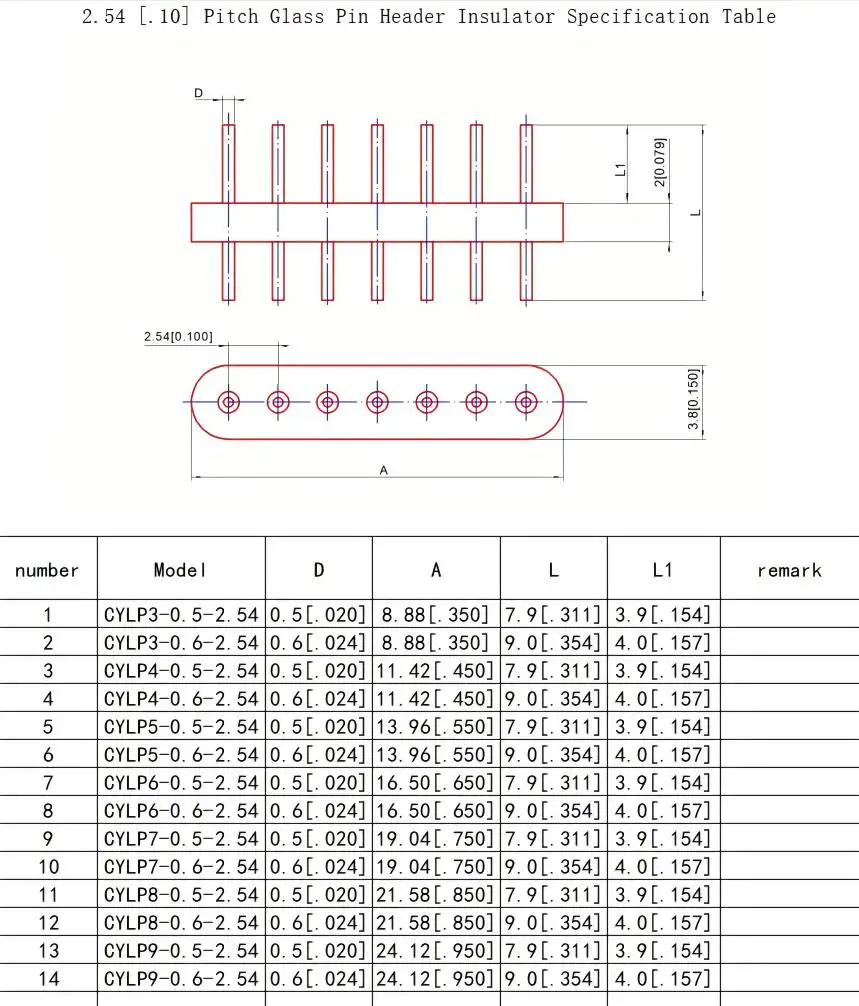
Comparative Analysis: Multipin Feedthrough Suppliers and Alternatives
When making strategic sourcing choices, it's helpful to know how the different feedthrough setups and multipin feedthrough supplier skills fit with the needs of your application.
Multipin vs. Single-Pin Feedthrough Performance
When compared to multiple single-pin units, multipin designs combine multiple electrical paths through a single penetration point. This means that the enclosure doesn't need to be changed as much, and installation is easier. This combination makes better use of room and often makes the whole system more reliable by reducing the number of possible leak paths. Single-pin feedthroughs, on the other hand, are better when different circuits need different voltage ratings, current capacities, or maintenance schedules. Cost analysis should look at both the prices of the parts and the labor needed to install them. Despite having higher per-unit prices, multipin solutions usually lower total installation costs.
Differentiating Supplier Capabilities
Leading manufacturers set themselves apart by introducing new technologies and strict quality controls. Some are great at working in ultrahigh vacuums with leak rates below 10⁻⁹ mbar·l/s, while others are great at working continuously at temperatures above 200°C. The efficiency of electromagnetic shielding changes a lot between suppliers, which makes it less suitable for RF uses. Customer service success shows up in how quickly technical support responds, how many samples are available, and how willing everyone is to work together to improve the design.
Benchmarking Tools and Validation Methods
Audits of suppliers let you see firsthand how things are made, how quality is controlled, and how well they can be tested. Factory visits show things about the technology of the tools, the level of cleanliness, and the skill level of the workers that written records alone can't show. Ask for proof testing of important factors such as leak rate verification, insulation resistance, and dielectric hold voltage. Suppliers who are sure of their quality will gladly let customers help with inspection procedures. Before committing to production quantities, testing a sample under your true working conditions gives you real-world information about how well it works.
Procurement Best Practices for Multipin Feedthroughs
Efficient buying methods help you get the right feedthroughs while staying within the project's budget and timeline and building good relationships with a multipin feedthrough supplier.
Technical Documentation Preparation
Details-rich specifications speed up accurate quotes and cut down on revision cycles. List the number of required pins, the maximum current per pin, the voltage that the device must be able to handle, and the temperature range it can work in. Give details about how you want the housing to be mounted, the material you want it to be made of, and any special weather hazards, such as salt spray, radiation, or chemical exposure. Include interface plans that show how the connectors fit together and PCB pad layouts for unique designs. During the review, it is important to make sure that everyone understands the acceptance standards for leak rates, insulation resistance, and contact resistance.
Managing Lead Times
Standard items from the store usually ship in two to four weeks. Custom multipin feedthrough designs, on the other hand, need eight to twelve weeks for molding, prototype testing, and production. Suppliers who have their own machine shops and can seal glass in-house usually have shorter lead times than those who outsource specialized processes. Make reasonable schedules that take into account sending goods internationally, clearing customs, and inspecting goods as they come in. Set up contact protocols for milestones to keep track of the work on custom orders and deal with problems before they happen.
International Trade Considerations
Cross-border purchasing adds a layer of complexity to the logistics process that needs careful attention to a number of factors. Make sure that your providers know the export control rules that apply to your business, especially those that have to do with defense and aircraft. Make Incoterms clear to figure out who pays for shipping, insurance, and clearing customs. Currency changes should be taken into account when setting prices for long-term supply agreements. Look for providers that have a history of sending goods internationally so that you can avoid delays and paperwork mistakes.
After-Sales Support Framework
Long-term partnerships with suppliers go beyond the initial delivery. Make it clear what the warranty covers when it comes to manufacturing flaws and early failures. Set up rules for how technical support should answer questions about installation, help with troubleshooting, and provide application engineering advice. When you need new parts quickly, responsive providers keep them in stock and offer faster shipping. When you do regular performance reviews, you can talk about quality trends, make sure that specs are clear, and look into ways to cut costs as production numbers rise.
Case Studies and Practical Tips for Choosing the Right Supplier
Real-life examples show how carefully choosing a multipin feedthrough supplier has a direct effect on the results of projects in a wide range of businesses.
Aerospace Application Success
A company that makes satellites needed multipin vacuum feedthroughs that could handle rapid changes in temperature and vibrations during launch. The supplier they chose gave them J30J series connectors with Kovar alloy housings, glass sintering technology, and qualification test data that showed the connectors met space-grade requirements. The feedthroughs stayed sealed after 500 thermal cycles at temperatures ranging from -55°C to +125°C and vibration tests at 196m/s². This relationship with a supplier provided steady performance over the course of a five-year mission, proving the value of strict supplier approval processes.
Medical Device Integration
A company that makes medical devices that are implanted needs special multipin feedthroughs made of safe materials and in small sizes. During the design phase, they worked together with their supplier partner to come up with pin configurations that kept signals safe while still fitting within size limits. The supplier's ISO 13485 certification and knowledge of FDA rules made the approval process go more quickly. After starting, reliability in the field was higher than 99.9% for three years, showing that supplier knowledge in specific uses lowers project risk.
Industrial Vacuum Equipment Deployment
A company that makes semiconductor equipment was looking for feedthroughs for chip processing rooms that worked at 10⁻⁵ Pa vacuum levels. They looked at a lot of sources by testing samples and inspecting factories before choosing one with special tools for finding helium leaks and written process controls. The transparent communication during custom design iterations and quick technical support during installation troubleshooting from the chosen supplier set the stage for ongoing collaboration across multiple product lines.
Procurement Manager Checklist
Successful supplier selection consistently addresses these decisive factors:
- Instead of depending only on what the seller says, check current certifications with the organizations that issued them.
- Read written case studies from apps that are similar to what you need.
- Talk to engineering staff, not just sales reps, to get a better idea of how customizable something is.
- Check how responsive technical support is by looking at how people talk to each other during the quote process.
- Make sure that testing equipment is available for the important parameters that are unique to your application.
- Make it clear how intellectual property rights are protected for custom designs that are worked on together.
- Before you place an order, make sure you have clear quality acceptance standards and inspection processes.
Conclusion
When looking for a trusted multipin feedthrough supplier, you need to think about their technical skills, quality processes, ability to make changes, and willingness to work with you. To make the best purchasing choices, you should carefully look at certifications, production capabilities, and past work that has been done in situations similar to yours. Factory surveys, sample testing, and checking references are all good ways to thoroughly evaluate suppliers. This lowers project risk and speeds up development times. Clear communication of requirements, quality standards, and performance standards sets the stage for long-term relationships that work well. As more and more industries need higher performance in tough conditions, your partnerships with suppliers become strategic assets that set your products apart and allow for new ideas.
FAQ
1. What certifications should I prioritize when evaluating potential suppliers?
Focus on ISO 9001 for quality management systems and certifications that are specific to your industry, like MIL-DTL-83513 for defense, ISO 13485 for medical devices, or AS9100 for aerospace. Environmental compliance through RoHS and REACH certification makes sure that rules are followed. For copies of current certificates, ask the organizations that issued them to confirm their validity from the multipin feedthrough suppliers.
2. What are typical lead times for custom multipin feedthrough orders?
For custom designs, the whole process usually takes eight to twelve weeks, which includes technical review, sample manufacturing, testing and validation, and production runs. Items from a normal catalog usually ship between two and four weeks. Lead times depend on the complexity of the design, the supply of materials, and the production plans of the suppliers. Set clear communication milestones to keep track of progress.
3. How extensively will suppliers support design modifications?
Capable providers give technical help throughout the design process by suggesting pin configurations, material choices, and mounting options. Partners who work together take part in design reviews, make suggestions for improving performance, and work with changes to specifications that happen during development. Check how responsive engineering was during the initial quote interactions to get an idea of the level of support.
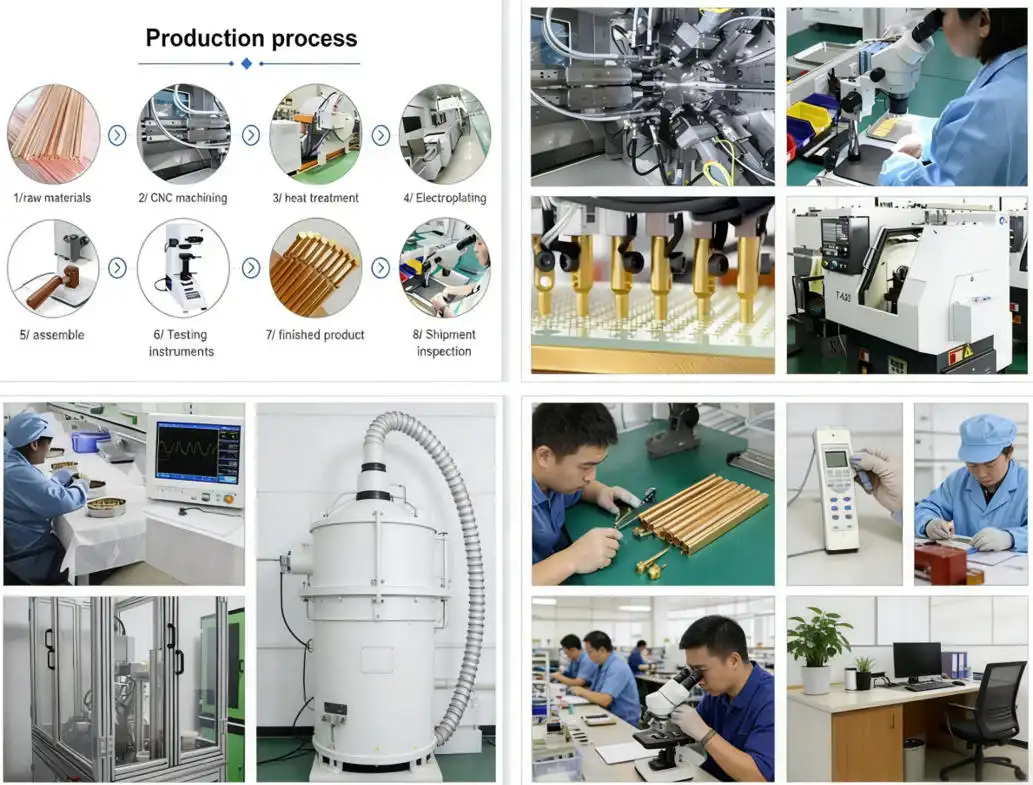
Partner with Chuangyu for Your Multipin Feedthrough Requirements
If you need precise electrical connectivity, Shaanxi Chuangyu Electronic Technology can help as a reliable multipin feedthrough supplier. They offer a wide range of multipin feedthrough solutions and have been in the engineering business for almost twenty years. Our factory in Xi'an makes unique designs, hermetically sealed connectors, and vacuum feedthroughs that meet the strict requirements of the semiconductor, medical device, photovoltaic, and aircraft industries. We keep our ISO quality certifications, our specialized glass sintering skills, and our engineering teams that know how to make solutions that fit the needs of each application. We are a strategic manufacturing partner for demanding applications because our prices are clear, our minimum order quantities (MOQs) start at prototype quantities, and our technical support is quick to respond throughout the lifecycle of your project. Email our engineering team at chuangyuwz01@cymicrowave.com to talk about your needs, ask for technical information, or set up a visit to our plant to see how we do quality control firsthand.
References
1. Electronic Industries Alliance. (2019). Standard for Hermetic Feedthrough Connectors: Design, Testing, and Quality Assurance. Arlington: EIA Publications.
2. Morrison, R., & Chen, L. (2021). Glass-to-Metal Sealing Technologies for High-Reliability Electronics. Boston: Technical Press International.
3. Institute of Electrical and Electronics Engineers. (2020). IEEE Guide for Selection and Application of Hermetic Electrical Feedthroughs. New York: IEEE Standards Association.
4. Defense Logistics Agency. (2018). MIL-DTL-83513: Detail Specification for Connectors, Electrical, Rectangular, Miniature, Hermetically Sealed. Philadelphia: DLA Document Services.
5. Wagner, H. J. (2022). Vacuum Technology for Industrial Applications: Component Selection and System Design. Berlin: Springer Technical Publishing.
6. National Aerospace Standards Committee. (2020). Quality Management Systems Requirements for Aviation, Space and Defense Organizations: AS9100D Standard. Washington: SAE International.