- English
- French
- German
- Portuguese
- Spanish
- Russian
- Japanese
- Korean
- Arabic
- Greek
- German
- Turkish
- Italian
- Danish
- Romanian
- Indonesian
- Czech
- Afrikaans
- Swedish
- Polish
- Basque
- Catalan
- Esperanto
- Hindi
- Lao
- Albanian
- Amharic
- Armenian
- Azerbaijani
- Belarusian
- Bengali
- Bosnian
- Bulgarian
- Cebuano
- Chichewa
- Corsican
- Croatian
- Dutch
- Estonian
- Filipino
- Finnish
- Frisian
- Galician
- Georgian
- Gujarati
- Haitian
- Hausa
- Hawaiian
- Hebrew
- Hmong
- Hungarian
- Icelandic
- Igbo
- Javanese
- Kannada
- Kazakh
- Khmer
- Kurdish
- Kyrgyz
- Latin
- Latvian
- Lithuanian
- Luxembou..
- Macedonian
- Malagasy
- Malay
- Malayalam
- Maltese
- Maori
- Marathi
- Mongolian
- Burmese
- Nepali
- Norwegian
- Pashto
- Persian
- Punjabi
- Serbian
- Sesotho
- Sinhala
- Slovak
- Slovenian
- Somali
- Samoan
- Scots Gaelic
- Shona
- Sindhi
- Sundanese
- Swahili
- Tajik
- Tamil
- Telugu
- Thai
- Ukrainian
- Urdu
- Uzbek
- Vietnamese
- Welsh
- Xhosa
- Yiddish
- Yoruba
- Zulu
An SMA RF attenuator protects your spectrum analyzer by reducing excessive signal power before it reaches the instrument's sensitive input stage. This critical component prevents front-end damage caused by overload conditions while preserving signal integrity and measurement accuracy. By inserting controlled attenuation between the signal source and analyzer, these devices ensure your equipment operates within safe power limits, extending service life and maintaining calibration stability across demanding RF testing environments.
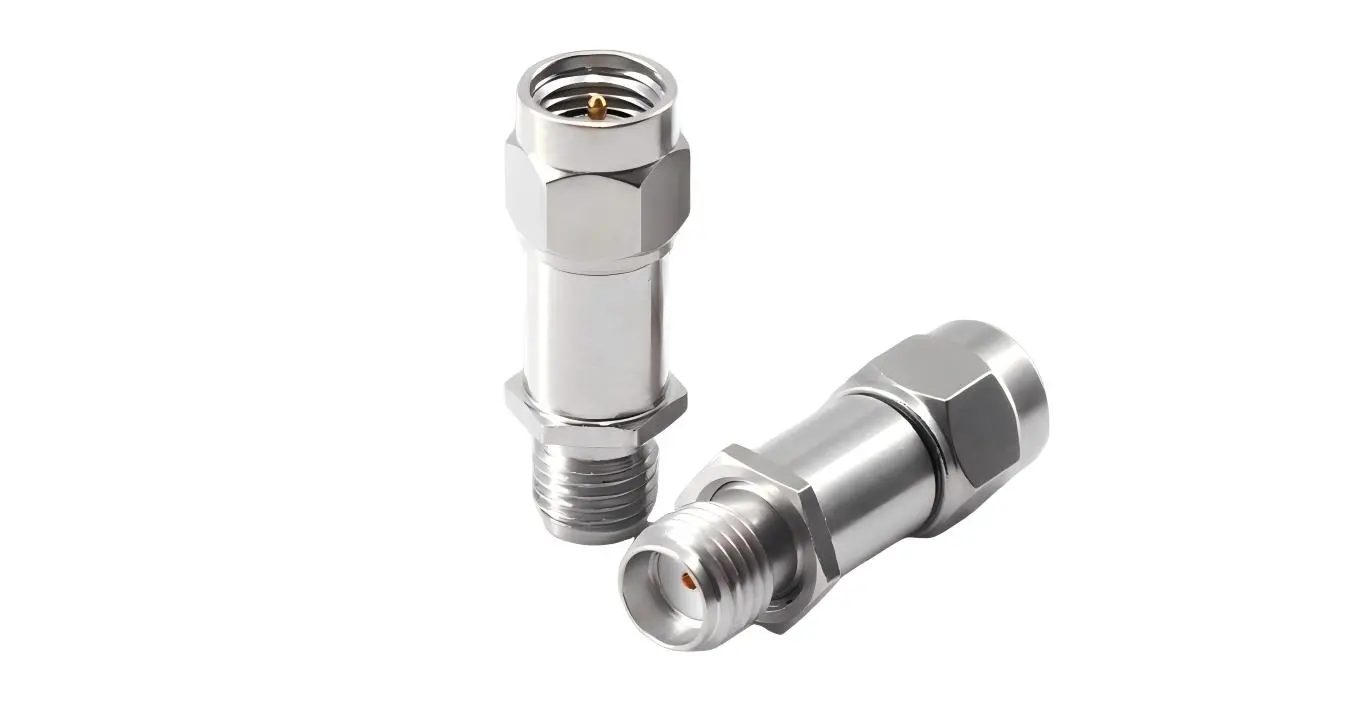
Why Protecting Your Spectrum Analyzer Is Critical
Vulnerability of Precision Measurement Systems
For high-performance types, spectrum analyzers often cost more than six figures, which is a lot of money. Low-noise amplifiers, mixers, and local oscillators are some of the sensitive front-end parts in these instruments that are made to pick up sounds at microvolt levels. When too much power comes in through the input port, damage happens quickly. In a single overload event, amplifiers can be burned out, mixer diodes can be destroyed, and input circuits can become damaged. Repairs often cost more than a few thousand dollars, and that doesn't include the time that the machine is down, which affects production plans and testing processes.
Real-World Damage Scenarios
Take a look at a 5G base station test case where the transmitted power is +43dBm (20 watts). Connecting this signal directly to an analyzer that can handle a maximum input level of +30dBm will fail right away if you don't use the right SMA RF attenuator. The front-end parts can't get rid of the extra energy, so within milliseconds, thermal damage happens. Over time, even signals that are below the exact maximum ratings can cause slow degradation, which can change the calibration and make measurements less accurate.
Measurement Integrity Preservation
In addition to protecting against damage, SMA RF attenuators keep the standard of measurements. When signals coming into an analyzer get close to its compression point, nonlinear distortion shows up in the spectra that are shown. Harmonics and intermodulation products that weren't in the original signal can be seen all of a sudden, which can lead engineers to come to the wrong conclusions about how well the device is working. Bringing signal levels down to the instrument's linear operating range makes sure that what you measure is a good representation of what you're testing.
Long-Term Asset Management
The economics of a lab are directly affected by how long the equipment lasts. When an SMA RF attenuator is used correctly, it protects analyzers so they stay in factory specs for longer, need to be calibrated less often, and show better measurement repeatability. When procurement teams look at the total cost of ownership, instruments that are properly protected give a better return on investment because they last longer and cost less to maintain.
Key Performance Factors When Choosing an SMA RF Attenuator
Frequency Range Matching
The SMA RF attenuator must have a frequency range that works with your application. A device that is designed to work at 18GHz doesn't work well at 26GHz, which leads to measurement errors because of higher insertion loss and VSWR degradation. When testing new 5G devices that work in millimeter-wave bands, it is important to choose parts that are rated for extended frequency coverage. Mismatched frequency response leads to regular mistakes that weaken the validity of the test, which could mean that compliant devices fail qualification or defective units pass.
Power Handling Capacity
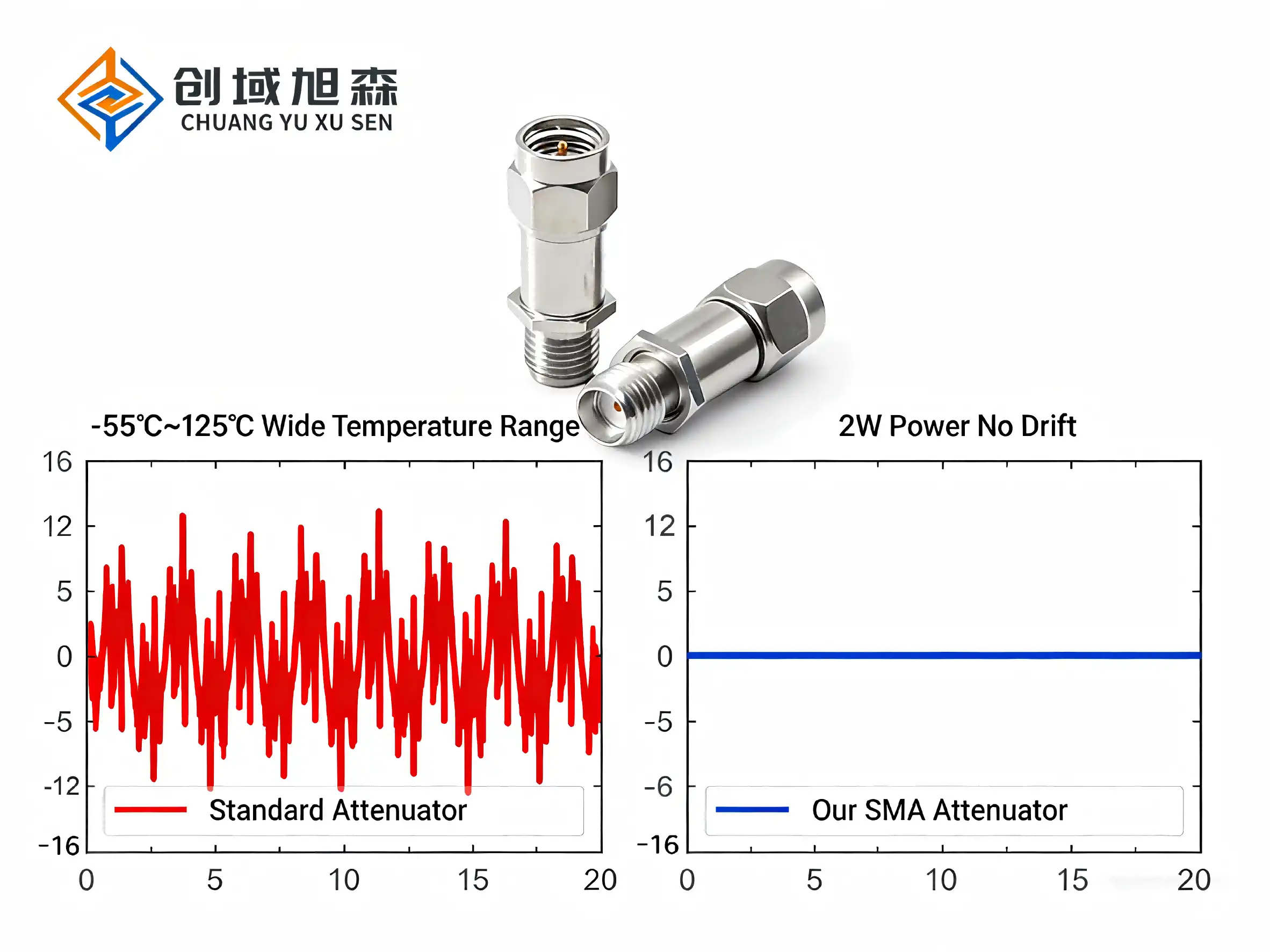
Average power ratings set the limits for constant operation, while peak power ratings deal with pulsed signals that are common in tests for radar and telecommunications. A 2W average power SMA RF attenuator can handle steady-state conditions like those found in continuous-wave tests, but peak power capability needs to be thought about for pulse uses. The 0.1kW peak grade and set pulse width and duty cycle factors make sure that parts can handle sudden changes without breaking. To make sure there is enough safety margin, engineers have to figure out the actual power levels at the attenuator, taking into account cable losses and the source's characteristics.
Impedance Characteristics and VSWR
For test tools, all RF systems use a 50Ω resistance, but there are also 75Ω systems used for video distribution. Reflections that mess up measurements can be avoided by making sure that the impedance stays the same throughout the signal chain. VSWR measures how well the resistance matches. For example, a VSWR of 1.2 means that only 4.3% of the power that hits the load is reflected back toward the source. Lower VSWR values lower the uncertainty of measurements and shield signal sources from reflected energy that might change the stability of output. Good SMA RF attenuators keep the VSWR at a certain level across their whole frequency range, not just at certain frequencies.
Attenuation Accuracy Considerations
When adjusting systems or checking gadget specs, accuracy is important. Every measurement is skewed by 0.7dB when an SMA RF attenuator that says "10dB" but only gives 9.3dB actually does. This mistake spreads through calculations when testing amplifier gain or filter insertion loss, and it could lead to specification failures. Tight tolerances—±0.5dB for lower values and ±1dB for higher attenuation—ensure that the measurements are accurate. Regular checks with precise network monitors make sure that performance stays within the component's limits for as long as it's used.
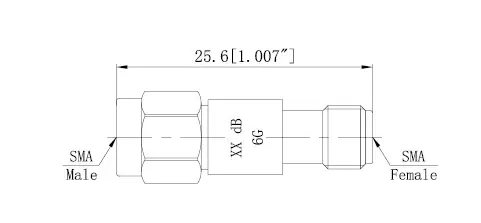
Comparing SMA RF Attenuators with Other Types for Spectrum Analyzer Protection
SMA Versus BNC Configurations
During the 1990s, BNC connectors were the most common type used for RF testing. However, they have a lot of problems above 4GHz. Even though their bayonet connection method is handy, it creates impedance discontinuities that make VSWR and insertion loss worse at higher frequencies. Engineers who work with older equipment below 1GHz can get by with BNC units, but modern wireless communications, satellite systems, and radar applications need SMA RF attenuator performance. Because SMA connectors' threaded coupling makes them more mechanically stable and electrically consistent, they are commonly used in modern test environments.
N-Type Alternatives
N-type connectors can handle a lot more power—often 100W or more—which makes them good for testing transmitters and figuring out what high-power amplifiers are made of. Because they are bigger, they can hold bigger center conductors and get rid of heat better. This small size advantage isn't so great in small test sets or when working above 18GHz, though. N-type SMA RF attenuators work best in situations where power handling is more important than frequency expansion, while SMA configurations are best for installations that need to cover a wide frequency range but don't have a lot of room.
2.4mm and 1.85mm Precision Connectors
When testing goes beyond 26GHz and into millimeter-wave frequencies, you need 2.4mm connectors that can handle 50GHz and 1.85mm connectors that can handle 67GHz. For these precise connections to work, they need to be handled with great care. They need to be installed in a clean room and must be carefully checked before each link. They let you measure things that you can't do with regular SMA RF attenuator parts, but they usually cost three to five times as much. Procurement planning tools aren't general-purpose answers because they aren't always available and wait times are long.
Performance-Cost Trade-Offs
SMA RF attenuators from less well-known brands can be as cheap as $30 to $50, while high-quality models from well-known names can cost $200 to $400. This difference in price is due to manufacturing tolerances, the quality of the materials, and performance testing. When the frequency limits get close, cheap parts often have worse VSWR, bigger loss tolerances, and less power handling. People who work in procurement have to weigh the benefits of short-term cost savings against the need for long-term dependability and measurement confidence. Protecting six-figure instruments should be done with tried-and-true parts that have been tested and come with maker support.
Procurement Insights for SMA RF Attenuators in B2B Contexts
Supplier Evaluation Criteria
To find reliable suppliers of SMA RF attenuators, you need to look at more than just the unit price. Manufacturing skills are important. Suppliers who do their own production can better control quality than brokers who get their supplies from different subcontractors. Ask for details about the places where the products are made, the systems used to manage quality, and the testing methods used. Established providers keep full test records for every production lot. This allows for tracking that meets the standards of ISO 9001 and AS9100, which are popular in aerospace and defense uses.
Pricing Structures and Volume Considerations
When a lot of units are ordered, the unit price goes down a lot. One SMA RF attenuator could cost $150, but if you buy 100 of them, the price could drop to $85 each, a 43% cut. Setting up yearly purchase deals that lock in good prices and guarantee the supply of parts is good for OEM integrators and contract makers. Some suppliers have consignment inventory programs that put stock at customer facilities to help with just-in-time manufacturing. The supplier doesn't actually own the goods until they are used. These plans make the best use of working capital while keeping output going.
Lead Time Management
Standard catalog items usually ship within one to two weeks, but it can take up to eight weeks for items with custom SMA RF attenuator values, specialized frequency ranges, or different connector genders to arrive. As engineers finish up their designs for test systems, they should work with procurement teams right away to find long-lead parts that could affect project schedules. Building ties with suppliers who keep a good supply of popular configurations in stock gives you options when needs change at the last minute or equipment breaks down and needs to be replaced right away.
Customization Capabilities
Standard product lines cover most common uses, but unique SMA RF attenuator solutions are often needed for testing that is very specific. If a supplier has engineering resources, they can change the types of connectors, increase frequency ranges, improve power handling, or add attenuators to custom housing assemblies. Because Chuangyu knows a lot about precise RF components, these changes are possible. This helps customers who need solutions that aren't in the catalog. Clear sharing of specifications is needed for custom development. Giving engineers thorough information about electrical needs, mechanical limitations, and the application helps them come up with the best solutions.
Quality Assurance Documentation
B2B buyers need more than just product datasheets when they buy an SMA RF attenuator. An important part of the procurement package is the certificate of conformance, test results that show the real measured performance, and material certifications that show compliance with RoHS and REACH. Medical gadget makers and security companies have to follow rules that require full traceability. Suppliers who can provide all the necessary paperwork speed up the qualification process and help customers meet their compliance obligations.
Best Practices for Attenuator Integration
Proper Installation Techniques
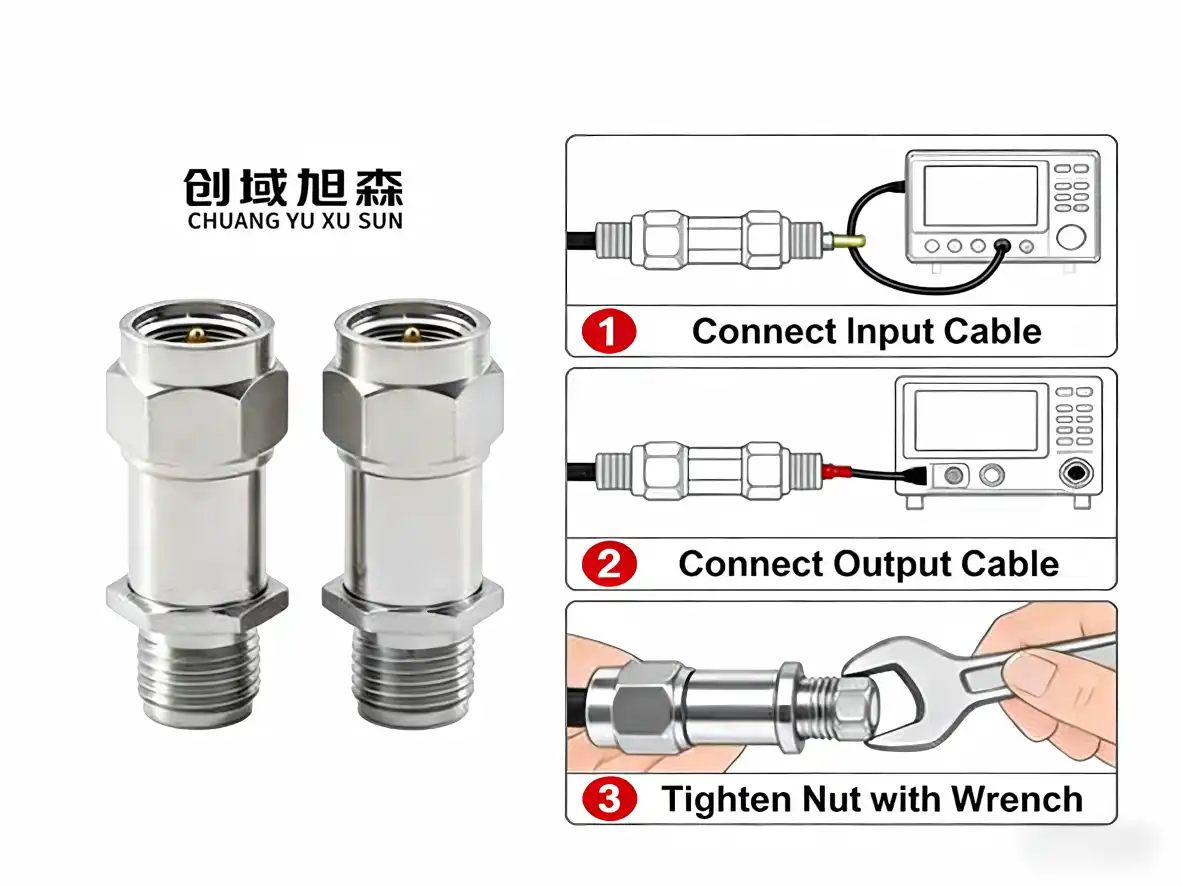
Measurement accuracy is directly affected by the strength of the connection. Use cotton swabs lightly wet with anhydrous ethanol to clean both mating sides before fitting the SMA RF attenuators. This gets rid of oxidation, dust, and flux residue that make the contact resistance higher. Follow the connector's instructions for how much force to use. For SMA connections, this is usually 8 to 10 inch-pounds. Under-torquing causes contact and VSWR changes that come and go, while too much force damages the threads and deforms the center conductors. RF connector torque wrenches make sure that setups are uniform and don't damage the connectors.
Parameter Verification Requirements
Before adding SMA RF attenuators to important test systems, use standardized network testers to make sure they work. Check that the VSWR stays within the acceptable range, measure the actual attenuation across the operating frequency range, and write down the results for equipment records. This standard data can be used to find degradation in the future. Verification once a year keeps measurement trust high and finds parts that need to be replaced before they affect the accuracy of the test. The suggested service period is once a year, but harsh environments or uses that get a lot of use may call for more frequent checks.
Storage and Handling Protocols
SMA RF attenuators should be kept in controlled environments with temperatures between 0°C and 30°C and relative humidity below 60% when they are not in use. Anti-static bags guard against oxidation and electrical discharge harm even more. Keeping parts in the right way extends their life by stopping corrosion and keeping connectors together. The 500-insertion-cycle limit takes into account the fact that connector interfaces wear out mechanically over time. Tracking the number of connections helps you figure out when you'll need to replace them before they affect measurements due to poor performance.
Transportation Considerations
SMA RF attenuators need to be protected when they are shipped between buildings or to test sites in the field. Impact damage during shipping can be avoided with foam-lined cases or sponge-cushioned boxes. If the sensitive internal attenuation chip is hit hard, it can break or move, which changes how the electricity works. When equipment is dropped, it deforms the housing, which changes the impedance and VSWR. Buying protected cases helps keep expensive parts in good shape and keeps the measurements stable even when the equipment is moved.
Application Environments
Different types of industries use these precise SMA RF attenuators. They are used for signal conditioning and impedance matching in 5G base stations, Wi-Fi infrastructure, and RF front-end modules by people who design communication systems. Most of the time, external attenuation is used in test and measurement applications. For example, spectrum analyzers, network analyzers, and signal generators can all use it to protect sensitive inputs and increase the dynamic range. Attenuators are used on production lines to set known signal levels for checking accuracy when RF modules are being calibrated. Industrial electronics applications include RFID readers, microwave sensors, and smart home RF modules where power control and interference reduction are important for making sure the devices work properly. As basic building blocks for developing and testing microwave circuits, SMA RF attenuators are used in research labs at universities and in corporate R&D centers. For safety-critical applications, medical device manufacturers testing implantable communicators and diagnostic tools need attenuation that they can count on.
Conclusion
Using the right amount of SMA RF attenuator to protect spectrum instruments is good technical practice and smart asset management. A small investment in good attenuators keeps measurements accurate, keeps equipment from breaking down, and extends the life of instruments. Knowing important SMA RF attenuator specs like frequency range, power handling, VSWR performance, and attenuation accuracy helps you make an informed choice that fits your needs. When making buying choices, combining technical performance with budget constraints is easier when you compare connection types and look at what suppliers can do. Following the right procedures for installation, testing, and maintenance will guarantee that these safety parts work reliably for their entire useful life.
FAQ
What attenuation value should I use with my spectrum analyzer?
Make sure the SMA RF attenuator is set so that the input signal is 10- 15 dB below the analyzer's highest safe level. This margin takes into account changes in the signal and gives you room in case you accidentally overload. To test a +20dBm transmitter with an analyzer that can handle a maximum of +30dBm input, the input must be weakened by at least 10dB, which brings the real input to +10dBm, which is well within the safe working range.
Can I use multiple attenuators in series?
Yes, cascading SMA RF attenuators adds their numbers together. For example, putting a 10dB unit after a 6dB unit gives you a 16dB total reduction. This method gives you options when you don't have access to exact values. Keep in mind that every connection point adds a little more insertion loss and could cause VSWR degradation.
How do I know when an attenuator needs replacement?
Performance loss is shown by an annual network monitor check. If the SMA RF attenuator values go beyond the specified tolerance, the VSWR goes up, or you can see that the connectors are worn out, they need to be replaced. Tracking insertion cycles helps predict service life—getting close to 500 connections suggests replacement, even if no degradation has been measured.
Partner with Chuangyu for Premium SMA RF Attenuator Solutions
SMA RF attenuators made by Shaanxi Chuangyu Electronic Technology Co., Ltd. are precisely built to work in harsh test conditions. Our factory in Xi'an makes 500,000 RF components every year using a hybrid process technology that combines thick-film and thin-film techniques and strict quality control. Each SMA RF attenuator goes through a lot of tests to make sure that it meets the stated standards for VSWR performance, reduction accuracy, and power handling. No matter if you need standard catalog items or custom solutions for unique uses, our engineering team is here to help you with the selection and integration process. To talk about your needs, email our buying experts at chuangyuwz01@cymicrowave.com. You can look at our full line of products at cymicrowave.com and learn how Chuangyu's knowledge can help protect your important measurement equipment.
References
1. Dobkin, R. (2018). RF and Microwave Component Design and Testing: A Comprehensive Guide. Boston Technical Publishers.
2. Johnson, H. & Anderson, K. (2020). "Spectrum Analyzer Input Protection Strategies for Modern Wireless Testing," IEEE Transactions on Instrumentation and Measurement, 69(7), 4523-4538.
3. Pozar, D. (2021). Microwave Engineering: Fourth Edition. New York: Wiley Engineering Publications.
4. Stevens, M. (2019). "Coaxial Attenuator Design Considerations for High-Frequency Applications," Microwave Journal, 62(4), 88-102.
5. Thompson, A. & Richards, P. (2022). Practical RF Test and Measurement Techniques. Denver: Professional Engineering Press.
6. Williams, T. (2020). "VSWR and Impedance Matching in RF Test Systems: Performance Implications and Mitigation Strategies," Journal of Electronic Testing: Theory and Applications, 36(3), 341-359.