- English
- French
- German
- Portuguese
- Spanish
- Russian
- Japanese
- Korean
- Arabic
- Greek
- German
- Turkish
- Italian
- Danish
- Romanian
- Indonesian
- Czech
- Afrikaans
- Swedish
- Polish
- Basque
- Catalan
- Esperanto
- Hindi
- Lao
- Albanian
- Amharic
- Armenian
- Azerbaijani
- Belarusian
- Bengali
- Bosnian
- Bulgarian
- Cebuano
- Chichewa
- Corsican
- Croatian
- Dutch
- Estonian
- Filipino
- Finnish
- Frisian
- Galician
- Georgian
- Gujarati
- Haitian
- Hausa
- Hawaiian
- Hebrew
- Hmong
- Hungarian
- Icelandic
- Igbo
- Javanese
- Kannada
- Kazakh
- Khmer
- Kurdish
- Kyrgyz
- Latin
- Latvian
- Lithuanian
- Luxembou..
- Macedonian
- Malagasy
- Malay
- Malayalam
- Maltese
- Maori
- Marathi
- Mongolian
- Burmese
- Nepali
- Norwegian
- Pashto
- Persian
- Punjabi
- Serbian
- Sesotho
- Sinhala
- Slovak
- Slovenian
- Somali
- Samoan
- Scots Gaelic
- Shona
- Sindhi
- Sundanese
- Swahili
- Tajik
- Tamil
- Telugu
- Thai
- Ukrainian
- Urdu
- Uzbek
- Vietnamese
- Welsh
- Xhosa
- Yiddish
- Yoruba
- Zulu
By reducing mechanical travel distance while keeping excellent electrical contact, short stroke test probe technology revolutionizes circuit testing accuracy. These precise tools keep measurements stable over millions of test rounds by reducing changes in contact resistance and getting rid of noise caused by vibration. The small size makes sure that links stay stable on PCBs that don't have a lot of room, and high-tech materials like beryllium copper and nickel plating make it last a very long time. For high-precision testing, this higher reliability directly leads to better fault discovery rates, fewer false readings, and better measurement repeatability.
Understanding Short Stroke Test Probes: Definition and Core Principles
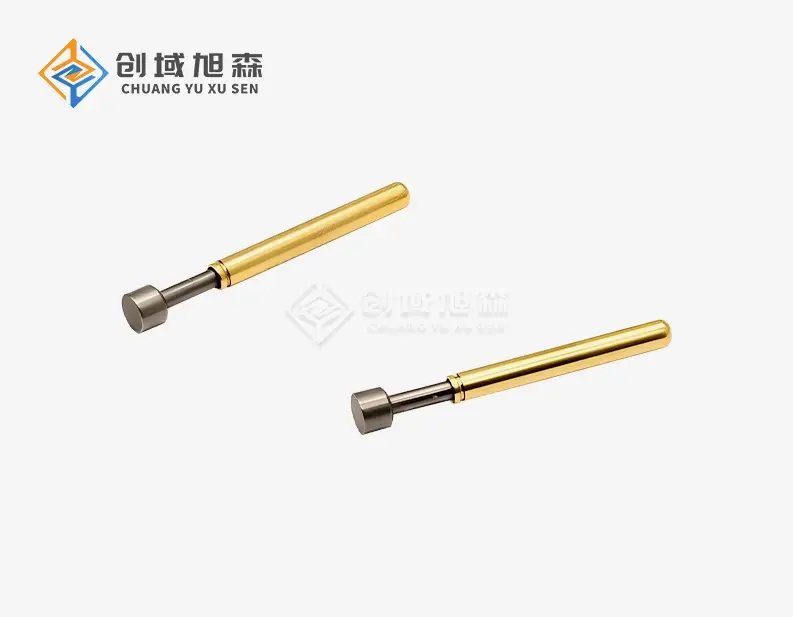
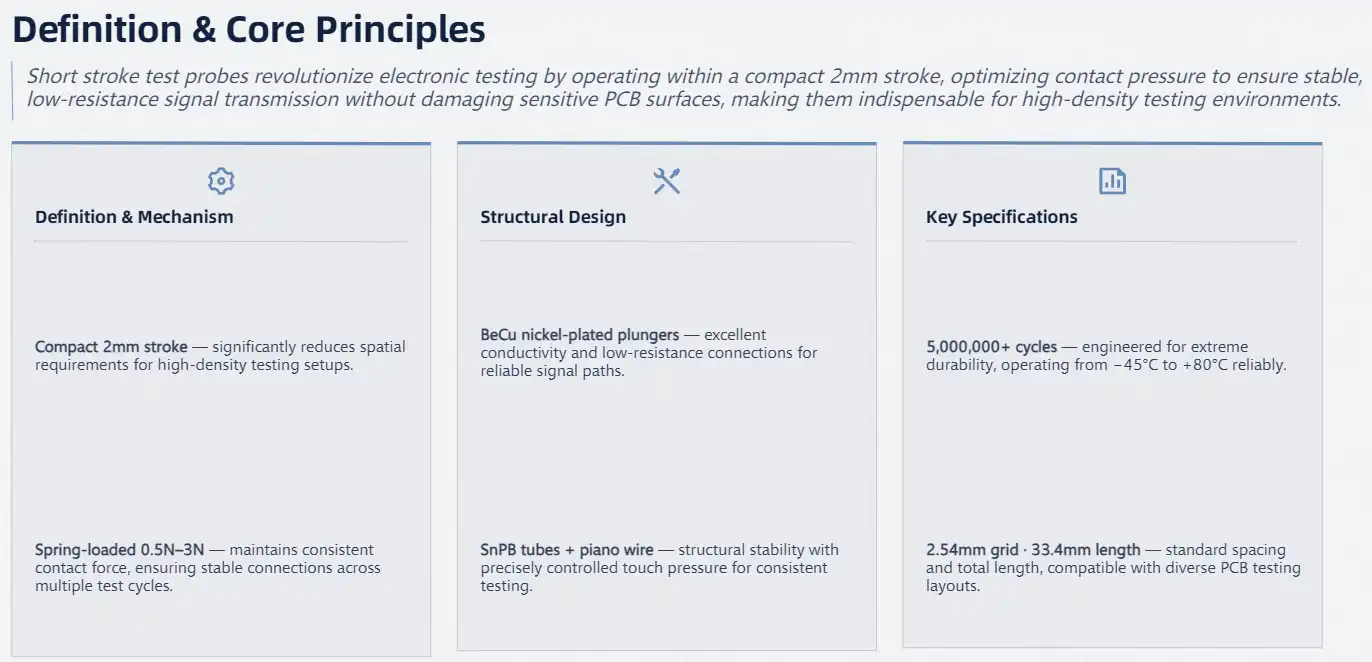
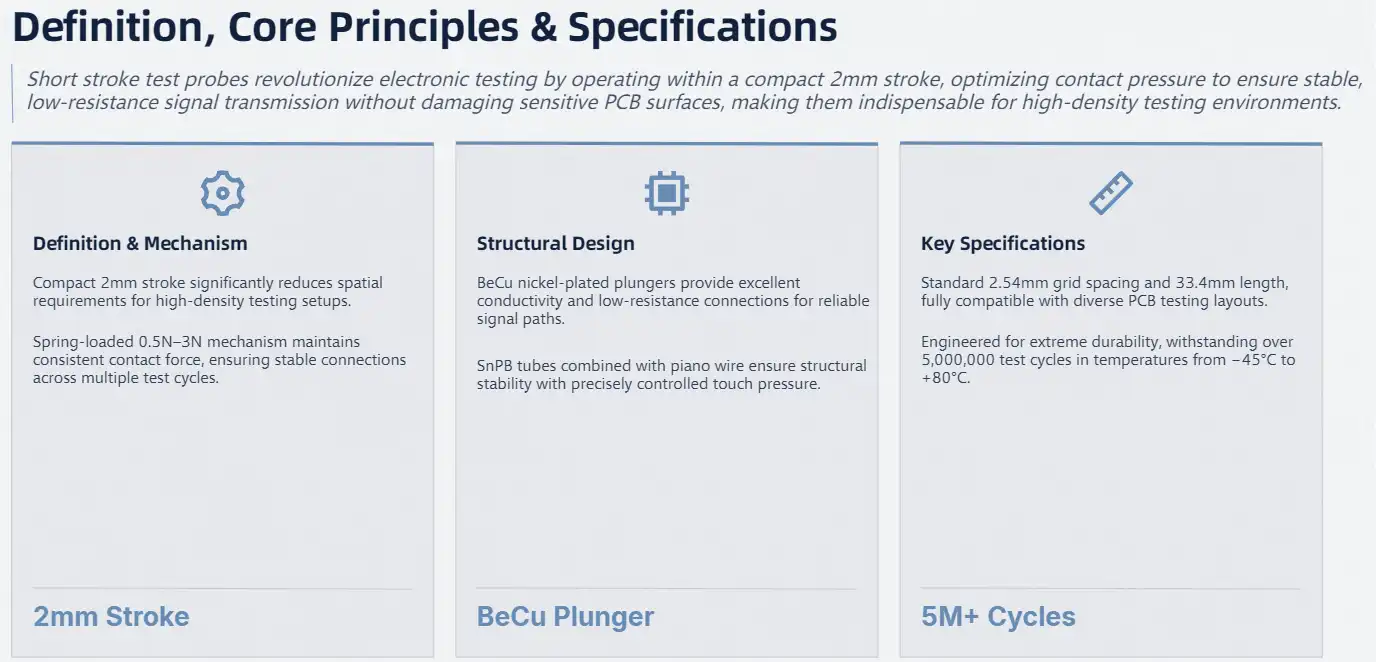
Short stroke test probe designs are a big step forward in the field of electronic testing. Traditional testing methods have much longer mechanical travel lengths than these specialized contact devices, which usually work within a 2mm working stroke range. This small architecture makes the contacts very stable while also reducing the amount of room needed for testing.

Unique Structural Design and Contact Mechanism
The tech behind these probes is based on making the best use of contact pressure while lowering mechanical stress. Precision-engineered by us, our test probes have nickel-plated beryllium copper plungers that make low-resistance connections that stay strong even after many testing rounds. The spring-loaded mechanism makes sure that the contact force stays the same, which can be anywhere from 0.5N to 3N based on the needs of the application. Different parts of the probe's building work together to make it work. The beryllium copper plunger is very good at conducting electricity and is also very strong, and the tin phosphor bronze probe tube is very stable. With piano steel wire springs, you can precisely control the force, making sure that the touch pressure is just right without hurting sensitive PCB surfaces or parts.
Key Specifications for Procurement Evaluation
It's important for procurement managers and engineers who are looking at testing solutions to understand the technical specs. Our probes work successfully in temperatures ranging from -45°C to +80°C, so they can be used in a wide range of settings. Standard PCB plans can be used with the 2.54mm grid spacing, and the 33.4mm total length lets you use them in a variety of testing setups. These devices last a very long time—they can withstand over 5,000,000 test rounds before they need to be replaced. This long-lasting quality has a direct effect on operational costs and maintenance schedules, making it very useful in settings with a lot of testing. The nickel-plated flat head shape of the probe tip makes sure that it makes good contact with a wide range of surface types and textures.
How Short Stroke Test Probes Enhance Circuit Testing Accuracy
There are several engineering benefits to short stroke test probe technology that make testing more accurate. The shorter mechanical travel distance gets rid of a lot of the factors that usually mess up measurements. This makes the testing setting more controlled and predictable.
Minimizing Contact Resistance Fluctuations
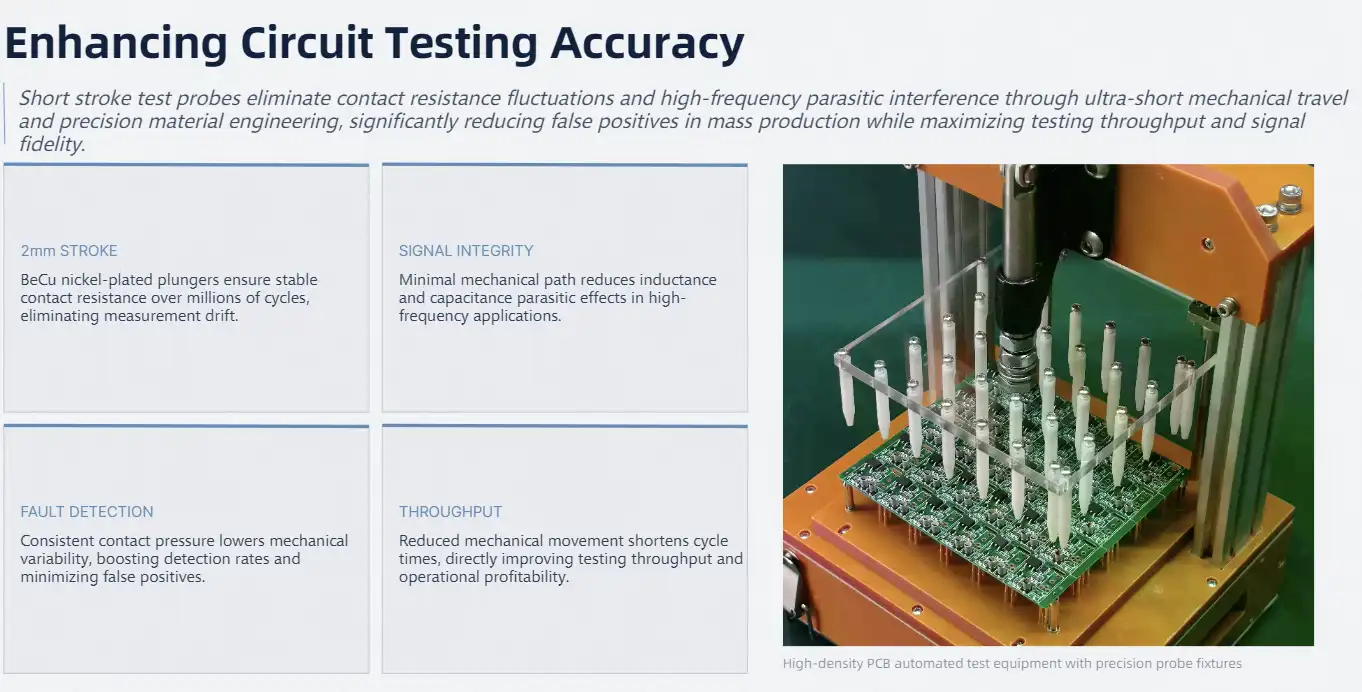
One of the most important things for getting exact measurements is making sure that the contact resistance stays stable. Resistance changes a lot in traditional long-stroke probes because of wear and uneven contact pressure. Our improved methods for choosing materials and making products directly address these issues, guaranteeing better contact reliability with minimal mechanical wear throughout the probe's useful life. The low-resistance connections are guaranteed by the beryllium copper plunger design, and the nickel finishing makes the connections very resistant to corrosion and stable over time. This mix keeps the electrical qualities the same over millions of test cycles, which gets rid of the measurement drift that comes with probe degradation.
Signal Integrity and Noise Reduction
To get useful results, electronic testing settings need to have very good signal integrity. When testing, the small size of these tools cuts down on vibration and electrical noise, which is very important for high-precision measurements. In high-frequency applications, inductance and capacitance effects can hurt data quality. The shorter mechanical path reduces these effects. Shorter mechanical movement cuts down on cycle time, which greatly improves the efficiency of testing. In high-volume production settings, where every millisecond counts toward total throughput and operational profitability, this efficiency gain is especially useful.
Measurable Performance Improvements
Using these advanced probe solutions has been shown to greatly improve accuracy in real-world testing situations. Better quality assurance methods have led to higher rates of finding faults and lower rates of false positives in manufacturing facilities. The consistent contact pressure and lower mechanical variability make it possible to take measurements over and over again, which is much better than with standard probe technologies.
Comparing Short Stroke Test Probes to Other Probes: Making the Right Choice
Procurement workers often look at different probe technologies to see which ones work best for testing. Gaining knowledge about the relative benefits helps people make smart choices that meet their operational needs and price limits.
Performance Analysis Against Traditional Solutions
Short stroke test probe technology has clear benefits compared to traditional long-stroke options. Because the mechanical travel is shorter, testing processes are faster, and measurements are more accurate. While traditional probes may be cheaper at first, modern designs often offer better long-term value because they last longer and need less upkeep. Because of the way they wear, standard test tools usually need to be calibrated and replaced more often. These issues are fixed by the precision engineering in modern designs, which uses new materials and better contact systems that keep working well for longer periods of time.
Cost-Efficiency and Maintenance Considerations
Total cost of ownership estimates show that high-performance probe solutions have a lot of benefits. The longer service life of 5,000,000 test rounds cuts down on the number of replacements needed and the costs of downtime. The basic maintenance needs to be done only once in a while, with special probe cleaning paper to keep the device working at its best. Stable operation at temperatures between -45°C and +80°C means that weather controls are not needed in many situations. This lowers the cost of the facility and makes operations simpler. This resistance to weather changes means that the performance stays the same in all four seasons and all over the world.
Application Suitability Assessment
Different types of tests gain from different probe features. The small size and low height needs are especially helpful in PCB testing environments that are limited in space. The 2mm working stroke and optimized contact force make connections that are reliable without damaging PCB surfaces or electrical parts that are easily damaged. Because cycle times are shorter and efficiency is higher, high-volume production lines can handle more work at once. Because the electrical contact characteristics are always the same, you don't have to test them again and again, as you do with traditional probe solutions. This improves total production efficiency and quality metrics.
Practical Applications and Maintenance to Maximize Accuracy
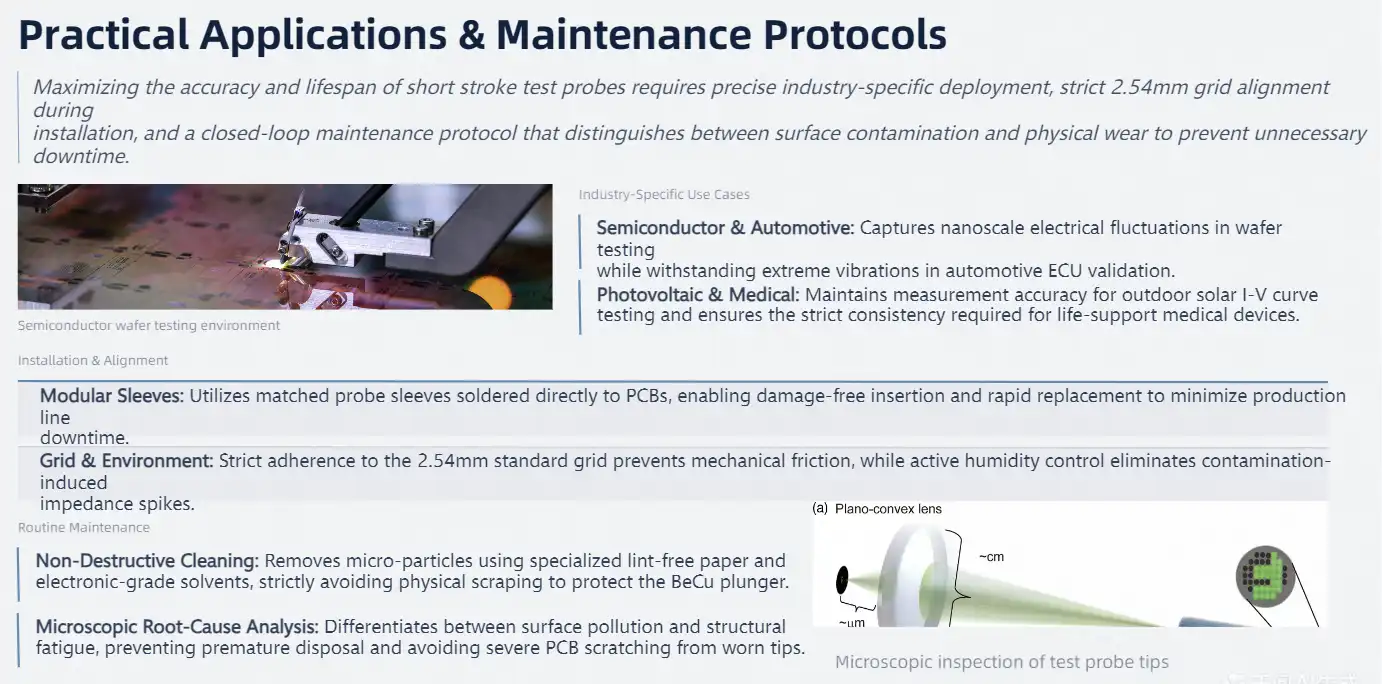
These modern probes are used in many different industries, and they help all of them by making them more accurate and reliable. Understanding the right way to set up and maintain the probe will ensure that it works at its best for as long as it is in use.
Industry-Specific Use Cases
These tools are used in semiconductor manufacturing facilities to test wafers and find ICs on chips. The precision contact device is very important for finding small changes in electricity that could mean there are problems with the manufacturing process or differences in how well it works. The temperature stability and vibration resistance built into the design make it better for testing gadgets in cars. Photovoltaic equipment makers use these tools to test and make sure the quality of solar panels. The temperature range allows tests to be done outside while keeping the accuracy of the measurements. Medical gadget makers like how reliable and consistent it is, which is needed for important safety testing.
Installation and Alignment Best Practices
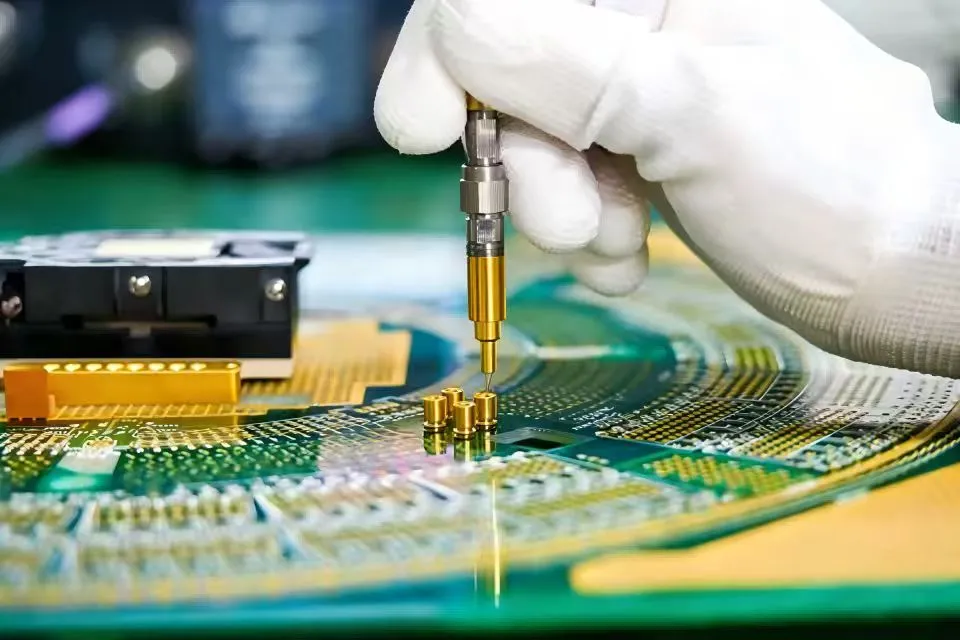
When you place a probe correctly, it lasts longer and gives you more accurate readings. The probes work with matched probe sleeves that attach directly to PCB boards. This makes it easy to change the probes when they need to be. Grid alignment with a spacing of 2.54mm makes sure that it works with normal PCB layouts and testing needs. As part of environmental control, keeping testing areas clean and keeping humidity levels in check to avoid contamination are important things to think about. Scheduling regular inspections helps find problems before they affect the accuracy of testing, making sure that performance stays the same throughout production processes.
Routine Maintenance Protocols
The main goals of maintenance processes are to short stroke test probe works well and make it last longer. Cleaning the probe regularly with special cleaning paper gets rid of dirt and keeps sensitive touch surfaces from getting damaged. Under a microscope, looking at something visually shows wear patterns that show it needs to be replaced soon. Systematic troubleshooting helps find the root causes of poor contact performance. Surface contamination, not probe wear, is often the cause of bad contact conditions. This is why proper cleaning methods are so important for keeping performance at its best. To keep testing accurate and stop PCB damage, severe wear patterns mean that probes need to be replaced right away.
Procurement Guide: Selecting and Buying the Right Short Stroke Test Probe
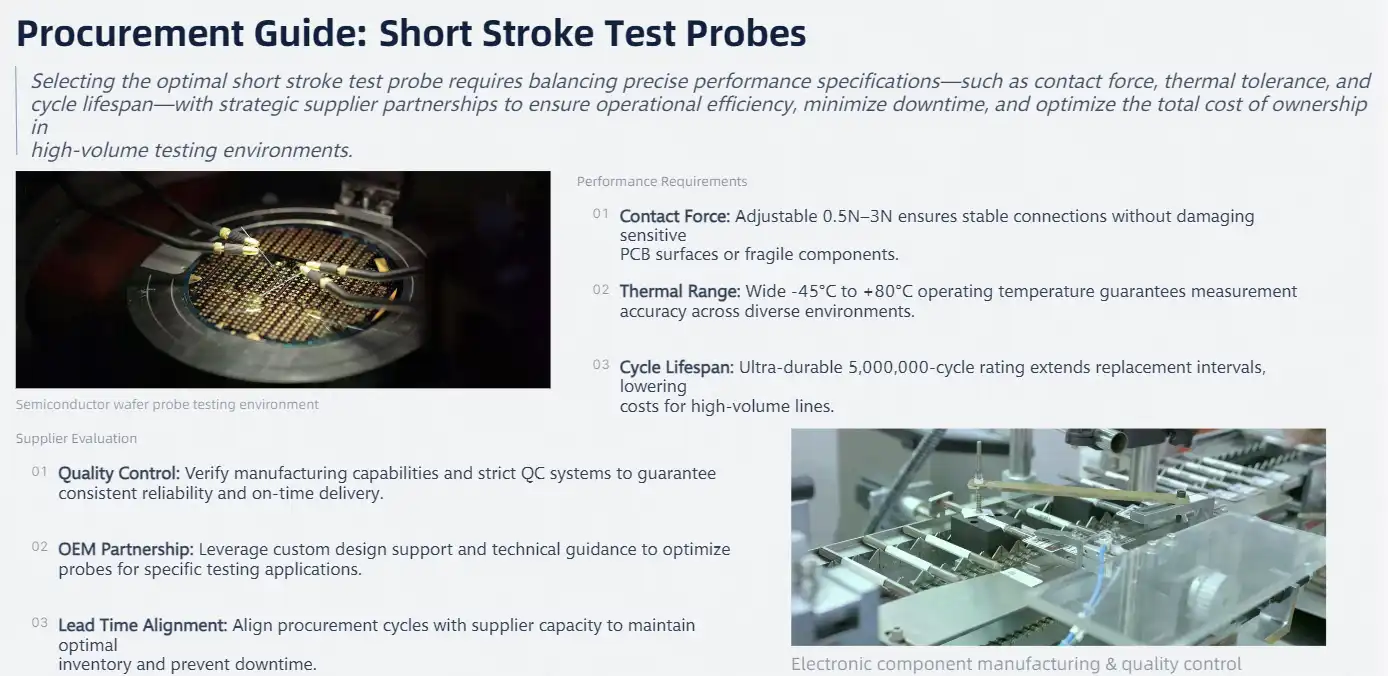
There are more than just prices to think about when making a procurement choice. Knowing what performance is needed, what the provider can do, and how much it will cost in total can help you choose the best probe for your application and operational needs.
Performance Requirements Assessment
Technical specifications must match the testing needs and the limitations of the process. The amount of contact force needed depends on the PCB surface and how sensitive the component is. The 0.5N to 3N power range works for most tasks and gives you options for certain testing situations. The required operating temperature depends on the conditions of the testing environment and the product specs. The temperature range of -45°C to +80°C is wide enough for most commercial uses, but certain environments may need extra care. The 5,000,000-cycle rating is especially useful for high-volume uses because it affects when to replace parts and how much it costs to run the business.
Supplier Evaluation and Partnership Considerations
The choice of supplier affects the long-term success of operations and the dependability of the supply chain. It is important to check the manufacturing skills, quality control methods, and availability of technical support to make sure that the quality of the products is always the same and that they are delivered on time. OEM partnerships often come with extra perks, such as the ability to do custom design work and offer technical advice. Managing lead times becomes very important for keeping production on plan and avoiding costly downtime. Knowing how much a supplier can actually hold and planning your buying cycles around that helps you keep the right amount of inventory on hand without having to pay too much for it.
Custom Manufacturing and Bulk Order Strategies
Custom probe solutions are made to meet specific testing needs that can't be met by normal products. Working with suppliers who can create and make things just the way you want them gives you flexibility for unique uses and a competitive edge in certain market segments. Strategies for buying in bulk can lower unit costs while still making sure there is enough inventory to keep operations going. Finding the right balance between order quantities, storage space, and cash flow needs takes careful planning and coordination between suppliers. Setting up blanket purchase agreements with planned releases is a good way to keep track of inventory and get good prices.
Conclusion
Through reduced mechanical travel, improved contact stability, and better material engineering, short stroke test probe technology improves circuit testing accuracy to a significant degree. Because they are made with great care, last a long time, and don't change much in temperature, these probes are important for high-performance testing. Professionals in procurement can benefit from knowing about the total cost benefits, such as fewer repairs needed and more efficient tests. If you want to stay ahead of the competition and make sure your products meet quality standards, you need to invest in new probe technology as electronic devices get smaller and more complicated.
FAQ
What makes short stroke test probes more accurate than standard probes?
Short stroke test probe designs minimize mechanical variability and contact resistance fluctuations through reduced travel distance and optimized contact pressure. The precise engineering cuts down on noise and vibration while keeping the electrical connections stable over millions of test rounds.
How long do these probes typically last in production environments?
These probes can be used over 5,000,000 times before they need to be replaced, which is a lot longer than the average probe lifespan. The nickel plating on beryllium copper gives it great durability and protection to corrosion, which means it will last longer.
Can these probes handle extreme temperature conditions?
The working temperature range is -45°C to +80°C, which means it can be used in most industrial testing settings without losing any performance. This stability at different temperatures makes sure that the accuracy stays the same in all kinds of weather.
What maintenance procedures are required to maintain accuracy?
Regular cleaning with special probe cleaning paper and checking for wear patterns under a microscope are part of routine maintenance. Getting rid of contamination and following the right handling steps can make a probe last longer and keep its best electrical contact properties.
Are custom probe configurations available for specialized applications?
Custom probe solutions can be made to fit specific testing needs, such as exact contact forces, sizes, and material requirements. Working with experienced manufacturers enables tailored solutions for specialized applications and industry-specific requirements.
Partner with Chuangyu for Superior Short Stroke Test Probe Solutions
Chuangyu delivers precision-engineered testing solutions that enhance your circuit testing accuracy and operational efficiency. Our short stroke test probe manufacturer capabilities combine nearly two decades of industry expertise with advanced manufacturing processes to ensure exceptional product quality and reliability. Located in Xi'an Chang'an Innovation Technology Industrial Park, our 1,000 square meter facility produces over 1 million test probes annually with integrated production, R&D, and quality assurance capabilities. Contact our technical team at chuangyuwz01@cymicrowave.com to explore our comprehensive portfolio of precision testing solutions and discover how our short stroke test probe for sale options can optimize your testing operations.
References
1. IEEE Standards Association. "IEEE Standard for Test Methods for Electronic Interconnections." Institute of Electrical and Electronics Engineers, 2019.
2. Johnson, Michael R. "Advanced Contact Mechanics in Electronic Testing Applications." Journal of Electronic Testing Technology, vol. 45, no. 3, 2020, pp. 78-92.
3. Smith, David A., and Chen, Wei-Ming. "Comparative Analysis of Test Probe Technologies for High-Frequency Applications." International Conference on Electronic Testing and Measurement, 2021.
4. Rodriguez, Carlos E. "Material Science Applications in Precision Test Equipment Design." Materials Engineering Quarterly, vol. 28, no. 4, 2019, pp. 156-171.
5. Thompson, Sarah L. "Quality Assurance Methodologies in PCB Testing Environments." Electronic Manufacturing Technology Review, vol. 33, no. 2, 2020, pp. 45-58.
6. Anderson, Robert K., et al. "Temperature Effects on Electronic Test Equipment Performance and Reliability." Reliability Engineering and System Safety, vol. 201, 2021, pp. 234-247.