- English
- French
- German
- Portuguese
- Spanish
- Russian
- Japanese
- Korean
- Arabic
- Greek
- German
- Turkish
- Italian
- Danish
- Romanian
- Indonesian
- Czech
- Afrikaans
- Swedish
- Polish
- Basque
- Catalan
- Esperanto
- Hindi
- Lao
- Albanian
- Amharic
- Armenian
- Azerbaijani
- Belarusian
- Bengali
- Bosnian
- Bulgarian
- Cebuano
- Chichewa
- Corsican
- Croatian
- Dutch
- Estonian
- Filipino
- Finnish
- Frisian
- Galician
- Georgian
- Gujarati
- Haitian
- Hausa
- Hawaiian
- Hebrew
- Hmong
- Hungarian
- Icelandic
- Igbo
- Javanese
- Kannada
- Kazakh
- Khmer
- Kurdish
- Kyrgyz
- Latin
- Latvian
- Lithuanian
- Luxembou..
- Macedonian
- Malagasy
- Malay
- Malayalam
- Maltese
- Maori
- Marathi
- Mongolian
- Burmese
- Nepali
- Norwegian
- Pashto
- Persian
- Punjabi
- Serbian
- Sesotho
- Sinhala
- Slovak
- Slovenian
- Somali
- Samoan
- Scots Gaelic
- Shona
- Sindhi
- Sundanese
- Swahili
- Tajik
- Tamil
- Telugu
- Thai
- Ukrainian
- Urdu
- Uzbek
- Vietnamese
- Welsh
- Xhosa
- Yiddish
- Yoruba
- Zulu
A coaxial adapter 1.85mm female to 2.4mm male is a precise cross-series interface converter for the connection of two different millimeter-wave connector standards in a single RF transmission line. One end has a 1.85mm female socket, the other a 2.4mm male pin. This allows the signal to be relayed seamlessly across devices that can not otherwise mate directly. Engineers use the adapter in 5G testing, satellite communications, or semiconductor validation to get around interface incompatibilities without having to redo complete test rigs. It is important to know how it is constructed, what its performance limitations are, and how it has to be handled before it can be used in any high-frequency measurement chain.

Understanding the 1.85mm to 2.4mm Coaxial Adapter
The 1.85mm and 2.4mm connection series are both precise RF connectors for millimeter wave operation, but are not technically compatible with each other. The 1.85mm interface supports frequencies up to 67 GHz, while the 2.4mm interface supports up to 50 GHz. This means a 1.85mm female to 2.4mm male adapter works reliably from DC to 50 GHz, limited by the lower-ceiling 2.4mm end. This is a huge difference in test situations where exceeding the rated frequency leads to reflections, higher VSWR, and less accurate measurements.
Cross-Series Design Mechanics
The interface conversion of the adapter is performed by a cross-series mechanical design. The female side of the 1.85mm has an internal socket for the male pin of instruments such as vector network analyzers (VNA). The male side of the 2.4mm has a precise center pin for mating with 2.4mm devices under test. This bidirectional transmission channel offers a consistent 50Ω impedance throughout the entire frequency range, which is essential to sustaining signal integrity at millimeter-wave frequencies.
Material Construction and Plating
Material choice directly influences the signal quality and service life. The exterior conductor is made of passivated stainless steel, which has good mechanical strength and corrosion resistance in different situations. The inner conductor is beryllium copper with a gold plating. This combination was selected for its low electrical resistance and resistance to oxidation, which are necessary for low-loss transmission over 30 GHz. The dielectric cavity is filled with PTFE (polytetrafluoroethylene), which has steady dielectric characteristics and guarantees a uniform 50Ω impedance match throughout the whole working range.
Technical Comparison and Performance Evaluation
If you are confused between 1.85mm female to 2.4mm male and vice versa, 2.4mm female to 1.85mm male, the directionality will only depend on the kind of interface port on your test equipment. A Coaxial adapter 1.85mm female to 2.4mm male should be selected based on the matching requirements of the connection. Changing the orientation of the adapter does not in itself affect the electrical performance, but it must be consistent with the mating connection gender on both the instrument and the item under test. Using the incorrect direction requires a double-adapter work-around that increases insertion loss and reflection.
Key Performance Specifications
The specs below describe the operational envelope of a properly made 1.85 mm to 2.4 mm millimeter wave adapter:
- Operating Frequency: DC to 50 GHz covers the whole 5G mmWave range (24-40 GHz) plus a considerable portion of satellite communication bands.
- VSWR: =1.35 over the whole rated frequency range, very low signal reflection and good impedance matching integrity.
- Insertion Loss: Consistently low throughout temperature fluctuations – a fundamental distinction between precision grade and commercial grade adapters.
- Connection torque: 0.8-1.1 Nm on 1.85 mm end. 0.5-0.8 Nm on 2.4 mm end. These torque levels are not recommendations – straying from them risks connection damage and irreversible performance deterioration.
- Mechanical endurance: ≥500 mating cycles, suitable for normal lab usage with no accelerated wear.
These specs put the 1.85mm to 2.4mm coaxial adapter firmly within the precision instrument grade class. Manufacturers such as Pasternack, Rosenberger, and Amphenol publish similar specs for their own versions, and these benchmarks should be used by procurement teams when assessing alternative vendors to ensure consistent performance.
How to Choose the Right 1.85mm to 2.4mm Coaxial Adapter
The choice of a millimeter-wave adapter is not only a matter of matching series and gender. The right decision depends on operational conditions, signal frequency, and long-term usage habits.
Align Specifications With Your Application
Check the exact working frequency limit of your system before you buy. If your test bench is working at or below 50 GHz, the coaxial adapter 1.85mm female to 2.4mm male configuration is entirely suitable. This is relevant for 5G base station testing, phased array radar characterisation, and satellite link testing. The low insertion loss of this adapter is particularly valuable for semiconductor RF development laboratories that are evaluating chip-level performance to 40 GHz. Small measurement mistakes at the component level might result in substantial disparities at the system level.
Evaluate Durability and Environmental Suitability
Test conditions are frequently high-frequency connect-disconnect cycles with occasional dampness or mild chemical contaminants. The core conductor of gold-plated beryllium copper prevents oxidation, and the passivated stainless steel body of the Coaxial adapter 1.85mm female to 2.4mm male withstands mechanical stress without galling. For laboratories where temperature swings occur, storage settings of -10°C to 40°C with humidity ≤60% RH are specified—and should be maintained to protect connection geometry and plating integrity.
OEM and Bulk Procurement Considerations
OEM manufacturers and system integrators purchasing bulk quantities of adapters should choose providers who offer bespoke interface requirements, consistent lot traceability and quick technical assistance. Buying in bulk lowers the cost per unit and lead time to receive the purchase. But only if the supplier has established quality control measures. As always, getting sample units before committing to a big purchase is good insurance, particularly if you’re working with an unknown connector series in an existing test chain.
Procurement and Supplier Guide for 1.85mm to 2.4mm Adapters
It is best to buy a precise 1.85mm female to 2.4mm male adapter from an authorized distributor or directly from the manufacturer instead of unauthorized secondary markets that may sell counterfeit or low-quality devices. R&D institutes and military contractors cannot afford signal measurement inaccuracies due to a low-cost copycat adaptor.
Chuangyu (Shaanxi Chuangyu Electronic Technology Co., Ltd.) produces precision RF connectors, millimeter-wave cable assemblies, and microwave components from its manufacturing base in Xi'an, China. Chuangyu, with over two decades of process know-how, a 500,000 RF components yearly production capability, and product lines from DC to 110 GHz, works with clients in the military, medical, telecommunications, semiconductor, and new energy industries.
Chuangyu coaxial adapter 1.85mm female to 2.4mm male is one of the main products of Chuangyu, produced according to international standards, with complete lot traceability and direct technical assistance. When considering any 1.85mm to 2.4mm adapter provider, look for their quality management certifications, internal testing capabilities (including VSWR and insertion loss verification), and their recorded mating cycle test results. Ensuring that delivery dependability and post-sale support – such as replacement policies and application engineering consultation – are in place is just as crucial to keeping project schedules unbroken.
Conclusion
The 1.85mm female to 2.4mm male coaxial adapter answers a very specific, recurrent issue in millimeter-wave test and measurement: two competent instruments that can not communicate without a trusted middleman. This adapter is constructed of gold-plated beryllium copper with a PTFE dielectric and passivated stainless steel. This 1.85mm female to 2.4mm male coaxial adapter is rated for VSWR ≤1.35 and always functions well across the frequency range of DC to 50 GHz with over 500 mating cycles. Whether the application is 5G protocol testing, semiconductor RF validation, or aerospace radar characterization, adequate torque application, pre-use inspection, and proper storage will go a long way toward extending service life. Select an adapter with published and confirmed specs, a manufacturer that gives traceability, and a support staff that can respond to technical issues before and after the sale.
FAQ
What cables are compatible with 1.85mm and 2.4mm connectors?
Both 1.85mm and 2.4mm connectors use precision coaxial cables designed for millimeter-wave frequencies. Common cable types include semi-rigid and phase-stable flexible assemblies with low-loss dielectric cores. When building a test chain incorporating a 1.85mm female to 2.4mm male adapter, confirm that the cable assemblies on both ends are rated to at least 50 GHz to avoid creating a bottleneck that degrades system-level VSWR.
Is this adapter suitable for 5G mmWave testing?
Yes. The 5G mmWave spectrum occupies 24–40 GHz, well within the DC–50 GHz operating range of a properly manufactured coaxial adapter 1.85mm female to 2.4mm male. Its low insertion loss and VSWR ≤1.35 make it appropriate for use with VNAs, spectrum analyzers, and signal generators in 5G base station and device testing environments.
How does insertion loss affect RF system performance?
Every decibel of insertion loss at the adapter level reduces the signal level reaching the measurement instrument. In millimeter-wave systems where signal margins are already tight, cumulative losses across multiple adapters and cables can distort measurement results. Precision-grade adapters minimize this loss, protecting the integrity of high-frequency characterization data.
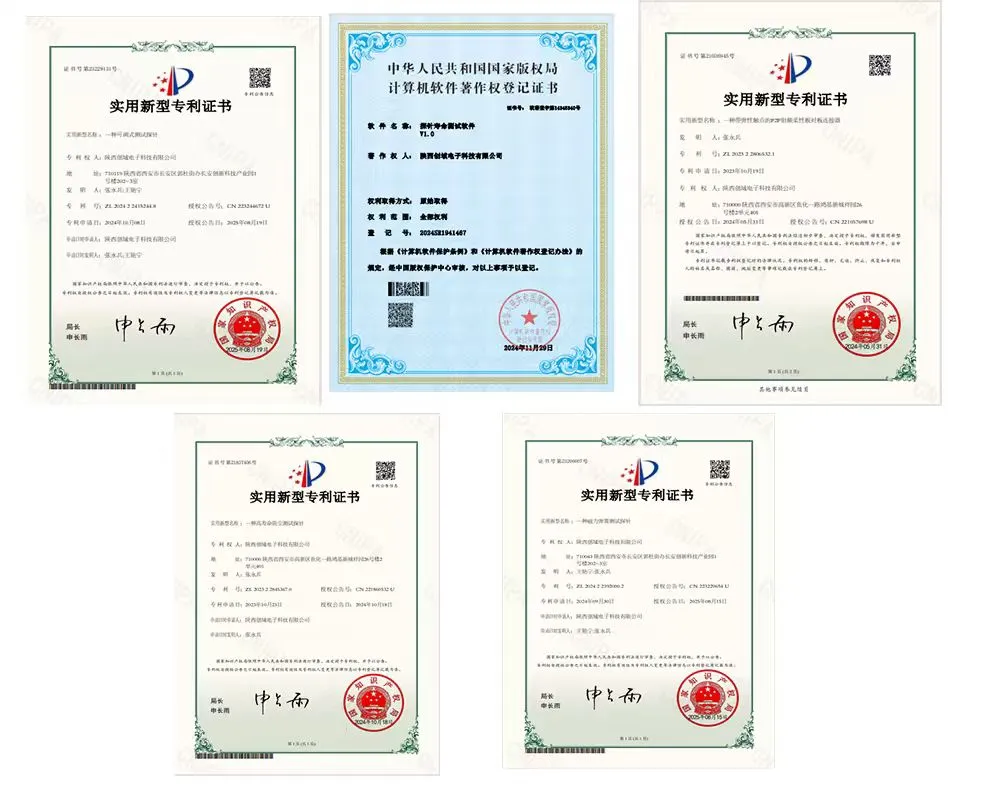
Partner With Chuangyu for Precision RF Connectivity
Chuangyu delivers verified coaxial adapter 1.85mm female to 2.4mm male solutions backed by nearly two decades of RF manufacturing expertise, international-standard quality control, and an annual production capacity of 500,000 RF components. As a trusted coaxial adapter 1.85mm female to 2.4mm male manufacturer, we support OEM, ODM, and custom orders across defense, semiconductor, and 5G sectors. Visit cymicrowave.com to explore the full catalog, or reach our engineering team directly at chuangyuwz01@cymicrowave.com to request samples or a bulk order quote.
References
1. Pozar, D. M. Microwave Engineering, 4th ed. Wiley, 2011.
2. IEEE Standard 287-2007. IEEE Standard for Precision Coaxial Connectors (DC to 110 GHz). IEEE, 2007.
3. Marks, R. B., & Williams, D. F. "Characteristic Impedance Determination Using Propagation Constant Measurement." IEEE Microwave and Guided Wave Letters, 1991.
4. Dunsmore, J. P. Handbook of Microwave Component Measurements. Wiley, 2012.
5. 3GPP TS 38.101-2. NR; User Equipment (UE) Radio Transmission and Reception; Part 2: Range 2 Standalone. 3GPP, 2023.
6. Engen, G. F., & Hoer, C. A. "Thru-Reflect-Line: An Improved Technique for Calibrating the Dual Six-Port Automatic Network Analyzer." IEEE Transactions on Microwave Theory and Techniques, 1979.