- English
- French
- German
- Portuguese
- Spanish
- Russian
- Japanese
- Korean
- Arabic
- Greek
- German
- Turkish
- Italian
- Danish
- Romanian
- Indonesian
- Czech
- Afrikaans
- Swedish
- Polish
- Basque
- Catalan
- Esperanto
- Hindi
- Lao
- Albanian
- Amharic
- Armenian
- Azerbaijani
- Belarusian
- Bengali
- Bosnian
- Bulgarian
- Cebuano
- Chichewa
- Corsican
- Croatian
- Dutch
- Estonian
- Filipino
- Finnish
- Frisian
- Galician
- Georgian
- Gujarati
- Haitian
- Hausa
- Hawaiian
- Hebrew
- Hmong
- Hungarian
- Icelandic
- Igbo
- Javanese
- Kannada
- Kazakh
- Khmer
- Kurdish
- Kyrgyz
- Latin
- Latvian
- Lithuanian
- Luxembou..
- Macedonian
- Malagasy
- Malay
- Malayalam
- Maltese
- Maori
- Marathi
- Mongolian
- Burmese
- Nepali
- Norwegian
- Pashto
- Persian
- Punjabi
- Serbian
- Sesotho
- Sinhala
- Slovak
- Slovenian
- Somali
- Samoan
- Scots Gaelic
- Shona
- Sindhi
- Sundanese
- Swahili
- Tajik
- Tamil
- Telugu
- Thai
- Ukrainian
- Urdu
- Uzbek
- Vietnamese
- Welsh
- Xhosa
- Yiddish
- Yoruba
- Zulu
When you need a high-precision gender-changing connector for demanding RF test environments, sourcing a coaxial adapter 2.92mm plug to 2.92mm jack from verified manufacturers ensures optimal signal integrity and system reliability. Trusted suppliers like Chuangyu offer direct factory access, customization options, and certification transparency, enabling procurement teams to secure components that meet stringent frequency performance and mechanical durability standards. This guide provides actionable insights for procurement managers, hardware engineers, and test and measurement professionals navigating the B2B marketplace for precision RF adapters that support frequencies up to 40 GHz.
Understanding the 2.92mm Coaxial Adapter: Key Features and Specifications
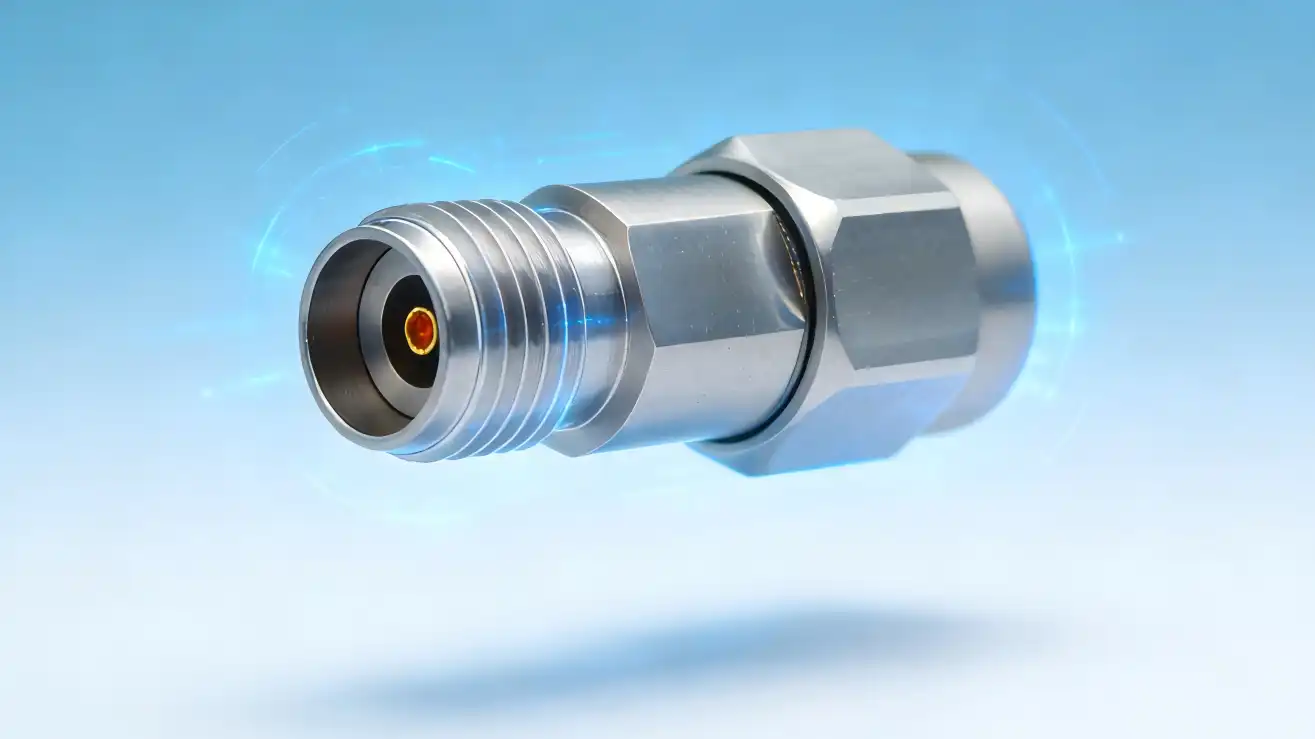
The Coaxial adapter 2.92mm plug to 2.92mm jack is an important part of high-frequency RF systems because it lets you change the gender of a signal while keeping the signal's quality high from DC to 40 GHz. Knowing how it's put together helps engineering teams choose parts that meet the needs for accurate measurements and system integration.
RF Coaxial Design and 50Ω Impedance Architecture
A precision 50Ω characteristic impedance coaxial structure makes up this Coaxial adapter, 2.92 mm plug to 2.92mm jack. It has a gold-plated beryllium copper center conductor, a PTFE insulating dielectric, and a stainless steel outer conductor. The gold-plated center pin reduces contact resistance and oxidation, making sure that the electrical performance stays the same even after thousands of mating cycles. The PTFE dielectric has low loss tangent properties that are needed to send millimeter-wave signals, and the stainless steel shell protects against electromagnetic fields and keeps the device stable. Low-loss transmission and protection against outside radio frequency interference are made possible by this three-layer design. This keeps measurements accurate in crowded test benches.
Gender Conversion and Interface Compatibility
There is a 2.92mm male connection with a visible center pin on one end, and a 2.92mm female connector with an internal socket assembly on the other end. This setup makes it possible to change the polarity between RF test tools, wire assemblies, and the device-under-test interfaces. This means that complicated fixes are not needed when the interface genders don't line up. The Coaxial adapter 2.92mm plug to 2.92mm jack works with all 2.92mm-series RF tools and wire assemblies, so it can be easily added to vector network analyzers, spectrum analyzers, and signal generators that are popular in telecommunications and semiconductor labs.
High-Frequency Performance and Electrical Parameters
The Coaxial adapter 2.92mm plug to 2.92mm jack works from DC to 40 GHz and has a voltage standing wave ratio (VSWR) of 1.35 and very little insertion loss. This means it can be used reliably for testing 5G components, satellite communication systems, and millimeter-wave research. Controlling the VSWR makes sure that the reflected power stays below important levels. This keeps the accuracy of the measurements during S-parameter characterization and power sweep testing. The low insertion loss feature keeps signal reduction to a minimum, which lets engineers do sensitivity tests and noise figure analysis without making mistakes that would invalidate the test.
Mechanical Reliability and Durability Standards
The outer conductor is made of stainless steel, which is very strong and doesn't rust. It can handle being connected over and over again in high-volume production test environments. The center pin retention force meets the standards for high-frequency tests, and the mating cycle life is more than 500 contacts before the performance starts to drop. Because it is durable, the Coaxial adapter 2.92mm plug to 2.92mm jack can be used with automated test equipment (ATE), where link dependability affects productivity and measurement repeatability in RF testing at the semiconductor wafer level and final product validation.
Comparative Analysis with Related RF Connectors
The Coaxial adapter 2.92mm plug to 2.92mm jack interface is the best of the 2.4mm, 3.5mm, and SMA connector families in terms of both frequency capability and physical robustness. Even though 2.4 mm connectors can work up to 50 GHz, they need to be handled more carefully because they are smaller. Even though the 3.5 mm and SMA connectors are very strong mechanically, they can only handle frequencies up to 34 GHz and 18 GHz, respectively. The Coaxial adapter 2.92mm plug to 2.92mm jack is the best choice for test apps that need 40 GHz bandwidth without the fragility issues that come with ultra-small 2.4mm interfaces. This makes it especially useful for 5G FR2 band testing and Ka-band radar component validation.
Why Choose 2.92mm Coaxial Adapters? Benefits and Application Scenarios
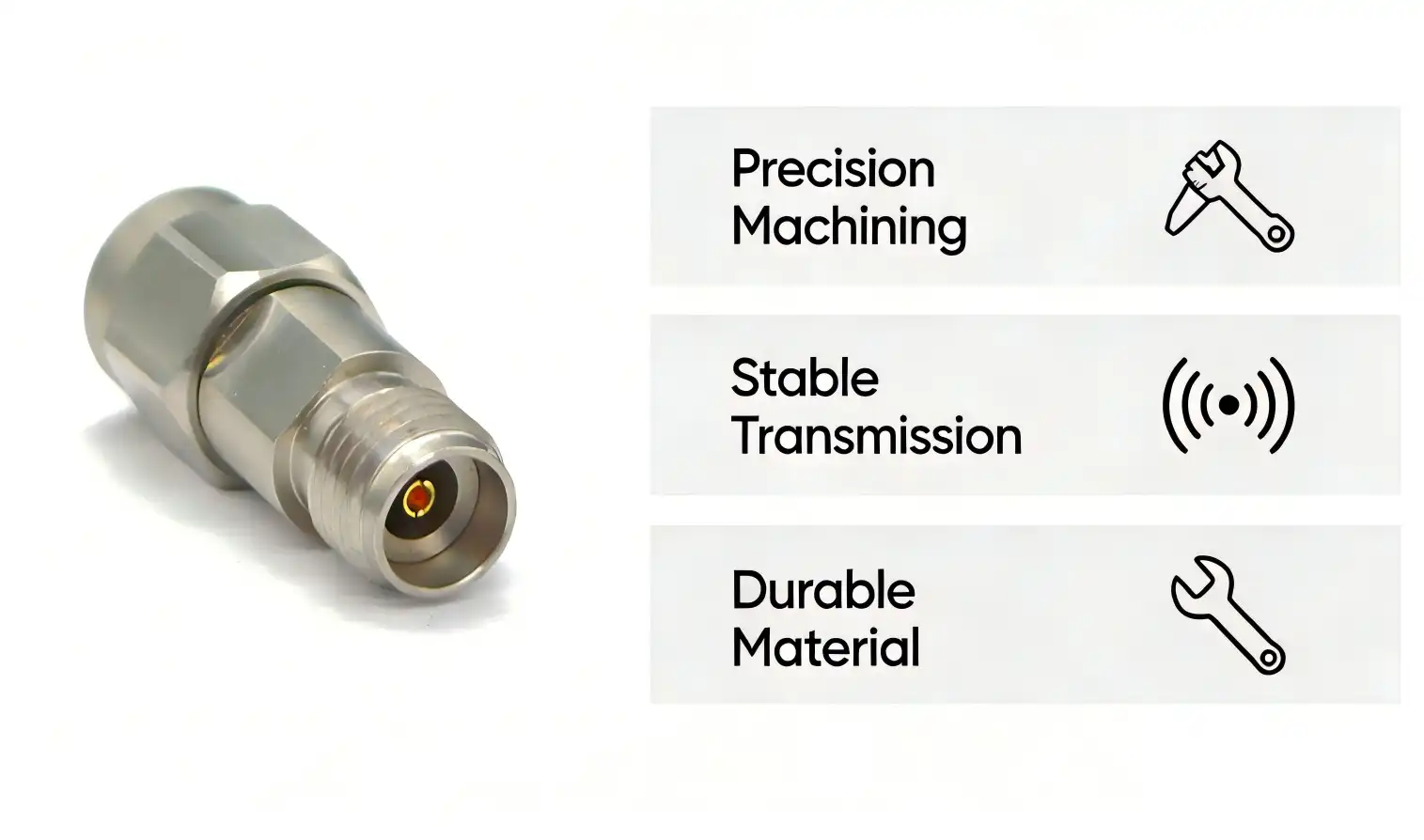
Engineers and procurement specialists choose Coaxial adapter 2.92mm plug to 2.92mm jacks because they consistently perform at high frequencies with low passive intermodulation (PIM). This makes them essential in sensitive microwave measurement setups and production test environments. The technical benefits and wide range of uses of these Coaxial adapter 2.92mm plug to 2.92mm jacks have a direct effect on measurement accuracy and operating efficiency in many different types of businesses.
Superior High-Frequency Performance and PIM Characteristics
PIM generation is kept to a minimum by precision machining and gold-plating the contact surfaces. This is very important when checking base station parts, radar front-ends, and satellite transponders, as false signals can hide how well the device works or cause fake failure modes. Third-order intermodulation products stay below detectable limits during two-tone tests because of the controlled contact force and material purity. This keeps the measuring dynamic range. This PIM performance is very important in telecommunications labs that are testing 5G massive MIMO antenna arrays and in aerospace labs that are checking phased array radar modules for military use.
Material Selection: Stainless Steel Versus Brass Considerations
When weighing material options, people who work in procurement have to make important decisions. Stainless steel outer conductors are more resistant to corrosion and last longer mechanically. This makes up for their higher initial cost by providing longer service life in damp places and automated test systems that mating cycles often. These steel-body Coaxial adapter 2.92mm plug to 2.92mm jacks, keep their shape even when the temperature changes. This makes sure that the electrical performance stays the same in weather rooms and field tests. Brass alternatives are cheaper for low-volume uses or test fixtures that are thrown away after one use, but they don't last as long in environments that are corrosive or where there are a lot of cycles. Understanding the job cycles of applications and how they are exposed to the environment helps buying teams get the best total cost of ownership while still meeting reliability standards.
Practical Application Across Industry Sectors
Microwave and Millimeter-Wave Testing: These Coaxial adapter 2.92mm plug to 2.92mm jacks, are used by test engineers to connect vector network analyzers to antenna feeds and RF front-end modules for 5G base station validation. The connections make it possible for spectrum analyzers and radar system parts to talk to each other in different ways. This lets accurate measurements of frequency response, group delay, and harmonic distortion be taken across the entire 40 GHz range. Semiconductor RF Development: These Coaxial adapter 2.92mm plug to 2.92mm jacks, make sure that automated test equipment and boards that are being tested can communicate with each other properly during the validation of RF integrated circuits. Hardware design engineers depend on them to keep measurement reference planes stable during on-wafer probing and package-level evaluation. This helps with accurate deembedding and calibration processes that are needed for modeling high-frequency circuits.
Aerospace and Defense Applications: To test military electrical equipment, Coaxial adapter 2.92mm plug to 2.92mm jacks must meet strict requirements for shock, vibration, and temperature cycles. In phased array radar systems and electronic warfare equipment, where high dependability and rejection of electromagnetic interference are necessary for mission-critical performance evaluation, the Coaxial adapter 2.92mm plug to 2.92mm jacks makes it easier to find RF components. Test System Integration and Fixture Expansion: Integration engineers use these Coaxial adapter 2.92mm plug to 2.92mm jacks to fix interface polarity mismatches in complicated RF test fixtures. This makes the system more compatible and cuts down on the time it takes to make custom hardware. Because it can change the gender of a test subject, the setup can be changed easily. This lets labs adapt to new device interface standards without having to buy all new equipment. These use cases show how picking the right Coaxial adapter (2.92 mm plug to 2.92mm jack has a direct effect on measurement accuracy, test throughput, and the rate at which equipment is used in both work and study settings.
How to Select and Compare 2.92mm Coaxial Adapters for Procurement
When looking for a precision RF Coaxial adapter 2.92mm plug to 2.92mm jacks, procurement managers and test engineers have to think about a lot of technical and business factors. A structured review system makes sure that the choice of components meets both short-term technical needs and the security of the supply chain in the long term.
Critical Technical Evaluation Criteria
Frequency Response and Insertion Loss: Check the Coaxial adapter 2.92mm plug to 2.92mm jack's specs across the working bands you need, paying special attention to the insertion loss at the highest test frequency. If a Coaxial adapter 2.92mm plug to 2.92mm jack has an insertion loss of more than 0.3 dB at 40 GHz, it could mess up measurements used for noise figure analysis and gain compression tests, which could hide device performance gaps. Impedance Matching and VSWR Performance: Make sure the Coaxial adapter 2.92mm plug to 2.92mm jack keeps the 50Ω impedance tolerance within ±1Ω across the whole frequency range and keeps the VSWR below 1.35:1. If you don't control the resistance well, reflections stop and start, which messes up S-parameter readings and time-domain reflectometry analysis. This makes it harder to trust the data that describes the device. Construction Quality and Material Specifications: Check the thickness of the center conductor plating, the grade of the dielectric material, and the quality of the finish on the outer conductor. In high-cycle applications, gold plating less than 0.5 microns may wear out too quickly, and lower-grade PTFE dielectrics cause frequency-dependent losses that make it harder to repeat measurements.
Supplier and Brand Comparison Framework
When procurement teams look at manufacturers and distributors, they should look at their track records of reliability, their portfolios of certifications, and their technical support after the sale. Established suppliers have strict quality control systems that include reports on dimensional inspections, electrical performance tests, and the ability to track products down to the batch level. Certification openness, such as ISO 9001 quality management, RoHS compliance, and REACH substance restriction conformity, shows that the manufacturing process is mature and that the company is aware of the rules. This standard is exemplified by Chuangyu, which has detailed quality documentation and the ability to make precise products. Their knowledge of millimeter-wave connectors goes up to 110 GHz, showing excellent process control that can be used to make Coaxial adapter 2.92mm plug to 2.92mm jacks. The company's Xi'an production base has special RF component manufacturing lines that can make more than 500,000 units per year. These lines can handle both small test orders and large production runs.
Cost-Benefit Analysis and Total Ownership Considerations
The unit price is only one part of the value of buying something. Total cost of ownership is affected by warranty terms, failure rates, and the stability of the calibration in a big way. If you buy Coaxial adapter 2.92mm plug to 2.92mm jacks that are 30% less expensive than the market average, they may fail more often or change size, which means you have to replace them before they're due to wear and tear. This will raise the cost of each test when you factor in the time and money needed to fix the equipment. Buying plans should consider the initial cost along with documented reliability data, the average time between failures, and how quickly the supplier responds to quality issues. When planning to standardize test equipment over a number of years or to support production test programs with predictable consumption rates, volume discount structures should be taken into account. Direct ties with manufacturers often offer better prices than dealing through distributors, and they also let you make changes for non-standard setups or special environmental ratings.
Where to Buy 2.92mm Plug to 2.92mm Jack Adapters: Trusted Suppliers and Channels
Finding trusted sources for RF components ensures that you can always get them, while also lowering the risk of buying them and making the supply chain work more efficiently. Whether to work with a direct maker or a network of distributors relies on how many orders you have, how much customization you need, and where you live.
Verified Manufacturer Channels and Customization Options
When procurement teams work directly with manufacturers like Chuangyu, they can get engineering help and make changes to the products that they don't get through distributors. In addition to making precision electrical connectors and RF wire assemblies, Shaanxi Chuangyu Electronic Technology Co., Ltd. also offers full design support for custom probe solutions and non-standard component specs. Their production facility in Xi'an has quality systems that are ISO-certified and testing labs that can check electrical performance from DC to 40 GHz.The manufacturer-direct model lets you customize the specs to fit your specific needs. For example, you can change the plating materials to make them more resistant to wear, change the contact force for special test fixtures, or make versions that are sealed against the elements for testing in the field. This ability to customize is very helpful when standard catalog items don't fully meet technical needs or when system integration calls for changes to the interface.
Lead Time Management and Logistics Optimization
Standard store items usually ship within one to two weeks from well-known makers who keep enough inventory on hand to cover high-turnover parts. Custom configurations may take four to six weeks, depending on how complicated the changes are and where they are in the production queue. Procurement workers should let manufacturers know about expected demand a long time before important project goals. This way, manufacturers can set aside production space and get specialty materials. When figuring out landed costs and total procurement cycle time, international logistics plays a role. Cross-border transactions are streamlined when manufacturers have established freight partnerships and knowledge of customs paperwork. This cuts down on clearance delays and tax complications. Being close to Xi'an High-tech Industrial Park gives Chuangyu supply chain cluster benefits, making it easier to get raw materials quickly and distribute finished goods quickly, with response times cut by over 20% compared to industry standards.
Volume Discount Negotiation and OEM Partnership Models
If a procurement manager is in charge of multiple test sites or a high-volume production program, they should look into volume buy deals and OEM partnership arrangements. Manufacturers usually offer tiered pricing based on set quantity thresholds that reflect economies of scale. For example, discounts get deeper at 50, 200, and 1000 units. Long-term framework agreements can help make sure that strategic accounts get better prices, more inventory, and earlier production schedules.OEM partnerships are more than just buying things from each other. They also include working together to make new products, fix technical problems, and create co-branded solutions for system integrators that serve end markets. These connections help procurement teams keep the supply chain stable and give them access to expert resources, which speeds up the time it takes to get new test platforms and production tools on the market.
Conclusion
When looking for the right Coaxial adapter 2.92mm plug to 2.92mm jack, you need to think about technical specs, source stability, and total cost. The Coaxial adapter 2.92mm plug to 2.92mm jack is necessary for 5G testing, semiconductor validation, aerospace applications, and RF system integration because it can handle frequencies up to 40 GHz and has precise 50Ω impedance control. To get the best results, procurement teams compare makers based on licenses, customization options, and customer service after the sale. They also look at frequency response, insertion loss, VSWR performance, and material quality. When a maker works directly with a company like Chuangyu, they can get technical help, better prices, and more flexible supply chains than through distributor channels. When procurement professionals know about lead times, logistics solutions, and chances to work together with OEMs, they can make sure they have a steady supply of parts and increase confidence in their measurements and equipment uptime.
FAQ
What frequency range do 2.92mm coaxial adapters support?
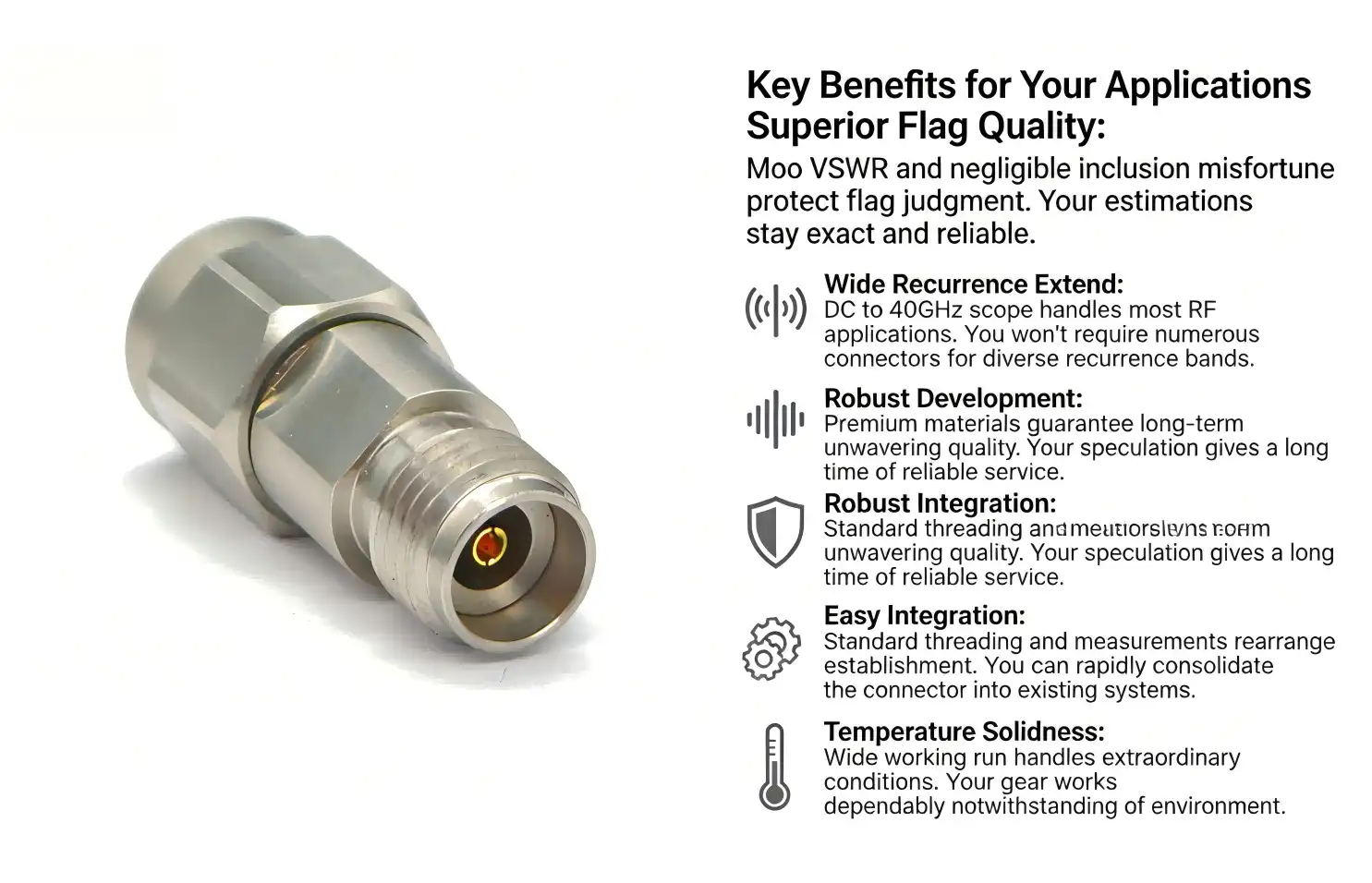
Standard Coaxial adapter 2.92mm plug to 2.92mm jacks work from DC to 40 GHz, which means they can handle 5G FR2 bands, Ka-band satellite communications, and most microwave test tasks. Controlled VSWR and low insertion loss across this spectrum make it possible to measure S-parameters and characterize power accurately without using correction factors that depend on frequency.
How do I ensure compatibility with existing RF test equipment?
Make sure that the test equipment has 2.92mm female or male connections and that the Coaxial adapter 2.92mm plug to 2.92mm jack's impedance fits the 50Ω standard for your system. Check the dimensions of the mechanical interface against the specifications of the equipment, and look at the mating cycle ratings to make sure that the durability matches the number of tests you do and how you use the equipment.
What factors most significantly influence adapter durability and performance?
The quality of the materials directly affects how long a Coaxial adapter 2.92mm plug to 2.92mm jack lasts. For example, the thickness of the gold plating affects the stability of the contact resistance, the grade of the PTFE dielectric controls the consistency of the insertion loss, and the quality of the stainless steel outer conductor determines how strong it is. Using the right amount of torque (usually ≤0.5 N·m) during installation keeps the structure from getting damaged, and cleaning it regularly with anhydrous alcohol keeps the electrical performance high even after hundreds of mating cycles.
Partner with a Trusted Coaxial Adapter 2.92mm Plug to 2.92mm Jack Supplier
Chuangyu offers precision-engineered RF connection solutions that are backed by quality assurance and nearly 20 years of manufacturing experience. Our Coaxial adapter 2.92mm plug to 2.92mm jack units have PTFE dielectrics, gold-plated beryllium copper center conductors, and stainless steel outer shells. They can operate from DC to 40 GHz with a VSWR of 1.35. The Xi'an factory can make more than 500,000 RF components every year, and it has test labs that make sure the parts work well electrically and last a long time mechanically. Technical teams help with customization for non-standard setups, environmental grades, and OEM needs. Procurement managers who support operations across multiple sites and high-volume production testing can save money with volume pricing programs. Get in touch with chuangyuwz01@cymicrowave.com right away to talk about your unique needs and get full technical documentation that will help you make sure your RF test systems are as reliable and accurate as possible.
References
1. Institute of Electrical and Electronics Engineers, "IEEE Standard for Precision Coaxial Connectors at RF, Microwave, and Millimeter-Wave Frequencies," IEEE Transactions on Microwave Theory and Techniques, 2021.
2. National Institute of Standards and Technology, "Calibration and Measurement Uncertainty of Coaxial Transmission Line Standards," NIST Technical Note 1462, 2019.
3. International Electrotechnical Commission, "IEC 61169-35: Radio-frequency connectors - Part 35: Sectional specification for 2.92 mm RF coaxial connectors," 2020.
4. Microwave Journal Editorial Staff, "High-Frequency Connector Selection for 5G Test Applications," Microwave Journal Industry Review, 2022.
5. Society of Automotive Engineers, "SAE AS39029: Coaxial Connector Performance Requirements for Aerospace Applications," SAE International Standards, 2018.
6. RF GlobalNet Technical Committee, "Best Practices for RF Connector Maintenance and Calibration in Production Test Environments," RF Design Magazine, 2023.